
Work trucks stand as unsung heroes in the logistics and construction sectors, extending far beyond mere transportation. As businesses grapple with operational efficiencies and stringent regulations, understanding whether work trucks qualify as commercial vehicles becomes paramount. This article delves into defining work trucks, establishing the criteria for their classification, examining the legal implications of such classifications, exploring their economic impact, and assessing their societal value across industries. By the end of this comprehensive exploration, stakeholders will be better equipped to make informed decisions that cater to their operational needs and regulatory compliance.
Work Trucks Within the Commercial Vehicle Landscape: Purpose, Classification, and the Fleet Implications
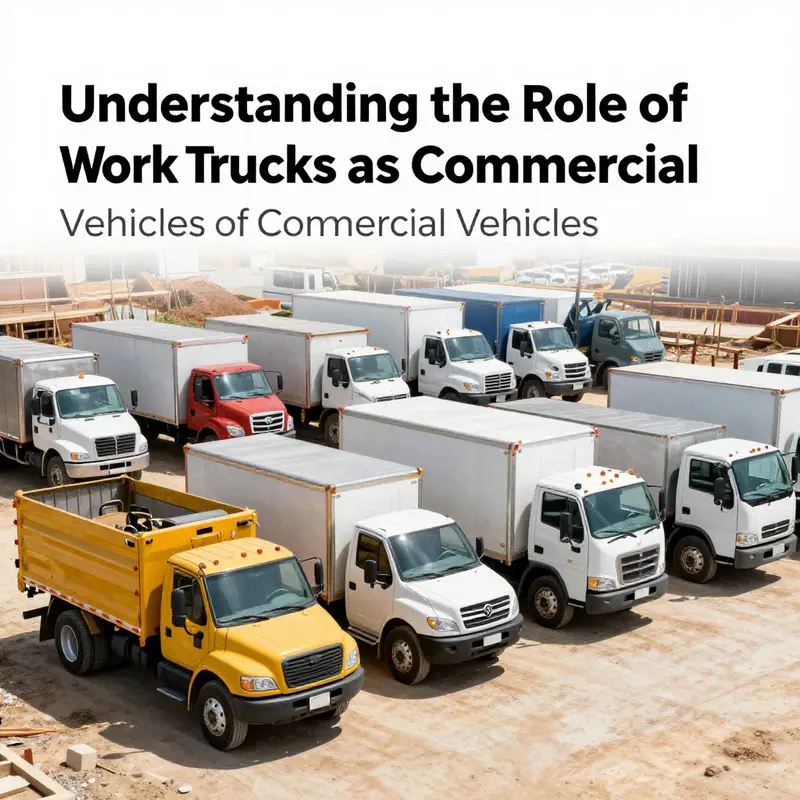
When people ask whether a work truck is a commercial vehicle, the instinct is to search for a simple yes or no. The short answer is yes, but the full answer matters just as much. A work truck is a commercial vehicle in the sense that it is owned, licensed, and operated for business purposes. Yet it differs from other commercial vehicles in how it is configured, how it is used, and how regulations view its role in the field. The topic sits at the intersection of fleet planning, safety compliance, and operational efficiency. It asks the reader to move beyond the idea of trucks as mere carriers of goods and to consider them as mobile workspaces that extend the capabilities of a company into the field. This distinction is not mere semantics. It shapes licensing requirements, insurance considerations, maintenance protocols, and the way a company inventories tools, parts, and manpower across multiple job sites. In practical terms, it helps a fleet manager decide which vehicles should be upfitted for a trade and how to budget for ongoing upkeep, tooling, and technology that keep the crew productive from dawn to dusk.
At its core, a work truck is a vehicle tailored for a job. It is not simply a transporter of materials; it is a platform for performing tasks on site. Think of a pickup or a utility chassis that has been outfitted with built-in tool storage, secure cabinets, and a power system capable of running tools and lights without a return trip to a shop. The upfit is deliberate: it is designed to minimize trips back to a warehouse, reduce the amount of time a worker spends hunting for tools, and enhance safety by providing organized, lockable storage and a defined workspace inside the vehicle. In that sense, the work truck behaves like a portable extension of the workshop. The equipment configuration is purpose-built for the trades that rely on it—plumbing, electrical work, landscaping, utility maintenance, and other field service operations where mobility and immediate access to gear directly impact productivity and job quality.
This arrangement helps explain why all work trucks are commercial vehicles, but not every commercial vehicle is a work truck. A delivery van that transports goods for a business, for example, is clearly commercial, yet it may lack the job-specific modifications that convert a vehicle into a mobile workshop. A plain cargo van or standard pickup used to carry tools and equipment without a dedicated storage framework or integrated power system might still be used for business purposes, yet it does not meet the operational criteria of a true work truck. The distinction lies in purpose and configuration: the work truck is engineered to enable work to happen on site, while a general commercial vehicle is primarily designed to move payload or passengers from point A to B. Recognizing this difference matters because it informs decisions on procurement, upfit scope, and safety protocols.
From a structural perspective, the features that define a work truck go beyond the bare minimum of cargo capability. Toolboxes are integrated into the chassis or bed to secure tools and hardware while keeping them readily accessible. Hydraulic lifts or ladders may be included to reach elevated work areas without using external scaffolding. Aerial platforms might be installed to reach lines or structures at height, enabling technicians to work efficiently without leaving the vehicle. Specialized storage compartments are laid out for easy inventory management, so common parts and consumables stay in reach. An on-board power system—whether through a portable generator, auxiliary battery, or inverter setup—lets workers operate cordless and corded tools directly from the truck. The aim of these components is to create a self-contained work environment that reduces downtime and enhances safety by organizing materials, securing equipment, and delivering power where it is needed most.
The practical implications for fleets are significant. A fleet that recognizes work trucks as mobile workshops can plan more effectively around uptime, maintenance, and tool lifecycle. Maintenance scheduling moves from a simple engine or transmission check to a broader, more comprehensive cadence that covers specialized electrical systems, hydraulic lines, battery packs, and even solar or generator components where applicable. Safety becomes a central axis of policy rather than a checklist afterthought. Upfit configurations shape the way a vehicle ages in the field, influencing everything from corrosion protection in tool compartments to the durability of mounting points for cranes, ladders, or platform accessories. Consequently, precise forecasting of upfit costs, depreciation, and parts replacement becomes a core function of fleet management, rather than a quarterly afterthought.
Industry observers and fleet professionals emphasize that the right work truck, equipped with the right tools and technology, can be a decisive driver of operational performance. A respected industry resource notes that the success of many field service operations hinges on having the right work truck—equipped with the right tools and technology—for the job at hand. This sentiment underscores a broader truth: the value of a work truck is as much about its embedded workflow as its payload capacity. When a truck is designed as a workspace, it transforms how crews approach daily tasks, how quickly they can respond to a service call, and how safely they can perform work under varying site conditions. The upfit becomes a cornerstone of the service model, enabling technicians to bill more time to productive activity rather than to logistical overhead.
From a regulatory standpoint, the classification of a work truck as a commercial vehicle triggers considerations that affect licensing, inspection regimes, and compliance reporting. Operators must be mindful of what the vehicle is used to transport and what equipment is installed. In many jurisdictions, commercial vehicle regulation focuses on the vehicle’s use, weight, and purpose rather than its cosmetic appearance or the presence of a tool cabinet. However, some rules do hinge on the intended trade or the presence of equipment that could affect driving behavior or safety on the road. This means a work truck operator should keep clear records of its business use, maintain up-to-date safety inspections, and ensure that any mounted equipment complies with road rules and manufacturer guidelines for secure operation. The result is a set of practices that harmonize vehicle configuration with applicable regulations, ensuring that the work truck remains a lawful and efficient asset across job sites and roadways alike.
For fleet leaders, the discussion about work trucks also intersects with broader market dynamics that influence how these vehicles are sourced, financed, and maintained. The economics of upfitting—whether through a modular approach that allows for quick swaps of tool modules or a more permanent, purpose-built design—can determine the total cost of ownership and the speed at which new capabilities are deployed across a fleet. A well-planned work-truck program can yield tangible returns: shorter job cycles, fewer misplacements of tools and parts, better driver safety scores, and more predictable maintenance expenditures. Conversely, a mismatch between a work truck’s configuration and the actual field requirements can lead to underutilized assets, higher downtime, and inflated operating costs. In that sense, the work truck becomes a strategic lever in the broader effort to optimize field service operations and, by extension, customer satisfaction and profitability.
This strategic framing is exactly why many fleets approach work trucks with a disciplined process. It begins with a clear definition of the trades served and the common tasks performed at typical job sites. It continues with a thoughtful upfit plan that prioritizes accessibility, durability, and modularity. It then entails a governance layer that standardizes components, defines maintenance windows, and streamlines repairs. The goal is not to chase every new gadget but to align vehicle capabilities with the actual workflow. When a fleet adopts this approach, it can articulate a coherent minimal set of features for a work truck, justify upfit investments, and measure performance through uptime, tool availability, and job completion times. The outcome is a more predictable, safer, and more productive field operation.
For operators seeking deeper policy and best-practice guidance, the literature on work trucks emphasizes a practical, fleet-centric lens. It is not merely about keeping tools dry or securing ladders; it is about turning a vehicle into an extension of the workshop, one that travels, works, and delivers results. In this sense, the work truck embodies the marriage of mobility and craftsmanship that defines many trades. As the regulatory and market environments continue to evolve, the central challenge remains constant: how to balance cost, safety, and productivity in a tool-driven, field-based operation. To explore broader context on how standards and emissions considerations are shaping OEM approaches to work-truck design, see the discussion on OEMs seeking clarity in emissions regulations. OEMs seek clarity in emissions regulations.
For readers who want a formal, fleet-focused framework to guide new work-truck programs, a respected industry guide offers a comprehensive overview of the upfit process, fleet integration, and ongoing management. This resource provides structured guidance that can help a new fleet align its procurement, maintenance, and safety practices with proven standards while accommodating the unique demands of field service work. It is a practical companion to the more narrative and policy-oriented discussion above, grounding the conversation in a repeatable model that can be adapted to diverse trades and company sizes. The guide emphasizes the value of starting with a clear operational profile, selecting a scalable upfit architecture, and maintaining a disciplined lifecycle management approach that spans acquisition, usage, and retirement of assets.
In sum, understanding whether a work truck is a commercial vehicle is not about classifying a single asset. It is about recognizing the work truck as a category of vehicle purpose-built to extend the workshop into the field. It is about acknowledging that this kind of vehicle sits at the crossroads of mobility, equipment integration, and safety compliance. It is about appreciating how the upfit choices shape not just a truck’s cargo capacity but its daily utility, worker safety, and the speed with which service jobs get completed. And it is about guiding a fleet through the complexities of regulation, cost, and performance so that the work truck remains a reliable, valuable, and lawful asset on every job site.
External resource: https://www.nafa.org/work-truck-101-a-guide-for-new-fleets
When a Work Truck Becomes a Commercial Vehicle: Navigating the Public-Service Threshold and the Pay-for-Transport Boundary
A work truck often sits at the crossroads between a company’s fleet and a public transportation asset. For someone who uses a pickup loaded with ladders and a tool rack to haul their own gear from site to site, the vehicle may feel like a utilitarian workhorse, not a regulator’s target. Yet, the moment that same truck begins to carry a customer, bill for a service, or provide transport to third parties for compensation, the political and legal coordinates shift. To understand whether a work truck qualifies as a commercial vehicle, one must look beyond ownership and model type. The heart of the matter lies in how the vehicle is used, what services it offers beyond an internal workflow, and whether those activities meet a public, paid, and external standard. In practice, this is less about the letter of a vehicle’s classification and more about the function it serves in the broader economy and society at large. The Guangdong framework, drawn from a careful examination of regulatory practice in a major commercial hub, centers the discussion on three interconnected criteria that practitioners often find decisive. First is public service to society. A truck is more than a tool for a single company when it delivers transportation services to other organizations or individuals. If a vehicle’s operation creates value that is available outside the owning enterprise—whether by moving customers’ goods, ferrying workers for pay, or supporting third-party logistics—it crosses from internal logistics into public service. This public-facing aspect matters because it expands the vehicle’s potential exposure to public-regulatory expectations, safety standards, and financial accountability that protect other actors who rely on the service. The second criterion concerns commercial intent. This is about whether the activity is undertaken for compensation. The Road Transport Administration’s guidance from the turn of the century makes a clear connection: freight transport that involves any form of financial transaction—separate billing for freight, blended pricing with cargo charges or handling fees, or contracts that tie labor or service fees to transportation—falls squarely into the commercial category. In other words, when a truck owned by a business serves external clients on a paid basis, it should be regulated under the commercial vehicle framework. The implication is practical: a truck that exists solely to move the company’s own gear and does not price or bill for moving third parties is less likely to be treated as a commercial vehicle for regulatory purposes, at least in the eyes of the agencies emphasizing externalized service and compensation. The third criterion delineates internal use versus commercial use. Vehicles used strictly for internal production or operational purposes—such as moving goods within a company’s own premises or performing tasks that do not involve third-party customers—do not necessarily require commercial-vehicle registration. The exemption is not a mere matter of the vehicle’s size or type, but rather the absence of third-party service provision. If the vehicle’s activity remains confined to internal workflows, the risk, rate-setting, and regulatory oversight associated with public transportation or for-hire operations do not apply in the same way. The critical distinction centers on external, paid, and public-oriented transport activity rather than ownership or design. This nuanced framework invites readers to evaluate a work truck through the lens of external service delivery and compensation. A contractor’s pickup that routinely travels to multiple job sites to carry tools, but bills only the employer and never charges the client—or never presents itself as a transportation service to the public—may remain within the realm of internal use. Conversely, a fleet that routinely collects goods, delivers them to customers, or provides labor-linked transport on a paid basis clearly aligns with commercial-vehicle regulations. The boundary is not the truck’s bed or cab or even its horsepower; it is the social and economic function the vehicle performs in the wider market. The practical implications of these distinctions extend into licensing, insurance, and compliance regimes, which are designed to ensure safety, accountability, and fair competition. When a vehicle is treated as a commercial vehicle, it falls under a framework that anticipates higher standards for driver qualifications, vehicle maintenance, operator record-keeping, and in many jurisdictions, more stringent insurance requirements. These rules reflect the public dimension of commercial transport: when the vehicle carries other people, goods for a price, or operates in public traffic with a commercial mission, the safety net must be stronger, not weaker. The Guangdong criteria thus offer a robust, usage-driven test that helps distinguish internal logistics from market-facing transport—an essential distinction for businesses that want to manage risk while staying compliant. A key implication for owners and managers is the need for deliberate policy alignment. If a company anticipates occasional paid transport of third parties or serves external clients with its fleet, it should plan for the corresponding regulatory obligations from the outset. This planning includes understanding filing requirements, insurance implications, vehicle registration categories, and the potential need to secure permits specific to commercial operations. In contrast, a company whose fleet remains exclusively within the bounds of internal site movement should monitor the regulatory environment to remain compliant while preserving the flexibility to adapt if external service needs arise. The line is not always static; a business model can evolve, and a vehicle may shift from internal use to external service as client demands change or as the company expands its service offerings. Within this evolving landscape, it is useful to consider how regulators in different jurisdictions approach the same question. The core principle—whether the vehicle’s activity constitutes a public service or a paid external operation—resonates across borders, even as the specifics of registration, licensing, and enforcement differ. The universality of the public-service criterion helps explain why a simple categorization by vehicle type rarely suffices. A pickup equipped for tradeswork may still be a commercial vehicle in one regulatory context and not in another, depending on how it is used and who benefits from its services. This recognition invites a practical, context-sensitive approach to classification: operators should assess their typical routes, billing practices, and the extent to which their services touch external markets and clients. For practitioners and students of transport policy, the Guangdong model provides a compelling template for thinking about how to reconcile ownership with function. It emphasizes that the external, paid, and public-oriented nature of transport activity is the decisive factor, not merely the vehicle’s form. It also resonates with broader debates about how to regulate mobile workspaces in a modern economy where the lines between internal logistics and public transport can blur as firms seek efficiency through shared resources and multi-client operations. The central takeaway is not a rigid rule about trucks but a framework that helps businesses and regulators navigate a spectrum of activity—from purely internal movements to fully external, compensated transportation services. In illustrating the principle, consider how a single truck might operate on a typical workweek: it might carry ladders to a construction site for its owner’s crew, then, on another day, be contracted to move tools for a different business or to shuttle workers between sites for a fee. Each shift in use alters the regulatory calculus. The job of regulators, in this scenario, is to distinguish between a utility that serves the owner’s enterprise and a service that competes in and serves a broader economy. That distinction matters not only for compliance and safety but also for the level of liability and accountability that accompanies the operation in public space. As such, the question remains less about whether a work truck is a commercial vehicle by virtue of appearance and more about whether its day-to-day operations create a public, paid service beyond the owner’s firm. As readers pull these threads into their own contexts, a practical approach emerges. Start with a clear inventory of how the fleet is used, who benefits, and how pricing is structured for each trip or transport service. Document instances where external clients are charged, separate billing lines exist for freight or handling services, or where labor costs are integrated with transport charges. If any of these scenarios apply, prepare for the possibility of commercial-vehicle registration and the corresponding regulatory obligations. If none apply, maintain a record of internal-use patterns to demonstrate that the vehicle remains within the internal-use exception should questions arise. The nuance of classification is the value of this careful record-keeping, not a shortcut by vehicle type alone. For readers interested in the broader conversation on regulatory alignment and cross-border considerations, a related exploration of regulatory issues in cross-border trucking offers context on how these principles scale beyond a single jurisdiction. See the linked resource on cross-border regulatory issues for additional perspective on how shared standards interact with local rules and how operators navigate the complexity of multi-jurisdiction transport services. TCAS Cross-Border Regulatory Issues Event External regulatory reference: For further detail on regional guidelines that shape these distinctions in practice, see the Guangdong Provincial Department of Transportation guidelines. https://www.gdjt.gov.cn/xxgk/tzgg/tzgg/content/post_123456.html
null
null
Mobilizing Commerce: The Economic Backbone of Work Trucks in the Commercial Vehicle Landscape
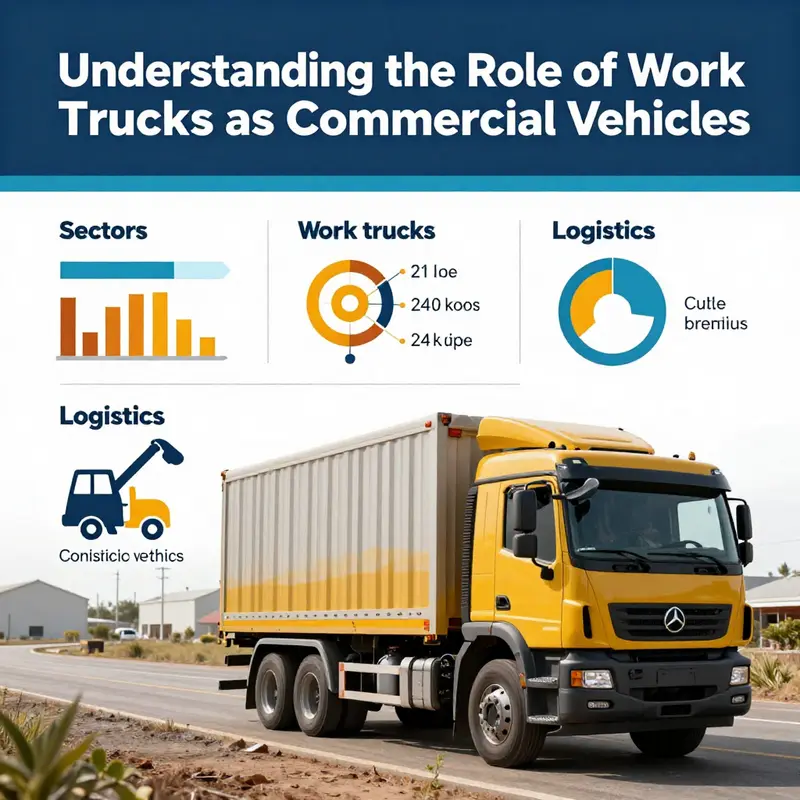
Across the daily drumbeat of commerce, the work truck stands as a quiet workhorse whose purpose far exceeds personal transport. A work truck is, in practice, a commercial vehicle by design and by use, built to carry tools, equipment, and personnel to work sites, to support service delivery, and to sustain mobility for businesses that rely on on-site presence. This is not a matter of niche classification but of function: fleets sized to meet demand, crews dispatched to perform tasks, and schedules rigid enough to ensure that infrastructure, maintenance, and service commitments stay intact. In that light, the work truck is less a personal vehicle and more a mobile extension of a company’s operational footprint. It serves as a moving workshop, a temporary office, and a cable between planning and execution that holds the logistics portion of a project together. For policymakers and industry observers, this distinction matters because it clarifies which vehicles are subject to commercial regulations, safety standards, and environmental considerations aimed at safeguarding workplaces and streets alike. It is through this lens that the broader question—“is a work truck a commercial vehicle?”—takes on practical significance rather than abstract nuance. The answer, grounded in typical usage patterns and regulatory intent, is that work trucks fulfill a commercial purpose. They operate within the same economic system as other commercial vehicles, and their performance, availability, and cost of ownership ripple through every link in the supply chain. The implications extend beyond fleet managers and drivers to the communities where jobs are performed and to the markets that rely on predictable service delivery. The work truck’s contribution to commerce begins with its core capability: turning a job site into a mobile command center. In fields ranging from construction and utilities to field service and landscaping, crews depend on these vehicles to provide a portable base of operations. A toolbox, a generator, meters, and a few spare parts can all be loaded into the back, creating a temporary workspace where plan drawings are consulted, measurements are taken, and decisions are recorded. This mobility is not a luxury; it is a practical necessity when the closest shop, warehouse, or supplier cannot be counted on to come to the job site. Each mile driven by a work truck is a mile of work performed, a schedule kept, and a commitment fulfilled. The economic weight of this reality becomes clearer when one surveys the sectors that rely on work trucks. In construction, for instance, time is money, and the ability to move crews, equipment, and materials efficiently determines whether a project finishes on time or slips behind. Utilities rely on service vehicles to inspect lines, perform routine maintenance, and respond to outages, keeping power and water systems functioning for households and businesses. Retail and e-commerce logistics increasingly depend on service and delivery vehicles to support on-site installations, last-mile services, and in-store replenishment. Each of these roles situates work trucks at the intersection of labor, capital, and infrastructure. Their presence not only enables operations but also spurs demand for related services. Maintenance and repair providers, fuel and energy suppliers, and parts manufacturers all benefit from a robust fleet that keeps business moving. Fleet management, telematics, and software solutions emerge as critical enablers here. The need to monitor uptime, optimize routes, and control maintenance costs translates into demand for data-driven solutions. In practice, fleets invest in scheduling efficiency, preventive maintenance plans, and driver training to reduce downtime and extend vehicle life. The broad consequence is a more productive economy: fewer delays, steadier cash flows for service providers, and higher utilization of equipment, which lowers unit costs and expands capacity for customers who rely on timely outcomes. The close tie between work trucks and last-mile networks is especially pronounced in the era of online shopping. As consumer demand accelerates the pace of delivery, fleets become the durable spine of rapid fulfillment, with work trucks serving as the flexible platform that adapts to surge volumes, seasonal peaks, and regional variations. This dynamic helps explain why the health of the work truck fleet often foreshadows broader regional economic vitality. When fleets expand to meet rising demand, jobs grow and local economies gain momentum; when disruptions occur—whether from supply chain hiccups, maintenance backlogs, or fuel price volatility—the effects cascade through merchants, service providers, and ultimately households who depend on dependable service. The economic narrative surrounding work trucks is not merely about moving people or cargo; it’s about sustaining a workflow that many industries cannot do without. In this sense, work trucks are a kind of economic infrastructure—the mobile platforms that enable production, repairs, and the ready exchange of goods and services across urban and rural landscapes. Yet every economic advantage comes with potential vulnerabilities. The same fleet that delivers speed and responsiveness can become a choke point if deliveries stall or maintenance budgets balloon. The sensitivity of work trucks to fuel costs, parts availability, and regulatory shifts means that fleets must stay vigilant about total cost of ownership, emissions considerations, and compliance requirements. A disruption in any one strand—fuel supply, component availability, or regulatory certainty—can ripple outward, affecting margins, service levels, and the ability of businesses to meet customer expectations. This tension underscores another important facet of the work truck’s economic role: its connections to broader systemic dynamics. The rise of high-capacity trucks and the associated environmental considerations have attracted attention from international forums and policy researchers. As a practical matter for fleets, the decision to deploy larger, higher-capacity vehicles involves balancing capacity gains with fuel efficiency, maintenance needs, and route feasibility. The International Transport Forum’s exploration of the economic and environmental potential of high-capacity trucks provides a macro perspective on how the sector might evolve under different regulatory and market scenarios. While the chapter here has focused on the daily, ground-level impact of work trucks, that larger frame reminds us that small changes in policy, technology, and fuel markets can reshape fleet composition, utilization patterns, and service models in meaningful ways. For fleet managers and business leaders, the emphasis remains on reliability, cost control, and service quality. In practical terms, this means designing fleets that match the specific work profile of the business: the typical payload, the frequency of site visits, and the geographic footprint. It means choosing configurations that maximize payload while preserving maneuverability in urban streets and tight job-site access. It means integrating robust maintenance cycles to prevent downtime and incorporating data-driven route planning to shorten travel time without sacrificing safety. It also means recognizing the ancillary ecosystem that supports work trucks—maintenance shops, fuel providers, parts distributors, and software vendors that enable efficient operation. These relationships help explain why demand in fleet equipment goods, such as trailers, chassis, and related services, often tracks more closely with overall economic activity than with consumer purchasing alone. In this context, a sentence from industry observers resonates: when a fleet expands, jobs grow, and when fleets contract, the economic fabric tightens in regions that rely on these professional services. The practical takeaway for business leaders is straightforward. Treat work trucks as strategic capital rather than mere transportation. Understand their role in your value chain, measure uptime and utilization, and align procurement with forecasted demand. The decisions around trailer orders, for example, have direct implications for margins and service levels across the network. See how shifting trailer orders can ripple into truckload margins, influencing pricing, capacity planning, and customer commitments. This link captures the practical, numbers-driven side of fleet strategy: Trailer Orders Impact Truckload Margins. As policy debates continue to shape emissions standards and fuel efficiency programs, fleets that combine prudent capital planning with disciplined operations will be best positioned to keep delivering value through changing conditions. For a broader regulatory and environmental context, readers may also consult external research that outlines potential pathways for high-capacity trucks and their implications for performance and sustainability. External reference: https://www.itf-oecd.org/economic-and-environmental-potential-high-capacity-trucks
Moving Weight, Shaping Society: The Societal Footprint of Work Trucks as Commercial Vehicles Across Industries
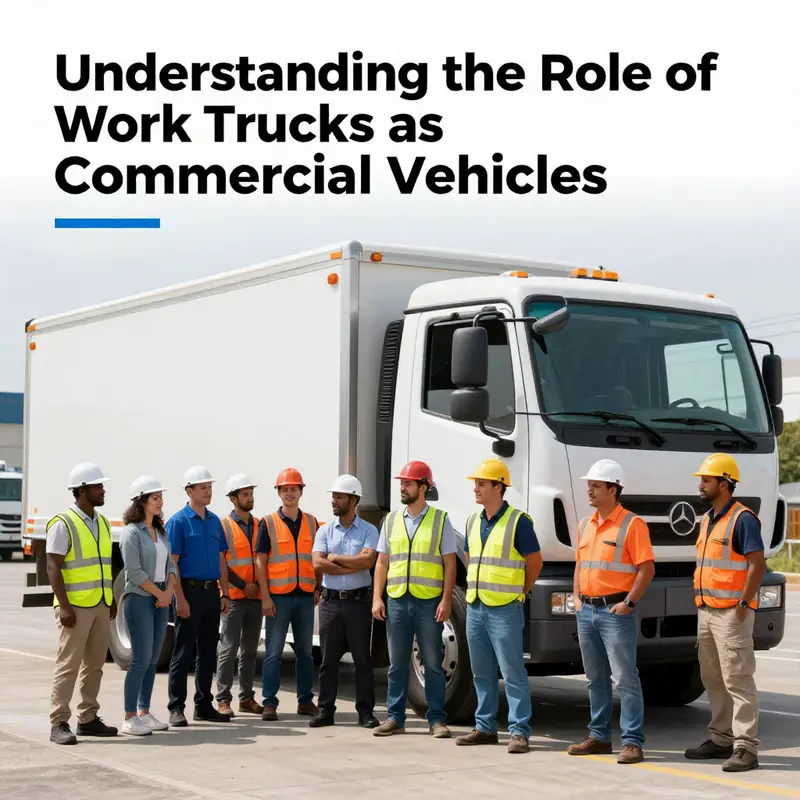
A work truck is more than a vehicle with a bed or a cab. It is a mobile workspace that often travels between job sites, warehouses, and service locations. When we ask whether a work truck is a commercial vehicle, the answer is usually yes, because its primary function is to support business activities rather than personal travel. This distinction matters not only for definitions or taxes, but for how communities experience the road network, how safety rules are applied, and how infrastructure evolves to accommodate a fleet that moves tools, materials, and personnel with regularity. In practice, a work truck carries the characteristics of a commercial vehicle even when the operator is a small contractor or a sole proprietor. Its design emphasizes payload capacity, durability, and reliability for professional use, and its ownership and operation align with business planning, asset management, and regulatory frameworks. The conversation about its societal footprint, then, begins with this functional baseline and expands into how the truck’s presence resonates across industry, geography, and daily life.
Economically, work trucks anchor logistics and field operations, forming a connective tissue for supply chains that keep homes supplied and construction projects advancing. These vehicles enable just-in-time workflows, reducing downtime between the moment a requirement is identified and the moment it reaches the job site. They support a wide range of business models, from small-scale trades to large utility outfits, and they help bridge canned plans with on-site realities. In urban areas, crews rely on these trucks to stage materials and crew movement efficiently, while in rural regions they enable access to remote sites, where roads may be rough and distances long. The financial ripple is clear: the vehicles themselves are capital assets; the maintenance and fuel they require create ongoing costs; and the drivers who operate them contribute to local employment, training pipelines, and entrepreneurial resilience. When viewed through this economic lens, the work truck is not merely transportation; it is a critical node in the calculation of project timelines, budgets, and regional growth.
Yet the societal reach of work trucks extends beyond the balance sheet. Traffic patterns shift in predictable ways as fleets expand, concentrating activity around industrial corridors, service hubs, and overnight maintenance routes. The presence of large vehicles on shared roadways influences driving behavior, road design, and the prioritization of certain safety measures. Large vehicles require longer stopping distances, careful maneuvering, and more deliberate lane changes, all of which interact with pedestrian flows, cyclist safety, and commuter traffic. Communities near construction sites or mining operations, in particular, experience acute effects on mobility, noise, and even air quality. These impacts are not simply nuisances to be managed; they shape daily rhythms, school bus routes, emergency response times, and the availability of public transit during peak industrial hours. The social costs and benefits, then, are distributed unevenly, and planners must account for both when mapping a region’s future.
Health considerations for drivers and the public are a key piece of this mosaic. Long hours, demanding schedules, and the physical strain of repetitive tasks contribute to fatigue and stress among operators. This, in turn, bears on road safety, as fatigue can impair reaction times and decision-making. The occupational health of truck crews intersects with community health through exposure to noise, diesel emissions, and other environmental factors near industrial zones and freight corridors. While technology promises improvements—such as more efficient engines, better telematics, and safer braking systems—the human element remains central. Training, rest policies, and access to healthcare for drivers are as essential to safe operations as any road design standard. When societies invest in the well-being of the workforce that powers these trucks, they also invest in safer streets for everyone who shares them.
Industry-specific dynamics illuminate how the societal footprint can shift with innovation. In sectors like mining, for example, the adoption of automation and driverless haul trucks poses complex social tradeoffs. On one hand, automation can reduce exposure to hazardous environments, improve precision, and lower the probability of certain types of accidents in remote work zones. On the other hand, it can reshape local labor markets, diminishing demand for lower-skilled or more precarious roles and altering the demographic and economic profile of mining towns. Communities that relied on steady streams of employment from extraction activities may experience population declines or slower economic diversification if automation is not paralleled with retraining and new opportunities. The broader lesson is that technology does not operate in a vacuum; it intersects with housing, education, and civic institutions that support workers through transitions. The same truck that carries tools to a site also carries potential for adjustment in a community’s social fabric as industries press toward greater efficiency.
To navigate these currents, a shift toward thoughtful, anticipatory planning becomes essential. Policymakers, planners, and industry stakeholders increasingly recognize the value of tools that can quantify how construction-related work trucks affect community mobility, emergency vehicle access, and public transit. Deterministic planning approaches, as explored in recent research, offer a way to forecast disruptions, identify high-risk corridors, and test mitigation strategies before projects begin. This forward-looking mindset supports infrastructure choices that are both economically rational and socially equitable. For example, planning models can help determine where to allocate staging zones for deliveries, how to schedule quiet periods or road closures, and where to invest in transit alternatives that reduce reliance on truck movements during peak times. The aim is not to constrain business activity but to align it with the broader purpose of ensuring safe, reliable, and inclusive mobility for all residents.
Interdisciplinary collaboration underpins these efforts. Engineers, urban designers, public health professionals, labor representatives, and community groups must come together to articulate shared objectives and monitor outcomes. This collaboration is not about reducing the role of work trucks; it is about shaping how they operate within a growing, interconnected cityscape. One practical pathway is to embed mobility metrics in project planning that consider emergency vehicle routes, school bus coverage, and walkable neighborhoods. When planners model the likely trajectories of heavy-vehicle movements, they reveal opportunities to reconfigure lanes, implement dedicated truck routes, or time deliveries to minimize peak congestion. These strategies illustrate a broader principle: progress in one domain should not come at the expense of another—especially when the costs are borne by everyday residents who may not directly benefit from industrial efficiency alone.
The conversation about societal impact also calls for a careful look at externalities and their distribution. Noise, air emissions, and vibration associated with work trucks have disproportionate effects on communities adjacent to industrial corridors, aging neighborhoods, and transit deserts where people rely more on pedestrians and buses than on private vehicles. Reducing negative externalities requires both engineering improvements and policy measures, such as stricter maintenance practices, cleaner fuels, and urban design that channels freight movements away from densely populated centers where possible. But it also requires social investment: retraining programs for workers displaced by automation, relocation assistance for towns dependent on mining livelihoods, and affordable housing solutions that stabilize communities facing demographic shifts. In this sense, the story of work trucks becomes a narrative about resilience and adaptation—how societies respond to changing modes of work while preserving safety, opportunity, and quality of life for their members.
A broader research lens helps connect these threads. Studies focused on field operations in challenging environments show how haul truck behavior informs not only productivity but also community experience. For instance, field work conducted in open-pit mining settings reveals how truck routes, maintenance downtime, and haul distances shape traffic patterns around mining zones and influence local emergency responsiveness. Such insights reinforce the need to integrate industry data with urban planning tools, field usability studies, and health impact assessments. They also underscore that the lexicon of commercial transport—rate cards, route optimization, and fleet utilization—must be complemented by conversations about social welfare, employment transitions, and community safety nets. The vehicle that moves the job forward is also a catalyst for social policy design as much as for industrial efficiency.
As this chapter weaves together the economic logic of timely delivery, the safety and health considerations of workers and the public, and the social consequences in communities near industrial activity, it points toward a practical synthesis. The objective is not to romanticize or vilify the work truck, but to recognize its centrality in modern life and to govern its growth in a way that valorizes both enterprise and equity. The path forward rests on honest data, inclusive planning, and continuous dialogue among business owners, workers, residents, and regulators. When these conversations translate into transparent rules, monitored outcomes, and tangible investments in people and infrastructure, work trucks can fulfill their business purpose while contributing to safer roads, healthier neighborhoods, and stronger, more adaptable economies. The result is a transportation system that respects the necessity of commerce while safeguarding the fabric of the communities it traverses. For policymakers and practitioners seeking a concrete link to industry-emission policy discussions, see clarity in emissions regulations for OEMs. This connection helps ensure that corporate ambition aligns with environmental and social responsibilities, guiding fleets toward cleaner performance without compromising the mobility that communities depend on. For an in-depth look at how real-world operations unfold in mining settings and the implications for sustainability, a field study of haul truck operations in open pit mines offers valuable context and data-driven insights: https://www.mdpi.com/2071-1050/17/16/6894.
Final thoughts
The classification of work trucks as commercial vehicles is not merely an academic distinction; it carries essential implications for legal compliance, operational efficiency, and economic contribution. Understanding the nuances of this classification empowers logistics and construction enterprises, small business owners, and procurement teams to align their operations with regulatory standards while maximally leveraging their work trucks’ capabilities. As industries evolve, the significance of responsible vehicle classification will only grow, underscoring the need for informed decisions grounded in legal, economic, and social awareness.