
Driving a commercial truck is not merely about handling controls; it encompasses a vast array of responsibilities requiring precision, expertise, and attention. For logistics and freight company owners, construction and mining enterprise procurement teams, and small business owners with delivery fleets, understanding the fundamentals of safely operating these imposing vehicles is essential. This guide offers an in-depth look into the multiple facets of commercial truck driving, from rigorous pre-drive inspections through meticulous driving techniques to adapting in varying conditions. Each chapter builds on the last, culminating in a comprehensive framework for ensuring safety and efficiency on the road.
The Quiet Command of Readiness: Mastering Pre-Trip Inspections for Safe, Efficient Trucking
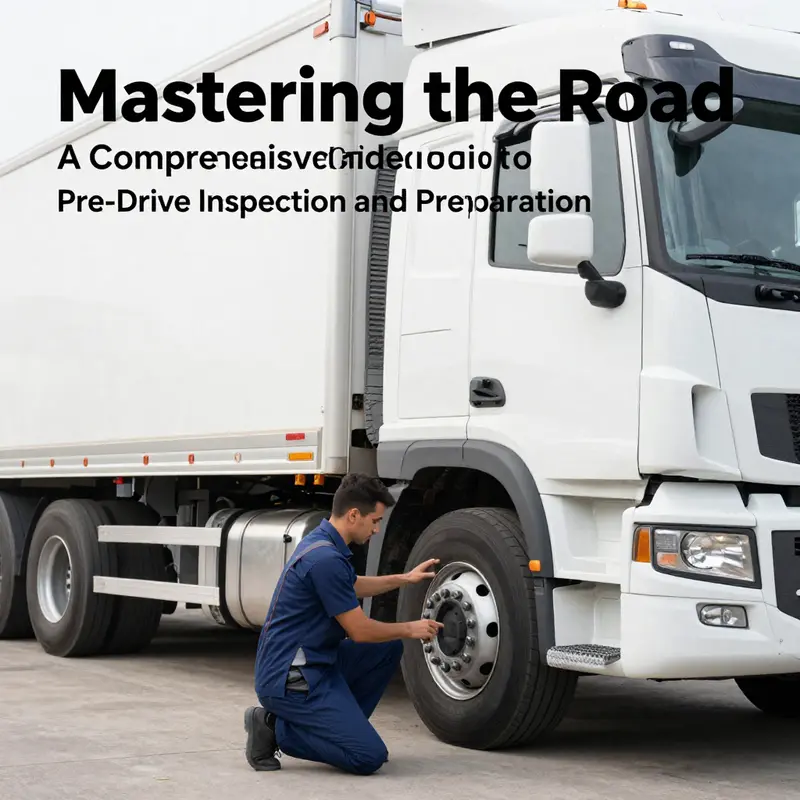
A commercial truck is a singular fusion of power, precision, and potential risk. The first act of responsible operation is not the roar of the engine or the flick of a switch, but a disciplined routine of inspection and preparation that establishes a safety margin for every mile ahead. This pre-drive ritual is the quiet command that keeps heavy machines reliable, reduces the chance of roadside surprises, and protects the lives of the driver and others on the road. It is not a ritualistic checklist to get through; it is a deliberate practice that translates into fewer breakdowns, smoother deliveries, and a reputation for dependability. In this sense, pre-drive inspection becomes the backbone of professional driving, shaping not only safety but also efficiency, cost control, and the ability to meet the exacting demands of modern logistics.
Exterior inspection starts the journey with a honest inventory of the truck’s outward condition. Tires demand careful attention: check inflation with an accurate gauge, verify tread depth, and look for cuts, bulges, or embedded debris that could compromise grip or cause a blowout at highway speeds. The tire’s condition is not only about safety; it governs fuel economy and ride quality, and it signals the truck’s ability to handle a heavy load across varying terrains. Lights and signals should shine in full clarity, with lenses clean and seals intact. Headlights illuminate the path, brake lights alert following traffic, and turn signals communicate intent so other road users can react in time. Hazard lights deserve a quick test too, as any failure here can mask a more serious electrical or wiring issue.
Mirrors and the windshield are the eyes of the vehicle. Cracks, chips, or misalignment distort vision and can hide hazards. A clean windshield is non-negotiable in foul weather, where even a minor smear can become a glare problem at dusk. The hitch and coupling deserve special attention if a trailer accompanies the truck. Secure alignment is essential for safe towing, and any looseness or play in the fifth wheel or kingpin can cascade into dangerous situations during turns or braking. Fluid leaks are a telltale sign of trouble under the hood or within the chassis. Oil, coolant, transmission fluid, and brake fluid should be checked for level and consistency, and any smear of fluid on the ground under the truck warrants immediate investigation before departure. The eyes and the hands must work in concert here; a responsible driver learns to notice the subtle signs that hint at developing mechanical issues long before they become an emergency.
Inside the cab, the mental tempo shifts toward readiness and control. Gauges are the constant heartbeat of the engine’s life; temperature, oil pressure, fuel, and air pressure must read within normal ranges. A test of the brakes in a safe, controlled environment is essential, because brakes are the primary link between the driver’s intent and the vehicle’s response. Steering should feel smooth, with no play that signals wear in the steering column or suspension components. Safety equipment is a reflective line of defense that should never be overlooked. Fire extinguishers should be present and accessible, first aid kits intact, and reflective triangles or other warning devices available for use in the event of a breakdown. Documentation matters as much as the machine’s mechanics. The truck’s logbook and any electronic logging device must be reviewed to ensure Hours of Service compliance and up‑to‑date records. A well‑kept log not only satisfies regulations; it prevents fatigue from becoming a hidden factor in a long day on the road.
Personal readiness is the thread that ties equipment to performance. A driver must be rested, hydrated, and free from substances that could impair judgment or reaction time. The seat should be positioned so that pedals are reachable with a slight bend in the arms and legs, and the back supported by the seatback. A good posture reduces fatigue and improves control during long hauls. Route familiarity matters as well. Knowing the weather outlook, potential chokepoints, and the expected traffic patterns provides a mental map that makes the pre-drive inspection more than a mechanical ritual; it becomes a preparation for the entire trip. The pre-drive routine also functions as a moment of mindfulness. Focusing on the wheel, the mirrors, and the road ahead primes the driver for the ongoing demands of the highway, city streets, and rural corridors. It is this mental vigilance, born from repetition, that helps a driver anticipate hazards and respond with appropriate urgency rather than reactive panic.
Documentation and regulatory compliance sit at the intersection of safety and accountability. Before pulling away, many operators complete a written or digital pre-trip inspection report. This document records the vehicle’s condition, the actions taken during the inspection, and any defects that require attention. It becomes a historical record that can be referenced if issues arise or if questions about compliance surface later. The discipline of documentation reinforces a culture of transparency and responsibility within a crew or fleet. It’s a traceable commitment to maintenance and to the safety of everyone who shares the road. For those who move across jurisdictions, this habit also supports smoother regulatory reviews and audits, underscoring a driver’s integrity and thoroughness. The FMCSA guidelines emphasize the seriousness of pre-trip inspection as the foundation of safe commercial operation, and the daily practice of documenting findings translates that policy into concrete action on every shift. In a practical sense, this paperwork is not a burden but a protective layer that safeguards the driver, the vehicle, and the public.
Preparation extends beyond the truck itself to the broader logistics ecosystem. The work begins with a plan for the day that considers the load’s weight, distribution, and security. A stable load reduces shifting that can affect steering and braking, and it also minimizes wear on suspension components. Checking securing devices, load locks, chains, straps, and tarps—where applicable—ensures cargo arrives intact and reduces the risk of a roadside incident caused by unsecured goods. The driver’s pre-trip inspection synergizes with the preventive maintenance program of the fleet. When issues are found, they are not ignored but logged and escalated through the proper channels. This iterative loop between inspection, reporting, and maintenance creates a culture where safety is continuous and not episodic. The driver’s habit of stopping to verify, rather than assuming everything is fine, preserves the vehicle’s life and the driver’s career.
The narrative of readiness also touches the economics and realities of the road in a subtle, meaningful way. Even choices that seem operational can be influenced by inspection outcomes. For instance, the decision to reallocate a trailer or adjust a route can be informed by the observed wear on tires or the reliability of certain components. This connection between safety checks and operational decisions is a practical reminder that the road is a dynamic system where prevention and planning pay dividends. It is not just about avoiding fines or penalties; it is about maintaining a sustainable pace that honors the time, velocity, and reliability required by customers. In this sense, the pre-drive inspection is a strategic tool, shaping not only safety but also the business rhythm of a trucking operation. The mind that conducts the inspection is the same mind that makes the day’s decisions about routing, rest breaks, and resource allocation. The two activities harmonize when the driver treats inspection as a daily business discipline rather than a chore.
In the larger picture, the pre-drive inspection and preparation ritual creates a foundation for the journey that follows. It primes the driver to absorb the realities of road behavior—blind spots, following distances, speed management, gear selection, and the cadence of braking and acceleration—through a lens of safety first. It also reinforces a culture of continuous improvement. If a defect is found, it becomes a learning opportunity, a chance to refine both technique and process. The result is a driver who is not only proficient in handling a heavy vehicle but also attentive to the vehicle’s evolving needs and fragile balance on the road. This is the essence of professional operation: consistency without complacency, readiness without rigidity, and safety without sacrificing efficiency. The chapter on pre-drive inspection is not an isolated moment in a manual; it is the living principle that informs every mile, every shift, and every decision behind the wheel.
As you consider the practice of pre-drive inspection in the context of the broader article, notice how the habit supports both the craft of driving and the realities of modern freight economics. A well‑inspected truck is less likely to experience unexpected downtime, which translates into fewer delays and more predictable service for customers. It also reduces the risk of costly repairs that can strain budgets and erode margins. The driver’s professional confidence grows from competence in both observation and action. When a problem is spotted, knowing the proper chain of command to report and the steps to take for safe accommodation keeps the operation moving in a controlled, safe fashion. This is how a single routine—repeated reliably each day—becomes a cornerstone of a resilient trucking operation, capable of sustaining high standards of safety, performance, and reliability across the long, demanding arcs of freight transport.
For readers who want to connect the nuts-and-bolts practice of inspection with the larger conversation around industry dynamics, consider exploring discussions framed around trailer utilization and operational margins. In contexts like industry analyses, you will find how decisions about trailer orders and related logistics influence the day’s planning and, in turn, the pre-drive preparation. See the discussion here: Trailer Orders Impact Truckload Margins.
In sum, the pre-drive inspection and preparation phase is the quiet anchor of safe, efficient trucking. It is a disciplined, thoughtful practice that protects lives, preserves equipment, and underpins dependable service. It requires attention to detail, a calm, methodical approach, and a commitment to continual improvement. When done consistently, it turns the long road into a sequence of controlled, predictable steps rather than a contest with the unknown. This is the essence of professional operation: being present, prepared, and purposeful from the first mile to the last.
External resource: https://www.fmcsa.dot.gov/inspector-resources/truck-and-bus-inspection
Starting Right: Mastering the Pre-Drive Ritual That Sets the Stage for Safe, Profitable Trucking
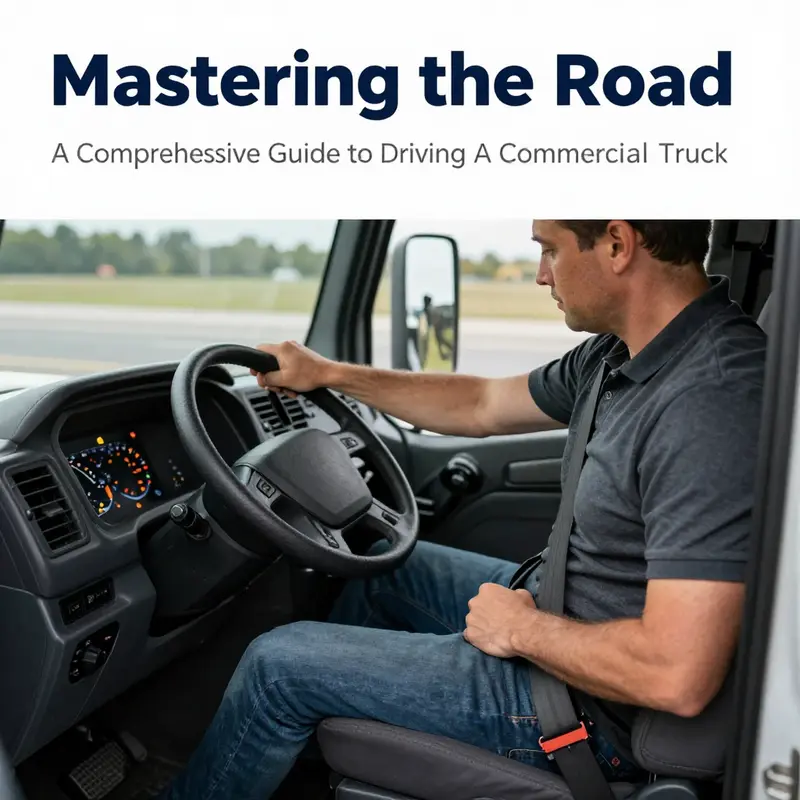
A commercial truck’s starting procedure is more than turning the key. It’s a safety ritual that guards lives and cargo. The moment before you pull away begins long before the first tire rolls. It starts with a methodical, almost ritual glance at the machine you trust with heavy responsibility across long miles. You learn quickly that the road rewards precision and discipline. The pre-drive moment is where a driver chooses to be proactive rather than reactive, and the payoff is measured not only in miles but in the quiet confidence that everything is as it should be.
The pre-trip inspection is the foundation. It is not a checklist to placate regulators, but a living test of readiness. The brakes must respond reliably, both the service brakes and the parking brake. Lights across the system—headlights for night and day, brake lights when slowing, turn signals for every change of direction, hazard lights for stop-and-go moments, and clearance lights where required—must illuminate clearly and function without fail. Tires are the contact patch with the road, so inflation, tread depth, and the absence of cuts or bulges or embedded debris become non-negotiables. The fluids tell a story about the engine’s health and the system that keeps things moving: engine oil at the proper level, coolant within range, transmission fluid sufficient for the load and the anticipated drivetrain demand. Wipers should operate smoothly, with washers available when visibility matters most. Mirrors must be adjusted for a full, unobstructed view, and the windshield must be clear enough to read road signs and spot hazards at a glance.
The inspection extends beyond the cab and into the trailer, and it includes a check of emergency equipment. Fire extinguishers should be present and accessible, a first aid kit should be intact, and triangles or flares should be within reach should a roadside situation demand immediate response. A well-kept inspection log is the quiet partner of every driver who takes safety seriously. The log records defects, actions taken, and the fixes completed or pending before departure. This record creates a traceable safety culture—a way to say to your dispatcher, your fleet, and most importantly to others on the road that safety is the first degree of precision you demand from yourself.
With the walkthrough complete, attention shifts to the starting sequence itself. The vehicle is prepared and the driver is prepared. The parking brake remains engaged while you set the transmission in neutral or park, depending on the kind of truck. In diesel engines, glow plugs play a small but important role; a brief wait allows them to heat the chamber, reducing cold-start strain on the engine. When you finally turn the key or press the starter, the engine should settle into a steady idle. The goal is a gentle start—the engine should idle for a full 30 to 60 seconds. This pause is more than routine—it builds oil pressure and allows the air brake system to pressurize smoothly. You watch the dashboard as the warning lights illuminate briefly and then retreat to a steady glow. If any warning light lingers after the engine settles, that signal asks for attention before movement. The busier the road ahead, the more careful this step becomes, because a faulty gauge or an unaddressed warning can compound into a safety risk once you begin to roll.
The air brake system is a critical partner in the starting ritual. A compact, almost audible moment of confirmation—whether you can hear the compressor building pressure and whether the gauge climbs to a safe threshold—tells you that the braking system is ready to manage a full stop and a safe stop under load. In a takeoff that carries a heavy payload, the air pressure inside the system must reach a reliable point before you release the parking brake and engage the road. The step from idling to movement is not a single beat but a controlled sequence: the clutch or electric engagement, the throttle applied with care, and the sense that the truck will respond to your input in a predictable, linear way. The hand-eye coordination of this stage is the nervous system of the operation, and your senses are tuned to feel the vehicle’s readiness through the seat, the pedals, and the steering wheel. Small cues—a touch of vibration, a subtle shift in its weight, or the way the road sounds at idle—become data points you translate into confidence or caution.
Even as the engine hums and the air pressure stabilizes, the stationary phase offers another chance to refine safety discipline. A quick horn test confirms that your signal to other road users will be heard. All turn signals and brake lights get a test, and the backup alarm, if equipped, should perform its role without objection. Mirrors are checked once more for optimal visibility, a reminder that blind spots in a big truck are not a mere nuisance but a real hazard. The cab interior should be free of clutter, with seatbelts accessible and the seat positioned so you can reach every control with a comfortable bend to the arms and legs. If something does not feel right, the prudent choice is to pause, troubleshoot, and correct before you move. This is not hesitation; it is a deliberate preservation of momentum that keeps you from becoming a statistic on the highway.
As you slide from a stationary posture into the ongoing rhythm of the drive, the world outside your windshield demands ongoing attention. Beginning the journey requires more than precision; it requires awareness. You release the parking brake slowly and smoothly, letting the truck respond through the drivetrain and the mass of the load you carry. You maintain a steady, predictable acceleration that avoids jerky starts that could unsettle cargo or surprise following traffic. In the long run, the discipline of gradual acceleration pays dividends in fuel efficiency and control, particularly when the vehicle is pulling a heavy trailer. The driver’s mind remains tuned to the road ahead and the vehicle beneath, interpreting the space between your ship and the worlds around it—vehicles of varying sizes, bicycles glinting in the sun, pedestrians stepping out from curb to street—through the lens of safety and responsibility.
The safe follow distance becomes a practical rule that governs your pace and planning. In a vehicle of this size, stopping distance is extended, and the margin for error is smaller. The recommended four-second following distance under normal conditions provides a cushion for reaction and braking. In rain, snow, or fog, the gap grows longer. You adjust speed to the conditions and maintain a margin that keeps your truck and its cargo secure. This is not about slowing down for the sake of compliance; it is about preserving life and preserving the freight you are entrusted with. As you navigate curves, you learn to account for off-tracking—the rear wheels tracing a slightly different path from the front wheels. You enter curves wide, allowing the truck to carry more of the turn with its front axle, and you cut inside only after the cab clears the apex. Engine braking becomes an important tool on downgrades, easing wear on service brakes and extending control through gravity and momentum. The art of governing speed, steering, and gear selection is the craft of a driver who understands the weight and momentum of a loaded heavyweight on the move.
Driving a commercial truck is a lifelong sequence of decisions that begins with the simplest act: the pre-drive ritual. It is a discipline of patience and foresight that translates into safer roads and more reliable deliveries. The journey from the starting procedure to the open road is not a stark leap but a continuum of checks, calculations, and adjustments. Each stage—inspection, start, stationary checks, and the build toward a safe departure—feeds into a larger objective: to bring people home safely and to deliver goods with the respect and care that this work demands. The reality of professional trucking is that safety never ends at the gate or the dock. It follows you onto the road and stays with you through each mile. The CDL and the training behind it exist not merely as credentials but as a pledge to uphold standards that protect the operator, the public, and the loads carried so far and wide.
For drivers seeking broader context on regulatory considerations that shape how fleets operate across borders, there is value in exploring cross-border regulatory issues and their impact on daily procedures. For more on that facet of the profession, see Cross-border regulatory issues event. This link offers a window into how policy and compliance influence the practical steps you take every day when preparing to drive a truck across jurisdictions. It reminds us that the art of starting safely is inseparable from the rules that govern when and where those miles count.
Finally, the path to professional proficiency is paved with ongoing training and adherence to established standards. A CDL is not simply a credential earned; it is a sustaining commitment to learn, adapt, and apply best practices in every shift. The steps described here—thorough pre-trip inspection, careful engine start, deliberate safety checks, and disciplined driving habits—are not one-time actions but repeated rituals that define reliability. As you build experience, these routines become intuitive, freeing your mind to focus on the dynamic, always-changing nature of the road ahead. For those who seek a deeper understanding of official protocols and safety guidelines, consult the appropriate regulatory resources. The standards exist to protect you and everyone else on the highway, and they are worth the steady, mindful practice that makes them second nature.
From Pre-Trip Precision to Highway Mastery: An Integrated Approach to Driving a Commercial Truck

The road for a commercial truck driver is more than a path from point A to point B. It is a moving workplace where size, weight, and momentum demand a discipline of precision and anticipation. This chapter weaves together the essential elements that turn raw control into practiced expertise. It starts before the engine turns, continues through the hours on the highway, and ends only when the vehicle is parked with every system quiet and secure. Understanding this continuum helps drivers stay safe, efficient, and compliant, even as conditions shift from sunlit interstates to rain-slick ramps or crowded urban streets. In practice, mastery comes from treating safety not as a checklist but as a rhythm that informs every decision on the road.
The bedrock of safe operation lies in the pre-trip inspection. A thorough walk-around is more than ritual; it is a diagnostic scan of the truck’s health and readiness. Tires are the first line of defense. Proper inflation, tread depth, and the absence of cuts or bulges prevent blowouts and improve stability on uneven pavement. Lights and signals must be clean and functioning; a late brake light or a dim headlight can mean a hazard unseen by the driver and other road users alike. The braking system deserves careful scrutiny—air pressure, lines, hoses, and the leak check all provide crucial feedback about the vehicle’s ability to stop smoothly. Fluids are the lifeblood of dependable performance: oil, coolant, transmission fluid, and windshield washer fluid must be at appropriate levels to protect the engine and the powertrain from heat and wear. Hoses and belts should show no cracks or glazing, and mirrors and the windshield require clear sightlines for every maneuver.
Equally critical is verifying that emergency equipment is present and accessible. A packing list that includes a fire extinguisher and reflective triangles is more than compliance; it is a deliberate safety margin. The pre-trip ritual also anchors the driver’s mental state. Seat position is tuned for reach and control, with the back supported to reduce fatigue during long shifts. The safety belt is fastened before any starter touch, a small act with outsized safety dividends. Then comes the moment of ignition: turning the key to ON to illuminate the dashboard, confirming that warning lights come alive and then fade as the engine settles into a steady idle. This pause—30 to 60 seconds of warm-up—lets the oil lubricate and the air brakes build pressure. It also trains the eye and ear to detect unusual noises, vibrations, or rough idle, which, if noticed, should be investigated before proceeding. Every trip begins with a clear, deliberate reset of attention, a mental agreement that safety will guide every choice.
With the engine running and systems primed, the transition from preparation to execution hinges on how the truck is handled at the wheel. Smooth acceleration matters; abrupt throttle bursts can unsettle the load and increase tire slip. For hill starts, the handbrake serves as a controlled counterweight to prevent rollback while the clutch reaches its biting point and the throttle is gradually applied. This technique keeps the vehicle from lurching forward and preserves the integrity of the air brake system. Shifting, whether automatic or manual, should be smooth and timely. In manual transmissions, the tachometer becomes a compass, guiding upshifts at the onset of peak torque—typically around 1800 to 2200 RPM—so the engine remains within its power band and fuel use stays efficient. Downshifting on descents or approaching stops should be chosen to maintain engine braking and minimize brake fade. The goal is to keep the engine engaged, never coasting in neutral, which robs the driver of controlling torque and can lead to a loss of vehicle direction in a critical moment.
Beyond the mechanical, the driver must relentlessly manage visibility and space. Large trucks carve multiple blind spots; constant mirror checks, shoulder glances, and deliberate lane positioning are necessary for safe lane changes. The rule of thumb for following distance is straightforward but essential: keep at least four seconds behind the vehicle ahead in normal conditions, and extend this in rain, snow, heavy traffic, or when hauling a heavy load. The long stopping distance of a heavy vehicle means a late cue can be costly. In contrast, cornering demands a different kind of patience. Entering curves requires slowing well before the turn, accounting for off-tracking where the rear axle follows a different path than the front. The cab should pass the apex before the trailer, allowing the vehicle to unwind gradually through the turn. These maneuvers culminate in deliberate braking—engine braking on descents to spare the service brakes from heat and wear, while smooth, progressive pressure on the pedal avoids jolts that could shift cargo or unsettle control.
In practice, the driver’s toolkit extends far beyond physical technique. Modern trucks come equipped with safety technologies designed to complement human judgment. Electronic Stability Control helps keep the truck from skidding or tipping when the load shifts unexpectedly or when cornering on a slippery surface. Adaptive Cruise Control can maintain a safe distance from the vehicle ahead, reducing the cognitive load on the driver during long highway stretches. Lane Departure Warning and Forward Collision Warning systems provide timely alerts when attention drifts or when a vehicle slows abruptly ahead. These tools are not crutches; they are partners that reinforce safe decisions when fatigue, distractions, or time pressure threaten performance. They also interact with the larger framework of Commercial Vehicle Operations, where continuous inspection and compliance are integrated with real-time driving decisions. For drivers who want to explore how these technologies fit into broader transport systems, a relevant discussion is available in the literature on intelligent transportation systems and commercial vehicle operations.
Defensive driving dynamics emphasize anticipation, restraint, and situational awareness. The driver who plans for potential hazards—pedestrians at city intersections, cyclists in mixed traffic, or a vehicle suddenly weaving into a blind spot—reduces risk for everyone on the road. The practice of signaling early and consistently, especially at lane changes and turns, communicates intent clearly to others and minimizes the chance of misinterpretation. It also means choosing lane positions that maximize visibility and give room for emergency maneuvers. In heavy traffic or near construction zones, the driver’s restraint can be the deciding factor between a smooth trip and a dangerous confrontation with a fragile, vulnerable traffic environment. The driving rhythm then becomes a dialogue with the road, where speed, spacing, and line selection respond to lane geometry, road grade, and weather.
Another dimension of this craft is fatigue management. Hours of Service regulations are more than a legal constraint; they reflect a physiological reality: fatigue erodes judgment, reaction times, and the ability to monitor multiple cues simultaneously. Planning rests and sleep becomes as important as route selection or cargo securing. A well-rested driver starts with a plan that minimizes unnecessary detours and ensures appropriate breaks, especially before long hauls. When fatigue does creep in, acknowledging it and taking a sanctioned break is safer for the driver and for the public. The aim is to maintain a sustainable rhythm that respects personal limits and professional obligations. The discipline here extends to emergency preparedness as well. Drivers should be ready to respond to tire blowouts, brake failures, or jackknifing with practiced procedures that emphasize safe pulling over, hazard signaling, and securing the vehicle while protecting nearby travelers.
Cargo behavior is another key thread in this fabric of safe operation. Weight distribution and load securing are not merely compliance issues; they influence handling, braking, and stability. An evenly distributed load lowers the risk of instability, while secure fastenings prevent cargo from shifting and altering the vehicle’s center of gravity during braking or cornering. Tie-downs, dunnage, and load bars—used according to carrier guidelines and legal weight limits—become part of the safety vocabulary the driver speaks aloud while preparing the rig and during transit. The interplay of weight, balance, and brake performance informs speed choices, following distance, and even route planning, as mountains, grades, and crosswinds can exaggerate the effects of an imbalanced load.
The road thus demands a holistic approach where preparation, technique, and awareness fuse into a single continuous practice. To connect this chapter’s core ideas to industry currents, consider the broader market dynamics that affect how trips are planned and executed. Industry analyses discuss issues such as capacity, demand, and regulatory landscapes that shape daily decisions. A deeper look into these dynamics can illuminate how drivers can optimize routes, timing, and workload within safety and compliance boundaries. For further reading on how market conditions influence trucking operations, see the in-depth analysis on excess capacity in the trucking market insights. (Excess capacity in the trucking market insights)
As this integrated approach unfolds, it remains clear that the aim is not merely to move goods from one place to another. It is to move them with consistency, predictability, and care for the people who share the road. The true measure of a driver’s craft lies in the quiet confidence that comes from habit and preparation—habits that make the most challenging conditions manageable and the most routine days safe. The intersection of pre-trip discipline, controlled driving technique, judicious use of technology, and fatigue-aware planning forms the backbone of professional road work. It is this intersection that enables a driver to respond to the unexpected with calm, to adjust to changing conditions without compromising safety, and to fulfill the responsibilities inherent in operating a large, powerful machine on public highways. The journey from meticulous pre-trip checks to steady highway execution is a continuous cycle of assessment, action, and review, where every mile reinforces the driver’s competence and every stop reinforces the values of safety and accountability.
For readers seeking a broader theoretical frame that connects driving practice with transport systems and safety technology, the literature on intelligent transportation systems and commercial vehicle operations offers further context. External resource: https://www.sciencedirect.com/topics/engineering/commercial-vehicle-operations
Riding the Road: Adapting to Conditions and Safeguarding Cargo in Commercial Trucking
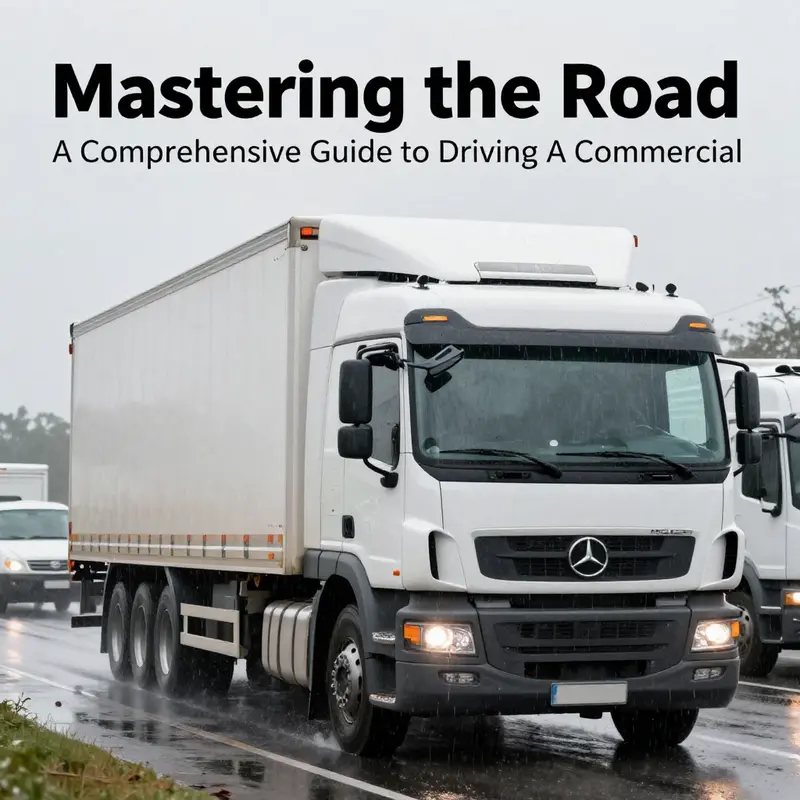
Driving a commercial truck requires disciplined habits, not a single skill. It demands preparation, perception, and precise control along with constant awareness of weather, road surface, and cargo. The vehicle is large and forgiving of neither impulse nor neglect. This chapter threads together core habits that make adaptation possible, showing how small, deliberate decisions add up to safer miles, steadier deliveries, and a lower risk for everyone on the road. The basics of pre trip checks, measured start procedures, and steady technique remain the foundation, while flexibility to adjust speed, route, and the use of safety systems in response to weather and traffic keeps the truck on a safe course.
Preparation begins before dawn. A thorough walk around inspection is the first line of defense when conditions are uncertain. Tires must be inflated to spec, tread deep enough to shed water, and free of cuts or bulges that could fail under load. Lights and signals should illuminate clearly and respond promptly to the driver input, so other road users can anticipate intentions. The air brake system must pressurize reliably, and there should be no leaks in the lines that would undermine stopping power on a slick grade. Fluids such as engine oil, coolant, transmission fluid, and windshield washer need checking to protect against overheating or reduced lubrication during a long shift. Hoses and belts should show no cracks or fraying, and mirrors and the windshield must offer an unobstructed view of the road. The pre trip ritual culminates in a mental handoff: the truck is a working system with predictable limits, and the driver’s job is to keep it operating within those limits as weather and terrain shift.
Starting the engine marks the transition from preparation to action, and it should be treated as a careful, probabilistic moment rather than a quick rush to motion. Sit up to reach pedals and controls with comfortable leverage, buckle the belt, and verify dashboard lights illuminate then fade as the engine runs. Allow the engine to idle for a short period to bring the oil to temperature and the air system to pressure. This is not merely ceremonial; it stabilizes the truck’s response and reduces the chance of surprises when the vehicle is loaded and moving. When the route or the load demands effort from the transmission, the driver’s restraint in not revving the engine immediately after startup compounds into a smoother, more predictable acceleration.
As the road opens, adaptation becomes visible in technique and in the choices that shape the first miles. Smooth acceleration remains essential, especially when a heavy load threatens to tilt the vehicle’s balance if the throttle is applied abruptly. Hills call for a patient hand on the throttle and, when necessary, the use of the handbrake to hold the truck at the biting point until the engine torque eases the truck forward. This method prevents rollback on grades and preserves vehicle control at the outset of a climb. For gear selection, the rule of thumb is to shift before the engine reaches peak torque, typically around 1800 to 2200 rpm, so the engine’s pull remains available without excessive throttle. Downshifting on descent serves a different purpose: engine braking reduces brake wear and guards against fade when long grades demand sustained speed control.
The road is a geometry of risks and opportunities, and the driver must read it with calibrated eyes. Blind spots are not a nuisance; they are a safety calculator. The truck’s size magnifies the consequences of a late or missed observation, so constant mirror checks and shoulder checks before lane changes or turns are indispensable. The driver’s following distance is recalibrated for the truck’s length and mass. In normal conditions, four seconds is a practical minimum, but foul weather, heavy traffic, or a heavy load should expand that buffer. The ability to anticipate a vehicle ahead’s brake point reduces the risk of collision and can prevent panic maneuvers that would destabilize the cargo or the tractor trailer combination. The driver’s mind remains in a defensive posture: plan for the worst while working toward the best outcome.
Weather too is a master of disguise. Rain can double stopping distances; snow can transform pavement into a treacherous sheet; fog blurs sightlines that would otherwise guide the vehicle’s path; and high winds can buffet a long trailer, nudging it toward the lane line or across its lane. The response is twofold: slow down and widen the margin for error. Lights help others see the truck in poor visibility, and the use of appropriate headlights during inclement weather makes the truck conspicuous to pedestrians, cyclists, and other drivers who might misjudge distance. In severe conditions, route and timing shift from an optimistic plan to a conservative one. Forethought about known slick stretches or mountain passes prone to ice can influence the choice of departure time or the total distance of the trip. The adaptation here is not dramatic; it is the steady application of prudent judgment reinforced by a willingness to delay, reroute, or even pause when conditions threaten safety.
The physics of the vehicle also calls for respect and adjustment. Slow, deliberate cornering reduces the opportunity for the rear end to snap out of line, especially when the vehicle’s off tracking takes effect. The payoff is stability: a wide entry into the curve, a careful apex, and a controlled exit that positions the truck for the next segment of highway. In emergencies, the reflex to brake hard must yield to a more measured approach so that the load does not shift. Engine braking and downshifting on long descents are not optional tricks but essential tools for maintaining control while protecting the brake system. The careful orchestration of throttle, clutch, and steering input is the difference between a safe pass through a difficult stretch and a destabilizing move that could lead to a dangerous sequence of events.
Adaptation also means using the truck’s safety technologies as allies rather than crutches. Electronic Logging Devices, collision avoidance systems, lane departure warnings, and adaptive cruise control can remind a driver to maintain speed appropriate to conditions and to keep a safer following distance. These systems are guides that help the driver maintain discipline in real time, but they do not replace the need for constant vigilance and hands-on control. The most effective operators learn to interpret the alarms and corrective actions these tools propose, integrating them with established safe practices—mirror checks, early signaling, consistent speed management, and proactive hazard scanning. Training underpins this synergy. A driver may start with initial certification and basic on-road coaching, but ongoing education through formal resources or certified courses ensures the ability to respond to evolving equipment, road designs, and enforcement expectations. In other words, technology supports judgment; it does not replace it.
Planning remains central when conditions shift. Weather forecasts become part of the trip’s early geometry, shaping the decision to avoid hazardous zones or to modify the route to minimize exposure to risk. The driver’s ability to pair forecast data with real-time road reports, traffic patterns, and the truck’s current performance creates a resilient plan. If a forecast changes, the driver must adapt without panic, communicating intentions to dispatch and adjusting ETA as needed. The driver learns to value safety over speed, recognizing that a minor delay is a small price to pay for avoiding a major accident. This patient, deliberate approach translates into fewer hard braking events, less wear on the drivetrain, and a steadier delivery schedule overall.
The human element of adaptation cannot be overstated. Fatigue erodes reaction time, concentration, and the ability to judge gaps in traffic. Hours of Service rules exist to frame a safer rhythm for driving, rest, and non driving time. A driver who respects these boundaries often avoids the cascade of errors that fatigue invites. Still, policy alone cannot guarantee safety; it must be lived through habits. The pre trip inspection, the managed pace of acceleration and braking, the disciplined use of signals, and the consistent practice of scanning for hazards—these are the habits that accumulate into reliability over thousands of miles. The modern truck may offer clever safety gear, but the driver’s judgment remains the decisive factor in whether gear prevents harm or simply adds a layer of complication.
Technology thus becomes a partner in practice. It can present warnings, slow the vehicle, or steer away from danger, but it requires a driver who understands when to heed the alert and when to rely on seasoned instinct. The ideal operator treats electronic aids as mentors, not crutches. A driver who keeps hands on the wheel, eyes scanning down the road, and ears attentive to changes in road feel demonstrates the best use of both human and machine. In this balanced approach, safety is a daily norm rather than an occasional exception. The job’s demands of short notice weather shifts, traffic density, and the physics of heavy load handling are not conquered by bravado or bravura. They are managed by disciplined habit, continuous learning, and a steady refusal to let momentum outrun caution. Toward that end, the official resource provided by the federal authority offers a comprehensive framework for the broader regulatory and safety landscape.
Final thoughts
Successfully driving a commercial truck is a multifaceted endeavor that requires diligent preparation, thorough understanding, and strategic adaptability. By adhering to rigorous pre-drive protocols, implementing safe starting procedures, mastering essential driving techniques, and adjusting to varying conditions, logistics and construction professionals can ensure not only their safety but also the safety of others on the road. Adapting these practices into daily operations will lead to improved efficiency, reduced risks, and a stronger commitment to road safety in the trucking industry.