
The trucking industry, historically entrenched in traditional gender roles, continues to reflect male-only portrayals in commercials. This entrenched narrative poses significant questions for logistics and freight company owners, procurement teams in construction and mining, and small business owners managing delivery fleets. This article explores the historical context, societal stereotypes, and demographic landscape that have shaped this representation. Moreover, it sheds light on changing trends and marketing strategies, offering insights into how the industry can slowly embrace diversity. Each chapter will illuminate how the persistence of a male-centric image influences current market perceptions, ultimately guiding leaders to navigate a more inclusive future.
Rugged by Design: Tracing the Historical Pull of Male Truck Drivers in Advertising
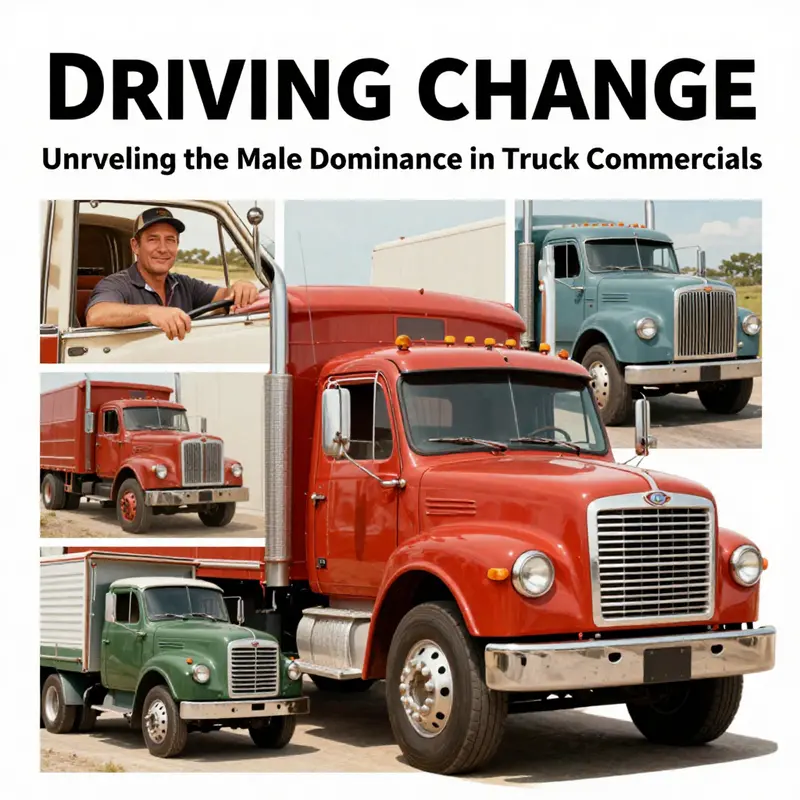
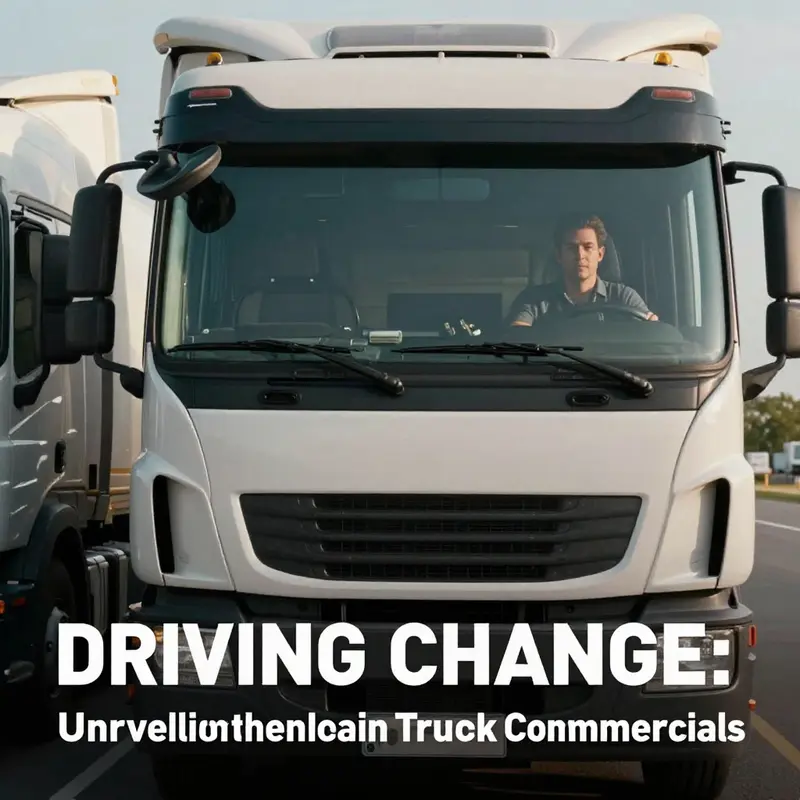
To understand why commercials so often cast men behind the wheel of heavy trucks, we must step back and read the industry as a cultural artifact as well as a market signal. The image of a lone driver who moves through open landscapes with power and purpose is not just a marketing choice; it is a reflection of a long history in which trucking was framed as a masculine domain. For decades, the work of operating large vehicles came to symbolize a suite of traits—self-reliance, endurance, risk tolerance, and an almost frontier-like independence. In the mid-to-late twentieth century, those traits were not only prevalent in the work force but also celebrated in public life. Advertisers, seeking to translate a complex logistical system into something instantly legible, leaned into these associations. The result was a visual shorthand: a strong man behind a truck, navigating vast, often untamed spaces, a figure whose strength seemed to guarantee the vehicle’s capability and the driver’s reliability.
The data from the last two decades of the twentieth and into the twenty-first century reinforces this pattern. Industry demographics were heavily skewed toward men, with male truck drivers comprising well over the majority—figures surrounding 95 percent in the mid-2010s, and occasionally approaching near-total dominance in some segments and timeframes. This imbalance did more than describe a workforce; it shaped the way the public perceived trucking as a vocation and a consumer product category. When a brand sought to communicate durability, resilience, and independence, the simplest, most direct narrative was a man in control of a powerful machine, moving through terrain that testifies to the vehicle’s toughness. In such a frame, the driver became less a person and more a sign: a symbol that the product could revitalize the identity of its owner and align with a broader social myth about work, courage, and the value of self-sufficiency.
Advertising has long thrived on the power of repetition. Visual tropes are efficient, quickly understood, and difficult to contest in the moment of decision. The campaigns that reinforced male-driver imagery did more than sell a vehicle; they perpetuated a sense of who belonged in the driving seat. Open plains, sweeping highways, and remote job sites were not incidental backdrops; they were part of a narrative architecture. The driver’s body and posture—steady, assertive, almost unilateral in purpose—paired with the truck’s perceived power created a cohesive impression: reliability equals masculinity. Such depictions also signaled a particular labor market logic to the audience. If the job was physically demanding and required long hours away from home, the advertising would implicitly invite a specific demographic to identify with the story—consumers who saw themselves as capable, rugged, and self-reliant in a way that felt authentic to the brand’s promise of performance.
The imagery was not merely a mirror of reality; it helped shape market expectations. When a brand built its identity on toughness and endurance, it sent a clear message to viewers about who the product was for and what kind of life it enabled. The open-road aesthetic reinforced the sense that the truck was a tool for mastering distance and danger, a perception that can be comforting to those who view themselves as guardians of efficiency and order in a sprawling logistical network. This is not solely about selling a vehicle; it is about selling a worldview in which work, technology, and personal conduct align in a way that privileges certain bodies and experiences. In that sense, the male-driver trope functioned as both a product cue and a social cue, an emblem of legitimacy for the truck’s role in commerce and everyday life.
As the industry evolved, so did the conversations around diversity and inclusion. There is growing recognition that the truck-driving profession benefits from broader representation and the inclusion of women and other underrepresented groups in advertising. Organizations and campaigns aiming to elevate women in trucking have gained visibility, and this broader discourse has gradually influenced some brands to experiment with more varied casts and storylines. Yet the historical inertia remains strong. Marketers continue to balance the appeal of established tropes with the contemporary push for inclusive storytelling. The continuity of masculine imagery is often justified by marketing logic, anchored in the perception that certain audiences respond more to traditions of ruggedness and independence. This choice persists even as it sits beside occasional glimpses of change—advertisements that feature women drivers, partnerships with diverse communities, or narratives that foreground teamwork and safety over solitary prowess. The tension between tradition and change is not purely aesthetic; it reflects a broader debate about who is imagined as the operator of the truck, who benefits from its promise, and how the industry positions itself to attract a changing labor force.
The debate intersects with safety and regulatory concerns that have long been central to trucking culture. The World Report on Road Traffic Injury Prevention, compiled by M. Peden and colleagues, provides foundational context for understanding risk factors linked to long-haul driving, such as fatigue and the demanding schedules that typify the profession. These risk factors are universal across genders but have historically been studied within systems that prize endurance and stoicism in male-dominated contexts. In advertising terms, the emphasis on resilience can be read as a reflection of a safety culture that prioritizes reliability and predictability under demanding conditions. The driver’s image, therefore, becomes a visual shorthand not just for power, but for disciplined behavior and the capacity to meet rigorous duties. That linkage helps to explain why the representation of male drivers endured longer than other professional archetypes: the public lens associated with masculinity aligned neatly with what the industry needed in terms of trust, continuity, and a sense of unbreakable performance.
Critiques from media scholars have punctured the veneer of inevitability surrounding these images. An influential discussion in the public sphere, including coverage by national media outlets, questioned the normalization of a particular look and voice as the default for truck advertising. The argument is not simply about political correctness; it concerns how visual storytelling shapes perceptions of who belongs in the workforce and who is responsible for keeping supply chains moving. The critique underscores how powerful a single recurring figure can be in a cultural sense. When audiences repeatedly see the same profile behind the wheel, it narrows the perceived range of possibilities for who can drive, operate, or design these machines. The effect is subtle but enduring: it subtly disciplines expectations, sets norms, and, over time, influences decisions about who will enter the profession and who will be comfortable endorsing the product.
Yet change is not just a matter of policy or aspiration. It emerges through real-world labor dynamics, shifts in consumer attitudes, and the advertising industry’s ongoing experiments with storytelling. The push toward more inclusive portrayals is often incremental and cautious, aimed at preserving the credibility and emotional resonance that the traditional imagery has built while expanding the narrative to reflect a broader audience. In practical terms, brands that diversify casting and narratives aim to broaden appeal without alienating core customers who still respond to the proven cues of power, durability, and autonomy. These shifts also acknowledge a practical truth: the trucking ecosystem is becoming more diverse in practice, even if that diversity is slower to appear in the most visible marketing moments. For readers curious about how industry labor trends are evolving in real time, see the discussion of the 2024 trucking job recovery and stabilization signals, which offers a lens on current labor dynamics in the field. [https://truckplusllc.com/2024-trucking-job-recovery-stabilization-signals-hope/]
Across these strands, the chapter of advertising history remains a study in how far public narratives travel before they bend. The open road imagery of the early campaigns created a lasting memory: a sturdy, solitary figure steering a machine that could conquer vast distances. That memory is still present in many contemporary ads, even as the industry welcomes more diverse voices and faces. The inertia of visual culture means that the old script does not vanish overnight; it persists as a reference point for both creators and viewers who carry forward the association of trucking with masculine, rugged competence. At the same time, the cultural tide is turning. As more women enter the cab and the backroom of the industry—design, maintenance, and logistics planning—the advertising ecosystem is compelled to broaden its vocabulary. The result will likely be hybrid stories that honor the lineage of the tradition while inviting a wider audience to see themselves in the truck’s mission. This is not a simple or linear transformation; it is a nuanced reweaving of identity, capability, and aspiration that respects history while inviting change.
For readers who want to explore critiques and debates about this visual regime, the NPR discussion on how the “rock-solid manly men” in truck commercials became a cultural shorthand offers a provocative entry point. It invites us to consider how enduring visuals encode values and how those values shift with the evolving makeup of the workforce and audience. External readers can engage with that critique here: https://www.npr.org/2013/12/26/258704755/how-did-the-rock-solid-manly-men-in-truck-commercials/.
The Male Wheelframe: Stereotypes, Ads, and the Quiet Reproduction of Trucking’s Gender Gap
In the realm of advertising, the image of the driver steering a heavy truck has become a universal shorthand for toughness, reliability, and control. This is not an incidental choice but a carefully rehearsed visual language that taps into long standing cultural associations between masculinity and mechanical expertise. The image remains so enduring that it can feel natural to viewers even as voices call for a more inclusive portrayal of who drives the highway and who powers the logistics system behind it. The chapter begins by unpacking why, in a field as image driven as advertising, a certain body type and a certain style of behavior can appear to dominate the frame. The root causes sit at the intersection of history, industry structure, and the marketing calculus that governs how messages are understood almost instantly by target audiences.
Historically, trucking has been a male dominated enterprise. The data from the mid 2010s show a workforce where men accounted for well over ninety five percent of truck drivers, with some reports climbing toward near total male representation. Those numbers are not just a census of who sits behind the wheel; they are a mirror held up to society’s expectations about who belongs there, who can handle the responsibility of moving goods across long distances, and who possesses the physical stamina required to endure nights on the road. Advertisers, who must communicate quickly and succinctly, look to the strongest, most unambiguous cues. In a visual language that prizes immediacy, the driver’s gender becomes a cue about who is competent to handle the vehicle, read the road, and respond under pressure. It is not simply that men drive trucks; it is that the image aligns with a cultural shorthand that brands the act of driving as an expression of rugged power and technical mastery. This alignment makes the trope durable, even as the world around it evolves.
The sturdiness of this trope is reinforced by the way advertisers talk about risk, responsibility, and the reliability associated with truck travel. A commercial can convey a complex bundle of values in a single shot: a driver checks the gauges, steadies the wheel, and rolls forward with the momentum of a promise kept. The visibility of masculine traits—grit, stoicism, decisive action—appears to reduce ambiguity about what the product is for and who it is for. In those moments, the audience does not need a long explanation; the frame communicates. The payoff is immediate: the brand stands for safety, dependability, and capability in conditions that demand both power and restraint. In a market where advertisers constantly test how to stand out, these elements offer a reliable anchor, a fixed reference point that helps a message break through a crowded landscape. This is not to say the messaging is perfectly uniform; it is to acknowledge the psychological power of established cues and the efficiency with which they explain a product’s value proposition to viewers who may hold varied levels of prior knowledge about trucking.
Yet the persistence of male dominated depictions creates a self reinforcing loop. When women appear rarely in the driver’s seat, younger audiences absorb a subtle but persistent message: this is not a space where they are meant to see themselves. The absence of diversity can shape perceptions of what counts as a legitimate career in trucking, and it can influence the choices of people considering the profession. The effect extends beyond the ads themselves. It seeps into workplace culture, training pathways, and recruitment strategies. If the pipeline looks uniformly male, recruitment messaging often mirrors that reality, reinforcing a cycle in which only certain stories and voices are invited to participate in the industry. In this sense, advertising is not merely reflecting the industry; it is helping to construct its social reality. The broader social implications come into sharper relief when one considers how quickly images in media can shape the imagination of younger viewers. The result is not just a preference for a particular look on the highway but a broader statement about who belongs behind the wheel of the economy’s lifelines.
Nevertheless, the industry is not static. The chapter’s core argument acknowledges both the endurance of tradition and the slow direction of change. There is growing recognition, from industry associations to advocacy groups, that a more diverse portrayal can expand the talent pool and broaden public understanding of trucking as a viable path for a wider range of people. Campaigns that highlight women in trucking, and even stories that foreground shared responsibilities, are becoming more visible. These shifts are not trivial; they reflect a broader societal push toward equity in the workforce across sectors that rely on technical skill and logistical acumen. The conversation in policy circles and professional associations emphasizes not only fairness but also the practical benefits of widening the recruitment base. A trucking ecosystem that invites more voices into the driver’s seat—along with more inclusive narratives about what a driver can look like—stands to gain in terms of safety, innovation, and resilience. The tension between tradition and transformation is thus less a war to overturn a stereotype than a negotiation about how to represent reality more faithfully while preserving core brand values.
In examining why stereotypes take hold, it is imperative to connect these advertising choices to the broader ecosystem in which trucking operates. The trucking labor supply is affected by workforce dynamics, wage structures, and the far reaching implications of regulatory regimes, all of which shape who comes to the job and how they are perceived when they arrive. In this sense, the persistent image of the male driver can be understood as a shorthand for a publicly visible, historically consistent field. However, the same dynamics that produced this image also produce opportunities to rethink it. If a company wants to reach a broader audience including women, nonbinary drivers, and younger entrants it must tell a broader story about what driving is, what skills are needed, and what the job can offer in terms of career development, safety culture, and work life balance. This reframe requires deliberate choices—from cast selection to narrative arcs—that foreground competence and care across a wider spectrum of drivers. The industry is learning that the value of trucking is not solely in the machine or the miles it covers, but in the people who steward the journey.
A pragmatic path forward involves recognizing the structural reasons for the current portrayals while actively pursuing inclusive storytelling that remains credible to audiences. The temptation to cling to familiar frames is strong, especially in a market that prizes the security of a proven signal. Yet the risks of stagnation—missing new talent pools, losing relevance among diverse audiences, and not fully reflecting the reality of modern fleets—start to outweigh the benefits of sticking with a comfortable long standing trope. Practical steps include diversifying the casting of drivers, weaving stories that show collaboration across genders, and highlighting the career progression available within trucking. By broadening the visual vocabulary and the character profiles that populate ads, advertisers can help reshape public perceptions over time. The impact would be not only a more accurate portrayal of who drives trucks but also an expanded sense of who can aspire to occupy the wheel, a change that could ripple across schools, community programs, and recruitment drives.
From an industry dynamics perspective, there is growing interest in examining how market conditions influence messaging strategies. For instance, shifts in fleet composition, demand cycles, and the overall health of the industry can affect how brands position themselves to attract drivers and customers alike. In some analyses, publishers point to excess capacity as an indicator of how the market is evolving and how messaging might adapt accordingly to attract a broader talent pool. In the chapter’s broader argument, advertisers should view gender representation not as a concession to political correctness but as a strategic alignment with a changing workforce and a changing public. When a campaign speaks to a wider range of drivers and audiences, it can improve brand credibility, broaden the talent pipeline, and foster a more inclusive industry identity. The underlying insight is simple: the frame can stay legible and compelling while expanding to include voices that have too often been out of frame.
To close the loop, the ongoing discussion about gender and trucking in advertising is not merely about optics. It is about the social and professional implications of who is seen at the wheel and how those images shape possibility. The persistence of male centric frames signals deep cultural patterns, yet those patterns are not immutable. The path toward a more inclusive portrayal is gradual, but it is feasible with intentional leadership, cross sector collaboration, and a willingness to interrogate how advertising choices either limit or expand the realm of what is imaginable for future generations of drivers. As this chapter suggests, breaking the frame requires more than adding a few women to a commercial; it requires a commitment to rethinking narratives, revaluing diverse skill sets, and actively shaping the stories that accompany the roadways. That reimagining is not just about fairness; it is about enabling trucking to reflect the full spectrum of talent that modern economies rely on to move forward.
For readers seeking a closer look at how market dynamics relate to trucking workforce strategies and advertising narratives, one lens is worth pursuing: the broader industry discourse on capacity and talent as part of a shifting market. That discussion is available in industry analyses such as excess capacity in the trucking market insights, which offers context for how fleet decisions interact with recruitment and branding. This perspective helps explain why some executives worry less about the gender of the driver and more about the pool of capable operators available to meet demand, all while recognizing that representation matters for the stories a industry tells about itself and the people who keep goods moving every day.
From Stereotypes to Shift: Why Trucking Ads Still Feature Men at the Wheel and What It Means for the Industry’s Future
In the long arc of industrial imagery, trucks have carried a particular set of stories about power, reliability, and rugged independence. Advertisers have tapped into those stories with a familiar rhythm: a driver who embodies the perception of the job itself. The result is a consistent visual cue that has become almost a shorthand for the industry in the public eye. Yet beneath this recurring image lies a more complex, evolving truth about who actually drives trucks and how quickly those realities are entering the color and shape of marketing. The question, then, is not merely why commercials still show men behind the wheel, but what the persistence of that image reveals about the industry, its workforce, and the marketing playbook that governs public perception. If the trucking world is to meet the coming decades’ challenges—most notably a looming driver shortage—the advertising lens will need to widen, not merely to reflect a changing workforce, but to help cultivate it.
The historical backdrop matters. The trucking sector has long been a male-dominated space, a dynamic reflected in workforce statistics and, more visibly, in the frames of the ads that reach millions of viewers. Data from the mid-to-late twenty-teens showed men composing the overwhelming majority of commercial truck drivers—figures often cited at well over 95 percent, with some sources noting an almost complete male predominance. That disparity is not just a statistic; it is a cultural signal that advertisers have learned to read as a proxy for audience expectations, for road realities, and for the kinds of stories that resonate. When a campaign is designed to project competence, safety, stability, and grit, drawing on a familiar, male-coded image can feel like quick, intuitive branding. The consequence is that commercials have mirrored the industry’s existing demographics rather than outpacing them. The effect is a self-reinforcing loop: ads reflect the status quo, and the status quo informs the next round of ads.
Yet the industry picture has been shifting, even if the changes are incremental. Women are not disappearing from trucking; they have become more visible and vocal in the profession, challenging the gender norms that once seemed natural to the highway. Within the broader American workforce, women constitute roughly half of all workers, but in trucking they remain a minority—about 7 percent of all commercial truck drivers according to a study conducted by the American Trucking Associations. This gap is not merely about access; it encompasses perceptions of the job as a “masculine” vocation, the demanding nature of long-haul schedules, and the social and logistical barriers that can deter sustained participation. Recruitment and retention pipelines have faced headwinds, including limited flexible scheduling options, persistent stereotypes, and insufficient targeted support for women entering or advancing in the field. The numbers matter, but the story behind the numbers matters even more. If the industry intends to recruit more women to address the anticipated shortage, the marketing and messaging around trucking must evolve in tandem with the workforce.
Industry initiatives signal a recognition that change is both possible and necessary. Across major carriers and advocacy groups, efforts have grown to attract, support, and retain female drivers, even as the overall percentages lag behind parity. These efforts include targeted recruitment campaigns, enhanced safety features, mentorship programs, and policies aimed at improving home time and job flexibility. While these programs have shown early promise, their impact has been gradual. The road to broader transformation requires not only more women who can drive trucks but a shift in how the industry and its marketing talk about the job. Representation in advertising is not merely a matter of fairness; it is a strategic lever for workforce growth. When potential drivers, particularly women, see themselves reflected in ads, the industry sends a message about belonging and opportunity. In turn, ads that mirror a more diverse workforce can help normalize trucking as a viable career for a broader cross-section of society, eroding the stigma that has historically constrained participation.
The media side of the equation remains a critical piece of the puzzle. Advertising often lags behind workforce realities, a lag that is visible in the ongoing recourse to male drivers as the default visual. The persistence of that visual is, to some extent, a function of tradition and audience targeting. Marketers aim to evoke certain emotions—trust, toughness, reliability—through archetypes that have proven effective in past campaigns. There is also a practical dimension: ads must work within a crowded media environment, and de-risking campaigns by using familiar, proven imagery can be a pragmatic choice. Yet the realities on the ground are changing. The trucking industry faces a shortage projected to create as many as 1.1 million vacancies by 2030. In this context, continuing to rely on a single gendered image may sacrifice an opportunity to widen the talent pool and to signal to potential drivers that the profession is open to all. The economic and social incentives for diversification are compelling. If marketing can help reframe trucking as a profession that embraces family life, professional growth, and technical skill across a broader demographic, it will be better aligned with the path the industry must take to stay resilient.
Beyond recruitment, inclusive representation in advertising also has social value. Advertising that features women and other underrepresented groups can break down stereotypes, inspire new generations, and signal to potential entrants that the road they see ahead belongs to them as well. The messaging matters. It shapes the narrative of who belongs in a vocation and who is capable of mastering its challenges. In trucking, where fatigue, safety, and complex logistics are central themes, the narratives circulating in ads can either reinforce outdated myths or help reframe the job as a modern, dynamic career with satisfying roles in safety, technology, and operations. The World Report on Road Traffic Injury Prevention, with its emphasis on driver fatigue and risk factors, provides a cautionary reminder that the discussion of who drives is inseparable from the drivers’ safety and well-being. The report, foundational in its analysis of risk, reminds us that the task of driving—whether male or female—demands rigorous training, supportive infrastructure, and sustained attention to health and fatigue. The gendered storytelling in ads should not obscure the universal responsibility to promote safe practices, quality training, and a living wage for those who keep commerce moving.
If the industry wants to steward a sustainable future, the marketing function must evolve in lockstep with workforce development. This means more than simply updating stock photos or running a few progressive campaigns. It involves integrating authentic voices from the evolving workforce into the creative process, ensuring the depiction of drivers—regardless of gender—embodies the skills, dedication, and daily realities of the job. When ads begin to include women as visible operators of the most demanding segments of trucking, viewers see possibility rather than exception. This visibility matters, particularly for younger audiences evaluating career options. A broader range of faces behind the wheel can help reduce misperceptions about the job and attract people who bring different perspectives and skills to the table. It is a practical investment in the industry’s future, one that respects the realities of workforce demographics while acknowledging the urgency of diversification in response to labor market pressures.
In this light, marketing strategy becomes a form of workforce strategy. The discipline of advertising—creative development, audience segmentation, media planning—needs to reflect the shifting demographics of the industry and the communities it serves. That can mean partnering with training programs, highlighting flexible scheduling and safety innovations, and telling authentic stories about women who drive long-haul routes, regional deliveries, or warehouse-to-truck transfers. It also means resisting the impulse to rely on a single, comforting stereotype that may have served past branding but now risks constraining growth. The industry’s future cannot hinge on a single image of the driver when the road ahead requires more varied talent and new kinds of expertise in logistics, data analytics, and technology-enabled safety. The advertising canvases of today must be prepared to reflect those evolving competencies and to invite a broader audience to participate in the work.
A practical note on pathways and incentives helps connect the discussion to concrete outcomes. Recruitment, retention, and progression programs tailored to women in trucking are not about token gestures; they are about structural improvements—mentorship, safe and supportive routes, and employer commitment to family-friendly policies. The Canadian context, for example, demonstrates how industry-led HR initiatives can illuminate the practical benefits of targeted support. For a concise overview of how such programs can translate into real advantages for employers and drivers alike, see Trucking HR Canada placement program benefits. This is one illustration of how industry partnerships can accelerate meaningful change while sustaining business competitiveness. In parallel, the broader industry must continue to report, share, and learn from these experiences so that successful approaches scale rather than remain isolated pockets of progress.
As the road ahead unfolds, the question is not whether commercials will change, but how fast and in what direction. The evidence points to a gradual broadening of the driver profile in trucking, driven by workforce shifts and the urgent needs of an aging, physically demanding field. Advertising will follow, not lead, the pace of change unless marketers take deliberate steps to foreground inclusivity and authenticity. The long-term payoff is twofold: a more robust talent pipeline and a public image that reflects the reality of a modern, diverse workforce. In doing so, the industry can honor the people who keep the wheels turning while expanding the community that sees trucking as a viable, rewarding career for anyone with the skill and the drive to take the wheel. For readers seeking a quick reference to broader workforce demographics, see the American Trucking Associations’ Driver Demographics report as a foundational resource. American Trucking Associations – Driver Demographics.
null
null
null
null
Final thoughts
In summary, this exploration of why commercials predominantly feature men driving trucks highlights the complex interplay of historical context, societal norms, industry demographics, evolving trends, and marketing strategies at play. As the trucking industry moves toward greater inclusivity, it is crucial for logistics and freight company owners, procurement teams, and small business operators to recognize the significance of diverse representations. A deeper understanding of these dynamics can empower industry leaders to challenge stereotypes, utilize inclusive marketing practices, and recruit diverse talent, ultimately benefiting their organizations and the industry at large.