
Understanding the value of commercial trucks is essential for logistics companies, construction enterprises, and small business owners alike. The valuation process is multifaceted and requires a thorough approach that takes into account all relevant factors. This guide will outline the critical methods for assessing the worth of commercial trucks, focusing on official documentation, online valuation tools, and professional appraisals. Each chapter will detail how to leverage these resources effectively to ensure you make informed decisions that benefit your investment. Let’s dive into how you can ascertain the value of your commercial vehicle and support your business needs.
Document-Driven Valuation: Using Official Records to Pinpoint a Commercial Truck’s Worth
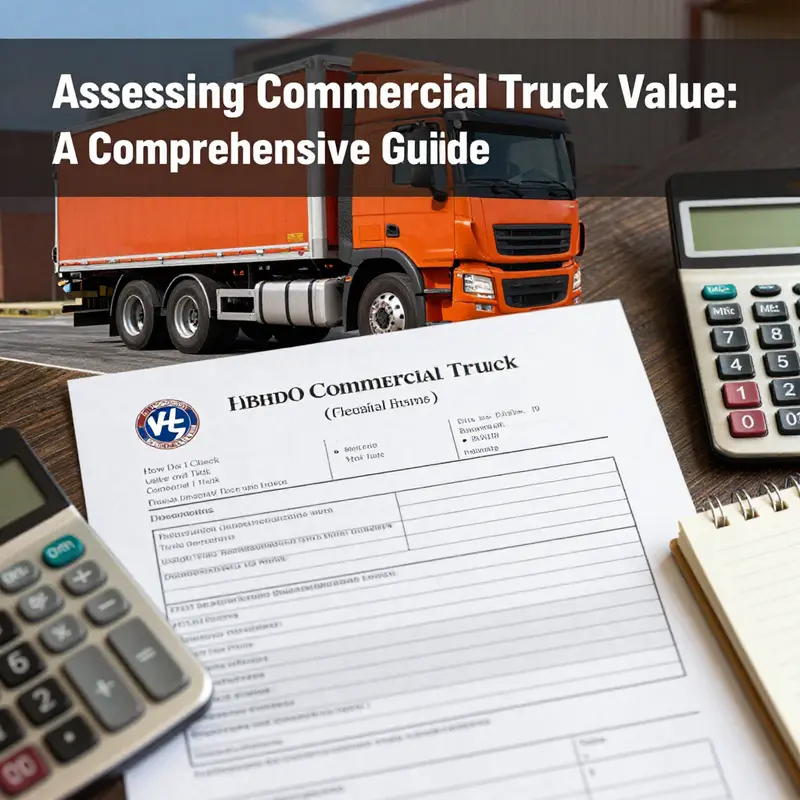
Document-Driven Valuation: Using Official Records to Pinpoint a Commercial Truck’s Worth
When you want a reliable value for a commercial truck, the documents that travel with the vehicle are your strongest allies. Official records remove guesswork. They anchor price estimates to verifiable facts: VIN, model year, registered GVWR, service history, and title status. A systematic review of these papers transforms scattered data into a defensible, market-ready figure. Below, the narrative walks through how to gather, interpret, and combine official documentation with authoritative data sources so the value you arrive at reflects both the truck’s condition and current market forces.
Begin by assembling every piece of paperwork the truck has. The registration book and vehicle title are the core legal documents. The title shows ownership and flags liens or salvage designations. The registration lists weight class and may show commercial endorsements or restrictions. Together they confirm identity and legal standing; without them, any valuation remains incomplete. A Vehicle Identification Number recorded in both documents gives you the single key to unlock histories, recalls, and configuration specifics. Cross-check the VIN on the paperwork with the VIN on the chassis and major components. Discrepancies signal risk and will lower the truck’s value until resolved.
Maintenance and service records are the next most influential papers. A full, date-stamped service history that details oil changes, major repairs, transmission overhauls, and mileage checks communicates responsible ownership. Buyers and lenders read these files as a substitute for visual proof of condition. Frequent, documented factory or dealer maintenance elevates perceived reliability. Conversely, gaps or vague service notes invite discounts because unknowns equate to cost risk. If receipts show recent major expenses—new tires, rebuilt transmission, or replaced engine components—these can be added back into the valuation as documented investments that reduce near-term maintenance risk for the buyer.
Odometer readings deserve special emphasis. Commercial trucks are valued heavily by miles and engine hours. Official odometer entries on inspection forms, service invoices, and registration renewals corroborate the truck’s usage. When mileage records are consistent across documents, you can rely on standard depreciation curves. If records show abrupt jumps or rollback suspicion, the truck’s marketability and legal standing suffer. For trucks with engine hour meters, treat engine hours with equal weight. Some vocational trucks accumulate less highway miles but more hours; appraising them by mileage alone produces misleading results.
Use the papers to identify specifications that materially affect price. Gross Vehicle Weight Rating (GVWR), axle configurations, engine model and horsepower, transmission type, fuel system, and installed equipment (like refrigeration units, lift gates, or specialized bodies) each change the valuation. Official documentation often contains codes or printed specifications that you can decode to determine factory options and installed equipment. Note any after-market additions and collect invoices for them. Built-in features generally command higher resale prices; after-market equipment will either add value or reduce it depending on quality and integration.
Once you have the documents organized, convert their facts into market inputs. Start with the VIN and model-year details and consult an industry valuation reference to establish a baseline value for that configuration. Authoritative valuation guides update regularly and provide wholesale and retail benchmarks. Use the registered configuration and mileage to select the correct comparables within the guide. If the truck has specialized equipment, use the guide’s adjustment factors or line-item additions to reflect those features. A clean title with full documentation will usually place the truck near guide values. A title branded for salvage, rebuilt status, or with outstanding liens will force a steeper reduction.
Beyond printed guides, registered transaction data from recognized commercial marketplaces is invaluable. These platforms capture real sales and auction results. Where possible, match your truck’s VIN, year, and equipment with recent auction outcomes. Auction prices often set the floor for wholesale values and reveal how quickly similar trucks are moving. If trucks of the same build and mileage are selling briskly, market demand is healthy and retail prices may be higher than guide estimates. If sales are slow or selling prices consistently under guide values, reduce your asking price accordingly.
Government and third-party databases expand the context for your truck’s worth. Vehicle registration databases and vehicle-in-operation (VIO) data show market penetration and average lifespans for specific models. These datasets reveal whether similar trucks are commonly retired early or kept in long-term service, both of which affect perceived risk. If a model shows early attrition because of known defects, adjust value downward. If a model is widely used and parts are plentiful, factor that into a higher valuation due to lower expected lifecycle costs.
A formal appraisal, produced by a certified commercial vehicle appraiser, is often the final step when you require a defensible value for lending, insurance, or legal purposes. Appraisers follow standardized methodologies and produce written reports that cite the documentation you collected. They will physically inspect the truck, test key systems, and reconcile their findings with the paperwork. Their reports will typically reference industry guides and recent auction data to justify adjustments. For specialized units—refrigerated bodies, dump beds, or electric powertrains—an appraiser’s expertise becomes especially important because these trucks have unique depreciation characteristics and parts markets.
Integration is where the documentation and market data converge into a single value. Start with the guide-derived baseline for the truck’s make, model, year, and mileage. Adjust that figure using documented maintenance history: add value for verified recent major systems work and subtract for unresolved mechanical issues listed in repair orders. Modify further using title information: a clean title supports the baseline, while branded titles reduce it significantly. Use auction and marketplace transaction data to refine the number for current demand in your geographic market. If local listings show similar trucks priced notably higher or lower, reconcile your figure to reflect regional supply and demand.
Document any assumptions you make. If you adjust value upward because the records show a recent engine rebuild, attach copies of the invoices. If you reduce value due to suspected frame damage noted in an inspection report, include the inspector’s notes and photos. A valuation built from documented facts and explicit adjustments is persuasive. It helps when negotiating with buyers, lenders, or insurers because each change is supported by a paper trail they can verify.
Practical pitfalls appear when paperwork is incomplete or inconsistent. Missing service records do not automatically reduce a truck’s value by a fixed percentage, but they increase perceived risk. In that case, supplement the paperwork with a recent comprehensive inspection report from a reputable shop. Such an inspection, paired with the VIN-based history you can pull from public records, narrows uncertainty and lets you justify a price closer to guide values. If titles show liens, resolve or clearly disclose them. Liened vehicles complicate transfers and often deter buyers, so clearing liens before sale typically preserves more value.
Another common issue is non-factory modifications or undocumented replacements. If the truck has a non-standard body or major engine changes, collect any available invoices and documentation of installation. Appraisers and buyers want to see evidence that modifications were done professionally and meet applicable safety and emissions rules. Lack of documentation for major alterations reduces value because it raises questions about the quality and legality of the work.
Document-driven valuation also guides depreciation strategy when you plan to trade or sell. If records demonstrate steady, factory-recommended maintenance, consider selling privately or through dealers who value service history. If documentation is thin or the title is branded, wholesale auction channels may be the realistic exit. The paperwork you present determines which market segment will accept the truck and at what price.
Finally, remain aware that market trends can shift faster than paperwork reflects. While documentation anchors a truck’s condition and legal status, supply-demand dynamics alter pricing swiftly. Use the documents to establish the truck’s baseline worth and then apply current market signals—recent sales, inventory levels, and seasonal demand—to finalize a realistic asking price. For a deeper look at how order flow and market capacity influence truck values, review analysis on trailer orders and truckload margins that ties production dynamics back to resale pricing.
External resource: For authoritative baseline values and regular updates to guide pricing, consult NADA Guides at https://www.nadaguides.com.
Internal link: For context on how manufacturing and order dynamics affect market pricing, see trailer orders impact truckload margins (https://truckplusllc.com/trailer-orders-impact-truckload-margins/).
By letting the paperwork lead and using it as the basis for market adjustments, you move from speculative pricing to a defensible, transparent valuation. Official documentation reduces negotiation friction and speeds transactions. Whether you are preparing a sale, securing financing, or seeking an appraisal for insurance, a document-driven approach produces a clear, reproducible value that stands up to scrutiny.
Chapter 2: Valuing a Commercial Truck Online—A Practical Guide to VIN Histories, Condition, and Market Data
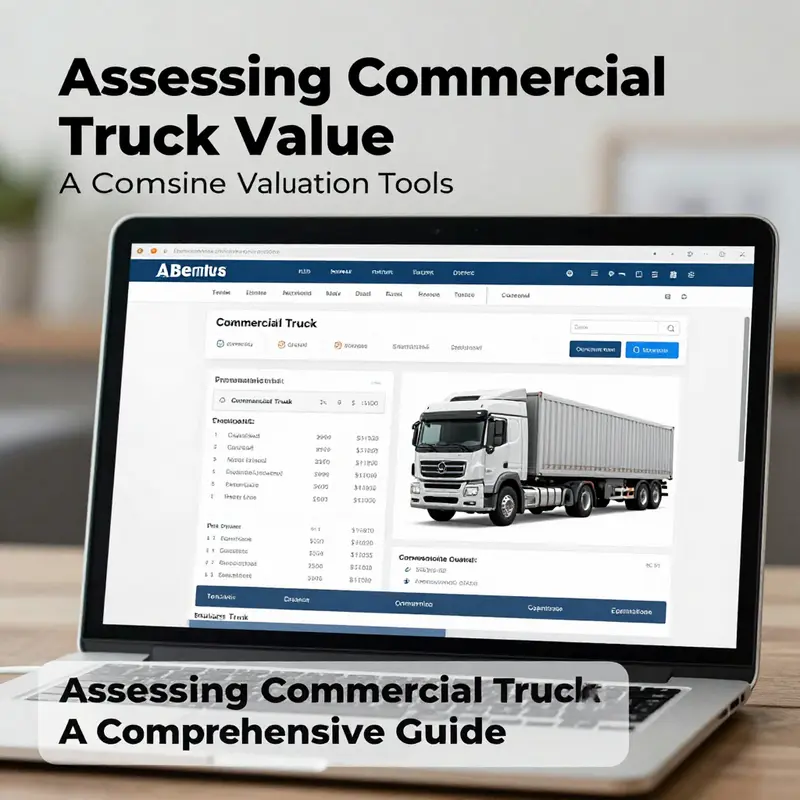
Valuing a commercial truck through online tools sits at the intersection of precise data and real-world market dynamics. It is not a purely virtual exercise, but a methodical process that begins with solid documentation and ends with an informed, defendable figure. When you approach online valuation, you are essentially stitching together three threads: a trusted vehicle history, current market signals, and a transparent record of the unit’s condition and features. The better you weave those threads, the more accurate and defensible your value will be when you sit down with a buyer, a lender, or an insurer. In practice, online valuation is most effective when you treat it as a starting point rather than a final verdict, a way to anchor price discussion while you confirm details through history checks and physical verification.
Central to the online valuation process is the Vehicle Identification Number, the gateway to the truck’s past and its present condition. The VIN is more than a string of characters; it is a key that unlocks critical information about ownership, title status, accident history, odometer integrity, and salvage events. A reliable VIN history report can reveal discrepancies that dramatically shift value. For this reason, you should pull a history report from a reputable source at the outset and use that report to temper or corroborate the figures generated by online valuation tools. As you cross-check, you learn how the past informs the present: a truck that has a clean odometer, a clean title, and a steady maintenance cadence often commands a higher trust premium in the market, all else being equal. The National Institute for Vehicle History and Protection, commonly accessed through trusted VIN data providers, emphasizes that a transparent history reduces risk for buyers and lenders alike. In practice, you will input the VIN into an online platform to fetch history data, then reconcile those findings with the valuation estimates that consider current demand, regional pricing, and the truck’s configuration.
After establishing a reliable history, you turn to the data you input for the valuation. Online tools for commercial vehicles collect a mix of basic identifying details and condition indicators. You will likely be prompted to confirm the year, make, model, and trim, as well as the truck’s mileage and location. You will also classify the vehicle’s condition and specify mechanical attributes such as transmission type, fuel type, and whether it features special equipment or aftermarket add-ons. It is tempting to rely on generic condition labels offered by platforms—Excellent, Good, Fair, Poor—but those labels can be subjective. A disciplined approach uses an objective checklist you apply as you inspect the truck and review maintenance records. Look for evidence of consistent service, documented repairs, and verifiable mileage in logs. Clean service history and well-kept records can lift a valuation because they lower perceived risk for buyers and lenders. In practical terms, this means you should reconcile the tool’s condition rating with your own inspection results, noting any gaps in maintenance history or documentation that could affect the price you might ultimately achieve.
Beyond the basics of year, model, and miles, online valuation for commercial trucks hinges on the truck’s role and body configuration. A box truck, a dump truck, a refrigerated unit, or a tractor equipped for specialized hauling carries different market demand and pricing benchmarks. The same chassis with different bodies can land in distinct segments of the market, and the demand for one configuration may outpace another depending on regional freight patterns, seasonality, and regulatory shifts. Because buyers cluster around particular capabilities—payload, reliability in demanding routes, or specialty equipment—the valuation will reflect those preferences. This is where a careful, market-aware perspective matters: you are not simply pricing a generic vehicle, but pricing a unit positioned within a specialized segment where supply, uptime requirements, and residual value interact in nuanced ways. In other words, an online valuation is most effective when it recognizes the body type, the typical usage (local delivery versus long-haul or regional operations), and the anticipated maintenance and uptime costs associated with that configuration.
As the process unfolds, you learn that a reliable valuation rests on multiple data streams, and those streams must be reconciled. An industry-certified professional who understands commercial fleets has long emphasized that selling with transparent, detailed condition reports speeds the closing process and reduces friction with buyers and lenders. The takeaway is clear: your valuation is strongest when you couple an honest, comprehensive history with a disciplined assessment of current condition and a realistic read of how the vehicle fits market demand. When you apply this mindset to online valuation, you begin to see how a methodical approach can yield a credible figure that stands up under scrutiny.
In practice, you will typically compare several valuation outputs to triangulate a realistic market price. Rather than relying on a single platform’s estimate, you examine how different sources respond to the same input set and how regional variation affects pricing. This multi-source approach helps offset the idiosyncrasies of any one tool and provides a more robust baseline for negotiations. The rationale is straightforward: online valuation platforms differ in their weighting of factors such as mileage, age, known issues, and regional demand signals. If two platforms agree within a reasonable band, you gain confidence; if they diverge, you investigate the reasons—perhaps one tool factors in a recent maintenance event more heavily, or another discounts for higher mileage due to regional market softness. In this way, online valuation becomes a disciplined, evidence-based exercise rather than a naked price guess.
To bring these threads together, you should also compare your online results with real-world sale data in your area. Local listings for similar trucks—matched for year, mileage, body type, and equipment—offer practical insight into what buyers are currently willing to pay. Observing how quickly similar units sell, and at what price points, helps anchor your expectations and calibrate the online estimates. This is not about chasing random listings but about creating a credible baseline anchored in realistic market activity. Regional conditions matter: a truck priced aggressively in a high-demand corridor may still fetch a premium if it aligns with the right buyers, whereas the same unit in a softer market may require additional incentives or a more careful presentation. When you read the market this way, you understand that price is not a fixed trait of the truck alone but a reflection of timing, location, configuration, and documented history.
The literature and expert guidance available to buyers and sellers of commercial trucks consistently stress the importance of a transparent, data-driven approach. An experienced appraiser notes that sellers who provide detailed, transparent condition reports tend to close deals more quickly, because buyers feel confident they understand what they are purchasing and what they may need to invest to keep the vehicle in service. This observation underscores the practical value of preparing a clean history, a solid maintenance record, and a careful, objective inspection narrative to accompany any online valuation. It also reinforces why you should not rely on a single number produced by an online calculator as the final word. Instead, use the figure as a negotiation anchor—a credible starting point informed by VIN history, maintenance documentation, body configuration, and current market signals.
For the actual process of pulling the data, you begin with the VIN and a trusted history source. The VIN provides the linkage to ownership records, title status, and past events that could alter value. A clean history reduces risk and supports a stronger valuation, while any red flags—such as odometer concerns, a salvage title, or confirmed accidents—require adjustments to the estimate. In the online valuation workflow, you will then enter the vehicle’s specification details: year, model family, precise body type, current mileage, transmission, fuel type, and any notable equipment like lift gates, refrigerated units, or other specialty features. Each input informs the tool how to weigh the unit against broader market data. The field for condition invites you to reflect not only on cosmetic wear but also on mechanical readiness. While some platforms provide an auto-grade score, your own inspection and the maintenance history should anchor that assessment. A well-maintained engine and transmission, with documented service, can meaningfully elevate value in the eyes of buyers who prioritize uptime and predictable maintenance costs.
In this context, it is helpful to recognize the limits of online tools. They are powerful for speed and breadth, but they do not capture every nuance of a truck’s history or the exact state of its mechanical systems at a given moment. A high-mileage unit with a spotless maintenance log may still require an investment to address aging components. Conversely, a unit with higher mileage but exceptional maintenance and recent upgrades can be surprisingly valuable in a market that prizes reliability and low downtime. This dynamic is where professional appraisal remains relevant, especially for high-value or highly specialized trucks. An appraiser can combine the inputs from online tools with on-site inspections, diagnostic checks, and a lender-friendly appraisal framework to deliver a formal valuation that carries weight in negotiations, financing, and insurance.
As you near the end of the online-valuation phase, remember the value is not a fixed number etched in stone. It is a representative range determined by data, market conditions, and buyer expectations. The best practice is to present a complete package: the VIN history report, the maintenance logs, the inspection notes, and the multiple valuation outputs you reviewed. This transparency helps you set a realistic asking price or negotiate with confidence. It also supports you when evaluating offers, allowing you to weigh not just the headline price but the overall deal structure, including any contingencies, warranties, or service agreements that might influence perceived value.
To gain perspective on how broader market dynamics shape valuations, consider the insights found in industry discussions about the trailer and heavy-truck markets. These discussions often highlight how shifts in supply, demand, and operational costs influence pricing for different configurations and usages. For readers seeking deeper context on market dynamics, the following resource offers a broader view of how industry conditions can impact valuations across different truck segments. Trailer Market Crisis: Manufacturers Adapt Strategies.
In sum, online valuation tools equip you with a solid, data-informed starting point. They empower you to quantify a truck’s value quickly, benchmark it against market norms, and surface potential red flags that warrant closer scrutiny. The most robust approach combines VIN-based history checks, objective condition verification, and multiple pricing perspectives from reputable online platforms—while acknowledging regional nuances and the specific role of the truck in its operational context. When you pair these elements with practical market data from local listings and, when appropriate, a professional appraisal, you arrive at a price that is not only competitive but also defendable to lenders, insurers, and buyers alike. The value you establish becomes the centerpiece of a thoughtful negotiation, framed by transparency, accuracy, and a clear understanding of how the vehicle sits within current market realities.
External resource for history checks: For a reputable VIN history check, consult NICB’s VIN history reports, which provide free access to vehicle history data through the VIN. https://www.nicb.org/
Valuation in Motion: How Professional Appraisals and Market Trends Reveal a Commercial Truck’s True Value
Valuing a commercial truck is rarely a matter of plugging numbers into a calculator. It is a disciplined effort that blends the judgment of seasoned professionals with the pulse of a shifting marketplace. The value you can reasonably expect to fetch for a truck on a given day sits at the intersection of its mechanical reality, its documented history, and the broader rhythms that move fleets and freight. In this chapter, we will trace how a thorough appraisal coupled with current market trends can yield a grounded, actionable valuation. The aim is not to produce a single, fixed number, but to build a defensible range that reflects both the asset’s intrinsic condition and the conditions surrounding current demand, pricing, and anticipations for the road ahead.
A professional appraisal begins with a clear, factual portrait of the vehicle itself. The appraiser will gather the basics—age, make, model, configuration, and especially the VIN, which serves as the ledger of the truck’s identity. The age and configuration matter because the market places different premiums on different chassis layouts, engine types, and specialized equipment. A dry van will have a different depreciation curve from a refrigerated unit or a dump truck, reflecting how drivers and operators value the specific use-case. The appraiser will also verify compliance with current safety standards and regulations. Trucks that meet newer safety and emissions requirements tend to hold their value better, not just because of the equipment itself but because buyers assume lower risk and fewer immediate capital outlays to bring the vehicle up to standard.
Mileage sits at the heart of the valuation conversation. It is a proxy for wear and tear, yet it is rarely the sole determinant. A well-maintained truck with higher mileage can outperform a lower-mileage unit if the maintenance records are robust and the mechanical state is sound. In this respect, the maintenance history becomes a vital supporting document. A complete ledger of scheduled services, repairs, and replacements signals to a prospective buyer that the truck has been cared for. Conversely, gaps in service records invite questions about reliability and potential hidden issues. The appraiser will scrutinize the engine and transmission, as these components drive long-term reliability and operating costs. A sound engine and transmission can lift a vehicle’s value, even when miles are moderate or high, because they promise fewer expensive surprises down the line. This is especially true for specialty configurations where equipment like lift gates, refrigeration units, or other advanced fittings come with their own maintenance demands.
Beyond the hardware, the truck’s history sheet—title, liens, and incident records—has a quiet but powerful influence on value. A clean title with no liens or encumbrances makes the asset easier to finance or insure, a factor lenders and buyers consider when forming offers. If there are outstanding debts or a cloud on ownership, the perceived risk grows, and so can the premium demanded by buyers to offset that risk. The appraisal process also pays careful attention to compliance with safety regulations. A vehicle that has kept current with inspections, weight limits, and other regulatory expectations reduces the likelihood of costly operational interruptions for a new owner. In the eyes of lenders, insurers, and fleet managers, compliance translates into lower risk and, all else equal, a higher value.
In the narrative of value, market dynamics are the living backdrop. The appraiser is immediately aware that freight demand rises and falls with seasons, capacity, and macroeconomic conditions. When freight volumes are robust, buyers and fleets scramble to secure equipment, and values tend to hold up well or rise modestly. During slow periods, depreciation can accelerate as buyers negotiate harder and sellers adjust price expectations. Fuel prices, although external to the truck itself, echo through the cost of operation. A vehicle noted for fuel efficiency or compatible with emerging fuel strategies may command a premium in a market where operating costs increasingly steer procurement decisions. Likewise, technology evolves swiftly. Features that improve safety, efficiency, or data visibility can tilt valuations as buyers weigh total cost of ownership against upfront price. Even small shifts—such as predictive maintenance capabilities or telematics that enable precise uptime metrics—can add value by reducing downtime and extending life-cycle profitability.
To translate these generalities into numbers, the appraisal process leans on market data. This means looking at recent, regionally relevant transactions and understanding how similar units have traded in the open market, whether through dealers, auctions, or private sales. Local market conditions often diverge from national trends. A truck with identical specifications may fetch a higher price in a tight regional market where demand outpaces supply, while the same unit might sit unsold longer in an area with abundant inventory. The appraiser will, therefore, triangulate across several sources to construct a price anchor. One element is the availability of current market reports that track actual sale prices rather than advertised asks. These reports sift through what buyers have recently paid, in effect measuring the market’s true willingness to pay. The insight is practical: two trucks with the same mileage and equipment can have markedly different values if one resides in a region with stronger demand or if a nearby fleet is expanding quickly.
The professional perspective on market signals goes deeper than simple price comparisons. It requires an understanding of how broader cycles influence depreciation curves and the timing of sales. Freight demand, for example, expands and contracts with freight volumes and capacity. If a surge in demand accompanies a shortage of suitable rigs, values may temporarily appreciate, and a well-maintained, ready-to-operate truck can command a premium. Conversely, when capacity floods the market and freight volumes thin, prices can soften as buyers become choosier and leverage becomes more favorable to sellers only if the condition and equipment justify it. In this environment, the appraiser will model expected depreciation with a careful eye on the trajectory of freight demand, often consulting industry analyses and forward-looking indicators.
Fuel prices also echo through the valuation conversation, though in a nuanced way. The direct effect is on operating economics: fleets care more about fuel efficiency and the cost of operation. A truck with a proven efficiency profile or a drivetrain that reduces fuel burn can maintain a higher resale value, especially if fuel costs are volatile. The appraisal does not stop at the wheel and engine; it also considers the weight of the truck, the GVWR specification, and how the vehicle’s configuration aligns with the prevailing load profiles in the region. This alignment matters because buyers are assessing how quickly the unit can be deployed to generate revenue without extensive down-time or retrofits.
Technology and safety trends form another axis of value. The market increasingly rewards technologies that improve uptime, route optimization, driver safety, and regulatory compliance. Features such as advanced braking systems, collision mitigation, enhanced visibility, and data-collection capabilities can differentiate a unit in a crowded marketplace. The appraiser will separate cosmetic finish from systemic improvements, ensuring the valuation reflects durable, operable benefits rather than temporary aesthetics. Equipment that reduces downtime—whether through quicker maintenance, diagnostics visibility, or remote monitoring—has a higher likelihood of commanding a premium when compared to a similar unit with less sophisticated support systems.
To round out the valuation, the appraiser also considers the broader configuration and its relevance to current logistics demands. The specific type of truck matters; a dry van has a different resale dynamic than a refrigerated unit or a specialized hauler. The market’s current priorities—such as the demand for temperature-controlled capacity or for units capable of handling hazardous materials—can tilt the value. The appraiser weighs these configuration-specific factors against the broader condition indicators. For example, if a dry van shows exceptional wear but the refrigeration unit is new and under warranty, the net effect on value may still be positive due to the reduced expected maintenance burden on the critical components.
All these strands—the truck’s age, mileage, service history, safety compliance, title clarity, and the macro signals from freight demand, fuel prices, and technology adoption—are woven together in a comprehensive appraisal report. The result is a defensible valuation range rather than a single figure. This range equips lenders, insurers, and fleet managers with the necessary context to make informed decisions about financing, acquisition, or retirement of a vehicle. It is essential to recognize that the appraisal is not a one-off exercise. It is dynamic and should be revisited as market conditions evolve, as the vehicle passes milestones in its lifecycle, or as changes in ownership or usage occur. The process is, in essence, a dialogue between the asset and its environment, conducted with disciplined data, careful observation, and professional judgment.
In the practical workflow of assessing value, the professional appraisal is often complemented by market trend analyses drawn from authoritative sources within the industry. For reliable trend data, professionals routinely consult aggregations of fleet performance, equipment depreciation rates, and regional demand signals that reflect the health of the market. These sources help to situate the truck within the larger economy of trucking, where cycles can be long and variable. The value picture becomes more complete when appraisers cross-check their findings against recent market materials, which reveal how much weight buyers currently place on certain assets, how quickly similar units are moving, and what factors buyers rate as decisive in price negotiations. While the data sources may differ in presentation, the underlying principle remains consistent: valuation is a synthesis of tangible asset factors and the intangible, often volatile, perceptions of the market.
In practice, the valuation conversation often moves from the abstract to the actionable through a carefully structured process. First, collect a robust packet of documentation: the title and registration, the VIN, maintenance invoices, service receipts, and any records of recent repairs or improvements. This documentation establishes the baseline confidence a buyer or lender needs to proceed. Then, assemble a snapshot of the current market by reviewing regional listings for comparable trucks, noting the parity of specifications such as age, mileage, engine type, cab type, and any attached equipment. It is critical to identify whether the market is discerning about certain features, such as upfit packages or safety systems, and to adjust expectations accordingly. The next step is to consult professional appraisal services, which bring standardized evaluation frameworks to the table. A certified appraiser will weigh the vehicle’s condition, production year, mileage, maintenance history, and compliance status against a spectrum of market indicators. They may also provide scenario analyses that consider best-case, base-case, and worst-case pricing, allowing owners to plan for potential fluctuations in demand and price.
At some point in this process, the practical realities of liquidity and timing surface. Owners often confront questions about how quickly they need to transact and what price compromises they are willing to accept to close a deal. A professionally prepared appraisal, grounded in current market data, delivers a credibility boost for negotiations. It helps buyers and lenders calibrate their expectations and reduces the likelihood of protracted bargaining. A seller can present a well-documented appraisal as part of a transparent disclosure package, signaling that the transaction is grounded in fact rather than impressions. In turn, a buyer gains confidence in the asset’s value, understanding that the price being asked reflects both the intrinsic condition and the market context.
While the specifics of any single valuation will vary, the overarching principle remains: combine a rigorous, document-driven assessment of the truck’s physical state with a careful interpretation of market signals. It is this integration that yields a valuation that is both accurate and durable. In this sense, valuation becomes less about chasing a number and more about understanding a price in motion—the moment when the asset’s potential aligns with the market’s willingness to pay. This approach helps ensure that every stakeholder—owner, lender, insurer, and operator—grasps the rationale behind the suggested value and can act with clarity when negotiating, financing, or planning the vehicle’s next chapter in service.
To illustrate how market dynamics can influence the valuation landscape, consider the way industry data shapes expectations. Authority sources within the trucking sector publish trend analyses that summarize fleet performance and regional demand fluctuations. These insights help explain shifts in depreciation curves and inform forecasts of future values. They do not dictate price, but they provide a lens through which to view price. The reliability of these sources rests on their methodological transparency and their receipt of timely, representative data. When combined with a well-documented vehicle history, appointment of a qualified appraiser, and a careful, location-aware market scan, market trend analysis elevates the valuation from an estimate to a defendable, actionable figure.
A final but essential note concerns the professional community and the standards that govern appraisal practice. Certified commercial vehicle appraisers operate within a framework that emphasizes objectivity, reproducibility, and consistency. They understand that a vehicle’s value is not merely a function of age or mileage but of a holistic assessment that encompasses safety compliance, maintenance discipline, equipment configuration, and the dynamic demands of the freight market. This disciplined approach aligns with the needs of lenders, who seek reliable, defensible valuations to underpin financing decisions; with insurers, who need accurate risk assessments; and with fleet managers, who must plan for maintenance, replacement, and capital budgeting in the face of fluctuating demand.
In sum, valuing a commercial truck through professional appraisal and market trend analysis is a disciplined, multi-faceted exercise. It requires detailed documentation, a thoughtful appraisal that weighs age, mileage, maintenance history, and safety compliance, and a vigilant reading of market signals—freight demand, fuel economics, and technology adoption. It also benefits from an awareness of configuration-specific dynamics and regional price variations. The result is a valuation that reflects both the asset’s durable value and the market’s current appetite, enabling informed decisions about acquisition, disposition, or financing. As you navigate these processes, remember that value is not an isolated number but a story told by data, history, and the living rhythm of the trucking economy. To appreciate this rhythm more deeply, writers and practitioners often examine related market signals. For example, the interdependence between trailer orders and truckload margins can illuminate how upstream procurement decisions influence downstream asset valuations. Trailer Orders Impact Truckload Margins This linkage helps explain why a change in equipment demand can ripple through the value of the capital invested in a tractor, and why a robust appraisal must always be read in the context of the broader equipment market.
For readers seeking a broader framework beyond immediate market signals, professional guidance remains indispensable. A skilled appraiser’s report, supported by current market data, provides the foundation for sound financial planning. It supports decisions about whether to refurbish, retire, or replace a unit in a timely manner. It also informs conversations with lenders and insurers about terms, coverage, and risk. The chain of insight from asset to valuation to decision is only as strong as the data and judgment that bind it together. In that sense, the valuation journey mirrors the truck’s own journey down the road: it begins with a precise assessment of conditions and ends with a forward-looking plan that aligns asset value with operational strategy.
For deeper context on industry trends and data that shape these valuations, consult the broader body of work produced by the sector’s leading associations and research bodies. These sources synthesize fleet performance, regulatory developments, and regional demand into actionable guidance for owners and decision-makers. In short, the value of a commercial truck is what buyers are willing to pay today, tempered by the projected costs and risks of ownership tomorrow. The more rigorously you document your asset and the more accurately you read the market, the more confident you can be in the price you set or accept. The road to precise valuation is long, but with method, transparency, and access to reliable data, it becomes navigable and practical for real-world decisions. For broader industry context, consult the American Trucking Associations’ data and analysis resources. https://ata.org/research-and-data
Final thoughts
Ultimately, knowing the value of your commercial truck is essential for making informed business decisions, whether you’re purchasing, selling, or financing. By utilizing official documentation, leveraging online valuation tools, and considering professional appraisals, you can ensure a comprehensive understanding of your vehicle’s worth in the context of current market trends. These methods collectively empower you to navigate the complexities of commercial truck valuations and drive your business towards greater financial success.