
Understanding who customizes body work on commercial trucks is essential for logistics and freight company owners, procurement teams in construction and mining enterprises, and small business owners with delivery fleets. In a sector where operational efficiency can dictate success, having the right resources for truck customization becomes a necessity. This article delves into the specialized in-house departments at renowned manufacturers, dedicated customization companies that offer tailored solutions, and independent repair shops that play pivotal roles in this industry. As the chapters unfold, readers will gain insights into the expertise, capabilities, and value these entities bring, ensuring their fleets meet the diverse demands of modern-day operations.
Behind the Skin: Mapping the Network that Customizes Body Work on Commercial Trucks
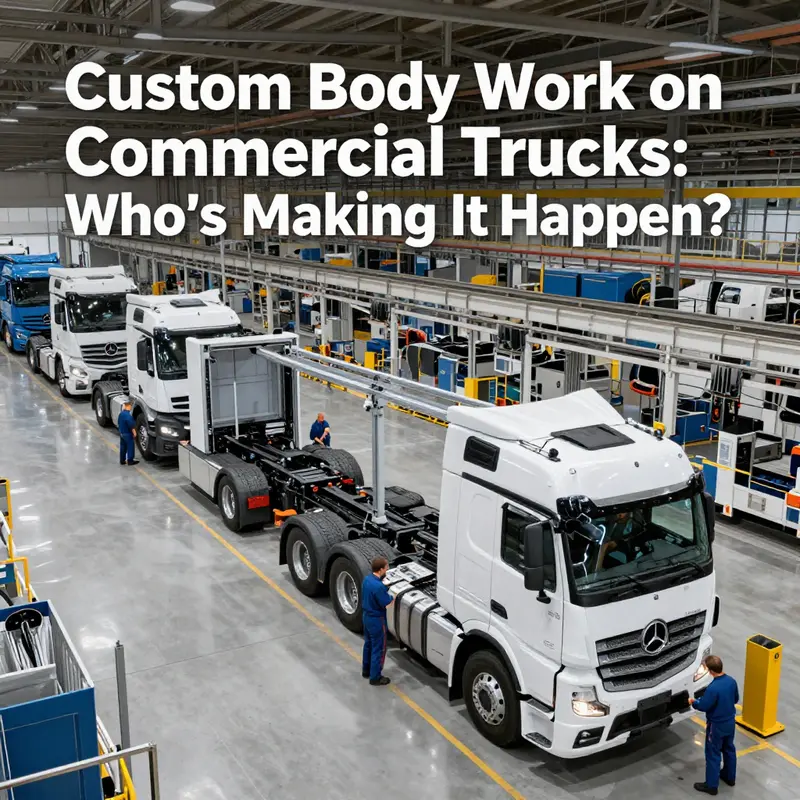
When a customer asks for a truck body that looks and acts unlike the standard factory model, the inquiry begins long before the paint is dry or the hydraulic lines are tucked away. Custom body work on commercial trucks is less a single-handed craft and more a coordinated orchestration carried out by a network of players. The core question—who does this work?—has a surprisingly nuanced answer. It is not confined to a single department within a fleet or limited to one type of shop. Instead, the responsibility is distributed across specialized in-house teams at some manufacturers, dedicated aftermarket specialists, original equipment manufacturers (OEMs) with custom build programs, and independent repair and fabrication shops scattered across the globe. Each player brings a distinct capability to the table, all aimed at turning a standard chassis into a purpose-built tool for a specific environment or operation. The result is a spectrum of customization that ranges from cosmetic refinements and minor reinforcements to sweeping transformations of the truck’s frame, cab, powertrain integration, and even the articulation of the bed itself through advanced hydraulic systems. In this expansive ecosystem, the decision about who performs the work hinges on factors like scale, timing, regulatory compliance, and the practical realities of operating in tight industrial spaces or demanding field conditions.
Part of the clarity in this landscape comes from recognizing that a significant share of complex body work is not done inside fleets but by inside-outside collaborations that blend engineering discipline with hands-on fabrication. When a fleet dictates a particular configuration—say a side-dump bed designed to offload material laterally in a narrow alley or an extended cab with specialized seating and controls—the solution is rarely a single technician under a hood. It is a design-to-delivery process that may involve a manufacturer’s in-house customization unit, a private shop with a specific hydraulic capability, and a chassis integrator who ensures the modified vehicle still meets weight, braking, and stability standards. This separation of duties helps fleets manage risk, control cost, and maintain uptime while still obtaining a vehicle that precisely fits their workflow.
In-house departments within large manufacturers present one end of this spectrum. These are teams embedded in the factory or corporate network that operate with the closest possible link to engineering standards, safety protocols, and supply chain timing. They have the authority to perform substantial changes that would be impractical for non-OEM shops. In practice, this means configurations as varied as different axle counts and positions, frame length alterations, wheelbase adjustments, and cab specifications that tailor the truck to a field or fleet operation with a unique ergonomic or visibility requirement. The authority to approve these modifications, the access to factory-grade tooling, and the ability to validate new geometry against crash and performance standards are what set in-house customization apart. Yet even within the OEM ecosystem, the pace and scope of work can be constrained by the intent to preserve warranty integrity, maintain interoperability with a standardized parts library, and align with production schedules. The result is a measured approach to transformation that serves the customer’s mission while preserving the vehicle’s long-term reliability and serviceability.
Beyond the walls of the factory, dedicated aftermarket customization companies form the most visible portion of the customization ecosystem. These outfits specialize in truck bodies and chassis modifications, and many operate with a singular focus on turning a stock platform into a specialized tool for a particular industry. The scale of their operations allows them to deploy a broader range of techniques, from advanced welding and frame rework to bespoke panel construction and the integration of custom hydraulic systems. In these shops, a role akin to a “Body Engineer” may exist—whether in name or function—designed to blend vehicle development with manufacturing know-how. The work often begins with a rigorous scoping phase: a detailed assessment of loads, cycle life, mounted equipment, and the operator’s workflow. From there, the team drafts a precise geometry and develops a fabrication plan that addresses both form and function. The emphasis is on durability, because the modified truck must tolerate repeated cycles of heavy use, exposure to the elements, and, in some cases, extreme temperatures or off-road conditions. Fabrication teams must also consider issues like corrosion resistance, fatigue life, and ease of maintenance, because a custom body that saves time in one operation should not create constant downtime elsewhere in the fleet.
While private customization shops handle many bespoke builds, OEM departments also offer tailored paths for fleets that want the security of a factory-approved process blended with the flexibility of a custom configuration. In these cases, the OEM leverages its existing design language, supply chain relationships, and testing capabilities to provide a streamlined route from concept to completion. The advantage for customers is not only the assurance of compatibility and warranty alignment but also access to trained technicians who understand the interaction between the chassis, drive components, and the modified body. This coordination minimizes the risk that a modification might-unintentionally—alter braking balance, adhesion, or steering geometry in a way that could compromise safety or regulatory compliance. The trade-off, of course, is that OEM-driven customization often involves longer lead times and carefully managed sequencing, because the program must fit within the broader production calendar and the company’s capacity to certify alterations.
A further, equally important strand in the story is the role of independent repair and fabrication shops. While not always the first option for a pounds-and-pounds-per-hour level of customization, these shops bring essential flexibility. They operate across geographies, serving regional markets with varying regulatory requirements and facility capabilities. Their strengths lie in hands-on expertise—welding, structural corrections, panel replacement, and the repair of damaged or aged bodies. For fleets that require rapid turnaround or modifications for older chassis that have entered a second career, independent shops fill a critical niche. They often serve as the bridge between the initial design concept and the practical, on-the-ground reality of a field deployment. Moreover, the human dimension of these outfits—craftspeople who have honed their skills across decades of projects—brings a depth of tacit knowledge about how different materials behave, how joints must be reinforced, and how crews will interact with the modified body in the day-to-day grind of operations.
The quantifiable heart of any custom build, however, is the technology that makes a body do more than merely sit on a frame. When a configuration hinges on a hydraulic side-dump system, the design challenges extend beyond the obvious requirement to lift and tilt. The lateral discharge capability must be integrated with the truck’s hydraulic power, stabilizing logic, and chassis dynamics so that the motion is smooth, predictable, and safe across the entire range of operating speeds and road conditions. Side-dump configurations are particularly valuable in constrained environments where backing up into position is difficult or impossible. They reduce the need to reposition the vehicle for unloading, which not only speeds up operations but also minimizes exposure to traffic or obstacles in tight sites. The engineering discipline here is to ensure that the hydraulic actuation does not compromise payload integrity, nor does it introduce dynamic moments that could destabilize the vehicle during tilting or unloading. The design must account for load distribution, hydraulic cycle times, and response to operator input, all while maintaining a safe clearance envelope around the bed and the sides of the vehicle.
In this regard, the industry has codified a set of stringent technical standards that guide every decision from material selection to process validation. Standards shape how the bed, frame, and mounting points are reinforced, how hydraulic circuits are sized and routed, and how the entire system remains accessible to service technicians. Across regions, regulators emphasize safe operation, stable load handling, and predictable behavior under all weather and road conditions. This is why the question of who performs the work is rarely semantic; it is a determinant of risk, cost, compliance, and performance. The teams must harmonize with the vehicle’s existing architecture, whether the modification touches the bed structure, the cab interface, or the electrical and hydraulic control networks. The end result is a truck that can meet a mission profile with a level of reliability that operations depend on while staying within the bounds of applicable regulations and industry best practices.
Despite the variety of players, a common thread runs through every successful customization program: the emphasis on simulation, validation, and quality control. In many cases, the path from concept to concrete product involves multiple checkpoints where engineers, fabricators, and operators review interface points, load paths, and serviceability. This ensures that a modified vehicle does not sacrifice durability for agility, nor does it become a burden due to maintenance complexity. A modern customization program proceeds much like an industrial design project: define the operational objective, translate it into a set of measurable requirements, test virtual models, build physical prototypes if needed, and then validate the final configuration under real-world conditions. Only then is it ready for production-scale rollout, with a plan that supports spare parts, field service, and ongoing upgrades if the operator’s needs evolve.
The story of who does the work is also a story of accessibility and knowledge transfer. Fleet operators increasingly seek clarity about the regulatory implications of modifications, including emissions and safety standards. This is not a passive concern but a driving factor in choosing a partner. It motivates fleets to favor collaborations with entities that speak the same language as their operations—partners that can articulate the tradeoffs between performance, cost, lead time, and compliance. In this context, an internal link in the industry dialogue has emerged: OEMs seek clarity in emissions regulations as they chart their customization pathways. This dynamic reflects a broader shift toward transparent, standards-aligned customization processes that can be traced from the initial concept to the first test drive.
The practical implications of these choices show up in the field as well. When a side-dump system is specified, it changes more than the bed geometry; it influences the vehicle’s footprint, weight distribution, and handling characteristics. The operator who will use the truck to perform repetitive unloading in confined spaces benefits from reduced maneuvering requirements, while the maintenance team must contend with more complex hydraulic circuits and potential wear points. Therefore, the selection of the right partner becomes a balancing act. The fleet may prioritize speed to deployment, in which case an independent shop with a proven record of quick turnarounds could be ideal. If the priority is long-term reliability and warranty coverage, steering the project through an OEM or an OEM-adjacent customization program may offer the more robust solution. If the operation demands scale—ramping up a fleet with dozens or hundreds of specialist bodies—the relationship with a dedicated customization company or even a factory-based program could deliver the most consistent results.
In all cases, the underlying discipline remains the same: a methodical, collaborative process that respects the physics of the machine and the realities of the operator. This is not a case of simply bolting extra panels onto a chassis or swapping components. It is a careful negotiation among weight, strength, accessibility, and serviceability; among the expectations of the customer; and among the legal constraints that govern heavy-duty vehicles. The people who perform these operations — designers who translate operational requirements into robust geometry, fabricators who implement those designs with precision, and technicians who bring the system into service and keep it performing over years of harsh duty — form a continuum. They are the hands that give a standard cab and frame the resilience to stand up to the demands of a busy workday.
As we look at the broader picture, we can see two enduring truths. First, there is no single path to a successful body modification. The choice between in-house, dedicated aftermarket, OEM custom programs, and independent shops depends on the mission, the timeline, and the operator’s risk tolerance. Second, the most effective customizations do not treat the body as a separate add-on. They treat the body as an integrated system with the chassis, the hydraulics, and the operator’s daily workflows. In that sense, body work is really about enabling the work itself—enhancing how a truck carries loads, how it unloads them, and how it interacts with the spaces in which it operates.
The discussion above anchors the chapter in a practical reality: while the configurations vary, the objective remains consistent. The fleet operator seeks a vehicle that performs the job with maximum efficiency, minimal downtime, and a safety profile that stands up under inspection. The customization partner seeks to deliver on that promise, with a clear plan for design, fabrication, validation, and ongoing support. The result is a vehicle that is more than the sum of its parts—one that embodies the operator’s daily rhythms, the industry’s safety standards, and the engineering discipline that binds them together. For readers who want a deeper dive into the specifics of side-dump technology and its applications, a technical background can be found in authoritative discussions of side-dump truck design and applications. For more technical background on side-dump systems, see Britannica’s Side dump truck design and applications. Additionally, industry perspectives on how OEMs are navigating emissions and regulatory clarity can be explored through industry-focused discussions such as those that address emissions regulations and cross-border regulatory issues, which reflect the evolving environment in which customization work is planned and executed. To learn more about how these regulatory conversations are shaping decisions in practice, readers can visit OEMs seek clarity in emissions regulations.
In sum, the work of customizing commercial truck bodies is a distributed, expertise-rich enterprise. It blends factory discipline with craft tradition and market responsiveness. It is an ecosystem where in-house departments, independent shops, OEM programs, and aftermarket specialists each play a critical part. When a customer’s need is beyond the scope of what a standard production line can deliver, it is precisely this ecosystem that comes together to create a vehicle that is as much a bespoke tool as a standard machine. The result is a category of vehicles that can be precisely tuned to the most demanding environments, while still maintaining the safety, reliability, and regulatory compliance that keep fleets moving forward. For those who work on the front lines of logistics, construction, mining, and municipal services, this blended approach to customization is not merely a capability—it is a practical way to turn a chassis into a mission-driven instrument of operation.
For readers seeking a broader understanding of the hydraulic and structural principles that underpin side-dump configurations, a technical grounding can be found in the general literature on side-dump truck design and applications, such as its discussion in Britannica. This chapter has aimed to illuminate the human and organizational dimensions of where, how, and by whom the body work is delivered, while pointing to the shared standards and collaborative processes that ensure the final vehicle is fit for purpose, safe to operate, and ready to return to the field as a productive asset. The next section will continue to unpack how these decisions reverberate through fleet management, procurement strategies, and the evolving economics of the commercial trucking sector, linking the craft of body customization to the broader dynamics shaping modern transport networks.
The Quiet Architects of the Fleet: How Specialized Builders Turn Chassis into Purpose-Built Work Vehicles
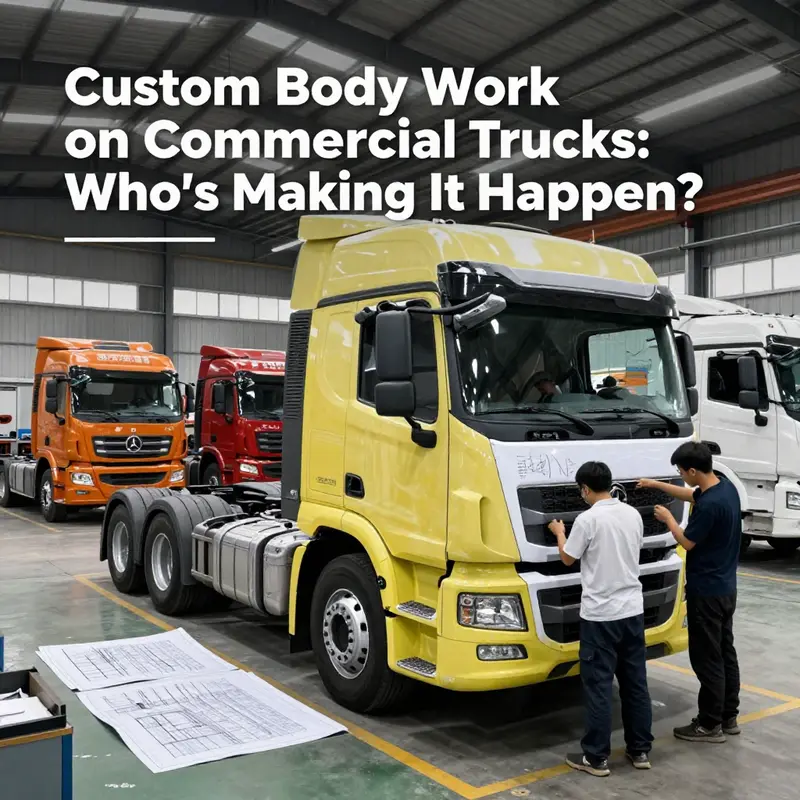
Across the modern fleet, a quiet ecosystem works behind the scenes to convert a standard truck into a purpose-built tool. This is the realm where specialized body builders, in-house customization divisions at major manufacturers, OEM engineers, and independent fabricators converge to translate broad capability into precise, site-ready performance. The process is as much about engineering discipline as it is about practical imagination—the art of turning a rigid frame into a mobile workstation that can lift, carry, store, and operate in the harsh realities of municipal streets, construction sites, utility corridors, and industrial yards. When we ask who does this work, the answer is not a single entity but a spectrum of specialists operating at different points along the chain of design, modification, and integration. The result is a fleet that looks uniform from a distance but performs as if each unit was built from scratch for a singular job.
At the core of this ecosystem are the in-house customization efforts that sit inside the big, brand-name manufacturers. These are not generic assembly lines; they are dedicated teams with the mandate to adapt standard chassis into configurations that demand major structural and functional shifts. Imagine a heavy-duty platform that needs a different axle count, a longer frame, a new wheelbase, or a cab arrangement that supports specialized operators and mission-critical equipment. A major manufacturer’s in-house customization division will coordinate these changes, blending heavy engineering with practical field requirements. The goal is not only to extend the vehicle’s geometry but to reimagine its identity as a dedicated service unit or industrial work site hub. In this setting, the client’s specifications become a technical brief, and the factory floor becomes a living laboratory where chassis, hydraulics, plumbed systems, and safety provisions are choreographed for reliability in the most demanding environments. This approach allows for deep integration of the vehicle’s systems, ensuring that the body and the chassis speak the same language of durability and responsiveness.
Beyond the factory walls, a global network of dedicated customization companies keeps the market dynamic and responsive. These firms specialize in body engineering as a core discipline, applying design thinking to every panel, deck, box, and winch that turns a truck into a task-specific platform. In some cases, these specialists assign formal roles such as Body Engineer to focus on vehicle development and manufacturing challenges. Their work spans from the initial layout of a service body to the fine-grained details of load distribution, electrical integration, and climate control for equipment storage. What makes these outfits indispensable is their ability to tailor every aspect of the body to the client’s workflow. They propose options that range from specialized service bodies and decks to dump boxes and landscaper configurations, from crane installations to lift platforms, and from flat decks to entirely bespoke configurations. In practice, the collaboration begins with a precise understanding of the job site, the operator’s routine, and the spatial constraints of the urban or off-road environment, then translates that understanding into a coherent body system that behaves as a single, integrated work unit on wheels.
Within this spectrum sits the role of regional and global players offering bespoke fabrication capacity without forcing customers to accept off-the-shelf layouts. A number of firms in Asia, for example, have developed dedicated teams to design and manufacture bodies that meet rigorous standards while accommodating a spectrum of chassis and cab options. Their expertise often includes not just the metalwork but also the integration of auxiliary equipment such as cranes, welding rigs, air compressors, and power units. The practical upshot is a fleet that can be adapted quickly to new tasks without sacrificing reliability, safety, or compliance with evolving industry standards. These capabilities are particularly valuable in sectors where operations are time-sensitive and equipment inventories are kept lean. Instead of maintaining separate fleets for different job types, a single vehicle can be reconfigured with modular body components or attachments, reducing downtime and accelerating response times.
At the same time, original equipment manufacturers continue to support customization through their own departments and pilot programs. In this context, the chassis owner’s roadmap becomes a shared development journey. OEMs leverage their deep knowledge of platform limits and long-term supply stability to offer extensive customization options that align with the manufacturer’s engineering standards. This can include changes to frame geometry, specialized cab layouts, adjusted load ratings, and the incorporation of safety systems that are harmonized with the vehicle’s native electronics. The advantage for buyers is clear: a higher degree of integration, warranty alignment, and a more straightforward pathway to compliance with safety and emissions requirements. The trade-off is that the breadth of customization may be constrained by the need to preserve core platform integrity and long-term serviceability.
Independent repair and fabrication shops occupy an equally essential niche. These are the shops that bring the flexibility and responsiveness that larger organizations sometimes struggle to match. They excel in repairs, structural corrections, and targeted modifications that extend a vehicle’s life or adapt it to a rapidly changing workflow. The role of a skilled technician in this segment—often described simply as a heavy truck body repairman—encompasses welding, panel replacement, frame straightening, and the careful harmonization of bodywork with existing mechanical systems. The beauty of these independents lies in their ability to deliver rapid, highly personalized service, sometimes on a tight budget or under tight deadlines. They can interpret a client’s evolving needs with a practical eye, reconfiguring storage compartments, upgrading mounting points for tools and equipment, and installing safety devices and lighting without requiring a lengthy OEM process. The result is a fleet that remains nimble and cost-efficient while still meeting the demands of industrial work.
The actual forms of customization are as diverse as the tasks they support. Service bodies built for electrical, water, or utility fleets, for instance, are designed to cradle a host of specialized tools, with compartments sized to optimize ease of access and remove-the-dust workflow. Decks and dump boxes address load-handling realities, offering dimensions and strengths tuned to the weight and bulk of the payload. Landscaper boxes, often a staple in municipal and commercial grounds work, emphasize modular storage, weather protection, and site readiness. Crane trucks and picker decks add a vertical dynamic to the unit, enabling loading, lifting, and precise placement of materials in environments where ground access is limited. Flat decks provide the foundation for modular equipment racks and mobile workshops. The common thread across these configurations is a focus on balance: the body must not undermine the chassis, and the operator must not have to fight the vehicle to get the job done.
This balancing act becomes more complex as builders add advanced integrations. Electric and telescopic cranes extend the reach of a single vehicle, letting crews lift and position heavy loads without extra support equipment. Articulating cranes with lift capacities from a modest few hundred pounds to several tons unlock a suite of tasks from mechanical maintenance to construction site installation. Alongside crane systems, air compressors, welders, and snow and ice removal equipment broaden the vehicle’s utility in challenging climates and seasons. Tool boxes, drawers, and lift gates are not mere conveniences but essential components that determine how quickly a crew can access the right tool at the right moment. LED lighting systems complete the package by extending productive hours and boosting safety during low-visibility work. Each piece of equipment requires careful electrical and hydraulic integration, with attention paid to weight distribution, safety interlocks, and ease of maintenance.
The practical impact of these developments is felt most clearly in the industries that rely on fast, reliable service. Municipal departments tasked with street maintenance, utility companies keeping critical services online, mechanical repair fleets supporting field operations, and logistical teams managing on-site operations all benefit when a vehicle is not just a carrier but a mobile workshop. The ability to customize a truck body so that it contains a complete, integrated set of tools and power options reduces the number of separate trips to different sites or the need for multiple specialized vehicles. In other words, the right tailor-made body work turns a single vehicle into a compact, efficient system designed to work at the point of need.
Market demand for customized solutions continues to rise as the world’s service-oriented economies push fleets toward greater efficiency and safety. Operators seek to do more with the same asset, to reduce downtime, and to consolidate tasks on fewer vehicles. The supply chain of customization—from design and fabrication to installation and commissioning—has grown sophisticated enough to support a wide range of specifications while maintaining cost discipline. Engineering teams increasingly lean on modular approaches that enable rapid reconfiguration without compromising structural integrity or operator safety. In this environment, the collaboration between a client, a customization specialist, and a manufacturers’ in-house team becomes a triad that can accelerate innovation on the front lines of operation. The result is not a set of one-off projects but a continually evolving portfolio of configurations that respond to new work patterns, regulatory demands, and the evolving needs of service crews.
If one were to trace the logic behind this ecosystem, the thread would lead back to workflow optimization. A well-designed body does more than protect and contain; it organizes. It routes access to frequently used tools and controls, it creates safe spaces for heavy loads, and it reduces the time crews spend preparing or repositioning equipment. The value proposition is clear: a tailored truck body yields greater uptime, improved safety, and lower total cost of ownership over the vehicle’s life cycle. The industry has learned that investment in specialized engineering and fabrication pays off in real-world performance, particularly when fleets must operate under demanding site conditions, tight schedules, or crews who rely on precise tool placement and quick access to power and water systems. The macro trends point toward a future where more fleets will demand flexible, modular bodies that can be reconfigured in minutes rather than days, with smart wiring diagrams and standardized attachments that permit changes without a complete redesign.
In the course of exploring these developments, it is useful to anchor the discussion in practical terms. The range of work can be imagined as a spectrum, with standard, utility-grade bodies at one end and highly integrated, mission-specific configurations at the other. The former emphasizes durability and straightforward access to common tools, while the latter embodies a design philosophy that prioritizes rapid deployment, precise payload handling, and seamless integration with on-board power, climate control, and safety systems. For buyers, the decision often hinges on the balance between initial cost and long-term productivity gains. For builders, the challenge lies in maintaining compatibility across a broad set of chassis options while delivering reliable, certification-ready equipment that can weather years of field use. And for operators, the payoff is a vehicle that behaves like a customized tool—a trusted extension of the crew’s capabilities rather than a passive carrier.
The narrative of customization also intersects with broader industry conversations about cross-border supply chains, regulatory clarity, and the evolving economics of manufacturing. The ability to source body components from global suppliers, and to assemble them into a coherent, compliant system on top of a standard frame, depends on a shared language of standards and test procedures. Industry resources increasingly emphasize interoperability, safety benchmarks, and performance metrics that help fleets compare options and justify investments. In this sense, the specialized builders play a dual role: they are both engineers and translators, ensuring that a client’s needs are clearly expressed in chassis-friendly terms while keeping the project aligned with regulatory expectations and best practices.
For readers seeking to connect the practical threads with broader industry analysis, consider the conversations around how market dynamics influence customization. Trends in trailer orders, freight demand, and the essential economics of maintaining a lean, adaptable fleet all contribute to the calculus behind choosing a customized body. A recent exploration of these dynamics highlights how shifts in demand for specific trailer configurations can ripple through to body-building decisions, shaping what kinds of decks, storage systems, and lifting equipment operators request in new builds. These discussions illuminate why a single vehicle can carry such strategic importance for a fleet’s productivity and service delivery. They also underscore the need for teams to collaborate with suppliers who understand not just what the job requires today, but how it might evolve in the months and years ahead. trailer orders impact truckload margins
The final layer of this story is one of ongoing learning and adaptation. As technologies advance, so too do the promises of automation, telematics, and diagnostics that help fleets monitor body-system health, plan maintenance, and manage inventories of spare parts and attachments. The role of the specialized builder, once imagined as a purely craft-focused capability, now spans data-informed design choices, energy efficiency considerations for on-board power, and safety engineering that anticipates operator risk in diverse job sites. The chapter of customization is not closed; it is being rewritten with every new tool, every new zoning regulation, and every new requirement from a field crew that expects to work faster and safer. In this sense, the specialized builders are not simply craftsmen. They are strategic partners who convert a set of raw materials into reliable capabilities, aligning the vehicle’s form with the function demanded by an ever-changing work landscape.
For readers who want to explore industry standards and best practices as the field continues to mature, the Commercial Truck Body Builders Association offers a consolidated resource with standards, guidance, and member perspectives. See https://www.ctbba.org for further reading and reference. As the chapter of customization continues to unfold, the collaboration among OEMs, independent fabricators, and end users will remain the engine of innovation, while the truck itself becomes a more capable, resilient, and intelligent tool on every job site.
Independent Shops at the Core: Understanding Who Customizes Body Work on Commercial Trucks and Why It Matters
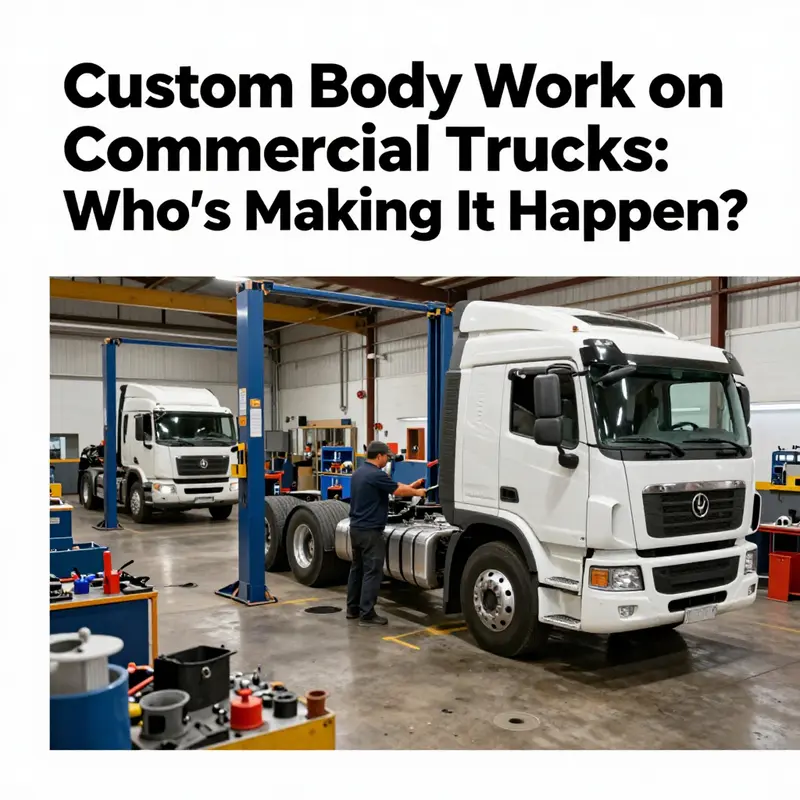
When fleets look to tailor a commercial truck beyond its factory configuration, the question of who performs the work is never merely academic. It is the difference between a chassis that barely meets a need and a vehicle that becomes a precise, durable tool for a specific operation. Independent body shops sit at the heart of this process. They are not the only players in the field—there are manufacturers with in-house customization capabilities, dealer service centers, and OEM-backed customization arms—but their role is distinctive in both breadth and adaptability. They bring a blend of craftsmanship, problem-solving, and practical logistics that aligns with the diverse demands of today’s work trucks. What emerges is a picture of customization as a collaborative, ecosystem-driven activity in which independent shops translate broad engineering possibilities into concrete, on-the-ground solutions. They do this not by appealing to the lowest common denominator of standard configurations, but by analyzing a fleet’s workflow, safety requirements, and regulatory constraints, then translating those insights into a tailored body and chassis solution that can endure harsh conditions and long service hours. In this sense, independent shops are not peripheral vendors; they are value amplifiers within the commercial trucking landscape.
The core competency of independent shops lies in their depth of hands-on experience with a wide spectrum of chassis configurations and cargo bodies. Unlike some dealership or factory service centers that may emphasize maintenance schedules and warranty-compliant replacements, independent specialists fuse metal fabrication, structural analysis, hydraulics, electrical integration, and panel work into a seamless customization offering. They routinely handle tasks that sit at the intersection of engineering and field operations: converting a standard frame into a longer or shorter configuration, installing specialized cargo bodies, adding lift mechanisms or hydraulic systems, and integrating safety features tailored to a given sector—refrigerated transport, construction, or waste collection, for example. This range is not merely about adding components; it is about ensuring that the entire system—weight distribution, center of gravity, mechanical interfaces, and power-electrical synergies—works in concert with the intended workflow and the road environment.
The value proposition of independent shops rests on several pillars. First, there is flexibility. Manufacturers and OEMs often design for scale and for a broad market, which can constrain how precisely a body reflects a customer’s daily routine. Independent shops, by contrast, frequently operate with a leaner decision-making chain. They can pivot quickly when a client’s needs change, whether that means adjusting a design mid-project or selecting alternative materials and construction methods to hit a target weight, a specific payload configuration, or a regulatory standard in a particular jurisdiction. Second, these shops tend to offer faster lead times. While dealer networks and OEM facilities juggle production schedules and certification steps, independent shops can compress the cycle from concept to installation, especially for mid-range or niche applications where standardization has already been exhausted and customization remains essential. Third, they often deliver cost-effective outcomes. The cost calculus of a bespoke body is not merely about unit price; it encompasses downtime, fuel efficiency through weight and aerodynamics, and lifecycle maintenance. An independent shop’s intimate familiarity with how different components behave under real-world conditions can yield durable, repair-friendly solutions that hold up in tough operating environments.
To appreciate the scope of what independent shops can accomplish, imagine a fleet manager seeking a custom-built body with multiple compartments and secure locking for a high-demand distribution operation. The job is not simply to enclose payload more efficiently; it is to engineer a locking scheme that can withstand daily handling, temperature changes, and the inevitable vibrations of long hauls. It is to design compartment geometry that maximizes use of available volume while preserving access, weight balance, and ergonomic unloading. It is to integrate the security and visibility features that fleet managers push for so the right items are available at the right time, reducing search times and exposure to theft. The same shop might also propose structural reinforcements to handle heavier loads, or an interior layout that accommodates mixed cargo types without compromising sanitary standards or product integrity. In other words, independent shops translate a high-level operational brief into a customized, field-tested solution that aligns with the vehicle’s baseline engineering but is optimized for the customer’s specific workflow.
The process itself mirrors the lifecycle of any engineering project, but with a practical emphasis that is uniquely suited to trucks and their work environments. Early engagements often begin with a detailed discovery, where a technician or designer walks through the fleet’s daily routines, the expected payloads, and the environments in which the vehicle operates. That discovery leads to a design phase, where CAD models and engineering sketches are used to test fit, space utilization, and integration with existing systems. Because these are mobile, heavy-duty vehicles, the design must consider access for maintenance, the ability to repair or replace components in the field, and the potential for modular upgrades as the fleet’s needs evolve. Fabrication follows, combining metalworking, welding, and sheet metal work with precise measurement and quality control. Electrical and hydraulic integration then brings the system to life, enabling components such as doors, lifts, and environmental control systems to function in concert with the truck’s propulsion and electrical architecture. Finally, commissioning and testing ensure that the installation is not just theoretically sound but practically robust, capable of withstanding long hours, extreme temperatures, and the jolts and vibrations that come with real-world operation.
Safety and compliance thread through every stage of this process. Independent shops must contend with a mosaic of regulatory demands that vary by region and by industry. Weight limits, axle load distributions, brake compatibility, and electrical safety standards frame the design choices. The installers must verify that modifications do not compromise the vehicle’s crashworthiness, lighting, reflectivity, or braking behavior. In some jurisdictions, alterations to a truck’s body or structural components may require recertification or inspection by a qualified authority before the vehicle can return to service. Independent shops build these considerations into their workflow, not as an afterthought but as a core constraint that guides material selection, joint design, and testing protocols. Their operating ethos tends to emphasize traceability, ensuring that each modification is documented, that the materials meet recognized standards, and that the installation can be revisited if future upgrades or repairs are needed.
This emphasis on standards does not mean independent shops operate in isolation from the broader industry. On the contrary, they actively leverage the evolving body of best practices that industry publications highlight. For instance, industry outlets consistently emphasize the critical role of independent specialists in delivering customized, high-performance truck bodies that balance function, safety, and cost. These publications provide case studies and expert perspectives that underscore how independent shops fill gaps left by larger, more centralized channels. They also reflect a broader market reality: as fleets grapple with volatility in demand, supply chain constraints, and shifting regulatory climates, the ability to tailor equipment quickly and credibly becomes a competitive differentiator. In this sense, the independent shop is less a niche supplier and more a key node in a resilient, agile trucking ecosystem. The practical takeaway for fleet managers is clear: when the operation hinges on precision and reliability, a trusted independent partner can be a strategic asset rather than a last resort.
Beyond the mechanics of fabrication and installation, independent shops contribute to a culture of problem solving and continuous improvement. Their engagement with diverse customers creates a feedback loop that informs design choices across projects. A modification that works brilliantly for one fleet’s urban delivery pattern may inspire refinements in a different context, such as a rural route or a hazardous materials handling scenario. Over time, this cross-pollination yields a library of practical, field-tested ideas that can be deployed across multiple customers, shortening the development cycle for similar needs. The ability to codify successful approaches into repeatable processes is what elevates a shop from a skilled workshop to a credible partner in ongoing operational excellence. It is also why independent shops often maintain strong relationships with fleets on a long-term basis, not merely as one-off repair or upgrade vendors but as collaborators who understand evolving requirements and can anticipate the next wave of customization needs.
The industry environment further reinforces the importance of these shops through their responsiveness to niche markets. Some operators require bodies designed to endure extreme climates, others need specialized cargo handling systems, and still others demand configurations that integrate seamlessly with fleet-wide telematics and scheduling software. Independent shops meet these demands in ways that larger, more templated channels sometimes cannot, offering bespoke alignments between mechanical design and digital support tools. The result is a more coherent and efficient operation: a truck that not only carries the load but does so with a design that aligns with the fleet’s workflow, maintenance practices, and safety culture. In this sense, independent shops become translators between the language of engineering and the practical requirements of daily logistics.
The value of independent shops also extends to the economic resilience of the trucking sector. When supply chains constrain the availability of standardized bodies or specialist components, these shops can creatively source alternatives, substitute compatible hardware, or rework existing structures to meet performance targets without waiting for extended lead times. This adaptability is particularly important to fleets that operate in remote regions or in industries where downtime translates into significant cost. The ability to deliver a tailored solution on a reasonable timeline can translate into lower downtime costs, higher fleet productivity, and a more stable operating budget. For many operators, these advantages are not optional but essential features of a modern, sustainable trucking operation.
The narrative around independent shops is not about bypassing the bigger players in the industry. It is about recognizing the complementary roles that different channels play in delivering robust, fit-for-purpose solutions. OEMs and in-house customization units provide scale, formalized processes, and background engineering support. Dealerships offer a familiar touchpoint with warranty coverage and aftermarket service. Independent shops offer speed, flexibility, and sector-specific know-how that is hard to replicate at scale. When fleets plan a significant customization effort, the most effective path often involves a coordinated approach that leverages the strengths of each channel. A design might begin within an OEM or in-house unit for a baseline configuration, move to an independent shop for field-tested customization, and then return to a dealership or service center for final integration with service and warranty support. In this orchestration, independent shops remain indispensable for their capacity to translate concept into concrete, reliable practice on a timeline that supports the fleet’s operational demands.
For readers who follow industry trends and best-practice discussions, this chapter echoes the insights found in industry commentary and case studies that emphasize the importance of independent specialists. Publications focused on truck equipment and aftermarket services frequently highlight how independent shops drive innovation in cargo handling, safety enhancements, and modular design. These discussions reinforce the practical reality: the landscape of customization is not defined solely by the biggest names or the most famous engineering departments. It is enriched by the hands-on expertise of shop floors where skilled technicians interpret real-world needs, match them to feasible solutions, and deliver with an accountability that comes from direct performance in the field. The takeaway for managers and operators is profound. When the operation hinges on customizing a vehicle to a precise purpose, the right partner is one that combines technical capability with field-tested practicality, a combination that independent shops have cultivated over years of hands-on work.
In closing, the role of independent shops in the customization of commercial trucks is not a footnote. It is a central thread in how the industry meets the diverse, evolving requirements of modern logistics. These shops are not merely builders; they are interpreters of work—translating the daily realities of operations into bodies and systems that endure, assist, and improve performance. Their work amplifies the capabilities of fleets, enabling them to operate with greater efficiency, safety, and reliability. As the industry continues to evolve—with greater emphasis on modular design, data-driven maintenance, and integrated safety systems—the partnership between fleets and independent body specialists is likely to deepen. For operators charting their next round of modifications, that collaboration promises not only a tailored solution but a durable competitive advantage. See further discussion of how broader market trends shape these decisions in the industry literature, including influential industry coverage that highlights the pivotal role independent specialists play in delivering customized, high-performance truck solutions. For a broader industry perspective on related economic and trend contexts, this discussion resonates with the themes explored in trucking economic trends affecting trailer orders.
External resource: Truck Equipment Magazine provides ongoing, authoritative insights into truck body modifications and the aftermarket landscape. https://www.truckequipmentmag.com/
Internal link reference: As you explore how market dynamics influence customization timelines and capacity, you might consider the current discussion of trucking economic trends affecting trailer orders. Internal readers can follow this analysis here: trucking economic trends affecting trailer orders.
Final thoughts
In conclusion, the landscape of custom body work for commercial trucks is underscored by the collaborative efforts of in-house departments, specialized customization companies, and independent repair shops. Each player contributes unique expertise and options that allow logistics, construction, and delivery enterprises to meet their specific needs efficiently. By choosing the right partner in customization, businesses can enhance their operational capabilities, tailored specifically to their industry demands. The choice of partner is crucial for those seeking to optimize their fleet operations and capitalize on the full potential of their vehicles.