
For logistics, freight, and delivery operations, understanding toll collection systems is crucial. Traditional methods like the SunPass system are not designed for commercial trucks, which require alternative solutions due to size and regulatory factors. This article delves into three chapters that outline the limitations of SunPass for commercial trucking, explore other viable tolling technologies, and explain how to navigate the intricate toll regulations that affect your operations. By understanding these key elements, you can ensure compliance and optimize your fleet’s travel efficiency.
The Tolling Divide: Why SunPass Isn’t a Fit for Commercial Trucks
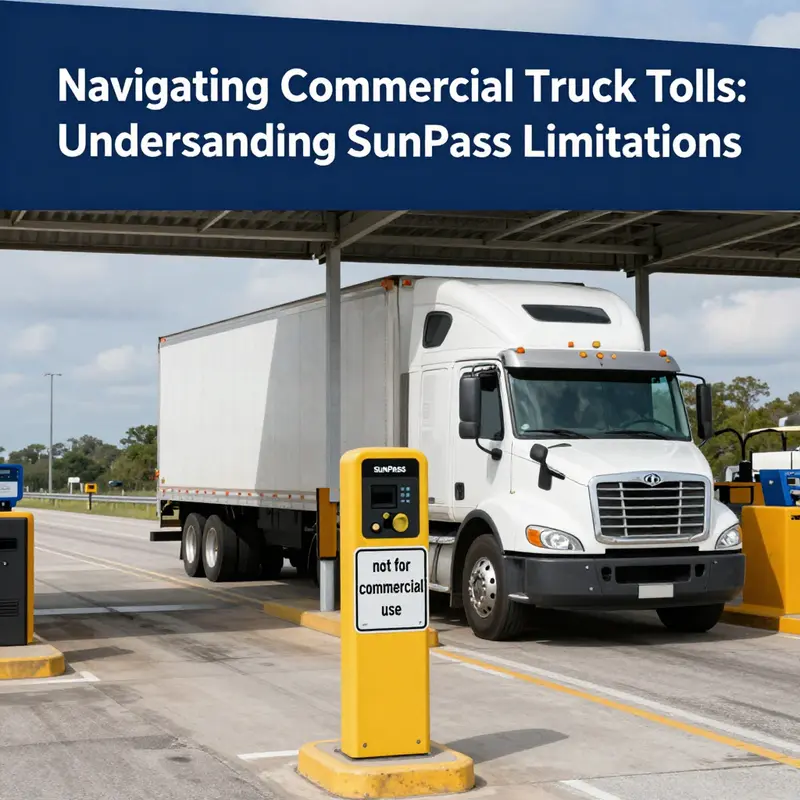
Truck fleets move with precision, urgency, and a steady drumbeat of miles on highways that form the backbone of commerce. Yet tolling systems reveal a layered landscape the moment a vehicle grows beyond a passenger sedan. The impulse to reuse a familiar transponder or prepaid account for every journey is strong, especially for operators who prize efficiency and predictability. But for commercial trucks, the tolling world is not a mirror of passenger vehicle tolling. A single universal device across state lines simply does not exist in today’s tolling reality, where complex vehicle classifications, weight based charges, and networked payment policies require a more nuanced approach.\n\nIn Florida and across many corridors fleets traverse, the practical question is not just whether a single transponder will unlock the passages, but whether a given account is designed to handle the scale, weight, and regulatory obligations that come with commercial operation. The answer, without ambiguity, is that a standard passenger oriented prepaid toll system is not intended for most commercial trucks. The systems meant to keep fleets moving are specialized, segmented, and built to recognize the heavy vehicle footprint on the nation’s highways.\n\nFor operators planning cross state trips, this distinction matters as surely as a trailer weight rating and bridge clearance. Florida’s tolling environment illustrates the broader point with particular clarity. The state operates a prepaid toll program that integrates a consumer facing transponder with a roadway network designed to simplify travel for cars and light duty vehicles. This is not a blanket permission slip for every heavier vehicle. Official guidance makes this explicit: most commercial trucks cannot rely on the standard prepaid system alone to process tolls across the state’s toll roads. Instead, fleets must consider commercial options that the tolling authority supports, purpose built to capture the realities of heavier vehicles—their larger toll charges, their weight related assessments, and the potential for penalties if tolls are mishandled. In practice, that means enrolling in a truck specific or commercial tolling pathway within the state framework, rather than reusing a consumer account.\n\nThe practical limits of a standard transponder in toll lanes become apparent when a truck arrives at a plaza designed for speed and throughput. In many lanes the posted rules are clear about speed. The permissible driving speed through these lanes, whether paying with a transponder or if the tolling apparatus photographs a plate and bills the owner afterward, is deliberately low at 25 miles per hour. This is a safety threshold and a compliance parameter that helps ensure accurate toll capture. Exceeding that limit can trigger violations and downstream consequences such as fines or enrollment flags that complicate future toll transactions. In short, what works in a car may risk misreads, mischarges, and disputes that can bubble up to fleet billing disputes if the tolling data diverges from fleet records.\n\nLayered onto Florida dynamics is interoperability. A truck that traverses multiple states encounters toll networks that do not share a universal standard. Some regions provide multi state or nationwide approaches for fleets, but those arrangements are not guaranteed to accommodate every vehicle type or every trip pattern. A transponder accepted in one state may not be recognized in another, or it may be eligible only under particular vehicle classifications. For fleets that move across state lines, the practical choice is often to maintain more than one tolling arrangement. Where a single device might be convenient in one corridor, it can become a source of confusion or a compliance risk in another. The consequence is not just the hassle of maintenance; it is the potential for tolls to be missed, for billing disputes to arise, and for enforcement systems to flag a truck as an outlier in a lane that expects a different class. The result is administrative drag that erodes the efficiency gains a streamlined tolling experience promises.\n\nThis is where the commercial tolling ecosystem earns its keep. While the standard consumer account remains a valuable convenience for many trips, fleets that plan to run coast to coast must engage with tolling authorities in ways aligned with heavy vehicle needs. A commercial toll account is more than a simple discount or prepaid balance; it is an integrated framework. It ties specific vehicle attributes to toll calculations, ensures correct billing even when a transponder is read in a densely trafficked corridor, and supports fleet level reporting that aligns with what operators need to optimize routes, fuel use, and maintenance cycles. The fundamental shift is from a one size fits all model to a modular approach that recognizes the vehicle category, axle configuration, weight, and typical routes.\n\nFor drivers and dispatchers, the implications extend beyond the highway edge. The operational realities of fleet management demand clarity about what the tolling arrangement covers and where it falls short. In practice, this means keeping a clear separation between standard passenger accounts and heavy vehicle arrangements designed to absorb tolls associated with heavier equipment and longer haul operations. It also means adapting to lanes that require slower speeds for commercial vehicles when tolls are being collected. The 25 mph rule in toll lanes acts as a safety valve and a policy lever, reminding operators to adopt a disciplined driving posture in those lanes where the technology is sensitive to speed and data streams expect a predictable pace. Fleet managers who anticipate these constraints can design routing and scheduling so that drivers are not boxed into a corner where a sudden lane change or acceleration triggers a compliant breach that becomes a costly administrative event.\n\nBeyond Florida, cross border nature of freight adds strategic complexity. Fleets traversing multiple states encounter a patchwork of tolling authorities, each with its own rules, device acceptance criteria, and enforcement protocols. No single transponder or account guarantees seamless toll payment across every jurisdiction. The practical path for long haul operators is to implement a combination of mechanisms: a robust commercial tolling account for the jurisdictions that explicitly support trucks, adherence to toll by plate options where transponder not accepted, and a disciplined approach to vehicle documentation so toll authorities can tie charges to the correct plates and fleet identity. In this environment, proactive coordination with tolling authorities becomes part of fleet operations. It means staying informed about policy updates, ensuring the right vehicle classifications are reflected in the account, and having a documented process for converting a misread toll into prompt adjustments if necessary. The business case is straightforward fewer disputes, fewer delays, and a more predictable expense profile across the fleet.\n\nTo illustrate the practical essence, consider a day to day workflow of a fleet that runs through Florida and neighboring corridors. A driver approaches a toll plaza in a heavy vehicle and engages the commercial tolling pathway rather than a consumer transponder lane. If the vehicle is correctly registered under a commercial account, the tolling system recognizes the weight category and assigns an accurate charge. The driver remains in the appropriate lane, maintaining a steady, controlled speed within the 25 mph limit. The transaction is captured in real time, the billing data aligns with the route log, and the dispatcher receives a coherent picture of what the toll cost will look like when invoices arrive. If instead a standard consumer transponder is read in a heavy vehicle, the system may fall back on license plate imaging with bills issued to the vehicle owner, but the vehicle weight class can complicate the evaluation, potentially triggering misbilled amounts or a violation notice that can escalate if the image is ambiguous or the plate is misread. Such outcomes impose not just monetary penalties but administrative overhead that reduces the time a driver can spend on productive work.\n\nThe broader takeaway for operators is practical and actionable. Do not assume that a passenger focused prepaid toll program offers universal coverage for trucks. Do not rely on a single device to simplify everything when the tolling ecosystem is built to support truck classifications and commercial accounts in a nuanced way. Instead, commit to a straightforward, fleet aware tolling strategy: identify which jurisdictions you will traverse, determine which tolling systems explicitly recognize heavy vehicles, and establish commercial accounts accordingly. Embrace toll by plate options for routes where transponder compatibility is uncertain, and ensure that your fleet’s license plate data is consistently updated in the tolling authority’s records so that charges do not drift into the wrong owner or vehicle category. In this approach, the speed limit of 25 mph in toll lanes becomes a routine discipline rather than a problem to solve at the end of a billing cycle.\n\nFor those seeking deeper clarity, it helps to consult official sources that govern tolling policies and equipment eligibility. The official guidance from the Florida tolling authority spells out exactly which vehicles qualify for which programs, and it emphasizes that the core consumer account is not universally applicable to commercial fleets. It points to appropriate alternatives for trucks, including the processes and requirements to maintain accuracy in toll collection for heavier vehicles. While exact terminology and pathways may evolve, the principle remains stable: commercial fleets must operate within a tolling framework designed to accommodate heavy vehicles, with safeguards to prevent mischarges and to support consistent billing. This is not merely about compliance; it is about preserving the efficiency fleets depend on to meet delivery windows, optimize maintenance cycles, and sustain profitability.\n\nAs you reflect on tolling for heavy vehicles, a connected thread emerges. Interoperability is real, but not every transponder or account travels seamlessly from one corridor to the next. Fleets should incorporate contingency mechanisms, ensuring every route has a clear tolling path that aligns with vehicle class and legal obligations. The operational advantage is more than smoother invoicing; it is a predictable cost of mobility for the fleet, a cornerstone in budgeting for maintenance, fuel, and driver hours. The tolling ecosystem rewards foresight and disciplined planning across routes and regulatory updates. In the long arc of fleet operations, such preparedness translates into time gained on the road, fewer disputes, and a reputational edge in logistics planning where miles are accounted for with precision.\n\nFor fleets contemplating future expansion, tolling strategy is not a single decision but a series of calibrated choices. Map typical routes, assess the compatibility of current transponder portfolios with authorities truck classifications, and pursue commercial tolling options or toll by plate where needed. The ultimate objective is a cohesive tolling blueprint that minimizes disputes, reduces manual intervention, and keeps drivers focused on the road ahead. This requires room for multiple accounts and integration with payroll and billing systems so data from different tolling streams can be absorbed without sacrificing accuracy. It is a prudent stance that respects both regulations and daily operations across a freight network.\n\nAnd so, the tolling divide remains a practical reminder: there is no single key that opens every toll door. For commercial trucks, the path forward lies in alignment with truck specific tolling policies, clarity about lane requirements and speed limits, and a willingness to adapt to a mosaic of regional systems. Fleets that embrace this mindset will find that the short term discipline—obtaining the correct accounts, maintaining up to date vehicle classifications, and knowing when to rely on toll by plate—will pay dividends in reliable toll expensing, fewer regulatory headaches, and smoother operations for drivers who move goods across a busy network. The road remains open to commerce, but the tolling detour must be navigated with care and attention to the details that separate a smooth ride from a costly delay. For a practical planning reference, consider that the heart of the matter is not a single device but a freight specific tolling architecture designed to support heavy vehicles on busy corridors, with safeguards that keep the wheel turning and the invoices accurate. And in that architecture, SunPass, as it is traditionally conceived, does not serve as the universal passport for commercial fleets; instead, fleets build a tailored tolling portfolio that matches routes, equipment, and cross border travel realities. For a practical planning reference, you can explore the cross border regulatory landscape and tolling policy discussions that influence industry practice. And while you weigh these considerations, keep in mind the official guidance from the Florida tolling authority, which remains the most authoritative source on vehicle eligibility and commercial accounts. External resources: https://www.fteflorida.com/tolls/sunpass/faq#commercial-trucks
Beyond Passenger Toll Cards: Electronic Tolling as the Engine of Sustainable Commercial Trucking
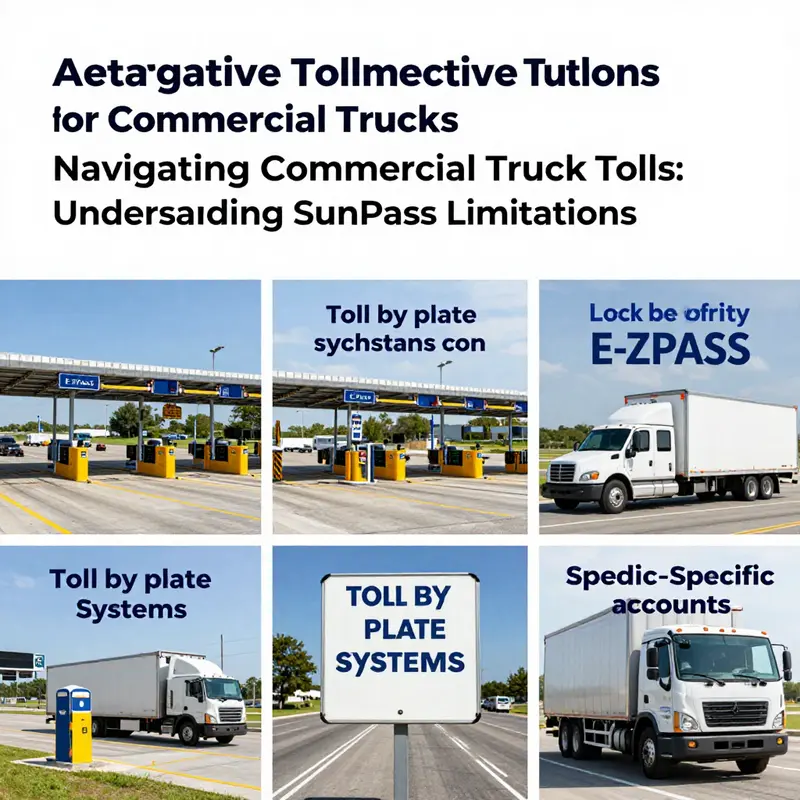
Tolling for commercial trucking sits at a critical nexus of policy, technology, and operational efficiency. The systems designed to collect fees from passenger vehicles were conceived around different priorities than those for heavy, high-mileage fleets. Freight haulers routinely traverse dozens of jurisdictions with varying toll rules, rates, and enforcement practices. A toll account issued for a car or a light vehicle may not be valid for a heavy truck, and even when it is technically possible to use a simplified card or tag, the commitment to weight, axle configuration, and regulatory class makes the mismatch obvious. In practice, fleets discover that there is no universal, one size fits all prepaid toll solution that covers every corridor or crossing. Instead, the reality is that trucks rely on a portfolio of tolling arrangements that recognize their scale, their duty cycles, and the need to plan routes with predictable costs. This is not merely a matter of convenience; it is a matter of compliance, risk management, and fleet profitability. A truck traveling through multiple states faces per-axle pricing schemes and different definitions of toll classes. Some toll authorities levy higher charges for heavy vehicles, while others use flat rates per axle or per mile with adjustments for weight or distance traveled. The result is a patchwork where relying on a single passenger vehicle account could lead to gaps in coverage, missed discounts, or, worse, inadvertent violations. The practical implication is straightforward: commercial operators must engage with tolling in a strategic way, choosing mechanisms that can operate across borders, across agencies, and across the full spectrum of vehicle configurations in a fleet. The alternative is administrative drag, revenue leakage, and the kind of friction that slows down the throughput that freight logistics depend on. In this environment, the idea of a universal plug-and-play account for trucks is less a guarantee and more a strategic aim. Fleets increasingly seek electronic tolling solutions that can bridge disparate tolling ecosystems while preserving accuracy and accountability. The core value proposition is not simply paying a bill with a single card; it is the ability to automate, reconcile, and optimize toll costs across a complex web of jurisdictions. To achieve that, operators look for robust electronic tolling architectures that can handle cross-border operations, support multiple tolling methods, and deliver consistent data for rate comparisons and route planning. An important part of this landscape is the recognition that trucks require specialized arrangements. There are truck-focused accounts that align with regulatory class definitions and axle counts, as well as toll-by-plate arrangements that photograph the license plate and bill the owner. There are broader, programmatic structures that aggregate tolling across regions, creating a more coherent experience for fleets that must traverse many corridors. Each of these approaches carries trade-offs. A truck-specific account can offer streamlined billing and access to volume-based discounts but may still be limited to a subset of corridors. Toll-by-plate provides coverage where account-based systems fall short but can introduce delays in billing, ambiguity about discounts, and the need for accurate plate registration. Comprehensive trucking programs, which may connect multiple authorities under a single framework, promise the most seamless travel but require a substantial onboarding commitment, data sharing, and ongoing coordination with fleet management systems. The practical navigation of these choices hinges on clear information from authorities and on the willingness of fleets to adapt their practices. While it would be tempting to assume that there is a single, flawless remedy, the reality is that a multi-layered approach typically yields the most reliable coverage. For many operators, this means first ensuring that every vehicle in the fleet is registered in the appropriate truck-focused system where available, and second, maintaining a toll-by-plate fallback to cover gaps in areas where electronic accounts do not extend. It also means planning routes with a clear understanding of which corridors are covered by which methods and which lanes offer the most cost-effective passage given the vehicle class. The official guidance from toll authorities generally emphasizes that heavy trucks must comply with separate rules from passenger vehicles, and the guidance courts the idea of specialized options that reflect the distinct economics of freight transport. In practice, fleets should begin by reviewing the toll authority websites that cover their intended routes and by confirming which options are accepted for their vehicle class. The emphasis is on accuracy, timeliness, and alignment with fleet software. This is where the role of intelligent tolling platforms becomes crucial. Modern electronic tolling technologies are designed to reduce stops, optimize routing, and provide rich data streams that help fleet managers understand toll exposure. A contemporary approach to tolling does more than collect fees; it supports fleet visibility, performance analytics, and compliance reporting. A plug-and-play platform for tolling can integrate with various systems and standardize data across jurisdictions. It can accept toll payments, apply any eligible discounts, issue refunds when necessary, and consolidate toll data with maintenance and fuel analytics. For operators that manage a sizable mixed fleet, the ability to centralize toll information in a single interface reduces administrative overhead and minimizes the risk of misbilling. The technology architecture behind these platforms emphasizes interoperability. They connect to multiple tolling networks, translating vehicle data, account statuses, and rate cards into a unified tolling ledger. With a few clicks, a fleet manager can review toll trends, compare the performance of different routes, and adjust procurement strategies for future shipments. The value proposition extends beyond just paying bills. The data produced by these systems can inform route optimization, vehicle assignment, and even maintenance planning by correlating toll exposure with miles driven and equipment utilization. This is particularly important for fleets pursuing reductions in total cost of ownership and for those seeking to demonstrate responsible fleet management to customers who demand transparency. The interplay between tolling and performance is increasingly intertwined with regulatory expectations, especially as governments push for lower emissions in freight transport. The adoption of electronic tolling is framed not only as a cost-control mechanism but also as a tool to enable more dynamic pricing models that reflect environmental performance. In regions that experiment with carbon-based toll tariffs or emission-adjusted charges, fleets can use tolling data to quantify the impact of their operations on air quality and to respond with cleaner vehicle choices or optimized operation plans. Industry players are watching closely as policies evolve, seeking clarity on how tolling incentives and penalties align with broader sustainability targets. The conversation about emissions regulations and tolling is not only about compliance; it is about shaping a logistics ecosystem where efficiency and environmental responsibility reinforce each other. In recent industry discussions, the emphasis has shifted toward enabling cross-border compliance through electronic tolling platforms that can store, verify, and transfer vehicle and usage data in a standardized way. This reduces the risk of inconsistency when a vehicle crosses from one jurisdiction to another and helps fleets maintain consistent records for tax, grant, or incentive programs tied to low-emission operations. OEMs seeking clarity in emissions regulations have highlighted the need for interoperable tolling frameworks that can support cleaner vehicle classes, dynamic pricing based on actual emissions, and standardized reporting that can be used across national borders. The idea is to create a digital backbone for tolls that aligns with efforts to electrify freight and to reduce the environmental footprint of long-haul movement. The practical reality is that electrification itself will reshape the tolling landscape. As fleets move toward zero-emission or low-emission powertrains, tolling systems may offer incentives for cleaner operations. Dynamic pricing could reward routes and driving patterns with lower emissions, while penalties could be reserved for the dirtiest behaviors or routes. The data generated by electronic tolling becomes a key input for those incentives, enabling fleet operators to target the most efficient configurations and to demonstrate progress toward environmental goals. This shift dovetails with broader investments in charging infrastructure and in vehicle technologies. The expansion of charging networks and modular charging solutions aims to reduce the risk of downtime and range anxiety for long-haul operations. When a fleet can reliably plan for charging along its typical routes, tolling integration becomes part of a broader optimization problem where electricity costs, charging times, and toll exposure are all balanced to minimize total costs. In this sense, tolling is not a stand-alone burden but a component of a smarter, greener freight system. As the freight industry continues to reimagine its operations, the ability to unify toll data with telematics, routing software, and energy management platforms becomes essential. The result is a more coherent picture of how a truck spends its miles, how much tolls contribute to total operating costs, and how this cost can be influenced by decisions about routes, time-of-day usage, and vehicle mix. The architecture that supports this vision is not a single silvery product but a mesh of interoperable capabilities. It is a philosophy of digital freight management that prioritizes data integrity, cross-jurisdictional compatibility, and the alignment of tolling practices with sustainability goals. While the journey toward full interoperability is ongoing and uneven across regions, the momentum is clear. Fleets are increasingly backed by software tools that help them plan, execute, and audit toll payments with a level of precision that was once unavailable. The effect is a reduced administrative burden, improved cash flow, and a sharper competitive edge because tolls are no longer an opaque line item but a transparent, optimizable cost. This is the new normal for commercial trucking, where electronic tolling becomes the engine that drives efficiency, compliance, and sustainability. For operators who want to stay ahead, the path is to adopt robust, interoperable tolling solutions that can scale with growth, adapt to policy shifts, and deliver actionable insights that translate into better routing decisions and lower total costs. The long-term payoff is not only lower toll outlays but the ability to demonstrate responsible fleet management to customers and regulators alike. The world of tolling is moving toward integration, standardization, and smarter pricing, and commercial trucking stands to gain the most when its data is trusted, its routes are optimized, and its electrification roadmap is aligned with the liberalization of tolling discounts and incentives rather than the friction of siloed systems. To readers who want to connect this topic with broader industry shifts, consider the evidence and discussions around emissions regulation and toll interoperability, which reflect a shared aim of reducing the environmental impact of freight while preserving the efficiency that modern supply chains require. OEMs seeking clarity in emissions regulations are increasingly asking for an interoperable tolling layer that can keep pace with policy, technology, and market demands. The convergence of these trends points to a future in which tolling is not a simple billing exercise but a strategic tool for smarter, cleaner, and more reliable freight movement. For a concise exploration of how OEMs and policymakers are aligning emissions targets with tolling frameworks, see the discussion on OEMs seek clarity in emissions regulations. OEMs seek clarity in emissions regulations. In the end, the real value of any tolling solution for commercial fleets lies in its ability to harmonize across jurisdictions, support route optimization, and integrate with the broader technology stack that already guides modern trucking operations. When fleets invest in electronic tolling that can scale across regions, they gain not only cost predictability but a robust dataset that informs decisions about equipment replacement, fuel strategy, and network design. The payoff is measurable in smoother operations, better utilization of assets, and a stronger ability to compete in a market that increasingly rewards efficiency and sustainability. External resources are beginning to codify this shift as a standard expectation rather than a novel advantage. A leading perspective highlights how electronic tolling is essential to sustainable commercial road transport by enabling cross-border, cross-system interoperability and by supporting dynamic pricing tied to emissions performance. This broader narrative underlines the importance of adopting interoperable tolling architectures that can evolve with policy changes, vehicle technology, and the expansion of charging and energy networks that sustain electrified trucking. For readers seeking a deeper dive into this dimension, a widely cited external resource offers a clear articulation of why electronic tolling matters for sustainable freight, and how it supports both emissions reduction and operational resilience. https://www.shell.com/alternative-tolling-solutions.html
Tolling Realities for Heavy Haulers: Why Passenger-Grade Accounts Don’t Cover Commercial Trucks
Across the interstate network, fleets constantly balance efficiency with compliance as they move goods from coast to coast. Tolling—a fast-moving, ever-evolving layer of that balance—presents a particular set of realities for commercial trucking. The central truth is straightforward: the tolling patterns and payment tools built for passenger vehicles rarely fit the needs of heavy-duty fleets. A prepaid, passenger-vehicle account acquired for everyday cars does not automatically translate into a usable, compliant payment method for large trucks. The systems, rules, and pricing structures are engineered with different vehicle classes in mind, and attempting to treat a heavy vehicle the same as a family sedan invites misbilling, penalties, and delays that ripple through a fleet’s schedule and bottom line. To navigate this terrain, drivers and fleet operators must cultivate an understanding that tolling for trucks is not a one-size-fits-all proposition; it requires a different set of tools, expectations, and pathways to ensure smooth, lawful passage through toll facilities.
The first layer to grasp is the distinction between electronic toll collection and the more legacy approach of toll-by-plate. Electronic toll collection relies on a transponder or tag that communicates with roadside readers to debit a prepaid account or bill an account linked to the vehicle. This is the backbone of efficiency for many passenger trips, where vehicles pass through without stopping and billing occurs in milliseconds. But trucks, with their greater length, weight, and axle configurations, complicate that picture. Some jurisdictions have designed, or are continuing to refine, truck-specific electronic tolling solutions that account for vehicle class, weight, and axle count. Others rely more on toll-by-plate, where cameras photograph a vehicle’s license plate and tolls are issued post hoc to the registered owner. In practice, this means a fleet must decide early on how to equip its trucks for tolling and be prepared for potential differences in how charges are assessed depending on the roadway and region.
Weight and axle considerations also shape toll regimes. In several states, toll rates are not flat; they rise with weight, axle count, or even the number of toll roads a vehicle uses within a corridor. Some roads impose restrictions or higher charges on vehicles exceeding certain gross weights or axle configurations. For a motor carrier, this is not merely a billing nuance but a compliance matter. When planning routes, fleets must be mindful of where weight-based fees apply and how those fees interact with any account-based arrangements. The risk of arriving at a toll gantry with a vehicle class mismatched to the system can lead to discrepancies, fines, or the need to resolve tolls after the fact, which slows operations and invites administrative overhead.
From a regulatory standpoint, tolling rules differ from state to state and even within regions, reflecting the public policies each jurisdiction aims to pursue—whether it’s funding for road maintenance, encouraging efficient freight movement, or managing congestion on urban corridors. The most important takeaway is that commercial trucking does not operate under a single, nationwide tolling regime. Instead, it is subject to a patchwork of state-specific regulations, mutually recognized but not uniformly standardized. For operators, this means proactive education and ongoing diligence. The right approach is to treat toll compliance as a core element of dispatch planning, carrier onboarding, and driver training, not as an afterthought when a trip is underway.
What do fleet managers actually do to stay aligned with these rules? They begin by identifying the tolling framework in each state and region their trucks will traverse. This entails understanding which authorities administer tolling on the routes in question and what options they offer for trucks. In many cases, commercial fleets will require a dedicated truck account with the toll authority or a regional system that is designed to handle heavy vehicles. These programs are tuned to capture the nuances of truck operations—weight bands, axle configurations, and route-specific pricing—so that charges are fair and predictable. Enrolling in the correct program typically requires providing vehicle details, operator information, and a path to an appropriate payment method tied to the vehicle, rather than a standard consumer account. The aim is to ensure that a truck’s toll charges are captured accurately at the moment of passage, not after the fact through post-billing corrections that can lag behind a driver’s schedule or a dispatcher’s needs.
This is where the practicalities of the modern tolling ecosystem come into sharp focus. An electronic toll collection setup designed for trucks often demands attention to device compatibility, account registration, and vehicle eligibility. Operators must confirm that their trucks carry the right type of transponder or that the toll authority’s system will correctly recognize the vehicle class. If a fleet relies on a single, general account intended for passenger vehicles, it is unlikely to deliver the correct tolling behavior for commercial trucks. The result can be incorrect charges, the potential for penalties, or disruption to trips that require precise timing. The remedy is clear: align with the truck-centric tolling programs that match the realities of heavy freight, which means working with the toll authorities to establish a covered, validated account and ensuring that the fleet’s equipment and data are in sync with the system’s expectations.
The alternative path—toll-by-plate—remains a viable safety net in many regions, but it comes with trade-offs. Toll-by-plate eliminates the need for a transponder in the vehicle, since the system relies on plate recognition rather than a live signal from an onboard device. However, this method often carries higher per-transaction costs, slower processing, and the risk of misread plates or missed payments if plates are obscured or misplaced. For fleets that run highly consistent routes with reliable plate data, toll-by-plate can be a practical backup, especially in areas where truck-specific accounts are not available or are temporarily unavailable due to administrative changes or equipment issues. Yet even as a backup, toll-by-plate typically lacks the efficiency and predictability demanded by professional trucking operations. The live billing cadence, the potential for late payments, and the administrative burden of handling occasional plate-based charges all must factor into a carrier’s risk management and cash-flow planning.
In practice, most fleets will pursue a structured mix of approaches. They maintain a dedicated truck account with the regional or state toll authority that best aligns with their core routes. They train drivers to verify vehicle class and identify the correct charging method before crossing toll points, reducing the likelihood of mismatched charges. They also keep a toll-by-plate option in reserve for routes or lanes where a truck account may not be available or fully up to date. This triad of approaches—truck accounts, plate-based options, and route-specific planning—helps maintain continuity in service, keeps dispatch on schedule, and minimizes surprises at payment time.
An important companion to technique is knowledge. Operators should not assume that a single, universal method exists across the entire highway network. The tolling landscape is dynamic; rules evolve as states adjust pricing, expand or consolidate networks, and pilot new programs tailored to commercial traffic. The wise carrier treats toll compliance as a live discipline. This means routinely consulting the official websites of the toll authorities relevant to the routes they operate, subscribing to regulatory advisories, and engaging with trade associations and industry bodies that synthesize changes into practical guidance for fleets. The American trucking community, for example, maintains comprehensive, regularly updated resources to help drivers and carriers interpret state-by-state toll regimes, understand the implications of weight and axle configurations, and implement compliant practices in daily operations. In other words, staying current is not optional advice but a foundational risk management practice for any fleet that moves freight across state lines.
The importance of authoritative guidance cannot be overstated. While this chapter emphasizes the practicalities of getting trucks through tolling correctly and efficiently, it also underscores the broader regulatory context in which trucking operates. As trucks traverse more miles, the tolling regimes they encounter become more consequential. Misunderstandings about which accounts are appropriate for trucks, or about how charges are calculated, can cascade into financial penalties, scheduling delays, and driver dissatisfaction. The route-planning phase, the dispatch process, and the driver’s daily workflow should all reflect an awareness of tolling requirements. An operator who builds this awareness into the core operating procedures—checking the vehicle class at the toll point, confirming the existence and status of the appropriate truck account, and having a reliable backup plan—positions the fleet to meet service commitments with fewer friction points and a clearer line of sight into true cost per mile.
To support this, fleets can lean on a framework of resources that translate regulatory nuance into actionable operational practice. For instance, look to state toll authorities and to industry associations that publish consolidated toll guidance and alerts. These sources help fleets interpret weight-based pricing, eligibility criteria, and route-based restrictions, turning regulatory complexity into a dashboard of practical steps for daily operations. With this understanding, carriers can also plan for the longer view: the capital investments needed to equip trucks with the right devices, the software tools that track toll charges against routes and driver hours, and the administrative workflows that reconcile invoices in a timely fashion. This is not a one-off compliance exercise but a continuous process of alignment between vehicles, payment instruments, and the evolving tolling landscape. The objective is straightforward: ensure that every mile is counted fairly and charged correctly, while preserving the pace of delivery that customers expect and the safety requirements that regulators demand.
The narrative above is not merely an account of avoidance of penalty; it is a description of intelligent, deliberate tolling governance within a trucking operation. It recognizes that tolling is a service infrastructure that must be integrated with fleet planning, route optimization, and cash-management strategies. When a carrier treats toll compliance as a strategic capability rather than a tactical afterthought, the trucking operation gains reliability and resilience. The fleet gains predictability in cost-per-mile calculations, the dispatcher gains a smoother passenger-like handoff at highway speeds, and the driver gains a more straightforward, technology-enabled experience that minimizes stops and administrative interruptions at toll plazas. In this light, the question, can a passenger-vehicle toll account be used for commercial trucks, resolves itself into a more nuanced answer: not reliably or generally, and not as a best practice. The prudent pathway is to pursue truck-focused toll programs that reflect the vehicle’s weight, axle count, route profile, and the regulatory context in which the carrier operates.
For readers who want to see how this landscape is evolving, the broader trucking industry conversation continues to adjust to ongoing tolling reforms and new payment models. Industry forums and regulatory pages provide timely updates on eligibility, pricing, and best practices. These resources are invaluable for fleets as they calibrate their routing, budgeting, and compliance programs to the current environment. As routes shift and corridors grow more congested with commercial traffic, the role of robust tolling governance becomes more prominent. The work of staying up to date is not glamorous but it is essential for maintaining service quality and cost control at scale. For a deeper dive into the policy and regulatory side of tolling, the toll regulations page from the leading trucking association offers a consolidated, policy-oriented perspective that fleets can cross-check against their internal procedures. External guidance such as this helps ensure that a fleet’s tolling strategy remains aligned with state and federal expectations, while still delivering the efficiency gains that electronic tolling promises when used correctly.
In contrast to a one-size-fits-all consumer approach, the trucking world benefits from a culture of precise qualification: confirming vehicle class, enrolling in the correct truck-focused program, maintaining up-to-date vehicle data, and planning routes in light of the tolling grid. This is a virtuous cycle. The right account ensures accurate charging, which reduces disputes and speeds reimbursements. The right route selection reduces exposure to higher fees and avoids misbilling that can arise from misclassified vehicles at toll plazas. The right administrative discipline ensures that billing reconciliations align with the reality on the road, not with the ideal of a single, universal tolling solution. The practical reality remains: commercial trucks require truck-compatible tolling arrangements, and relying on passenger-vehicle accounts alone is unlikely to satisfy the combination of regulatory compliance, billing accuracy, and operational efficiency that fleets need to sustain high-performance freight movement.
To close this discussion with a tangible sense of direction, fleets should begin with a clear map of the tolling terrain on their core corridors. Identify which jurisdictions incorporate weight- and axle-based pricing, which authorities offer dedicated truck accounts, and where toll-by-plate remains a relevant fallback. Build a plan that prioritizes enrolling fleets in truck-specific programs, while keeping toll-by-plate as a contingency for routes that lack full truck-coverage or where updates to truck accounts are temporarily pending. Establishing this plan within the dispatch and finance workflows ensures that drivers are equipped with the correct expectations and tools at the outset of each trip. It also frames the continuous improvement cycle that every modern carrier should cultivate: monitor regulatory changes, update vehicle data, verify account status, and harmonize route choices with the evolving tolling landscape. In doing so, a fleet transforms tolling from a potential choke point into a predictable, well-managed cost element that supports reliable service delivery across multi-state operations.
As you plan for the next quarter of operations, consider how your tolling governance aligns with broader industry trends—capacity dynamics, price movements, and policy shifts—that shape the economics of trucking. A timely, well-structured tolling strategy can contribute to more accurate cost modeling, better driver scheduling, and stronger relationships with customers who expect timely, transparent delivery. For readers seeking connections to broader market insights that intersect with tolling and freight economics, a recent piece on excess capacity in the trucking market offers a lens into how supply dynamics influence routing decisions, equipment deployments, and investment priorities. Excess Capacity in the Trucking Market Insights provides a helpful, if indirect, companion to tolling considerations by framing how industry conditions can pressure route planning and cost containment. While this chapter centers on compliance and payment systems, the larger context of market structure inevitably informs how fleets approach toll roads as they optimize networks and costs.
In sum, the practical answer to the core question is clear and grounded in policy as well as practice: passenger-grade toll accounts are not a reliable or recommended solution for commercial trucks. The path forward is to engage with truck-specific toll programs where available, supplement with toll-by-plate where necessary, and maintain an ongoing cadence of regulatory awareness, equipment readiness, and route-aware planning. This approach minimizes risk, supports on-time performance, and preserves the financial integrity that is essential to sustaining operational success across the long haul. The tolling landscape will continue to evolve, but with deliberate preparation and disciplined execution, fleets can turn tolling from a source of friction into a predictable, manageable component of modern freight operations. External resources keep pace with those shifts, guiding fleets toward compliance and efficiency as they navigate the open road.
External resource for further guidance: the toll regulations page maintained by the national trucking association offers current, authoritative guidance on state-by-state toll rules, compliance tips, and updates to regulations that affect commercial fleets. https://www.trucking.org/industry-topics/toll-regulations/
Final thoughts
In navigating the roadways of commercial trucking, understanding the limitations of toll systems like SunPass is essential. A range of alternative tolling options, including E-ZPass and specific commercial accounts, can be adopted to ensure compliance and facilitate smoother operations. Additionally, staying informed about toll regulations helps logistics and freight companies avoid unexpected penalties. Proper planning and awareness are crucial for optimizing fleet efficiency and navigating toll expenses effectively.