
In a captivating series of commercials for Dodge Ram trucks, the character of Trevor Jones, the ‘3rd Jones’, has emerged as a significant element within logistics, construction, and small business sectors. These humorous ads, featuring a trio of musicians performing catchy tunes about the truck’s robustness, place Trevor Jones’s character—embodying a relaxed and uniquely stylish persona—in the spotlight. This article dissects the multifaceted role of Trevor Jones, exploring his character in relation to his companions, the humorous and musical framework of the commercials, the meticulous production effort behind the scenes, and the cultural reception of this memorable character. Each chapter builds on the understanding of how Trevor Jones not only enhances the ad campaign’s appeal but also resonates with a target audience keen on durability and reliability in their vehicular choices.
In the Cargo Hold: Tracing the Third Jones and the Quiet Craft of Truck Advertising
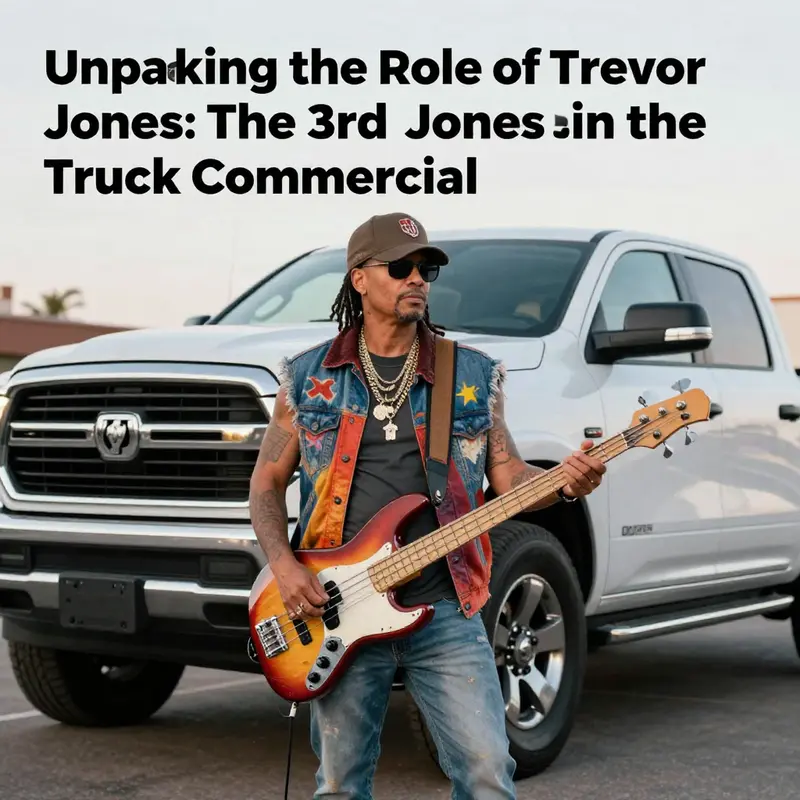
The question, who is the 3rd Jones in the truck commercial, opens a door into a surprisingly intricate corner of modern advertising. It invites a name, a persona, and a little bit of mystery about how a brand uses character, music, and a dash of surrealism to keep a product memorable. In this particular campaign, the third Jones is Trevor Jones, a British actor and musician whose presence threads through the ad as both joke and anchor. The premise is cunning in its simplicity. Three men named Jones form a fictional trio. They play instruments, sing, and tell a story about durability and power, all while the vehicle’s body remains as quiet and as stage as a concert hall backstage. Yet in the most talked-about iteration, Trevor’s Jones is not a studio musician at all but a man who wakes up in an unfamiliar space—the back of a truck—like a character dropped into a dream that has somehow turned into a test drive. The humor emerges from a rhythm that owes as much to deadpan timing as to punchlines. Trevor’s reactions, straight-faced and precise, become the emotional center of a scene that could easily drift into slapstick but refuses to relinquish its understated charm. The chain of moments that follows—confusion, attempt to escape, futile probing of the cargo area, and finally a resignation that is half-comedic, half-philosophical—lands in a space where the audience is invited to laugh with the character rather than at him. That is the heart of the campaign’s appeal: the absurdity of a man discovering he has become, for a moment, a literal occupant of the vehicle’s interior while the exterior world whizzes by, and yet the ad insists on keeping its focus on Trevor’s calm, almost meditative, cadence. In this sense, the third Jones functions as both obstacle and mirror. He is the audience’s stand-in, the figure who must reconcile bewildering circumstance with a straightforward, almost stoic acceptance. The effect is a subtle reminder that a vehicle’s interior—ample space, sturdy construction, and thoughtful design—can carry not just people, but narrative momentum. The humor does not become a loud proclamation of capability; it becomes a quiet testimony to how a well-built vehicle can be a stage for all kinds of stories, including a surreal jailbreak from the ordinary. Trevor’s character, as the bassist of the Jones trio, adds a texture to the performance that is crucial to the campaign’s texture. He brings a laid-back charisma with a slightly quirky visual signature—a look that reads as “comfortable in the spotlight” even when the spotlight shifts to a cargo hold. The deadpan delivery, the small but precise physical choices, and the way he inhabits the space he finds himself in—all of these elements combine to create a micro-narrative that is at once funny and oddly contemplative. The charm lies in how the ad games you with expectation: you anticipate escape, you anticipate a reveal of some clever feature, and you instead receive a compact study in restraint. The truck’s interior becomes a character in its own right, a stage where the absurdity can unfold without knocking the product its due. In cinematic terms, Trevor’s performance uses rhythm as a storytelling device. Each pause, each look away from the camera, and each unspoken question he seems to carry amplifies the sense that the vehicle is a vessel for possibility. The ad does not just sell a machine; it sells a vision of what it feels like to be inside one during a strange, humorous ordeal. The campaign’s longevity and its occasional use of high-visibility broadcast events, including prominent airings during major broadcasts, speak to a broader strategy in advertising that values memorability over mere information. The aim is not to overwhelm with specs but to encode the experience of the vehicle into a moment of shared laughter and astonishment. Trevor Jones’s role as the third Jones helps to anchor that strategy in human scale. The audience is drawn to the reliability of the gag—its consistency across installments, its predictable escalation of absurdity—while remaining curious about the protagonist’s reaction. In other words, the third Jones becomes a conduit for letting the audience feel the vehicle’s capacity through a personal, intimate lens. This approach mirrors how contemporary automotive marketing often negotiates the boundary between demonstration and storytelling. Rather than a straightforward explainer, the narrative invites viewers to inhabit a temporary, humorous crisis and to gauge how a well-made machine can respond with poise. The result is not just a commercial catchphrase but a memory that lingers because of its oddball plausibility and Trevor’s distinctive presence. The production choice to cast Trevor as the bassist—someone whose demeanor could be described as controlled, cool, and a touch offbeat—further deepens the branding logic. The “Jones” concept is intentionally modular: each Jones delivers a facet of the overall identity—musical skill, temperament, and perspective. Trevor’s deadpan humor and his slightly offbeat aesthetic work in harmony with the other two Jones figures, who provide complementary trends in performance and persona. The beauty of this structure is its economy. A single, well-timed moment, followed by a fade or a camera tilt toward the interior’s expanse, suffices to communicate a suite of qualities: space, strength, safety, and reliability—all conveyed through a story that thrives on whimsy rather than overt technical selling. The underlying technique here is to normalize wonder. The audience is invited to delight in the ridiculousness of the setup while simultaneously recognizing that the product is designed to handle the unexpected with grace. Trevor’s role, therefore, becomes an instrument for illustrating that poise. The more the viewer trusts the character’s composure, the more the audience registers the vehicle’s performance as natural, not manufactured. The campaign’s reception has thrived on this delicate balance between humor and respect for the audience’s intelligence. It is a reminder that advertising can be more than a barrage of features; it can function as a small, shared theatrical experience. Trevor Jones, in this light, is not merely a performer; he is a vessel for the brand’s broader message—an invitation to imagine what it feels like to be inside a vehicle that can handle a sudden, surreal shift in reality while keeping the ride smooth and secure. For readers curious to explore how such advertising logic connects to the wider economics and trends of the trucking world, consider a discussion you can find in industry coverage about how trailer orders, market capacity, and cross-border movement shape the narratives brands tell in the showroom and on the screen. In particular, look for discussions about how those dynamics influence the cadence and tone of promotional storytelling—how the rhythm of a campaign aligns with the rhythms of the road, and how a character like Trevor Jones becomes a bridge between product performance and human experience. The result is a chapter of advertising that does more than present a vehicle; it invites you to walk through a moment where humor, space, and craft meet in the back of a truck and stay with you after the screen goes dark. Internal link: for a deeper look at how industry dynamics shape trailer and vehicle marketing, read more in the discussion on Trailer Orders Impact Truckload Margins. Trailer Orders Impact Truckload Margins. External resource: for the original video of the ad and Trevor Jones’s performance in this specific storytelling setup, see the video referenced in the material: Video on YouTube.
The Third Jones: Decoding Character Dynamics in the Truck Ad Campaign
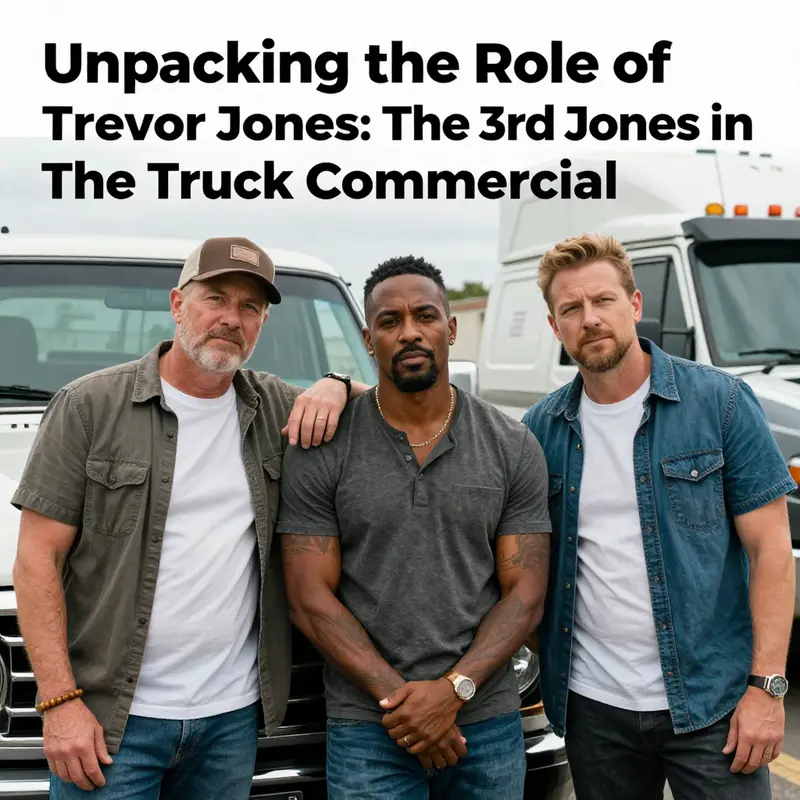
Across the landscape of modern advertising, brands increasingly lean on character-driven narratives that blend music, humor, and performance claims. In discussions about one advertising trope—the trio of characters all sharing the surname Jones—the idea of a “third Jones” often surfaces as a shorthand for a distinctive archetype within a campaign. This chapter explores that dynamic, asking how a third member can anchor a story, deepen audience recall, and subtly calibrate the perceived strength and reliability of a vehicle. While the exact, official existence of a prominent “Third Jones” straight from a branded series remains unsettled in public records, the cultural footprint of the concept offers rich ground for analysis. It invites us to observe how a well-constructed character, even when only implied, can help a viewer feel the product’s power without a hard sell.
The idea of three Joneses standing together—each with a distinct personality and musical taste—provides a useful lens for examining character dynamics in short-form storytelling. A first Jones might carry the guidebook role: the optimist who frames the narrative arc, signaling the right way to approach a challenge. The second Jones adds ballast, ambiguity, or tension: the contrarian who tests notions of capability and reliability. The third Jones then becomes the hinge, the anchor that holds the trio’s instability in check while delivering a rhythmic cadence to the whole piece. In ad storytelling, rhythm matters as much as the evidence of capability. A well-timed joke, a well-timed musical cue, or a deadpan line can make a late reveal land with a clarity that a dozen bullet points cannot. The third Jones, in this sense, often acts as the steady center around which the others orbit. He may appear less flashy, but his presence ensures the story lands with a sense of grounded truth.
If we consider Trevor Jones—a figure sometimes associated by fans with the “3rd Jones” role in discussions of the campaign world—the imagined persona tends to align with a bass-player archetype: cool, laconic, and quietly competent. A bassist is not always the loudest voice in the room; that part of the band secures the groove. In the context of a commercial narrative, the bassist’s job is to provide a reliable heartbeat, a sense that the vehicle’s power and endurance can be trusted even when the action moves through comedic or exaggerated terrain. The busyness of the ad’s scenes—music staging, quick-cut action, and a chorus of personalities—depends on someone who can keep the cadence consistent. The third Jones, in this braid of performances, often becomes the signaling mechanism that tells the audience: this is the moment where the product’s core strengths—durability, traction, and steadiness under pressure—are not mere abstractions but a lived, felt experience.
From a storytelling standpoint, this dynamic also helps the campaign manage audience attention. The first Jones distills the premise into a promise. The second Jones initiates the challenge—terrain, weather, or escalating stakes—pushing the story toward a spectacle of capability. The third Jones, the anchor, absorbs the shock and returns the audience to safety: the vehicle endures, the crew remains intact, the journey continues. In this flow, humor and music are not just adornments; they are functional devices that modulate tempo and emotion. The bassline—quiet, steady, perhaps a touch quirky—serves as a sonic counterpoint to the more extroverted antics of the others. It is a reminder that strength does not always shout; sometimes it hums beneath the surface and carries the story through a moment of satire or suspense.
Yet the real power of this character dynamic lies not simply in the performance but in how it maps onto consumer perception. Advertisers rely on archetypes to crystallize a product narrative into recognizable, repeatable cues. A trio with shared surname becomes a shorthand for unity amid variety. Each Jones stands for a consumer segment or usage scenario: the practical family hauler, the weekend adventurer, and the steady operator who uses the vehicle as a tool for daily life. The third Jones, positioned as the cornerstone, signals that a product’s most persuasive argument is not one amazing trick but a consistent track record. The humor, the banter, and the music create a memorable moment; the quiet competence of the third Jones makes that moment feel trustworthy rather than flashy. The audience leaves with a sense that the vehicle can perform not only in a single stunt but across the range of ordinary, demanding tasks that shape real life.
What complicates the reading, of course, is the lack of a clearly documented official series naming and character breakdown. The public record contains no definitive, widely circulated authoritative source that confirms a formal “Third Jones” in a branded campaign of this exact mold. Instead, the concept appears as a cultural note within online discussions and fan interpretations. This ambiguity is not a barrier but a feature of how contemporary advertising ecosystems operate. Brand teams seldom rely on a single, fixed depiction; they craft flexible archetypes that can be adapted across media, contexts, and audiences. The hypothetical third Jones thus functions as a narrative instrument rather than a fixed character. In this sense, the discussion itself mirrors a broader truth about character in advertising: audiences fill in the blanks, and the most effective anchors are those that invite identification without prescribing it too rigidly.
In reading such a dynamic, one encounters the frictions between myth and evidence. The research results caution that the formal record of a “Third Jones” in a specific truck-ad context is not robust. They suggest the idea may emerge from a combination of advertising concepts, internet memes, and creative recombinations of character settings. These tensions illuminate a crucial point: the power of storytelling in ads often depends less on verifiable details and more on the resonance of the character’s silhouette. A listener who hears a bassline and sees a cool demeanor may immediately infer durability and reliability, even if no campaign spreadsheet confirms that exact characterization. The third Jones becomes a lens, then, for how character dynamics shape perception. If the audience believes in the anchor, the audience accepts the product’s promised performance as a matter of narrative trust rather than a heavy-handed claim.
As we consider the broader implications, the discussion invites readers to notice how brands use character to respond to market realities. In periods of shifting consumer expectations, a well-constructed trio can convey that a company understands both the thrill of discovery and the seriousness of quality. The third Jones helps balance the play with a note of continuity—a reminder that while we enjoy the ride, we count on the vehicle to deliver. For marketers, this balance matters more than a single standout moment. It is the rhythm of the campaign—the way the guitar riff returns between punchlines, the way the bass anchors the tempo—that makes the message endure long after the screen fades to black. As for viewers, the enduring satisfaction often comes from recognizing a familiar dynamic, and feeling reassured by the idea that the vehicle—and the people who operate it—can navigate both the punch lines and the real-world demands of everyday life.
For readers who wish to situate this discussion within broader industry conversations, consider the conversation around character narratives in truck advertising trends. It provides a framework for understanding why audiences respond to a three-person vignette as a cohesive, memorable story rather than a string of features. A useful point of reference outside this chapter is the ongoing discourse about how brands deploy character-centered storytelling to maintain attention in crowded media spaces. See, for broader context, a contemporary analysis of truck advertising trends that highlights how character settings influence consumer perception. See also an external reference for further context on how character narratives shape perception in truck advertising can be found here: https://www.cnn.com/2024/09/12/business/truck-advertising-trends-2024/index.html.
The Third Jones as a Narrative Engine: Humor, Music, and Identity in a High-Profile Truck Campaign
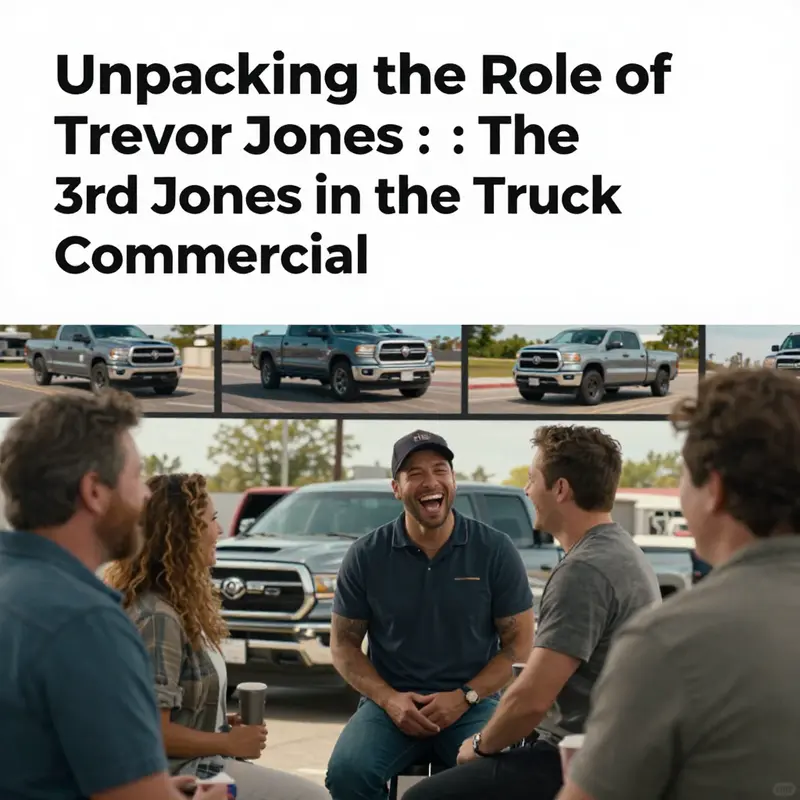
Trevor Jones, the 3rd Jones, enters the scene not as a foreground star but as a deliberate hinge in a three-part story about a beloved pickup brand. The campaign frames a fictional trio called the Joneses, each member embodying a distinct musical persona, while collectively bearing the same surname as a wink to lineage, reliability, and a shared sense of mission. In this setup, the third Jones becomes more than a musician on screen; he acts as a narrative pivot that links durability with a playful sense of self. The execution leans into a blend of humor and music that sticks, not by shouting the vehicle’s features, but by staging a mini myth about character, camaraderie, and a kind of road-tested swagger that audiences can almost hum along to. The sculpted tension between the preparedness of the truck and the improvisational aura of a band is where the campaign finds its liftoff. Trevor Jones, with that bassist’s swagger and the deadpan cadence that marks his on-screen persona, anchors the piece and gives the ad its quiet heartbeat. While the spotlight moves across the other Joneses in the group, the 3rd Jones operates as the paradox these spots need: substantial yet approachable, masculine but unpretentious, and always ready to deliver a line that lands with a smile rather than a shout. In this sense, humor functions as a bridge to trust. If the audience is going to take a leap of faith about a heavy-duty vehicle’s capability, they first need to feel a human connection to the people who embody its promise. The 3rd Jones supplies that bridge by reframing toughness as something compatible with warmth, wit, and a touch of deadpan charm. The music, too, does not merely decorate the visuals; it defines the pace and mood of the narrative, shaping perception as surely as any price tag or spec sheet would. The bass line, steady and unhurried, becomes almost a character in its own right. It provides ballast for the humor, allowing moments of punchline to land without feeling forced. The choice of tempo and tone—down-to-earth, with a hint of the unexpected—creates a sonic environment in which the truck’s advertised virtues can be lived rather than listed. The third Jones, in this context, becomes the guardian of that rhythm, the figure who keeps the groove intact as the scene hops from one vignette to the next. The ad’s humor works at several levels, and its effectiveness rests on how those levels interact. There is the immediate, situational comedy—the misadventures of three friends trying to outplay each other while the truck remains the silent, steadfast prop that holds each scene together. Then there is more subtle humor: the self-aware moments in which the characters acknowledge the absurdity of their own bravado or the cliché of masculine marketing in a way that feels refreshing rather than cynical. This self-awareness is not a repudiation of tradition but a reconfiguration of it. It invites the audience to see the joke as an invitation to engage with the brand on a more personal plane. In this reconfiguration, humor becomes a kind of social contract. It signals that the campaign understands its audience’s appetite for wit and its expectations for authenticity. Humor, in this sense, is not a mere accessory; it is a mechanism for social alignment, enabling viewers to feel seen in a landscape saturated with hyperbolic bravado. The 3rd Jones’s deadpan delivery becomes the hinge that makes humor land without alienating core values. It is not about softening the message of strength but about presenting strength in a more nuanced key, one that resonates with audiences who value cleverness as much as capability. Music amplifies that resonance by providing a shared emotional cadence. When the soundtrack shifts from light flirtation to a more determined, almost anthemic pulse, viewers sense that the narrative is moving from a playful vignette toward a convincing assertion of the product’s reliability. The synergy is not accidental. It is a deliberate orchestration of two sensory channels—auditory and visual—to create a holistic impression. The result is a memory product and a story that can be recited long after the screen goes dark. The 3rd Jones, with Trevor Jones’s particular charm, embodies the idea that legacy and modern identity can coexist in the same frame. The character’s style—laid-back yet precise, with an unmistakable presence—echoes the broader brand mood the campaign cultivates: a heritage that does not demand reverence but earns it through consistency, humor, and a collaborative spirit. This combination matters because audience attention is a precious currency. Humorous moments are easier to share, and music is easier to recall; together they compound the message, making it more likely that viewers will remember both the character and the product when they face a real purchasing choice. The campaign’s cast and concept also speak to the wider cultural context in which advertising now operates. The late-2010s and early-2020s audiences grew adept at parsing sincerity from bravado, irony from arrogance, and performance from real-world utility. By leaning into humor that both teases and respects the audience’s intelligence, the ads invite viewers to be part of the joke rather than passive recipients. The musical layer further cements a sense of belonging. In a landscape where brands vie for quick impressions, a well-crafted tune becomes a sonic cue that travels beyond the screen and into playlists, social feeds, and word-of-mouth discussions. The 3rd Jones’s role thus fulfills a double purpose: he anchors the humor with a personality that viewers recognize as trustworthy, and he helps tether a memory anchor to the vehicle’s perceived resilience. In this way, the ad moves beyond a simple feature reel and becomes a short, repeatable story about character, reliability, and camaraderie. The discussion of the 3rd Jones’s character also invites reflection on how narrative devices can sustain brand interest across multiple installments. Humor allows room for variation without fragmenting the central promise, while music preserves continuity from one scene to the next. When audiences see the same trio in different contexts, the third Jones remains the constant, a reminder of the message’s core: that the vehicle stands up to the stories the characters tell and the adventures they chase. The approach illustrates how modern campaigns can build a sense of myth without resorting to grand, unreachable ambitions. It uses intimacy—between performers, between characters, and between viewers and the screen—to cultivate a felt sense of loyalty. The character of Trevor Jones as the 3rd Jones becomes more than a role; he is a narratorial touchstone that signals to audiences that humor and music are not mere adornments but essential channels through which the brand’s ethos travels. For practitioners and scholars, this case offers a cautionary note about how to structure a campaign that seeks to endure: allow the humor to be human rather than hyperbolic, let the music breathe and carry emotion, and place a character whose presence can be read as both lineage and invitation. The result is a campaign that is memorable not because it overshadows the product, but because it treats the product as part of a larger, more relatable story. As audiences increasingly demand meanings beyond the hinge of a single feature, the 3rd Jones demonstrates that a well-crafted musical humor device can anchor a brand narrative in a way that feels both authentic and aspirational. In that light, the ad becomes less a commercial and more a cultural moment—one where humor, rhythm, and shared myths converge around a vehicle that promises not only strength but also companionship on the road ahead. For readers exploring how such devices travel across markets and media, this example suggests a path: build a character who personifies the brand’s promise, pair that persona with a musical and comedic tone that invites participation, and let the audience become co-authors of the story at every new airing and platform. See the broader discussion on how humor in advertising works and why it matters for additional context, and consider how audience expectations evolve when a campaign leans into self-aware wit alongside enduring sonic branding. excess-capacity-in-the-trucking-market-insights. For further reading, explore the external resource on why humor in advertising matters in today’s media landscape: https://www.adweek.com/brand-marketing/how-humor-in-advertising-works-and-why-it-matters/.
Behind the Third Jones: Production Mythos in Truck Advertising
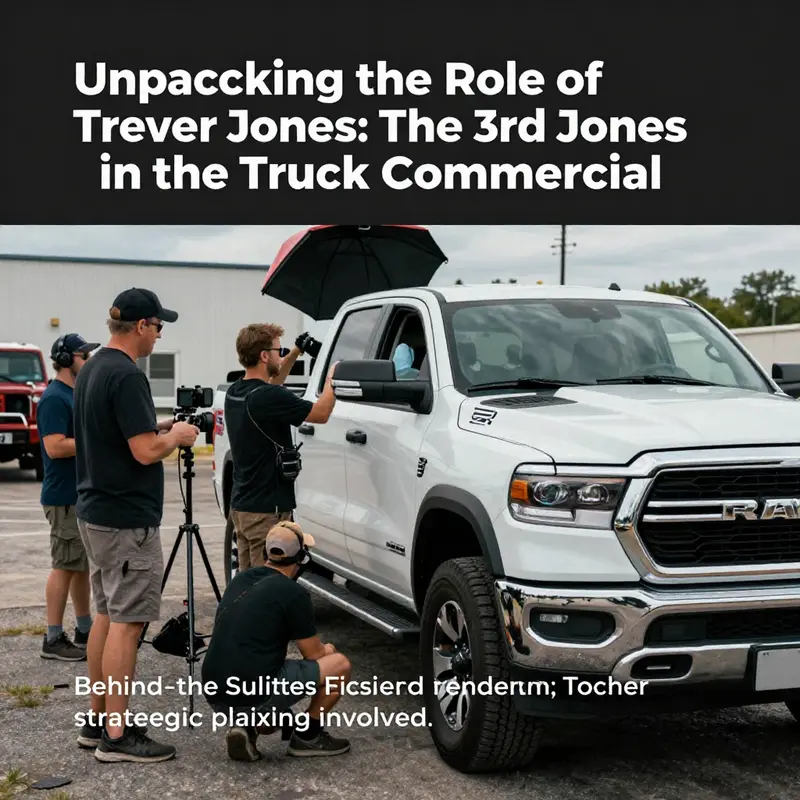
In truck advertising the phrase ‘third Jones’ functions as a narrative device rather than a single credited performer. The available materials suggest a production philosophy that fuses song, timing, wardrobe, and camera into a coherent portrait of endurance. The third Jones acts as the steady bassline in a tempo-driven narrative: quiet, dependable, and visually distinctive across takes. Because official credits are often opaque, this chapter treats the idea as a case study in production mythmaking: the concept, casting, rehearsal, wardrobe, set design, music, and post-production decisions work together to imply reliability without shouting it. The role is less about one performer than about a complete performance ecosystem where the rhythm of the track, the cadence of the dialogue, and the camera’s gaze shape how viewers perceive the truck’s capabilities. In this view, the production element becomes a collaborative choreography—directors, agencies, writers, and performers shaping a brand’s persona through craft rather than a single name. The absence of a public, verifiable credit does not diminish the insight: it highlights how modern campaigns rely on an ongoing design process that can be difficult to pin to a single individual, yet can leave a durable impression of strength, camaraderie, and road-tested reliability.
Echoes of the Third Jones: A Study in Advertising Mythology
Across the field of advertising, the idea of a third member named Jones in a truck campaign has become a touchstone for exploring how audiences interpret branding in minimal formats. The commercials rely on concise dialogue and strong performances to build a trio of Jones whose dynamic signals endurance and practicality. The campaign frames the truck as a partner in everyday myth making, a durable companion that survives the road’s challenges. In this arc, the question of who precisely plays the 3rd Jones becomes less about biography and more about signature, mood, and resonance with the core promise of reliability.
From a reception standpoint, the identity of the third Jones is secondary to the sense of presence created by the group. Audiences map traits onto faces and come away with a shared story of resilience rather than a verified credit. The third member often serves as the grounding hinge, tempering swagger with calm certainty. This pattern mirrors broader marketing practices that invite viewers to invest in personas as part of a brand narrative, rather than in a single celebrity.
Scholars emphasize that the social life of interpretation matters as much as the produced image. The production crew, timing, color palette, and editing cadence cue viewers to attribute roles and qualities without explicit dialogue. The result is a cultural moment where the memory of the ad persists because viewers feel they participated in its meaning, not merely watched it unfold.
Ultimately, the absence of transparent cast credits can become a feature rather than a flaw: it encourages audiences to co-create the story, reinforcing the idea that a durable product can belong to a shared memory rather than a single named performer. The third Jones functions as a symbol of reliability that aligns with the brand promise of performance in challenging conditions.
Notes for researchers: this case illustrates how brands craft social experiences around compact performances. It invites further inquiry into how audience interpretation, production design, and marketing economy converge to produce a lasting memory around a vehicle that endures.
Final thoughts
The evolution of Trevor Jones as the ‘3rd Jones’ in the Dodge Ram truck commercials encapsulates not just effective advertising but also an authentic connection with diverse audiences in logistics and transportation. By harnessing humor and music, the campaign successfully showcases the vehicle’s durability while enhancing cultural dialogues around masculinity, camaraderie, and reliability. Trevor Jones’s character resonates powerfully with logistics professionals, small business owners, and construction teams seeking trustworthy and robust vehicles. As these commercials continue to entertain and inform, Trevor Jones solidifies his place not only as a beloved character in advertising but also as a symbol of quality in the trucking industry.