
Understanding the financial investment associated with the Dodge Ram 3500 truck is crucial for logistics and freight companies, construction firms, and any small business managing delivery fleets. This article sheds light on the current market prices, the factors influencing these costs, and strategic buying considerations for commercial buyers. Each chapter focuses on specific aspects of pricing, options available, and how to approach the procurement process to ensure the best value for your investment.
Hidden Price Tags: Reading the Real Cost of the Heavy-Duty Commercial Pickup Featured in the Ad
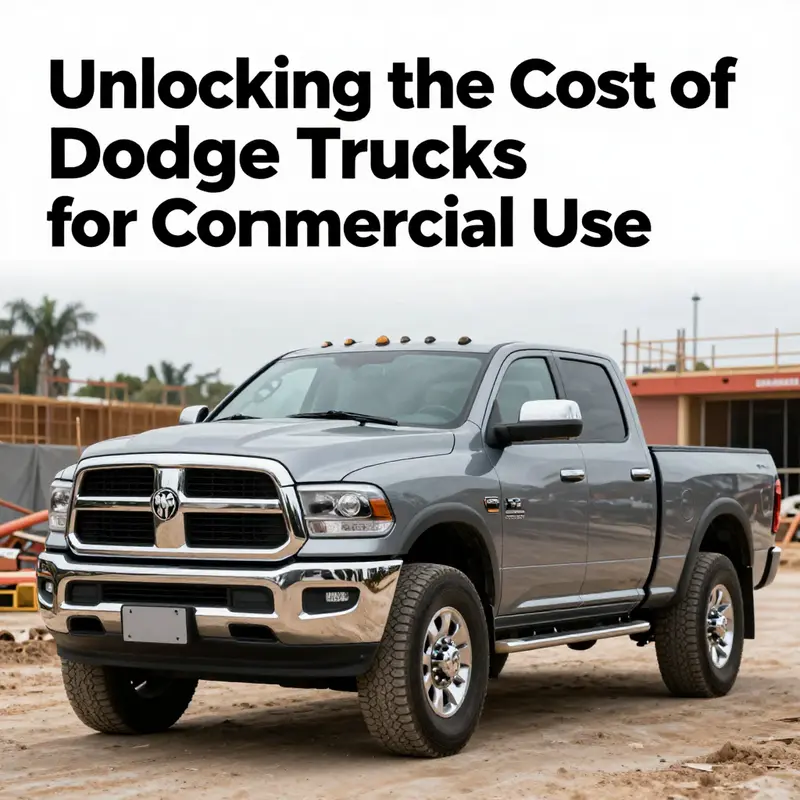
When a commercial-heavy pickup dominates the screen, it’s easy to remember horsepower and payload but forget the price tag that follows the banner. The vehicle shown in the ad is more than a momentary impression; it sits at the intersection of performance, purpose, and dollars. What viewers often don’t realize is that the sticker price is only the starting point. The actual amount a buyer pays depends on how the truck is configured, what the cab contains, the drivetrain selected, and the array of options that turn a workhorse into a tailored asset. In practical terms, the base entry in this class starts around the mid-$50,000s, but that figure quickly shifts as fleets demand more capability, comfort, and reliability. The path from screen to street is paved with choices, incentives, and, for commercial buyers, strategic pricing that can be shaped by fleet agreements and dealer programs rather than a single manufacturer sticker.
From the outset, the base price for a new heavy-duty pickup in this category—one built to handle tough jobs and long shifts—hovers around a representative starting point. In the current market climate, the basic configuration with a standard cab and rear-wheel drive typically lands near the low-to-mid $60,000s before taxes and fees. This baseline covers the engine most people would consider “standard” for work purposes, a drivetrain that works reliably with a full day’s haul, and a cabin that gets the job done without frills. But that starting point is just that—a starting point. The moment you add a second crew member, increase the cab size, or opt for a four-wheel-drive setup, the price climbs. Swap to a longer wheelbase, upgrade the interior materials, or add advanced towing packages, and the cost moves higher still. In short, the price is a function of need: the more you require from the truck—more power, more space, more sensors, more protection from the elements—the more you’ll pay to secure it.
The economics here extend beyond the baseline. Commercial buyers often negotiate volume pricing, especially when turning a single purchase into a fleet deal. Fleets are not simply a collection of identical trucks; they’re a rolling calculation of utilization, maintenance costs, and downtime. For many operators, the financial calculus includes not only the upfront purchase price but also the total cost of ownership: fuel efficiency, maintenance intervals, warranty terms, and residual value after three, five, or seven years of heavy use. These considerations can tilt the decision toward a configuration that might carry a higher price tag upfront yet offer lower lifetime costs through better reliability, reduced downtime, or more favorable financing terms. In this sense, the sticker price becomes part of a larger equation that weighs immediate cash outlay against the total economic value delivered over time.
Within this framework, the market for the heavy-duty pickup has evolved alongside changes in the brand’s strategy and the broader automotive landscape. The lineage of the traditional full-size pickup in this segment has shifted, with the surviving parts of the lineup proceeding under a dedicated truck division rather than as a single, all-encompassing family. For buyers, that transition matters. It clarifies where to look for documentation, warranties, and service networks, and it reframes expectations about how pricing is structured across trim levels, option packages, and after-sale offerings. The base price remains the anchor, but the remainder of the price architecture is built from a combination of configuration choices and the specifics of how the vehicle is intended to perform in daily commercial use.
To translate these ideas into a practical shopping approach, consider the way features are grouped in this class. A work-ready truck might include a heavy-duty suspension package, a towing system engineered for the maximum gross combination weight, and an interior designed for long shifts rather than pageantry. Each element adds value for certain customers and adds cost for others. A cabin with larger seating, premium sound, and higher-grade materials improves driver comfort but also raises the price. A more capable four-wheel-drive system increases traction in adverse conditions and, again, adds to the total cost. Similarly, specialized options—such as a chassis cab configured for a body builder or a refrigerated conversion—can dramatically alter the final figure. The result is a spectrum rather than a single line item. For commercial buyers who operate in fluctuating markets, this spectrum is not a flaw but a feature: it allows teams to tailor a vehicle to the job while keeping the door open for future adjustments as needs change.
The procurement landscape for these trucks is also shaped by the broader market realities that affect all large-scale vehicle purchases. The base price and the configuration-driven costs exist alongside incentives, financing options, and dealer-specific terms. Fleet pricing, in particular, can produce meaningful savings when multiple units are purchased and managed under a single agreement. Dealers and manufacturers often offer programs designed to reduce the per-vehicle cost, align maintenance schedules with operating realities, and provide predictable budgeting for organizations that rely on predictable uptime. In practice, this means the price a commercial buyer pays may differ significantly from the sticker price for a single unit ordered off the showroom floor. The same is true for the choice of options: a modest, well-chosen package can deliver the job-ready capabilities you need without pushing the price into a steep ascent. A different combination, chosen for comfort and convenience, can push the price higher while delivering benefits that are harder to quantify in the short term—easier night drives, faster job turnovers, and better driver retention.
On the question of international procurement, some buyers explore options outside domestic markets to access a broader mix of vehicles or accessories. In markets where supply chains span continents, the price equation becomes more complex. When sourcing from overseas suppliers—such as those that export reconditioned or demo units—pricing is built not only on the base vehicle price but on export logistics, import duties, and supplier markups. The structure often includes tiered pricing that reflects the level of customization and material quality. The delivered price depends on lead times, shipping terms such as free-on-board (FOB) or cost, insurance, and freight (CIF), and compliance with emission standards and safety checks performed during pre-shipment inspections in strategic hubs. In such cases, the final landed cost for a commercial operator includes freight, insurance, duties, and the potential need for additional localization work once the vehicle arrives. While these routes can offer access to different configurations or older model years at competitive prices, they also introduce a layer of complexity that requires careful project management and risk assessment. Lead times may stretch beyond domestic timelines, and the paperwork involved in cross-border purchases can require specialized expertise to minimize delays and miscommunication.
Within this broader ecosystem, it remains essential for buyers to anchor their decisions to current, authoritative sources. The realities of pricing shift with model year updates, shifts in dealer incentives, and changes in supply chain dynamics. To avoid misinterpretation, it is prudent to verify the latest MSRP, factory options, and incentives with official channels or authorized dealers. Those official sources provide the most reliable baseline against which to measure any fleet or aftermarket packages. To deepen understanding of cross-border considerations that can influence pricing decisions in international procurement, one practical resource to consult is a cross-border regulatory issues event that outlines the unique compliance pieces that impact pricing and delivery timelines in cross-border truck deals. For a practical look at cross-border regulatory context, see tcas-cross-border-regulatory-issues-event.
When it comes to anchoring a price discussion, a reliable starting point for understanding current pricing trends and model availability is to look at the official, real-time information on trim levels, pricing, and factory options for the latest large pickups in this class. A dedicated manufacturer page presents the most up-to-date MSRP, dealer incentives, and factory options, which helps buyers build a precise expectation of what a configured vehicle would cost. For readers who want to anchor their budgeting in the most authoritative source, checking that official page alongside a local dealer’s quote provides a grounded view of what a job-ready pickup costs in today’s market. It’s worth noting that those pages are frequently updated to reflect new option packages, updated technology, and changes in market demand, so a price that seems fixed one week may shift the next as features are added or removed from the lineup.
In short, the advertised price on a commercial-ready heavy-duty pickup is just the first rung on a ladder that includes a spectrum of configurations, fleet terms, and whether the unit will be burdened with a custom body or a factory option bundle. The ad’s impression of power is matched by a pricing reality that requires thoughtful evaluation of needs, total cost of ownership, and alignment with procurement strategy. Commercial buyers should approach the purchase as a strategic investment: identify the essential capabilities, compare the incremental costs of expanded capacity, and negotiate terms that deliver predictable performance and support over the vehicle’s life. When the time comes to place an order, the price you finalize will reflect not only the vehicle you select but also the path you choose to finance, insure, service, and eventually decommission or replace the fleet. External resources will help close the loop by offering independent perspectives and official pricing baselines, while internal references guide you through cross-border considerations that can affect lead times and landed costs. For those navigating international routes, the combination of export logistics, duties, and compliant documentation can shift the economics in meaningful ways, reinforcing the idea that price is a dynamic, negotiated outcome rather than a single, fixed figure. External resource: https://www.dodge.com/vehicles/trucks/ram-1500.html
From Trim to Towing: What Drives the Cost of a Heavy-Duty Commercial Pickup

Pricing a heavy-duty commercial pickup is less about a single price and more about a careful balancing of capability, configuration, and total ownership costs. In practice, the sticker shock you might feel when you first see a quote is a reflection of a long list of choices that tailor the truck to a business’s exact needs. The base point in this segment sits around the mid-to-high fifty thousand dollar range for a standard configuration with a minimal equipment load. That starting figure is not a single price everyone pays, but a baseline from which fleets and businesses build upward through choices in cab design, drivetrain, bed length, and a spectrum of option packages that add capability, comfort, and safety. The important thing for anyone evaluating a commercial heavy-duty pickup is to understand how each decision you make reshapes the total cost of ownership, not just the upfront price. When a fleet manager sits down with a dealer, they are not negotiating a static price but mapping a solution that fits the job at hand and the cash flow of the operation.
Trim levels, in this context, function as the most visible levers. Basic or entry trims cover the essential work-truck remit: rugged frames, practical interiors, and reliable powertrains designed to perform under load. As a rule, choosing a higher trim level yields tangible gains in materials and technology—think more robust seating, upgraded dashboards, and more responsive technology suites. Those premium touches come with a price premium, of course, but they also deliver longer-term value by improving driver comfort, reducing fatigue on long shifts, and enabling more precise control over heavy payloads. For fleets that rely on vehicles to be on the road for extended periods, the incremental cost of upgrading to a higher trim is often justified by productivity gains, better driver retention, and fewer downtime incidents.
Beyond the trim, the configuration of the truck itself can move the money needle in distinct ways. The cab style matters. A regular cab emphasizes payload and efficiency, a crew cab expands crew space and rear seating comfort, and a mega cab offers the most interior room for crews and additional storage. Each choice shifts the price, not only because of the extra metal and fabric but because the overall mass, shifting center of gravity, and interior volume change the engineering requirements for the drivetrain and chassis. A similar logic applies to bed length and wheelbase: longer beds support bigger payloads but also alter weight distribution, fuel economy, and maneuverability in urban settings. When these structural choices are paired with a chassis cab variant—designed for upfitting by body builders for specialized uses such as refrigeration, tow, or flatbed applications—the price moves again, often in a way that reflects the bespoke nature of the final product.
Drivetrain choices carry a second tier of pricing implications. The availability of all-wheel drive or four-wheel drive generally costs more up front and adds a different calculus for maintenance, tire wear, and fuel consumption. In commercial use, 4×4 capability can translate directly into higher uptime in challenging environments, which can be critical for a business that operates year-round in varied terrain or weather. However, the premium for a 4×4 system is not merely about traction; it also affects annual operating costs through maintenance intervals and possible insurance considerations. The interplay between torque, axle ratio, frame strength, and cooling capacity becomes more pronounced in heavy-duty configurations, especially as the vehicle is tasked with pulling or carrying heavy loads across demanding routes. For buyers, the practical takeaway is to evaluate the real-world duty cycle: how often will the truck encounter steep grades, rough roads, or off-road sections? The answer to that question helps determine whether the extra upfront cost for a specific drivetrain aligns with the total cost of ownership over the vehicle’s service life.
Options and packages form the third major axis of price formation. Towing packages, for instance, are more than a badge of capability; they often bundle cooling systems, upgraded suspensions, hitching hardware, and electronic trailer controls that enhance safety and efficiency when pulling large trailers or heavy equipment. Off-road equipment—skid plates, higher ground clearance, specialized tires, and sometimes stronger dampers—appeals to segment users who must operate in rugged environments. Interior upgrades—leather upholstery, enhanced climate control, and larger infotainment screens—improve driver comfort, which translates into longer shifts and sustained productivity on the road. Upgraded audio systems, around which a business may build a premium driver experience, contribute to driver satisfaction and retention. Then there are advanced driver-assistance features, which can range from adaptive cruise control to lane-keeping assist and collision mitigation. These systems add safety and efficiency, but they also carry a cumulative cost that grows with each additional feature. When you begin to combine packages, the total price can rise quickly, but so too can the utility and resilience of the fleet, particularly in high-demand commercial contexts where uptime and safety are non-negotiable.
It helps to keep an eye on the practical economics of a fleet purchase. The first consideration is whether the truck will operate courtly as a solitary asset or as part of a larger fleet where scale brings its own economics. Fleet purchasers often benefit from volume discounts, negotiated financing terms, and centralized maintenance programs that reduce per-vehicle ownership costs over time. The negotiation process can also unlock incentives tied to business size, contract terms, or long-term service commitments. In practice, a business evaluating a heavy-duty pickup will assess not only the upfront price but also the vehicle’s depreciation profile, projected fuel costs, and maintenance obligations. A well-chosen configuration minimizes downtime and repair costs and improves predictability of operating expenses in a budgeting cycle, which can be more valuable than a small reduction in the sticker price. This is where the lifecycle mindset matters: while a trim upgrade might raise the immediate bill, it can lower costs further down the road by reducing repetitive repairs, improving driver efficiency, and extending tire life through better weight distribution and traction control.
When a business stands at the price conversation, there is also the reality of the market context. The cost of a heavy-duty commercial pickup does not exist in a vacuum. It is shaped by supply chain dynamics, dealer incentives, and financing options that reflect broader economic conditions. For fleet buyers, the ability to time orders with favorable margins can be as valuable as the exact configuration chosen. Orders placed in larger volumes may qualify for discounts or accelerated delivery timelines, while smaller fleets or single-unit purchases might rely more heavily on standard factory pricing, with fewer levers to pull in terms of discounts. The bottom line is that the least visible but most impactful element in pricing is the way a business negotiates the overall package, including optional equipment and service commitments, in the context of current market conditions. The negotiations may hinge on how imminent a vehicle is to deployment, how critical uptime is to the operation, and how a dealer can bundle maintenance or telematics services with the asset itself.
For readers who want to see how these dynamics play out in practice, the economics of fleet purchases are often tied to broader industry patterns such as production cycles, order backlogs, and shifts in demand for trailers and equipment that rely on these trucks. Analysts frequently point to the way order cadence affects margins for both manufacturers and buyers. In this sense, the price you negotiate is not just a function of your chosen configuration but also of the broader supply and demand environment that governs how quickly units can be delivered and how much competition exists among buyers for available stock. This intersection of configuration, market timing, and negotiated terms creates a complex, but navigable, pricing landscape for anyone tasked with outfitting a commercial fleet.
As a practical step, prospective buyers should approach pricing with a structured mindset. Begin with a clear statement of duty cycle: what routes, climates, and payloads will be typical for the vehicle? Then map the required capabilities to a baseline specification, and build upward only as needed. This disciplined approach helps prevent feature creep, where a series of attractive add-ons slowly elevates the total cost without delivering proportional value. It also helps in comparing two or more quotations where each unit reflects a different blend of trim, body, and option packages. It is worth noting that the base price, while informative, does not capture every potential cost, including dealer fees, taxes, registration, and the possible need for after-market towing or stabilization equipment. In some cases, financing terms or fleet incentives can reduce the total cost of ownership over time, even if the headline price appears higher.
The negotiation and pricing process can also be influenced by how a business structures its fleet purchases. Some buyers prefer a single, consistent configuration across the entire fleet to simplify maintenance,training, and parts inventory. Others opt for a mix of configurations to meet diverse job requirements, accepting the added complexity in exchange for greater flexibility. Both strategies have cost implications. A uniform fleet can reduce spare parts inventories and streamline service intervals, but it may require accepting a more generalized spec that lacks some job-specific optimizations. A mixed fleet may maximize on-job performance while increasing the administrative and repair-access overhead. The key is to balance uptime, driver satisfaction, and total cost of ownership against the upfront pricing sheet.
Industry context helps explain why a given configuration feels right for a business at a particular moment. Trends in trailer orders and the broader truckload market can push fleets to re-evaluate their equipment needs. When demand for trailers or specialized bodies rises, truck manufacturers and dealers tend to adjust incentives, lead times, and financing packages to align with shared business objectives. For readers who want to explore this dimension in more depth, see the analysis on trailer orders impact truckload margins, which discusses how order patterns influence pricing strategies and profitability. This perspective reinforces the notion that a truck’s sticker price is part of a larger conversation about capacity, utilization, and operational efficiency, rather than a standalone figure.
In sum, the cost of a heavy-duty commercial pickup is the product of several interlocking decisions. The base price provides a starting point, but trim level choices, cab and bed configurations, drivetrain options, and a spectrum of packages all combine to raise or stabilize the final outlay. Fleet considerations like volume discounts, financing terms, maintenance programs, and the anticipated duty cycle add further layers of impact. The practical takeaway for buyers is to treat price as a function of utility: choose configurations that maximize uptime, safety, and driver productivity while avoiding unnecessary features that do not deliver measurable business value. With that approach, a business can justify the investment and secure a vehicle that serves as a reliable cornerstone of daily operations, rather than a static line item on a budget spreadsheet. For more context on how broader market dynamics influence pricing decisions in this sector, readers can explore related analyses such as the trailer orders impact truckload margins. This reference helps frame the pricing conversation within the rhythms of demand, capacity, and the strategic considerations that drive fleet management decisions.
External reference: https://www.dodge.com/trucks
Commercial Pricing Realities: Discounts, Customizations, and Real-World Valuation for the Brand’s Heavy-Duty Pickup
Pricing the brand’s heavy-duty pickup for commercial use is rarely a straight line from sticker to sale. It involves a dynamic mix of factory configuration, fleet incentives, and on-the-ground customization that changes with demand, volume, and your business’s ongoing needs. The conversation begins with a practical baseline: what does a new, basic configuration typically cost before any fleet discounts or specialized equipment? From there, the cost can evolve in multiple directions, driven not only by the core chassis and drivetrain but also by decisions that reflect the realities of commercial use—hard-wearing interiors, extended duty cycles, and the many hours a work truck spends on the road or in the shop. Understanding this pricing landscape requires both a methodical approach to the numbers and a clear view of how discounts and tailor-made configurations interact to create value that goes beyond a simple price tag. In other words, price is not just a number; it is a negotiating framework shaped by the buyer’s scale, the supplier’s programs, and the business outcomes the vehicle is meant to deliver over its lifetime.
To begin, consider the most basic entry point for the brand’s heavy-duty lineup in a standard, minimal setup. The base price for a new model of this class commonly starts around the mid-to-high fifty-thousand dollars range in the most straightforward cab-and-drive combinations. That figure serves as a reference point, not a final price, because the true cost of ownership for a commercial fleet is rarely determined by the sticker price alone. For a single vehicle, a few thousand dollars of difference may come from a choice of engine, transmission, or a different bed length. Yet the real delta appears when you accumulate multiple units and begin to layer in fleet incentives, maintenance plans, and optional packages designed to support work-life uptime and safety. In the context of a commercial purchase, the sticker price is the first number a buyer negotiates, but the ultimate price often hinges on the total value proposition—the combination of discounts, service arrangements, and the capabilities the vehicle carries into daily operations.
Discount programs for commercial buyers are more than a single “percentage off.” They are a constellation of incentives designed to reward scale, predictability, and strategic partnerships. The most widely utilized avenue is the manufacturer’s Fleet Sales program, which is structured to recognize business customers that place regular, multi-unit orders or maintain a constant procurement rhythm. The precise discount a fleet buyer can secure does not come from a single formula. It depends on several variables: the model family you’re evaluating, the engine type selected, and the total number of vehicles involved in the purchase. Diesel options, for example, can shift the economics favorably for long-haul or high-workload duties due to their efficiency profile and durability in tough operating conditions. The actual percentage off the base price, the timing of the incentive, and whether it applies to a single unit or an entire order are all contingent upon the current incentive calendar and the terms of the fleet program in place at the time of purchase.
Seasonal promotions also enter the conversation. These promotions can come with lease-to-own options or flexible financing that reduces the upfront burden and makes cash flow more predictable for a business with tight margins or variable utilization. It is common for a fleet buyer to combine several levers: a manufacturer-backed incentive, a regional dealer incentive, and a lease arrangement that aligns with the company’s depreciation and tax planning. The goal is to fold the best possible price into a structured financing plan that preserves capital for other critical assets, such as equipment for the job site or technology upgrades that improve productivity and safety. Because every fleet is different, the precise mix of discounts and financing arrangements should be negotiated through an authorized commercial or fleet-focused channel. A seasoned fleet solution specialist can help align the incentive landscape with the company’s budget cycle and procurement policy, ensuring that the final price reflects both the immediate cash outlay and the long-term return on investment.
Beyond the base price and the initial fleet discount, the scope of customization available on a commercial heavy-duty pickup expands the dialogue from “how much” to “how functional.” The truck’s core platform is built to accept a range of heavy-duty configurations, including chassis cab variants and specialized bodies that convert the vehicle into a utility truck, refrigerated unit, dump bed, or a chassis for other work-specific applications. These chassis cab configurations are not mere cosmetic add-ons; they are structural adaptations that determine weight distribution, payload readiness, and the vehicle’s ability to accommodate high-demand equipment like hydraulic lifts, heavy-duty winches, or reinforced electrical systems for auxiliary machinery. Each customization carries its own cost and delivery timeline, which can affect the overall price in ways that a buyer might not anticipate when starting with a base configuration.
Intertwined with the mechanical and structural changes are interior and electrical upgrades designed to withstand the rigors of commercial use. Heavy-duty work fleets demand seats and materials that survive long shifts, dusty or muddy environments, and frequent ingress and egress. Durable vinyl upholstery and reinforced dashboards are common choices, not as luxuries but as investments in uptime and cleanliness. The electrical architecture may be widened to support additional devices and on-board electronics, from power inverters to complex lighting systems and telematics modules. Telematics integration is increasingly a standard consideration in modern fleets. It enables real-time monitoring of vehicle health, driver behavior, and route optimization. This is not just about data collection; it translates into tangible savings through reduced maintenance surprises, safer driving practices, and better asset utilization. The pricing implications of telematics can be significant, but many buyers regard them as essential for fleets that must maintain a high degree of operational discipline and accountability.
The conversations about price and customization naturally lead to a practical framework for evaluating value. In a commercial setting, the total cost of ownership should be assessed over a multi-year horizon, with careful attention paid to maintenance costs, downtime, and resale value at the end of the vehicle’s service life. Fleet buyers often run through scenario analyses that compare different engine choices, drivetrain configurations, and the presence or absence of certain premium interior packages. A higher upfront price can be justified if it translates into fewer unexpected repairs, better fuel efficiency for high-mileage runs, or more consistent uptime due to enhanced electrical and telematics support. Conversely, a leaner configuration may be attractive for small fleets with variable work patterns, if the perceived risk of downtime can be managed through a robust service agreement and predictable maintenance costs.
When thinking about the interplay between discounts and customization, it is useful to recognize that volume planning can unlock a synergy that reduces total costs in a way that individual price tags cannot. A larger order can secure more favorable terms on both the base vehicle and the factory-installed options, especially when the buyer demonstrates a clear, ongoing demand signal that helps the manufacturer forecast production and parts allocation. In practice, that means buyers seeking maximum value should discuss not only the price per unit but also the cadence of deliveries, the availability of interim units, and the future potential for additional orders within the same fiscal period. An experienced fleet advisor can help map these dynamics to the company’s budgeting process, ensuring that the negotiated price aligns with both short-term cash flow and long-term capital planning.
As the conversation expands from price to performance, the role of dealer networks becomes increasingly important. Commercial buyers benefit from working with authorized channels that specialize in fleet solutions, configurations, and post-purchase support. These professionals understand the nuances of telematics integration, warranty extensions, and service contracts that are tailored to heavy-duty applications. They can also provide insights into the practical realities of the purchasing process, including lead times for chassis cab bodies, the feasibility of custom paint or branding options, and the logistics of vehicle delivery to a fleet operation that may span multiple sites. In many regions, dealers offer value-added services such as on-site fleet evaluations, driver training programs, and proactive maintenance scheduling that help minimize downtime and extend the life of the investment.
To ensure that a commercial buyer secures the most favorable outcome, it helps to approach the process with a defined procurement strategy. A clear specification of needs—payload requirements, towing capacity, cab style preferences, and the exact nature of any specialized bodies—acts as a north star during negotiations. It reduces the likelihood of feature creep, where add-ons accumulate beyond what is truly necessary for daily operations. It also provides a framework for comparing offers across different dealers or regions, ensuring that the chosen configuration delivers the most efficient combination of performance, durability, and cost. A well-documented procurement plan can also support negotiations around service levels, such as maintenance intervals, response times for roadside assistance, and the availability of loaner vehicles during major repairs. The objective is not merely to minimize price but to maximize uptime, reliability, and predictable operating costs over the vehicle’s lifecycle.
Within this pricing and customization landscape, the end consumer should be mindful of the broader regulatory, insurance, and administrative considerations that accompany a commercial vehicle purchase. Depending on the sector, there may be specific regulatory requirements for vehicle specifications, safety equipment, and body configurations. Insurance premiums can be sensitive to the chosen setup, including payload characteristics, aftermarket electrical systems, and telematics capacity. The administrative process—title, registration, and potential fleet-wide accounting treatments—also deserves attention, especially for larger organizations where procurement is embedded within a formal asset management framework. When possible, engaging a fleet-focused consultant or working with a dealer that has robust experience in commercial operations can help translate technical specifications into compliant, cost-effective procurement outcomes. The result is a purchase that is not just financially optimized but operationally robust, with a configuration that directly supports the company’s service delivery and customer commitments.
For readers who want to explore how these discussions translate into real-world pricing psychology, it helps to examine the broader market context and the practical implications of scale. The economics of commercial vehicle purchasing are influenced by the ebb and flow of orders, the reliability of supply chains for chassis and bodies, and the evolving expectations around fuel efficiency and maintenance transparency. A fleet that prioritizes predictable maintenance costs may be better served by a higher upfront investment in durability and a comprehensive service plan, rather than a lean configuration that shifts risk to out-of-pocket repairs and unscheduled downtime. In contrast, a smaller operation with irregular utilization may find that a lighter configuration paired with favorable financing offers yields a more attractive monthly cash flow, even if it means accepting higher mileage risk over time. The underlying principle is that price, discount, and customization must be evaluated in the context of usage patterns, maintenance philosophy, and strategic priorities—an alignment that turns a nominal price into genuine business value.
As you move toward finalizing a purchase decision, it is prudent to consult primary sources of information and leverage the most current data on incentives and configuration options. The manufacturer’s commercial channel is the most authoritative starting point for baseline pricing, available configurations, and the current state of fleet incentives. Meanwhile, the fleet-specialist dealer can translate those program details into concrete numbers tailored to your order size and delivery requirements. When you have a precise specification in hand, including cab style, engine preference, and all anticipated customization, you can begin to model the price range with confidence. At this level, the conversation shifts from abstract potential to actionable numbers, with a clear pathway to a final quote that reflects both the negotiated discounts and the unique capabilities your business requires. The result is a pricing scenario that reflects not just the cost of a single vehicle but the full spectrum of value your fleet receives—uptime, reliability, safety, and the ability to fulfill commitments to customers with consistent performance over time.
In essence, commercial buyers are balancing three intertwined objectives: securing a favorable unit price through manufacturer and dealer incentives, obtaining the exact configuration necessary to perform the job efficiently and safely, and designing a procurement approach that supports stable budgeting and predictable maintenance. The optimal outcome is a combination of competitive pricing, purposeful customization, and a service framework that underpins long-term fleet viability. To support this, buyers should engage early with fleet-focused channels, prepare a precise requirements document, and be ready to explore a range of financing and leasing options that align with business cash flow and depreciation planning. The pricing journey then becomes not a one-off negotiation but a structured, strategic process that recognizes how discounts, customization, and ongoing service work together to deliver real business value over the life of the vehicles. For readers who want a closer look at the mechanics behind how volume orders influence margins and overall cost structures, there is a deeper dive in the related analysis on trailer orders and their margins, which offers practical illustrations of how scale affects price and profitability.
External resource for further context: https://www.dodge.com/commercial
Final thoughts
Investing in a Dodge Ram 3500 truck for commercial purposes requires a comprehensive understanding of its pricing structure and the various factors that influence costs. Considerations about trim levels, customization, and potential discounts play a critical role in making an informed purchase. By leveraging this knowledge, procurement teams can maximize value and ensure their fleet meets the demands of their operations efficiently.