
Commercial truck insurance is not just a regulatory formality; it’s a critical component of operational stability for logistics, construction, and delivery businesses. As these vehicles play pivotal roles in transporting goods and services, understanding the intricacies of commercial truck insurance becomes paramount. This guide elucidates the basic principles of commercial truck insurance, its essential components, the necessity for businesses, the legal landscape surrounding it, and emerging trends that shape the future of this vital industry. By the end, you’ll have a holistic view of how to adequately protect your fleet and ensure compliance.
Guardrails on the Road: The Core Principles of Commercial Auto Truck Insurance
Commercial auto truck insurance is more than a policy tucked into a binder. It is a carefully designed framework that recognizes the scale, velocity, and value of the operations behind modern freight and service fleets. For a business that relies on one or more trucks to move goods, serve customers, or construct infrastructure, insurance is not a one-size-fits-all shield but a dynamic risk management system. Its success hinges on aligning the policy with real-world operations: the routes driven, the cargo carried, the people behind the wheel, and the regulatory terrain that governs daily activity. The core principles of this coverage grow out of a simple idea: protect the operation from the unpredictable while preserving the ability to continue moving forward after an incident. When you sit with a broker or an risk manager and map out a commercial truck program, you are really mapping resilience—how a fleet absorbs a loss, recovers, and keeps generating value for customers and stakeholders alike.
At the heart of every commercial auto policy is liability coverage, the foundation upon which the rest of the program rests. Liability is not merely a financial cushion; it is a legal requirement in many jurisdictions and a cornerstone of responsible fleet management. It covers bodily injury and property damage claims that third parties may launch as a result of an accident involving the insured truck. The policy sets a maximum amount the insurer will pay per incident, and the limits you choose matter. Smaller operations may start with modest protection, but as trucks grow in size, as routes cross state lines, and as the potential exposure from highway speeds increases, higher limits become prudent. In many contexts, the law requires a minimum level of liability, but most businesses find that the journey to profitability hinges on choosing limits that reflect the true risk of a collision, the medical costs that could follow, and the potential for catastrophic lawsuits. This is not just about compliance; it is about financial viability in the face of the worst possible day on the road.
Alongside liability, physical damage coverage protects the truck itself, the asset that makes the entire operation possible. This category is typically divided into two major components: comprehensive and collision. Comprehensive covers non-collision events that can still inflict serious harm to the vehicle, such as theft, vandalism, fire, weather-related damage, and certain unusual perils. Collision, by contrast, covers damage arising from contact with another vehicle or object, regardless of fault. Taken together, these coverages acknowledge that the truck is a high-value asset subject to a wide array of risks as it travels across highways, rural routes, and urban corridors. The specifics of what is included or excluded can vary by insurer and policy, and some programs may offer additional protections for parts intimately tied to the vehicle such as tires or glass. One caveat commonly echoed in industry conversations is that perils like earthquakes may be excluded unless added or specifically covered. The practical effect is that policy design must anticipate a broad spectrum of risk while recognizing that some events require separate, specialized protection.
Cargo insurance sits next to liability and vehicle coverage as a critical driver of business continuity. The goods being transported are not only valuable; they are the business’s raison d être in many scenarios. If cargo is damaged, lost, or stolen in transit, cargo insurance steps in to compensate for the value of those goods or to repair the financial relationship with customers who rely on timely delivery. For firms that transport high-value merchandise or operate in sectors with stringent service levels, cargo coverage is not optional but essential. It helps preserve client confidence, maintains supply chain integrity, and prevents a single transport mishap from cascading into contractual disputes or liquidity challenges. In the broader sense, cargo insurance reinforces the trust that freight networks depend on every day when a driver signs in and a pallet leaves the dock.
Non-owned and hired auto liability, often referred to in the shorthand as NOHPL, addresses a crucial but often overlooked exposure: liability arising from vehicles that the business does not own but uses for work activities. This arises whenever an employee drives a personal vehicle for company deliveries, a leased truck is used for a temporary period, or any scenario involves a non-owned vehicle performing business tasks. NOHPL ensures there is a shield for the company when those non-owned or hired vehicles cause damage or injury in the course of business. In some programs, a more formalized Hired and Non-Owned Auto policy may sit alongside or integrate with standard liability coverage, reflecting the modern reality that the workforce and the fleet are increasingly flexible. This recognizes that the day-to-day tapestry of transportation involves more than the vehicles that sit in the fleet yard.
Workers’ compensation is another pillar in most fleet operations. This coverage is not about the vehicle per se; it protects people—the drivers, the dispatchers, the warehouse staff, and anyone else who participates in the operation—from medical expenses and lost wages if they are injured on the job. In many states it is a regulatory requirement, and in practice it supports the health and continuity of the workforce by ensuring injuries do not derail the business’s capacity to serve customers or fulfill contracts. The truck itself may be the star of the show, but the people who operate it and keep it moving are its lifeblood. Workers’ compensation, in combination with liability and property protections, creates a framework in which the human element is acknowledged and safeguarded while the business remains resilient through uncertainty.
Beyond these core components lie a suite of optional coverages that can fortify a fleet’s risk profile without overinsuring or underinsuring. Uninsured/Underinsured motorist protection stands as a critical backstop when an accident involves a driver with insufficient or no coverage. Medical payments or MedPay can help cover medical expenses for drivers and passengers regardless of fault, a practical bridge in the complex timelines of accident claims. Towing and labor coverage recognizes the real-world costs of breakdowns on the road and the often-overlooked expense of getting a heavy vehicle moving again. Then there are specialty add-ons that can align with specific business models: coverage for business interruption if a vehicle is out of service after a loss, or more tailored protections that address unique cargo classes, routes, or regulatory requirements. Each of these options adds a layer of protection calibrated to the nature of the operation, the geography of the routes, and the values at stake in the supply chain.
The necessity of commercial truck insurance rests on several clear factors. First, these are large, heavy vehicles that travel long distances and operate in environments where the potential for serious incidents is inherently higher. Second, there is a robust regulatory framework that often requires minimum levels of coverage for carriers, reflecting the broader public interest in safe and accountable freight movement. Third, the costs of a serious accident extend far beyond vehicle repair—legal fees, medical bills, cargo losses, and business interruption can threaten a company’s entire financial structure. Finally, client requirements and contractual obligations frequently set higher bars for insurance limits and coverage types, making a comprehensive program not merely prudent but essential for ongoing business relationships. In short, commercial truck insurance is a comprehensive risk-management tool, a bundle of coverages designed to ensure the operation remains financially viable even after the unexpected disrupts the road.
The landscape is not static, and there is a converging thread between traditional coverage and the changing face of the industry. As autonomous vehicle technology advances, the nature of exposure and coverage evolves. Underwriting is increasingly data-driven, and the lines between liability, cyber risk, and software failure are growing blurrier. Some of the traditional policy lines may see shifts in premium structures as the exposure base changes, while new forms of coverage may emerge to address software malfunctions, sensor failures, and cybersecurity threats that accompany driverless fleets. The industry literature increasingly points to a future where insurers and fleet operators collaborate more closely to map data streams from telematics, driver behavior analytics, route risk, and maintenance histories. This evolution promises more precise risk assessment but also requires fleets to embrace more transparent data sharing and proactive maintenance. For organizations seeking to understand these shifts, the Deloitte Insights research on autonomous vehicles and insurance offers a detailed look at how underwriting, exposure, and liability may transform in the coming years. It is a reminder that the core purpose of insurance remains the same: to enable operational continuity in the face of risk, while encouraging practices that reduce the likelihood and severity of loss. For further reading on these shifts, see the external resource listed at the end of this chapter.
Within this framework, it is useful to connect these principles to the broader industry conversation about how the trucking sector is evolving. The discussion around excess capacity in the trucking market, for example, reflects how demand, supply, and risk interact in complex ways. Fleet operators who align insurance design with actual operating realities are better positioned to manage rates, access capital, and secure contracts with confidence. See more on this topic in the industry insights about excess capacity in the trucking market at this link: Excess capacity in the trucking market insights.
Ultimately, the practical goal of commercial auto truck insurance is to balance protection with affordability, to cover the aims of a fleet while supporting the ability to grow, compete, and maintain reliable service. The core principles—liability as the foundation, physical damage as the protection of the asset, cargo coverage as the guardian of value, NOHPL and HNOA to address non-owned exposures, workers’ compensation to protect people, and a thoughtful set of optional protections—work together as a coherent program. This approach is complemented by a forward-looking view that recognizes how automation may reshape risk, pricing, and the kind of coverage that fleets will need in the near and mid-term future. It is a dynamic equilibrium, one that rewards fleets that invest in both robust risk transfer and proactive risk management, and it remains essential as the road continues to evolve.
For readers seeking a deeper dive into how automation is reshaping insurance for trucks and what that means for underwriting and product design, the Deloitte Insights piece on autonomous vehicles insurance provides a rigorous, forward-looking perspective. https://www2.deloitte.com/insights/us/en/focus/autonomous-vehicles-insurance.html
Under the Shield: The Layered Reality of Commercial Auto Truck Insurance and What It Really Covers
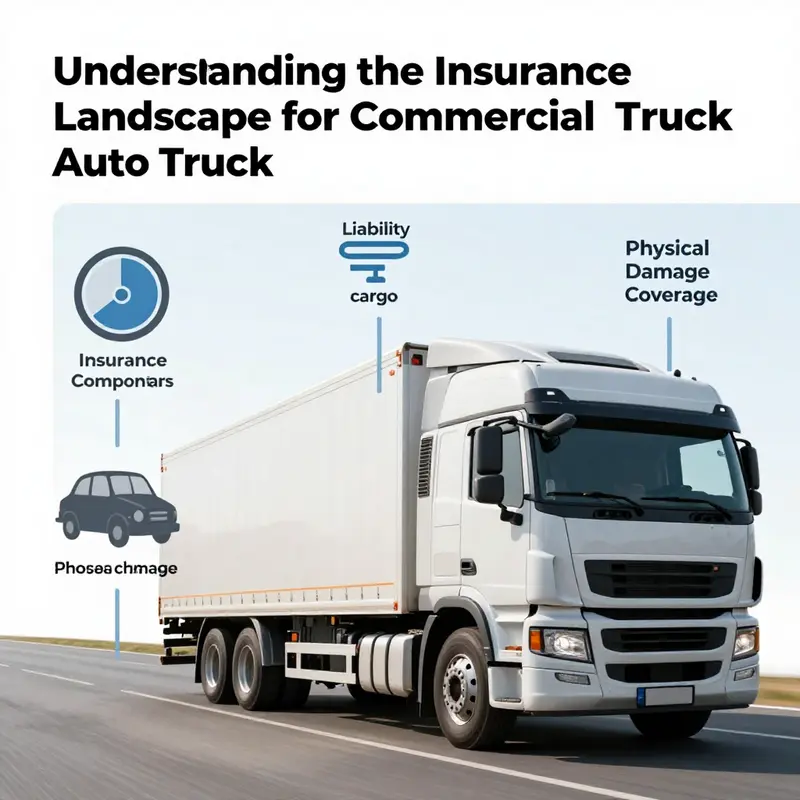
Insurance for commercial auto trucks sits at the intersection of risk, regulation, and operational reality. It is not a single policy slapped onto a fleet; it is a structured defense built from several coverages that together help a business weather the financial storms that follow accidents, cargo loss, or legal claims. The core idea is risk management tailored to the scale, routes, and demands of commercial transport. When a company treats coverage as a toolbox rather than a one-size-fits-all product, it gains the resilience needed to stay in business after a loss and to keep the wheels turning for customers who depend on timely deliveries. In this sense, commercial truck insurance becomes as much about strategy as about protection, translating everyday safety and maintenance practices into measurable financial safety nets.
At the heart of this protection are the physical damage and liability components. Physical damage coverage safeguards the truck itself, ensuring that repairs or replacement do not drain cash reserves after a wreck, theft, fire, or natural disaster. Most policies distinguish between two main strands: comprehensive coverage for non-collision events such as theft, weather damage, or vandalism, and collision coverage for damage arising from contact with another vehicle or obstacle. The specifics can vary—from how perils are defined to what parts of the vehicle are included—yet the intent remains consistent: to restore the fleet to service with minimal disruption. Policyholders should be aware that some agreements exclude certain perils. Earthquakes, for example, may be outside the standard envelope and require a separate rider if a fleet routinely operates in seismically active regions. Understanding those exclusions helps avoid gaps that could complicate a claim or amplify losses when disaster strikes.
Liability insurance, the most critical and legally binding portion, protects third parties—other drivers, pedestrians, and property owners—from the costs of injuries or property damage caused by an insured truck. In many jurisdictions, liability coverage is mandatory for commercial operations, reflecting the reality that large, heavy vehicles can cause severe harm. Insurers typically quote limits per incident, with amounts like one million or two million dollars common for many fleets. Larger or riskier operations, such as those handling high-value cargo or traveling through densely populated corridors, may pursue higher limits to shore up protection against catastrophic claims. The liability layer not only addresses potential out-of-pocket expenses but also helps ensure the business can withstand lawsuits that could otherwise threaten cash flow and continuity.
Cargo insurance sits alongside liability as a pillar of protection for the value held in transit. This coverage makes good the value of goods that are damaged, lost, or stolen while on the move. For companies whose revenue streams hinge on the safe delivery of high-value or time-sensitive products, cargo coverage is essential. It protects the primary asset of the business—the goods—so that a single incident does not erase margins or drive customers away. The terms of cargo insurance can vary depending on the type of cargo, its value, and the shipping routes. In some cases, shippers seek higher limits or specialized clauses for hazardous materials or ultra-fragile items, underscoring how cargo protection is closely aligned with the specific operational profile of a fleet.
Non-Owned and Hired Auto Liability (NOHPL) addresses risk when vehicles used for business purposes aren’t owned by the company. This comes into play when drivers operate personal vehicles for deliveries, use rented trucks, or rely on leased equipment. NOHPL ensures that the business still has a financial shield if one of these non-owned or hired vehicles is involved in an incident. It is a reminder that modern trucking operations often rely on a mosaic of vehicle arrangements, not just a homogeneous fleet of company-owned assets.
Workers’ compensation is another foundational element in most states. It covers medical expenses and lost wages for employees injured on the job, including truck drivers, warehouse personnel, and maintenance crews. While it is often mandated by law, the specifics vary by state. Workers’ comp contributes to a broader culture of safety by ensuring employees receive care without resorting to costly, ad hoc medical settlements. A well-designed program links workers’ comp to incident reporting and return-to-work strategies, which in turn reduces indirect costs and preserves productivity.
Beyond these core components lie a suite of optional or endorsement coverages that let fleets tailor protection to their exact needs. Uninsured/Underinsured Motorist (UM/UIM) protection is a critical fallback when a driver encounters another party that cannot fully cover damages. Medical Payments (MedPay) offers coverage for medical expenses for the driver and passengers, regardless of fault. Towing and Labor coverage helps ensure a stranded truck can be recovered and repaired without delaying deliveries. And there are specialty add-ons—risk management tools or business interruption protections—that step in when an incident interrupts operations, helping a company bridge the gap between accident recovery and revenue continuity. Each endorsement acts like a keystone that supports the weight of the fleet’s particular risk profile.
To build a coherent protection plan, fleets also rely on endorsements that reflect how they actually operate. Cargo coverage, of course, remains central, but bobtail coverage becomes meaningful when trucks operate without a trailer, such as during repositioning or when returning empty. Coverage for hired drivers or independent contractors recognizes that modern freight movements often involve a mix of in-house and external labor. The practical effect of these endorsements is to cap gaps between policy language and real-world practice, allowing a business to maintain compliance and resilience even as operating models evolve.
All of this sits within a broader context of regulatory compliance and market expectations. For carriers, maintaining minimum levels of liability insurance is a legal obligation in many jurisdictions. Beyond the law, customers—shippers and logistics providers—often specify insurance requirements as a non-negotiable condition of doing business. The financial protection offered by a well-structured policy helps carriers meet those contractual obligations, maintain competitive advantage, and manage risk across multiple contracts and routes. The result is not merely a policy portfolio but a framework that aligns risk appetite with operational strategy, enabling a company to bid confidently on complex assignments and to fulfill service-level commitments even after a disruption.
As technology reshapes the road, the insurance landscape for commercial auto fleets is evolving in tandem. The advent of autonomous and semi-autonomous vehicle technology introduces new uncertainties for underwriters and new lines of coverage for operators. Driverless fleets promise reductions in certain types of claims driven by human error, yet they bring forward fresh risks—software failures, cybersecurity threats, and liabilities for remote operators. Underwriting models must adapt to these realities, recalibrating how risk is measured, priced, and managed. In this shifting environment, some traditional policy lines may tilt toward lower premiums in the absence of human error, while complementary coverages emerge to address that new frontier of liability. The Deloitte Insights perspective on autonomous vehicles and the insurance industry provides a useful backdrop for understanding these transitions, illustrating how insurers are rethinking product design, risk quantification, and the balance between regulation, technology, and accountability. External readers can explore that evolving landscape to see how automation is changing both the exposure matrix and the protective strategies that fleets rely on.
Choosing the right policy requires more than ticking boxes for required coverages. It begins with a clear view of the fleet’s risk profile: the kinds of loads carried, typical routes, seasonal traffic patterns, and the geographic mix of operation. A fleet that runs long-haul across multiple states or provinces will face a different risk calculus than a local delivery operation. The type of cargo, whether general merchandise, perishables, hazmat, or luxury goods, also shapes the coverage needs and the conditions of the endorsements. Because the road is unpredictable, the ability to tailor a policy through endorsements matters as much as the broad categories of protection. Fleets that invest in driver training, proactive maintenance, and telematics-enabled safety programs often negotiate more favorable terms, not merely lower premiums. Insurers recognize that proactive risk management reduces the likelihood of costly claims and shortens the duration of losses when they occur.
In practice, this means the insured must communicate a precise operating profile to the insurer. Details such as the percentage of time on high-risk corridors, seasonal fluctuations in cargo values, and the mix between owned and non-owned equipment all feed into underwriting decisions. The goal is to create a policy that reflects reality rather than a generic risk model. When a fleet negotiates coverage with an insurer, the result should be a cohesive mix of core protections and targeted endorsements that keeps the operation financially viable after a loss and ready to recover quickly. The emphasis is on resilience: a plan that supports the business through repair or replacement, coverage of third-party claims, protection for goods in transit, and the capacity to maintain service levels even when incidents occur.
For fleets operating across borders or in highly regulated environments, the imperative to align insurance with regulatory and contractual requirements becomes even sharper. Cross-border operations add layers of complexity, including varying minimum liability requirements, cargo rules, and the need to harmonize coverage with multiple jurisdictions. A thoughtful approach to coverage includes not only meeting local mandates but also anticipating the needs of customers who demand consistent protection across routes. This anticipates not just compliance, but the credibility and reliability that come with a robust risk management program. A useful entry point on how automation interacts with these concerns can be found in a resource that examines the shifting insurance landscape as technology advances, including the implications for cross-border and cross-jurisdiction operations.
As a practical frame, consider how a modern fleet would view the relationship between its insurance program and daily operations. Maintenance standards that minimize mechanical failures, driver selection and training that emphasize safe operating practices, and the use of telematics to monitor speed, braking, and hours of service all feed into lower risk. When incidents do occur, a well-designed policy supports a rapid, efficient claims process that accelerates repairs, preserves cargo integrity, and manages the downstream effects on customers and cash flow. In short, the insurance program should function as a partner in operations, not a barrier to growth. It should reflect the realities of long-haul travel and heavy loads, the realities of tighter margins, and the evolving challenge of technology-driven risk. And it should be flexible enough to adapt as the picture of risk shifts with policy developments, regulatory changes, and the emergence of new fleet architectures.
To explore one facet of this evolving landscape, fleets can consider how border and regulatory issues intersect with risk transfer. For more on cross-border considerations and related insights, see bridging-border-barriers-meeting-insights. This resource highlights how practitioners are reconciling disparate regulatory regimes and insurance requirements as fleets operate beyond domestic boundaries, ensuring that protection travels as confidently as the trucks themselves. Such perspective helps brands prepare for the next wave of risk management: a world where automation, cyber threats, and remote monitoring become part of the standard operating picture. With that in view, the insurance of the commercial auto truck emerges as a living framework—one that blends traditional protections with forward-looking coverage to keep freight moving and businesses resilient across markets and technologies.
External resource for broader context on automation and risk: Deloitte Insights – Autonomous vehicles and the insurance industry. https://www2.deloitte.com/insights/us/en/focus/industrial-strength/autonomous-vehicles-insurance.html
Why Commercial Truck Insurance Is Indispensable to Business Continuity and Risk Management
Commercial truck insurance is not a peripheral expense; it is a central component of how freight, delivery, construction, and many other service businesses remain solvent and operational after setbacks. For companies that rely on trucks to move goods or people, insurance turns unpredictable exposures into manageable costs. The protections it supplies span the physical asset, third-party liability, the value of cargo, and the wellbeing of employees. Together these coverages form a safety net that preserves cash flow, maintains contractual relationships, and satisfies regulatory obligations.
A single major accident can produce liabilities and losses far beyond the purchase price of a truck. Third-party liability often represents the most immediate and pressing exposure. When a commercial truck is involved in a crash that causes injury or property damage, the costs can include medical treatment, long-term care, legal defense, and settlements or judgments. Liability coverage pays these expenses up to policy limits, preventing the business from being forced to liquidate assets or declare insolvency as the result of a single incident. In many jurisdictions, liability minimums are mandated by statute or by federal regulators for carriers operating interstate. Compliance with these requirements is mandatory; beyond compliance, selecting adequate limits is a strategic decision tied to the size of the operation, routes traveled, and the nature of the cargo.
Physical damage coverage protects the truck itself. Collision coverage handles repairs or replacement after impacts with other vehicles or objects. Comprehensive coverage pays for loss or damage from causes other than collision—vandalism, theft, fire, and many weather events. For a fleet operator, these coverages reduce the financial shock of a disabled vehicle. A truck out of service translates directly into lost revenue, disrupted schedules, and potential contractual penalties. When a vehicle is repaired promptly or replaced through an insurance settlement, the business minimizes downtime and preserves customer relationships. Optional endorsements can extend protection to specific components or conditions, but policyholders must read exclusions carefully; not all perils are automatically covered in every policy.
Cargo insurance addresses the most visible business asset for many trucking firms: the goods in transit. Damage to or loss of cargo can wipe out a shipment’s value and generate claims from customers. Cargo coverage reimburses the owner of the goods, or the carrier if the carrier bears responsibility, for loss caused by covered perils. The scope of this protection depends on the policy terms and the type of goods transported. Perishable items, hazardous materials, and high-value freight may require specialized coverage or higher limits. For carriers that rely on contracts with shippers or brokers, proof of cargo insurance is often a prerequisite to win and retain business. This makes cargo coverage both a financial safeguard and a commercial imperative.
Uninsured and underinsured motorist protection is a subtle but vital layer of defense. Even with mandatory insurance laws, some drivers lack adequate coverage. If one of your trucks is struck by such a driver, UM/UIM coverage helps pay for injuries and damages that the at-fault party cannot fully cover. In regions where this exposure is common, omitting UM/UIM can leave a business absorbing avoidable costs that erode margins and strain reserves.
Workers’ compensation and related medical payments complete the triage of human risk. Trucking operations expose drivers and other employees to physical danger. When an employee is injured on the job, workers’ compensation covers medical care and a portion of lost wages. This coverage protects both the employee and the employer by providing predictable pathways for treatment and recovery while limiting tort liability. Medical payments coverage, often modest in scope, supplements this protection by addressing immediate medical expenses regardless of fault. Together, these coverages maintain workforce stability in the wake of incidents and support compliance with state laws.
Beyond core protections, commercially minded firms often carry additional policies or endorsements that address niche exposures. Hired and non-owned auto liability covers situations where employees use personal vehicles for business tasks or where rental vehicles are in service for company purposes. Business interruption coverage can replace lost income while a vehicle is repaired or replaced. Towing and labor endorsements minimize small but disruptive costs when breakdowns occur on route. The right mix of coverages depends on the operation’s scale, geography, cargo types, and contractual obligations; sound risk management balances cost with the potential for catastrophic loss.
Insurance also functions as a commercial passport. Many shippers, brokers, and governmental agencies require carriers to carry specific types and levels of insurance before they will award contracts or permits. Demonstrating appropriate coverage is therefore not only prudent but often compulsory for access to lucrative lanes and customers. For small and medium operators, this means that adequate insurance can be the difference between eligibility and exclusion from key business opportunities. Maintaining certificates of insurance and ensuring they satisfy client requirements keeps operations viable and competitive.
Risk transfer through insurance complements other loss control measures. Training programs for drivers, vehicle maintenance schedules, route planning, and safety technology all reduce the frequency and severity of losses. Insurers reward these investments with lower premiums and access to broader coverage terms. In this sense, insurance and safety practices form a virtuous cycle: proactive safety reduces claims, which reduces insurance costs, which frees resources for further safety investment.
Cost is always a consideration. Premiums reflect factors like vehicle type, driving records, cargo value, routes, and historical loss experience. Larger trucks and heavy hauls typically attract higher premiums because the potential for severe damage and costly claims is greater. However, the cost of inadequate insurance can be catastrophic. A judgment in excess of uninsured assets, lost contracts due to noncompliance, or a prolonged business interruption can far outweigh annual premium savings. Effective risk management evaluates the marginal cost of higher limits and broader coverages against the financial consequences of uncovered losses.
Purchasing the right policy requires clear understanding. Insureds should know policy limits, exclusions, and the conditions under which coverage responds. They should also be aware of deductibles and sublimits that may apply to specific losses. Working with experienced advisors helps businesses align coverage with operational realities. Periodic reviews ensure that policies evolve with the business—new routes, additional trucks, different cargo types, or changes in contractual requirements can all necessitate adjustments.
Operational resilience depends on predictability. Commercial truck insurance converts uncertain and potentially ruinous events into defined expenses and processes. Claims are handled through established insurer procedures that provide funding for repairs, medical bills, or settlements, and that often include assistance in coordinating recoveries. That predictability preserves working capital and allows managers to focus on growth rather than crisis management.
Finally, the landscape around trucking is dynamic. Economic cycles influence freight volumes and fleet composition. Regulatory shifts change minimum requirements and expose companies to new compliance obligations. Equipment trends alter replacement costs. All these dynamics shape insurance needs. Companies that link their insurance strategy with business planning are better positioned to weather market swings and to take advantage of opportunities. For further reading on the regulatory and business forces that affect the trucking sector, consider material on how trailer orders influence truckload margins, which shows how industry shifts cascade into operational and financial choices: https://truckplusllc.com/trailer-orders-impact-truckload-margins/.
For practical, authoritative guidance on choosing the right commercial auto insurance, the U.S. Small Business Administration provides a useful overview of coverages, legal requirements, and decision points that businesses should consider when evaluating their insurance programs: https://www.sba.gov/business-guide/insurance-and-licenses/commercial-auto-insurance
The Legal Skeleton of Commercial Truck Insurance: How Rules Shape Coverage and Safeguard the Road Ahead
Every commercial trucking operation sits within a web of laws and regulations designed to ensure that when accidents happen or cargo goes astray, there is a ready financial remedy. The insurance of the commercial auto truck is not merely a blanket for risk; it is a carefully structured framework forged by state mandates and federal oversight. Understanding what the law requires helps business owners, operators, and drivers anticipate costs, plan for contingencies, and maintain the continuity essential to a transportation operation. The core premise is simple enough: liability insurance is the legal backbone, and the specifics—how much, where, and under what conditions—are dictated by a blend of state statutes and federal rules that together define the minimum safe harbor for the industry. Beyond the minimums, the law also influences what coverages a firm should secure to protect assets, meet client expectations, and stay financially viable after a disruption.
State-by-state requirements set the baseline. In the United States, every state requires commercial vehicle operators to carry liability insurance. Yet the minimums differ widely from one jurisdiction to another. Some states, mindful of the larger risk profile associated with interstate shipping, impose thresholds in the vicinity of one million dollars for liability coverage on carriers that cross state lines. Others, particularly for intrastate hauls, establish lower obligations. This patchwork means a carrier’s legal exposure—and the corresponding premium—can swing dramatically depending on the routes, cargoes, and clients involved. When a truck moves across borders, the insurer and the carrier must ensure the coverage aligns with the most demanding state standard that could apply to the trip, creating an incentive for conservative planning and, often, higher aggregate limits.
On the federal stage, the regulatory spotlight intensifies for interstate carriers. The Federal Motor Carrier Safety Administration, operating under the Department of Transportation, sets a baseline for financial responsibility that most operators cannot ignore. Interstate operations are required to maintain a minimum of $750,000 in liability insurance. While this figure provides a floor, many fleets opt for higher limits—commonly $1 million or more—to cushion catastrophic claims that could arise from higher payloads, longer routes, or complex liability scenarios. These federal requirements are not merely advisory; they establish a condition for maintaining operating authority across state lines. The policy must be in force, continually maintained, and documented through a valid insurance policy or a self-insurance arrangement approved by the FMCSA. In practice, that means a carrier cannot legally begin or continue operating without proof of adequate financial responsibility, and any lapse can trigger regulatory penalties, suspension of authority, or other enforcement actions.
The need for continuous coverage extends beyond the liability backbone. While liability insurance is the legally mandated core, commercial truck insurance commonly includes a suite of coverages that businesses arrange to address real-world risk. Physical damage coverage, often described as vehicle damage insurance, protects the truck itself from perils that go beyond a routine collision. Comprehensive coverage covers non-collision events such as theft, vandalism, or weather-related damage, while collision coverage addresses damage incurred in crashes. Although not all perils are universally mandated by law, many fleets consider these components essential for keeping a fleet operational after an incident. The cargo held in transit constitutes a separate strand of protection; cargo insurance shields the value of goods from loss or damage while in transit, a risk that can threaten the profitability of a shipment and strain client relationships if not adequately covered.
In addition, there is coverage to address liability arising from non-owned or hired autos. Non-Owned and Hired Auto Liability (NOHPL) is particularly relevant when drivers use personal vehicles for business tasks or when third-party equipment enters the operation. This layer mitigates gaps that could otherwise leave a carrier exposed if a vehicle not owned by the company is involved in an accident while performing company duties. Workers’ compensation finishes the core legal requirements by ensuring medical expenses and lost wages for employees injured on the job. In most states, workers’ comp is a legal obligation, and it also plays a critical role in protecting an operation from wage-related liabilities that could accompany a driver or dockworker injury.
Beyond these foundations lie additional optional coverages that, while not legally mandated, are frequently regarded as indispensable risk-management tools. Uninsured/Underinsured Motorist (UM/UIM) coverage addresses scenarios where the at-fault driver lacks adequate insurance to cover the damages. Medical Payments (MedPay) can help cover medical expenses for drivers and passengers regardless of fault. Towing and labor coverage provides practical support when a truck breaks down away from the home base. For some fleets, businesses interruption or contingency protections become relevant if a breakdown or accident interrupts service, threatening contract performance and revenue streams. Each of these components is shaped by a risk assessment and a business’s appetite for protection against the financial ripple effects of an incident.
A practical consequence of the legal framework is how it influences purchasing decisions and insurance pricing. Carriers with high-value cargo, hazardous materials, long-haul routes, or operations in high-risk geographies will often seek higher liability limits to reflect their exposure. In many cases, regulators and underwriters align to ensure that the coverage not only adheres to the minimum but corresponds to the actual risk profile. The result is a spectrum: a legally compliant base policy and a tailored, risk-adjusted package that supports operational resilience.
The regulatory conversation is not static. As technology advances, regulators are paying closer attention to how insurance should adapt to new realities. Autonomous and semi-autonomous trucks, for instance, prompt questions about who assumes responsibility for risk when the human driver is not always in control. The current framework, which emphasizes driver liability and vehicle-centric risk, is gradually evolving as regulators and insurers explore how to underwrite and allocate risk when automation becomes a larger portion of the fleet. This evolving landscape signals potential shifts toward new types of coverage, new documentation standards, and perhaps different requirements for manufacturers, software developers, and fleet operators who share responsibility for automated systems. While the existing model emphasizes human-in-vehicle risk, the horizon hints at a broader construction of accountability that could reshape underwriting paradigms and premium structures over time.
For fleets navigating this regulatory terrain, the practical path to compliance begins with a careful assessment of a few foundational questions. What is the mix of interstate versus intrastate operations? What is the cargo mix, and what is its value relative to the vehicle’s and driver’s risk profile? What routes are most common, and what hazards are most likely along those corridors? Answering these questions with accuracy helps determine the minimum liability requirement and informs decisions about higher limits that are prudent given the business’s exposure. It also clarifies the necessity and value of coverages beyond liability. If clients require specific insurance levels as a prerequisite to contract, or if the company needs to secure favorable terms through ongoing relationships with shippers, the insurer can align policy structure to satisfy those expectations while remaining compliant with regulatory demand.
In the process of building and updating a compliant policy, many organizations turn to guidance and case studies that illuminate how other operators manage risk and regulatory change. A relevant discussion area explores how cross-border and border-adjacent operations cope with differing state rules and the way regulators coordinate to set consistent expectations at a higher scale. For example, readers may find insights in analyses that consolidate regulatory perspectives on cross-border trucking and the implications for insurance coverage and compliance, which can be found in industry discussions and related studies. An accessible overview of bridging border barriers and the insights gained from those conversations can be explored here: Bridging Border Barriers: Meeting Insights.
Another dimension worth noting is the evolving emphasis on safety culture and how it intersects with legal requirements. Regulators increasingly expect carriers to demonstrate their risk management practices—driver training, maintenance programs, incident reporting, and proper documentation. While these elements are not insurance products themselves, they influence underwriting and premium calculations. A company that shows a robust safety program and low-frequency, high-severity claims can secure more favorable terms, even when its routes traverse rugged or high-traffic corridors. Conversely, gaps in maintenance or inconsistent driver qualification standards can trigger higher premiums or even policy non-renewals, underscoring that compliance is a living discipline, not a one-time purchase.
The legal framework also intersects with client requirements and market dynamics. Many shippers and freight brokers insist on minimum coverage levels as a condition of business. This expectation aligns with the broader principle that insurance is not merely a shield for a company but a professional credential that signals reliability and financial stewardship. When a fleet meets or exceeds regulatory minimums and can document continuous coverage, it earns credibility with carriers and customers alike. In practice, this means that the policy must be drafted with clarity about what is covered, the limits of liability, the locations where coverage applies, and the procedures for adjusting terms as routes or cargo types change. The interplay between legal requirements and market expectations thus reinforces the importance of a deliberate, proactive approach to insurance planning—one that anticipates regulatory shifts while aligning with client contracts and operational realities.
For readers seeking a consolidated understanding of where federal and state requirements intersect with practical risk management, the Federal Motor Carrier Safety Administration’s official resources provide authoritative guidance on compliance and financial responsibility. While this chapter centers on the insured risk and legal prerequisites, the broader regulatory ecosystem is continually updated as technology and industry practices evolve. Access to official regulations and current thresholds can be found at the federal site, which serves as a critical reference point for carriers, brokers, and insurers alike. External resource: https://www.fmcsa.dot.gov
Steering Into the Future: The Next Frontier of Commercial Auto Truck Insurance
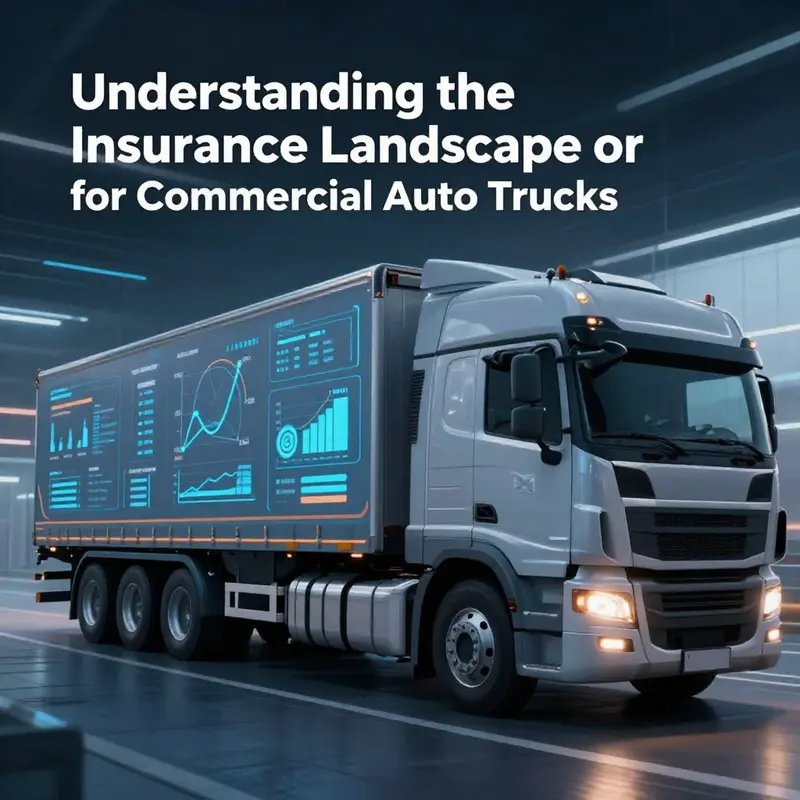
The road ahead for insurance in the commercial auto truck sector is no longer a straight line but a complex, adaptive landscape that blends technology, risk science, and market dynamics into a single, evolving ecosystem. As fleets become more connected and more autonomous, the very idea of risk shifts from a human-centered equation to a systems and data-driven calculus. Insurers, fleet operators, manufacturers, and regulators are now negotiating a shared destiny in which risk is understood through continuous streams of information, and protection is built not just on a policy but on a coordinated approach to safety, resilience, and rapid response. In this future, coverage is less about simply stacking traditional policy components and more about weaving a fabric of protections that can flex as the operating environment changes. The bedrock of today’s commercial truck insurance—physical damage, third-party liability, cargo, and workers’ compensation—remains essential, but the definitions, the boundaries, and the premium economics are expanding in ways that require a new kind of underwriting intuition and a more collaborative risk management mindset.
Technological advancements are not merely altering how trucks move; they are reshaping how risk is assessed and priced. Autonomous and semi autonomous trucks, once a distant possibility, are becoming a practical reality across many freight corridors. The concept of liability begins to detach from a single driver’s attentiveness and shifts toward the reliability of software, sensors, networked control systems, and the chain of data that ties a vehicle’s decisions to the outcomes on the road. When a truck operates with a driverless control system, the insurer’s question moves from did the driver react in time to did the software, the sensor suite, and the control algorithms perform within defined safety tolerances under a wide range of conditions. This shift requires rethinking the traditional liability framework, introducing new lines of coverage for software malfunctions, cyber risks, and even data integrity breaches. Under this lens, coverage becomes more modular, with risk layers that can be tuned to the level of autonomy, the cargo profile, and the operational context.
The role of data in underwriting is taking center stage. Telematics devices collect a continuous stream of information about driving behavior, route selection, speed, following distance, braking patterns, engine health, and even maintenance compliance. Real-time analytics can translate these signals into dynamic pricing and proactive risk management. A fleet that demonstrates careful driving, efficient routing, and timely maintenance can expect more favorable terms than a similar fleet with erratic patterns or frequent mechanical troubles. Yet this data-based approach also heightens the importance of cybersecurity. As trucks become more connected, the potential attack surface expands. A cyber intrusion into an operator’s telematics platform or a vehicle’s control network could cascade into operational disruptions, regulatory noncompliance, or cargo loss. Insurers are beginning to incorporate cyber risk assessments into transport insurance, layering in protective measures such as secure data governance, encryption standards, and incident response planning as part of the overall risk profile.
The electrification wave adds another dimension to risk planning. Electric and hybrid fleets introduce peculiar exposures—the battery system, thermal management, charging infrastructure reliability, and the higher up-front repair costs for advanced propulsion components. These factors drive updates to actuarial models, as the cost of component failure and the speed of recovery from downtime differ meaningfully from traditional diesel-powered equipment. Insurers are responding with coverage add-ons that address battery degradation, charging station vulnerabilities, and even incentives for resilience—such as coverage for loss of revenue when a charging facility is unavailable during a critical repair window. The evolving energy profile of trucking also means more attention to fleet resilience planning, including spare parts logistics, on-site charging capabilities, and the ability to reroute or rapidly substitute capacity in case of a charging disruption.
Beyond the mechanical and electronic layers, the regulatory and market context is in flux. Many regions still require minimum liability coverage for commercial carriers, but the interpretation of risk and the enforcement of safety standards are becoming more nuanced as new technologies emerge. Insurers must navigate a regulatory mosaic that includes data privacy laws, cybersecurity obligations, and cross-border movement of goods. This complexity is not a barrier but a catalyst for a more disciplined approach to risk governance. Carriers that adopt robust safety programs, auditable data practices, and transparent incident reporting tend to earn not only lower premiums but quicker claims handling and stronger reputational advantages in a market that prizes reliability and continuity.
The concept of coverage itself is expanding to accommodate a broader view of operational resilience. In addition to traditional liability and physical damage, policies are increasingly integrating cargo protection, non-owned and hired auto liability, and workers’ compensation within a more cohesive risk management architecture. The line between insurance and risk services is blurring as insurers offer proactive loss prevention, safety coaching, and fleet health monitoring as value-added components of the relationship. This ecosystem approach aligns the incentives of all participants—fleet operators, drivers, manufacturers, maintenance providers, and insurers—around the shared objective of reducing the frequency and severity of losses. When a single incident can ripple through multiple stakeholders, coordinated risk management becomes not just prudent but essential for maintaining service continuity and market competitiveness.
The future of premiums and coverage design in this space will be heavily influenced by the interplay between demand volatility and the cost of protection in a more data-rich, connected world. Telematics-enabled, usage-based pricing can deliver more precise risk differentiation, rewarding consistent safety performance while exposing higher costs for patterns associated with elevated risk. This does not only reflect a fairer allocation of risk; it also supports safer behavior by creating tangible financial incentives for fleet operators to invest in driver training, maintenance discipline, and route optimization. Yet the transition is not purely benevolent; it demands a robust data governance framework and a culture of trust. Operators must understand what data is collected, how it is used, who has access, and how privacy and competitive considerations are protected. Insurers, in turn, need transparent models, regular calibration, and clear communication about how data translates into premiums and coverage terms.
The interplay between data, autonomy, and coverage is also reshaping the portfolio of optional coverages offered to fleets. Uninsured or underinsured motorist protections remain a vital safety net for third-party risk, but the emphasis is increasingly on ensuring rapid access to incident data, facilitating swift claims resolution, and supporting safety improvements to reduce recurrence. Medical payments and personal injury protection frameworks are staying relevant, yet their integration with autonomous and connected vehicle operations creates new questions about fault attribution and the timing of settlements when traditional causation chains are less clear. In the same breath, tow and labor coverage gains importance as breakdowns become more complex in electric and high-tech trucks, where specialized equipment and technicians are often required for rapid recovery. The emergence of business interruption protections tied to operational resilience reflects a growing understanding that downtime costs can eclipse immediate repair costs and cargo losses in economic impact.
On the market side, collaboration is becoming a critical differentiator. Insurers are pursuing strategic partnerships with truck manufacturers, fleet operators, technology providers, and government agencies to build integrated risk management platforms. Shared data access, faster claims processing, and more effective loss prevention strategies are among the benefits of this collaborative model. When a carrier, a OEM, and an insurer can align around a common data standard and a common set of safety metrics, the result is not just lower premiums but faster, fairer risk assessments and a more resilient supply chain. This cooperative approach also helps address the cross-border and multi-jurisdictional realities that many fleets face, where regulatory standards and operational practices can vary dramatically from one corridor to another. A coherent risk framework thus becomes a competitive advantage, enabling operators to pursue growth with confidence while remaining compliant and financially stable.
For readers who want to connect these trends to real-world market signals, a look at current industry analyses reveals how closely policy design and fleet strategy track broader market dynamics. In particular, shifting trucking economic trends affecting trailer orders signal how operators balance capital expenditure against risk protection. The evolving order patterns reflect expectations about utilization, maintenance costs, and the pace of fleet modernization, all of which feed into pricing models and coverage choices. This is not a detached consideration; it is a practical reminder that insurance is most effective when it is calibrated to the operational realities fleets face. When a fleet plans to augment capacity or replace aging equipment, the insurer’s insight into those plans can translate into proactive risk management steps, such as pre-approval of specific routes, targeted driver training, or staged deployment of autonomous testing in controlled environments. In that sense, today’s insurance products are increasingly proactive risk services, designed not merely to indemnify losses but to prevent them.
The synthesis of autonomy, electrification, data analytics, and ecosystem collaboration points toward a future in which insurance for commercial auto trucks becomes a strategic enabler of safe and efficient freight movement. The insurer is increasingly seen as a partner in optimization rather than a distant payer after the fact. The most successful market participants will be those who balance rigorous risk underwriting with agile product design, transparent data practices, and a collaborative stance toward safety and resilience. As the industry navigates the transition, it will rely on a shared commitment to maintain service levels, protect cargo value, and ensure that the corridor remains open even when unexpected events occur. The path forward is not a single upgrade but a series of coordinated adaptations, each reinforcing the other to create a more resilient, efficient, and trustworthy trucking ecosystem. And with this horizon in view, the next chapters will explore how fleet operators can operationalize these principles, what governance frameworks prove most effective in practice, and how customers experience the evolution of coverage in a way that is both affordable and reliably protective.
For those seeking a broader, market-level perspective, see the industry analysis that examines market size, share, and trends in the commercial truck insurance space across coverage types and risk profiles. Trucking Economic Trends Affecting Trailer Orders. In addition, a comprehensive external analysis offers deeper quantitative insights into how these dynamics are shaping pricing, product design, and regulatory expectations across regions. Commercial Truck Insurance Market Size, Share & Trends Analysis Report By Coverage (2026).
Final thoughts
In understanding commercial truck insurance, it is clear that it serves as more than just a legal requirement; it is a crucial investment in the safety and financial viability of logistics, construction, and delivery operations. The right insurance coverage helps businesses mitigate risks, comply with regulations, and safeguard their assets. As the industry evolves, staying informed about key components, legal obligations, and future trends will empower fleet operators to make strategic decisions, ultimately ensuring business longevity and success.