
As a logistics or construction enterprise, comprehending whether commercial truck plates are necessary for your fleet is paramount to legal compliance and operational efficiency. This decision significantly affects the way cross-state transportation is managed, the types of insurance required, and overall business expenses. In the following chapters, we will explore the implications of having commercial truck plates on business operations, delve into the regulatory frameworks that differ from state to state, and highlight the legal and financial ramifications of operating without the appropriate plates. By the end of this discussion, you will have a comprehensive understanding of your obligations regarding commercial truck registration and how to align your fleet’s operations accordingly.
When Your Truck Becomes a Business Asset: Deciding If You Need Commercial Plates
Determining Commercial Status Without Guesswork
When you own a truck, the line between personal and commercial use can be thin. The right license plates are not a mere formality. They define how regulators, insurers, and clients view your operation. At the core, commercial plates signal that a vehicle is used to support business activity. That designation triggers a distinct set of rules for registration, insurance, safety, and cross‑jurisdictional travel. Businesses that misclassify vehicles risk fines, insurance gaps, and operational delays. Understanding when a truck becomes a business vehicle prevents those pitfalls and keeps day‑to‑day work moving.
A practical starting point is to ask a few focused questions: Do you transport goods or passengers for pay? Do you use the truck to make deliveries, haul materials, or perform services tied to revenue? Is the vehicle regularly loaded with tools or inventory for job sites? If the answer to any of these is yes, the vehicle likely needs commercial plates. Many states hinge their requirement on use, not just on the size of the truck. That means even a mid‑size pickup can qualify as commercial when it serves as a worktruck. For owners who occasionally use their truck for business but primarily use it for personal life, the rules can be murkier. In those cases, keeping clear, contemporaneous records of use and discussing specifics with your state motor vehicle agency helps you reach the correct classification.
Commercial plates also differ depending on the scope of operations. Local businesses that stay within a single state often register with standard commercial plates issued by the state. Companies that operate across state lines typically need apportioned registration, which allocates fees across the states where mileage is logged. Apportioned plates are critical for freight carriers, long‑haul delivery firms, and any enterprise whose trucks frequently cross borders. They provide a legal framework for paying registration fees proportionally, and they keep trucks compliant with both federal and state rules.
The operational consequences of plate choice are far from trivial. Commercial registration often comes with higher minimum insurance requirements and stricter liability coverage rules. Insurers price policies to the risk profile of the vehicle’s use; a truck ferrying heavy loads daily justifies broader coverage and higher premiums. If a vehicle that should be commercially registered is insured under a personal policy, an insurer may deny a claim after an accident. That exposure can leave an owner personally liable for major damages. Commercial plates also subject vehicles to different inspection regimes. Safety inspections, weight checks, and maintenance documentation are more closely scrutinized for commercial trucks, particularly those operating under interstate authority.
Fleet managers and independent contractors alike benefit from seeing commercial plates as an operational tool. Plates mark a vehicle as part of a professional fleet, which communicates credibility to clients and partners. They streamline compliance with state laws and federal regulations, especially when a vehicle participates in regulated activities. For example, companies that move freight over state lines must follow both state registration rules and federal safety and licensing standards. Commercial plates ensure alignment with those expectations and reduce the chance of being stopped for noncompliance during routine enforcement checks.
Practical scenarios make the distinction clearer. A contractor who uses a pickup to haul tools and building materials to job sites every weekday is using the truck for business. That truck should have commercial plates. A small bakery that owns a van for daily deliveries of orders within the same city also needs commercial registration, even if the vehicle is not heavy. Conversely, a person who uses a truck solely for commuting, family travel, or occasional weekend hauling typically keeps standard passenger plates. The frequency, purpose, and nature of the cargo—plus whether money changes hands—are what matter most.
When a truck crosses state boundaries, the regulatory picture gains another layer. Interstate commerce invites federal oversight alongside state rules. Drivers and owners must consider requirements such as the International Registration Plan (IRP) and International Fuel Tax Agreement (IFTA) if their operations meet mileage or revenue thresholds. These agreements simplify registration and fuel tax reporting for vehicles that travel in multiple jurisdictions. Apportioned plates under IRP show inspectors and law enforcement that registration fees have been handled correctly across states. Failing to adopt apportioned registration when required leads to fines and potential impoundment, which disrupts operations and financial stability.
Compliance also ties into licensing for drivers. Certain commercial operations trigger the need for a commercial driver’s license (CDL) for the person driving. That requirement depends on vehicle weight, type of cargo, and passenger capacity. Businesses must ensure that drivers hold the proper licenses for their assigned duties. Misjudging that requirement can halt a job midstream and subject the company to fines. It is good practice to verify licensing status during hire and periodically thereafter, especially when roles or equipment change.
Maintenance and inspection responsibilities increase with commercial classification. Many states mandate scheduled inspections for commercial vehicles and keep records of maintenance. Those inspections are not only about safety. They are a practical tool for risk management. Regular checks identify wear affecting braking, steering, and load security. Companies that treat inspections as part of their operational routine save money over time by preventing downtime and costly repairs. Inspectors often look for secure tie‑downs, correct tire ratings, and properly rated hitching equipment. Documentation of repairs and preventive actions can be vital evidence of compliance after an incident.
Insurance considerations deserve special attention. Commercial insurance policies provide broader coverage than personal policies. They address liability for third‑party injuries, cargo loss, and commercial property damage. Coverage options include primary liability, cargo insurance, physical damage, and contingent liability. Business owners should evaluate not just the minimum legal requirements but also the exposure associated with lost revenue, damaged goods, and increased litigation risk. Many insurers offer tailored packages for fleets, which can yield economies of scale on premiums. Clear communication with an agent about intended vehicle use prevents nasty surprises if an insurer discovers undisclosed business usage after a claim.
Recordkeeping is a practical discipline that supports compliance. Maintain mileage logs when vehicles travel for both personal and commercial reasons. Keep receipts for fuel, repairs, and tolls. Track routes and customer assignments tied to vehicle use. These records serve two functions. First, they help determine whether a vehicle’s predominant use is business or personal. Second, they support financial processes like tax reporting and cost allocation when vehicles are part of a company fleet. For vehicles requiring apportioned registration, accurate mileage reporting to each jurisdiction is essential for proper fee allocation.
Business growth can change plate requirements. A single truck used occasionally for side jobs may be fine on passenger plates initially. When operations expand—more trips, paid deliveries, or hiring drivers—the classification can shift. Owners should reassess plate requirements whenever business activity changes. That reassessment avoids retrospective penalties and supports smoother scaling. Many states expect owners to report changes in vehicle use. Proactively updating registrations avoids enforcement actions during routine roadside checks.
Penalties for noncompliance vary but can be substantial. They include fines, impoundment, citation, business license jeopardy, and insurance claim denials. Beyond immediate penalties, violations can damage a company’s reputation. A delivery business stopped frequently for registration or safety violations sends a poor message to customers. Reputational harms can have longer financial impacts than fines. Treating plate choices as part of operational risk management protects both balance sheets and client trust.
For many businesses, the route to compliance begins with the state motor vehicle agency. DMVs provide specific guidance based on vehicle weight, declared use, and mileage. They can confirm whether a vehicle qualifies for standard commercial plates or needs apportioned registration. Agencies also explain paperwork requirements, fees, and timelines. In some states, applications can be completed online. For cross‑border operators, state DMV specialists often refer to federal resources and tax agencies for guidance on interstate registration and fuel tax rules.
Operational efficiency improves when classification is clear. Properly registered vehicles have fewer interruptions. Fleet managers can schedule maintenance around predictable inspection windows. Insurance claims proceed more smoothly when the insurer recognizes the vehicle’s declared use. Drivers operate with the correct licensing for their tasks. All of this reduces downtime and increases the reliability of services. For businesses tendering bids or contracting with larger firms, correct registration is frequently a prerequisite. Clients often request proof of commercial registration and insurance before awarding contracts.
Deciding whether to convert plates also involves cost considerations. Commercial registration and insurance usually cost more than personal equivalents. Apportioned registration requires administrative effort and possibly consulting help. However, those costs must be weighed against the risk of fines, claim denials, and operational constraints. For companies that rely on timely deliveries or hazardous cargo, the marginal insurance and administrative costs are modest compared to the value of uninterrupted service.
A few practical steps help owners make the right choice. First, review how the vehicle is used over a defined period. Track trips, customers served, and cargo types. Second, consult the state motor vehicle agency for guidance specific to your jurisdiction. Third, talk with your insurance broker about policy options and implications. Fourth, if you operate across states, consider apportioned registration and learn the reporting obligations under IRP and IFTA. Fifth, document maintenance and inspections rigorously. Sixth, update registrations and insurance promptly when business use expands.
When operations involve cross‑border issues, stakeholders often benefit from peer insights and industry forums. Industry events and meetings focus on regulatory alignment and help managers anticipate upcoming changes. A practical resource for operators dealing with border crossing and regulatory challenges is the archived meeting insights on bridging cross‑border barriers, which highlight common pitfalls and solutions. These insights illustrate how regulatory clarity reduces delays and enforcement actions during interstate operations. Embedding that kind of intelligence into operational planning pays dividends when trucks move between jurisdictions.
Commercial plates are not just a label. They are a compliance tool, a risk transfer mechanism, and a signal of professionalism. Owners who treat plate classification with the same attention they give to routing, driver hiring, and maintenance reduce legal exposure. They also improve service reliability and client confidence. When in doubt, document usage patterns and seek guidance from state and federal agencies. That approach prevents surprises, aligns insurance with risk, and keeps your truck working for you rather than becoming a regulatory headache.
For authoritative guidance about federal rules applicable to interstate operations, you can consult the U.S. Department of Transportation for regulations, definitions, and resources.
https://www.transportation.gov
For practical insights into cross‑border regulatory challenges and industry discussions, review this summary of meeting insights on bridging border barriers: https://truckplusllc.com/bridging-border-barriers-meeting-insights/
How Federal Rules and State Plates Work Together: Navigating Commercial Truck Registration
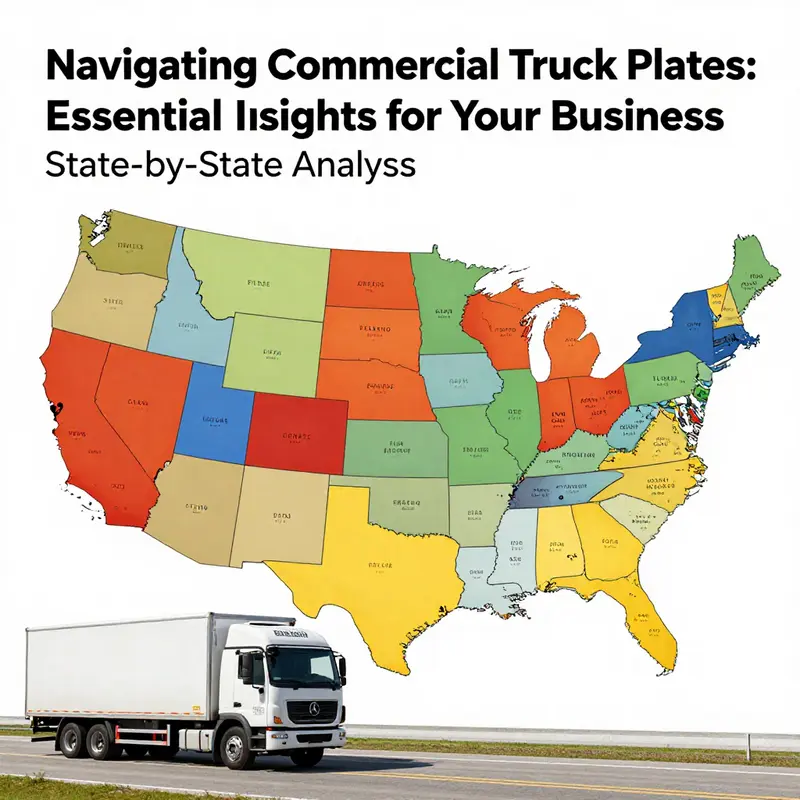
Understanding whether your truck needs commercial plates starts with recognizing the layered system that governs commercial vehicle registration in the United States. At first glance, it may seem like a state-by-state mosaic. Each state issues license plates and maintains vehicle records. Yet the practical rules that determine when a truck requires commercial registration are shaped far more by federal standards and interstate agreements than by isolated state laws. This chapter walks through how those layers interact, why carriers often register under a single base jurisdiction, and what truck owners should watch for when deciding if they must carry commercial plates.
The system rests on two pillars: federally driven safety and qualification rules, and interstate frameworks that allocate registration responsibilities and fees. Federal agencies set minimum safety and driver standards that apply nationwide. States implement those standards locally by issuing plates and licensing drivers. Meanwhile, interstate agreements allow vehicles to operate across jurisdictions without a patchwork of separate registrations. Together, these elements create a single, functional market for commercial trucking, while preserving state authority over plate issuance and enforcement.
One of the most important interstate agreements is the International Registration Plan, and its effects are visible every time you see a truck displaying an “apportioned” plate. The IRP exists so that carriers operating across state or national borders avoid registering the same vehicle in multiple jurisdictions. Instead, a carrier registers its fleet in a single base jurisdiction. That jurisdiction issues registration and apportioned plates. The carrier then records miles traveled in each participating jurisdiction. Registration fees are apportioned back to the states or provinces where the miles were driven. This method ensures that each state receives fair compensation for wear on its roads and for services used by the vehicle fleet.
The practical consequences of that apportionment system are clear. Companies that operate nationwide can choose a base jurisdiction with registration processes and fee structures that suit their operations. Large rental or leasing firms often maintain a single base jurisdiction for logistical simplicity. In those cases, trucks carry the base jurisdiction’s plates, even when operating far from that state. This is why fleets based in certain states can appear disproportionately present across the country. The plate itself signals the vehicle’s registration status; an apportioned or apportioned-style plate tells enforcement and licensing authorities that the vehicle is registered under the IRP and that fees have been accounted for across jurisdictions.
Overlaying the IRP are federal safety and driver standards administered principally by the Federal Motor Carrier Safety Administration. The FMCSA establishes minimum qualifications for commercial drivers. Those qualifications include commercial driver licensing standards, medical fitness requirements, and, increasingly, language proficiency rules and other assessments. States issue the physical licenses, but they must comply with FMCSA regulations. Failure to comply can carry significant repercussions. States that fail to apply federal standards risk losing federal safety funding and other sanctions. Recent federal enforcement efforts have underscored the seriousness of this oversight.
These national rules affect who must hold commercial credentials. For example, a vehicle used to transport goods for hire is typically a commercial motor vehicle for FMCSA purposes. When a vehicle meets the federal definition of a commercial motor vehicle—based on weight, purpose, or passenger capacity—its operation triggers a network of licensing, insurance, and safety obligations. The requirement to display commercial registration or carry apportioned plates often flows from these federal definitions. Practically, this means that even relatively light trucks used in commerce may require commercial plates if they are engaged in business transport across jurisdictions or if they meet weight thresholds set by federal or state rules.
States retain important control over the appearance and issuance of plates. Each state designs its plates, sets character limits for personalized plates, and determines formats for plate numbering. Those visible differences matter in day-to-day enforcement and administrative work. When law enforcement or motor vehicle agencies encounter a truck, plate design and numbering format help them quickly classify the vehicle, confirm its registration, and verify compliance with state and federal rules. Personalized commercial plates are also a local matter. States may allow vanity plates for commercial vehicles, but they set stricter limits on permitted content and character counts compared to passenger plates. This balance helps states preserve public safety and regulatory clarity while still offering some flexibility to carriers.
Registration and enforcement practices can differ. Some states apply commercial plates based primarily on weight thresholds. Others look chiefly at vehicle use—whether the vehicle is employed in a business activity such as hauling freight or providing a delivery service. A few states treat any vehicle used to generate revenue as subject to commercial registration, irrespective of weight. These differences can create confusion for truck owners who operate across state lines. That’s why the IRP and FMCSA frameworks are crucial: they create harmonized definitions and practical mechanisms for multi-jurisdictional operations.
When assessing whether a truck requires commercial plates, owners and operators must ask several practical questions. Is the truck used for business activity? Does it transport property or passengers for hire? Does it cross state lines or operate primarily within a single state? What is the vehicle’s gross vehicle weight rating (GVWR)? Answers to these questions map directly onto the combined federal and state framework. A truck used to deliver goods for pay will usually fall within commercial definitions. If the truck travels interstate, the carrier will likely need to consider IRP apportionment if the operation crosses multiple participating jurisdictions.
Insurance rules tie directly to registration status and FMCSA definitions. Commercial registration typically requires higher levels of insurance than passenger registration. Insurance carriers price policies based on the vehicle’s use and the statutory liabilities tied to commercial operations. If an owner misclassifies a commercial vehicle as a personal vehicle to avoid higher premiums or to bypass registration requirements, insurance claims can be denied. Enforcement actions can also be severe if inspections find systemic misclassification. Thus, aligning registration status, insurance coverage, and actual vehicle use is critical.
Inspections and maintenance programs reflect the system’s emphasis on public safety. Commercial vehicles, especially those operating interstate, undergo more frequent and rigorous inspections. States and federal authorities may require periodic safety checks, maintenance logs, and driver qualification files. Carriers must maintain compliance documentation, such as records of vehicle maintenance, driver medical certifications, and hours of service logs. These records support both regulatory compliance and risk management strategies. Failing to maintain proper documentation can lead to fines, out-of-service orders, and other operational setbacks.
For many small business owners, the regulatory landscape can feel overwhelming. One practical approach is to begin with the vehicle’s intended use. If the truck will transport goods or materials for the business, or if it will carry passengers for a fee, consider it a commercial vehicle until a state or federal rule says otherwise. Next, contact the state motor vehicle agency to confirm registration categories and any weight-based thresholds. If the vehicle will operate in multiple states, contact the state agencies in question about IRP apportionment requirements. Many states provide online tools and clear guidance for carriers on whether apportioned registration is necessary.
Choosing a base jurisdiction under the IRP is mainly an operational decision for carriers that run fleets across state lines. That choice affects paperwork, fee calculations, and the look of the fleet’s plates. While some carriers pick a base state for favorable fee structures or administrative convenience, they must ensure accurate mileage reporting. Miles driven in each jurisdiction determine fee apportionment. Accurate recordkeeping prevents disputes with jurisdictions over owed fees and reduces the risk of audits.
Enforcement actions often reveal the practical boundaries between state and federal authority. States enforce plate and registration rules locally, but they do so under the umbrella of federal definitions. If a state fails to maintain required verification practices, it may face federal action. Those consequences can affect funding for safety programs, which in turn can reduce state capacity to support their own truck safety initiatives. Conversely, when states implement federal standards rigorously, carriers experience clearer expectations and smoother compliance pathways.
Technology is reshaping registration, enforcement, and compliance. Electronic logging devices, digital inspection reports, and online registration systems ease administrative burdens. Electronic systems also support more accurate mileage reporting, which benefits IRP apportionment calculations. As technology evolves, states and carriers will continue adapting to ensure that registration status, plate issuance, and compliance monitoring reflect actual vehicle use and operations.
Misunderstandings remain common. Some truck owners assume that plate size or vehicle appearance determines whether commercial plates are required. Others believe that small pickups used occasionally for business are exempt from commercial registration. The correct rule is practical: use determines classification more than appearance. Routine commercial use—delivering goods, carrying tools for a business, or transporting customers for pay—typically requires commercial registration, even for smaller vehicles. Checking with state motor vehicle authorities is the fastest way to confirm local rules and avoid costly missteps.
For carriers and owner-operators, a proactive compliance strategy pays dividends. Start with formal classification: catalog each vehicle’s typical use, average operating miles, and whether operations are intrastate or interstate. Verify insurance coverage aligns with intended use and with federal minimums. Establish a recordkeeping system for maintenance, driver qualifications, and mileage. If operating across multiple jurisdictions, adopt a clear IRP-compatible mileage reporting protocol. Regular audits of these records help prevent surprises during roadside inspections or administrative audits.
The plate itself is only one visible element in a broader compliance picture. It signals to enforcement agents, insurers, and regulatory bodies how a vehicle is registered. More importantly, the plate ties into a web of obligations—insurance, safety inspections, driver qualifications, and fee apportionments. For that reason, carriers should view registration as a compliance hub rather than a mere administrative step. Proper registration reduces legal exposure, supports smooth operations, and helps maintain good standing with insurers and regulators.
Where ambiguity exists, seek guidance. Local motor vehicle agencies can clarify state-specific nuances. For multi-state operations, consult the arrangements provided by the IRP program and review FMCSA guidance on driver and vehicle qualifications. Small carriers and individual owner-operators may also benefit from professional advice on tax implications and fee apportionment, given the financial mechanics involved in IRP registrations.
Ultimately, the question “Do I need commercial truck plates?” resolves into a straightforward decision tree when framed against this regulatory architecture. If the truck is used in commerce or meets federal commercial definitions, then commercial registration and the associated plates are likely required. If the truck remains dedicated to personal use, standard passenger plates will suffice. When operations cross state lines, the IRP and federal regulations dictate how registration interacts with multi-jurisdictional travel.
For practical guidance specific to cross-border and multi-jurisdictional regulatory issues, industry forums and meeting summaries can offer useful context about how agencies and carriers navigate these rules. One good resource that examines cross-border regulatory challenges and meeting insights can be found in this summary of cross-border regulatory issues and events. For authoritative federal guidance on driver qualifications and safety standards, consult the Federal Motor Carrier Safety Administration’s website: https://www.fmcsa.dot.gov
By seeing registration as an integrated system—rather than a collection of separate state rules—truck owners and carriers can make informed decisions. Correct classification protects operations, reduces the risk of enforcement actions, and ensures that fees and responsibilities are fairly distributed among the jurisdictions a vehicle serves.
When Plates Matter: Legal, Financial, and Operational Risks of Running a Truck Without Commercial Registration

Operating a commercial truck without the proper commercial plates or operating permit transforms a routine business choice into a high-stakes legal and financial exposure. For anyone who uses a truck for freight, deliveries, client services, or any activity tied to commercial gain, registration status is more than an administrative detail. It determines whether your work is lawful, whether insurance will respond after an incident, and whether a single enforcement action can instantly cripple cash flow and reputation.
Begin with the immediate legal reality: regulators treat unpermitted commercial transport as unauthorized market activity. In jurisdictions with clear statutory frameworks, such as the road transport regulations enforced by national ministries of transport, unauthorized operations are explicitly illegal. That means an enforcement encounter is unlikely to end as a simple warning. Authorities empowered to regulate road transport have a range of administrative tools that hit both operations and finances. They can demand that transport activity stop on the spot, issue heavy fines tied to the money earned from illegal work, and seize vehicles or revenue derived from the activity. Those measures are designed to remove the economic advantage of operating outside the law and to deter repeat offenders. The practical effect is immediate: a forced cessation of business, possibly in the middle of a customer engagement, which interrupts contracts, damages client relationships, and creates urgent costs to restart services legally.
Financial penalties in these legal systems are particularly punitive. Regulators commonly impose fines that are calculated as multiples of the illegal income. This approach shifts the penalty from a fixed administrative fee to a coercive punishment that scales with the operator’s gains. Where illegal proceeds are small or absent, many frameworks still set substantial minimum fines. The reasoning is clear: a modest or symbolic fine would not deter risk-taking. A large, fixed penalty ensures that avoiding registration is never economically neutral. Beyond fines, authorities may confiscate proceeds from unauthorized operations, which can erase the revenue for specific trips. That makes cash flow unpredictable and threatens the ability to meet payroll, lease payments, or other fixed business costs. For small operators or owner-operators working on slim margins, the loss of even one or two weeks of revenue can be catastrophic.
The risk to your equipment compounds the penalty. Transportation authorities can seize the vehicle used in illegal transport until the matter is resolved. Seizure is not merely a temporary inconvenience. A seized truck cannot fulfill current contracts, cannot be repaired or maintained on schedule, and can incur additional storage or impound fees. Even after release, administrative requirements—inspections, retroactive registrations, and documentation—can add unpredictable costs. The time lost while reclaiming and re-legalizing the vehicle is time not spent earning, which for many businesses represents the most damaging financial impact of enforcement.
Insurance is another cornerstone of business risk that hinges on proper registration. Commercial plates and operating permits are integral to the insurer’s assessment of risk. If a truck involved in an accident is registered for commercial use and properly insured, the insurer typically covers liability, property damage, and third-party claims within the policy scope. If the truck lacks the required commercial registration, insurers commonly deny coverage on the grounds of material misrepresentation or breach of policy conditions. That leaves the operator personally liable for all damages, medical costs, legal defense, and third-party claims. The exposure can exceed the value of the vehicle and the business combined, especially in cases involving serious injury or loss of life. For a business owner, an uninsured catastrophic claim can lead to bankruptcy and permanent loss of personal assets.
Beyond the measurable fines, seizures, and insurance voids, the legal framework includes a creeping threat: criminal liability. Repeated violations or cases where the scale of illegal operation reaches a statutory threshold can bring criminal charges. Criminal provisions typically carry far heavier penalties: substantial fines, criminal records, and imprisonment. A criminal conviction also has long-term collateral consequences. It limits the ability to obtain future operating permits, diminishes access to credit, and may bar participation in certain commercial activities. The shadow of criminal risk changes business decisions: what might initially appear as a manageable administrative shortcut suddenly becomes a life-altering gamble.
The operational consequences of noncompliance extend into contracts and supply chain reliability. Many shippers and logistics partners require proof of proper registration, valid operating permits, and appropriate insurance before they will award contracts or accept freight. Failure to provide these documents can mean missed bids, cancelled orders, and exclusion from networks that supply steady work. Even where a job is won despite incomplete paperwork, a single enforcement action can nullify contracts, trigger claims from shippers for breach, and force the operator to refund payments or cover expedited replacements. In competitive markets, a damaged track record discourages future business and complicates efforts to scale.
A related but often overlooked impact is on financing and credit. Lenders and leasing companies evaluate legal compliance when deciding to fund trucks, trailers, and working capital. An enforcement action for illegal operation becomes a red flag on loan applications and lease renewals. Credit terms tighten, interest rates rise, and access to capital can be restricted. This makes it harder to invest in safety upgrades, newer equipment, or technology that would improve efficiency and profitability. In short, noncompliance restricts the financial lifelines that keep a transport business viable.
Reputation damage is not only intangible; it has measurable business consequences. Government blacklists and industry registries often record enforcement history. Being listed for operating without a permit can disqualify companies from government tenders, preferred vendor lists, and logistics platforms that require compliance checks. Business partners are wary of associating with operators who risk attracting regulatory scrutiny. For a business that depends on repeat customers and referrals, a damaged reputation reduces opportunities and increases customer acquisition costs.
Operational safety and compliance culture suffer in environments where registration is ignored. Commercial vehicle safety regimes typically include periodic inspections, maintenance standards, and driver qualification requirements tied to the vehicle’s commercial status. When a truck is used commercially without the correct plates, it may not be subject to or may not undergo those inspections. That increases the likelihood of mechanical failures, unsafe cargo handling, and driver fatigue issues going unnoticed. The statistical link between inadequate maintenance and severe accidents is well established. Skipping registration often correlates with skipping essential safety practices, which in turn raises the probability of costly incidents.
The ripple effects also reach employees and contractors. Drivers who operate vehicles lacking proper permits may be individually penalized, face suspensions, or see their professional records tarnished. Drivers often rely on accurate registration and insurance to protect their livelihood. When an operator places a driver in an unauthorized vehicle, the employer exposes that driver to personal legal and financial consequences, undermining morale and increasing turnover. Recruiting and retaining skilled drivers becomes harder when the business is perceived as risky or noncompliant.
From a strategic standpoint, the cost-benefit calculation for skipping commercial plates rarely favors noncompliance. The apparent short-term savings—avoiding registration fees, administrative time, or conditions attached to commercial status—are quickly dwarfed by the cascade of fines, lost income, legal fees, and reputational harm that follow enforcement. Even before a compliance inspection occurs, simply operating in a grey area constrains growth. Companies cannot pursue larger contracts, cross-border work, or government projects without supplying proof of full compliance. That forecloses higher-margin opportunities and pressures operators to remain at the lower end of the market.
Practical prevention is straightforward. Anyone planning to use a truck for business should verify registration requirements with the relevant transport authority before commencing operations. This includes checking whether vehicle weight, cargo type, or the earning model (per-trip pay, contract haulage, or occasional paid deliveries) triggers a commercial classification. Many authorities provide clear guidance online and through local offices. Filing for the correct plates early prevents the worst outcomes: it preserves insurance integrity, keeps vehicles in service, and enables access to broader markets and financing.
When compliance gaps are discovered, prompt correction matters. Voluntary disclosure and rapid remedial action—registering the vehicle, obtaining backdated permits where permitted, and cooperating with inspections—can mitigate sanctions in some regimes. Authorities are typically less punitive when operators demonstrate good faith and take swift steps to remedy noncompliance. Seeking legal and accounting advice early helps manage negotiations with regulators and preserves business continuity.
Operational documentation is a second, practical defense. Maintain clear records of contracts, invoices, maintenance logs, and driver qualifications. These records not only support lawful operation but can be essential evidence if regulators question the nature of your activities. Good documentation helps demonstrate whether a vehicle was used commercially and whether any income was derived, affecting the calculation of fines and penalties.
Finally, consider the broader strategic value of compliance. Proper registration unlocks access to insurance products tailored for commercial risks, to financing and leasing options for newer equipment, and to digital platforms that match freight with carriers. It also embeds the operation within a regulatory framework that, while restrictive, provides predictable rules and a degree of legal protection. Compliance creates a foundation for scaling safely and sustainably.
For operators uncertain about specific obligations in their jurisdiction, consult official guidance from transportation authorities. Detailed rules and procedures set by national transport ministries clarify what constitutes commercial operation and outline required permits and penalties for noncompliance. For a primary source on regulatory requirements and enforcement measures, refer to the official road transport management regulations published by the Ministry of Transport. For practical industry discussion on cross-border regulatory complexities that can influence how registration and compliance are interpreted across jurisdictions, see this commentary on cross-border regulatory issues.
External resource: https://xxgk.mot.gov.cn/2020/zhengce/202407/t20240715_4169872.html
Internal resource: cross-border regulatory issues
Final thoughts
Understanding the requirements for commercial truck plates is crucial for protecting your business from legal penalties and optimizing operational efficiency. The regulations may vary significantly depending on the state you operate in, necessitating a diligent approach to compliance. Similarly, a failure to adhere to these regulations can result in severe legal and financial repercussions for your business. By being informed and proactive, you can ensure that your business navigates the complexities of commercial truck registration effectively, safeguarding its operations and reputation in the industry.