
The evocative Ram Truck commercial entitled ‘So God Made a Farmer’ has left a lasting emotional stamp on viewers, notably among professionals in logistics and fleet management. Central to its success is the powerful narration delivered by Tom Selleck, whose storytelling complements the striking visuals of rural America. This infallible combination compels viewers to reminisce about the core values and perseverance associated with farming. Each chapter of this article navigates through various dimensions of the commercial’s appeal, culminating in the revelation of its vocal anchor, thereby providing vital insights that resonate with procurement teams, freight company owners, and small business operators invested in delivery fleets.
Voices Behind the Ram Brand: How Speaking Roles Shape the Truck’s Story
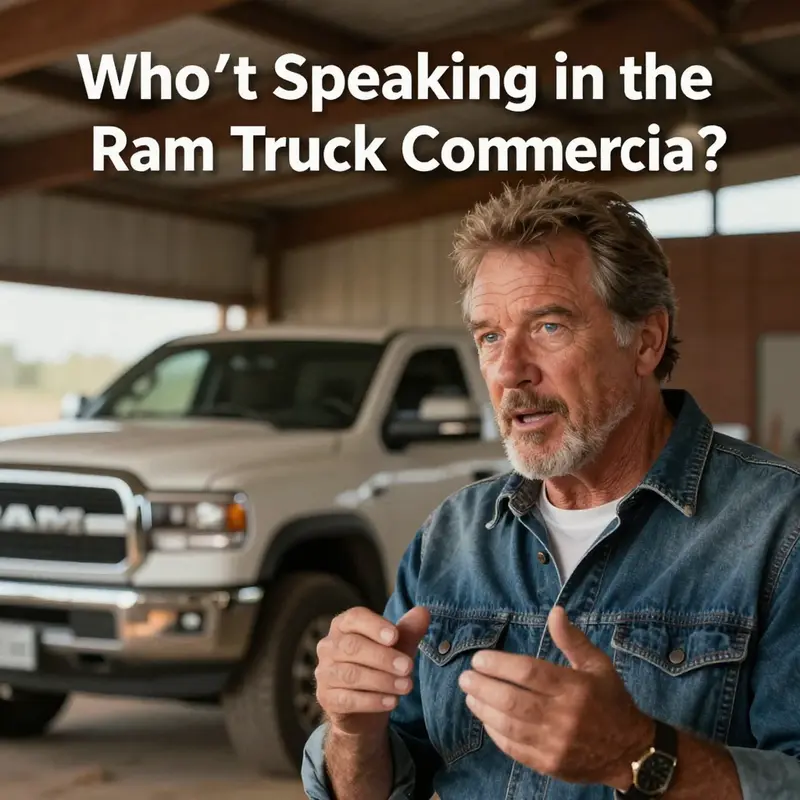
When audiences tune in to a Ram Trucks advertisement, they are often invited to listen as much as they are invited to watch. The question of who is singing, or more precisely who is speaking, sits at the center of how these spots land with viewers. The most famous Ram Truck moments have hinged not on a chorus or a musical performance, but on the authority of a voice delivering a compact, emotionally resonant message. In shaping that voice, the brand has moved beyond the convention of a traditional singer or a classic narration by a hired voiceover actor. The arc of Ram’s advertising, especially when we trace it from early campaign touchstones like So God Made a Farmer to the newer, high-profile Super Bowl entries, reveals a deliberate strategy: the speaking role is a branding instrument, crafted to mirror the values the company wants its customers to feel—trust, grit, and an intimate, almost candid connection to the people who rely on these machines day in and day out. In this light, the inquiry “who is speaking in the Ram Truck commercial?” becomes less about a single performer and more about a set of narrators—both voice and persona—whose presence is as carefully engineered as the vehicle features on screen. The shift from a recognizable actor as the mouthpiece to an itself-as-character approach tells a larger story about how the brand conceptualizes voice, truth, and appeal in a market dominated by performance and perception alike.
If we anchor our understanding in the most widely discussed Ram moment of the last decade, the 2013–2014 era’s So God Made a Farmer, we hear a voice that commands attention not because of a flashy vocal range but because of its sense of gravity. The voice in that era’s campaign is associated with Tom Selleck, an actor whose gravitas informed every line that skimmed over the screen like a rough, sun-bleached wind. This is not a performance that calls attention to itself through a soaring melody or a clever rhyme. Instead, it relies on the mythic cadence of a spokesperson whose gravitas makes the farmer’s life feel almost mythic in scope. The result is not a song or a jingle but a seamless blend of image, intention, and cadence—a form of verbal storytelling that elevates the everyday heroism of farming to cinematic proportion. The power of the voice rests on its resonance with the audience’s lived experience: the daily labor, the pride in a hard-earned harvest, the appreciation of a vehicle engineered to meet real-world demands. The message lands with the same force as a well-timed punctuation mark in a sentence—clear, purposeful, and memorable because it is anchored in a truth the audience recognizes.
Yet the speech was never about selling a song; it was about selling a worldview. The choice to pair Selleck’s voice with images of vast fields, weathered hands, and a horizon that seems to promise both challenge and relief created a tonal environment in which the vehicle’s utility was inseparable from the character of the people who depend on it. This is a crucial distinction: a voiceover that is a pure instrument of rhetoric is not the same thing as a voice that embodies a brand’s ethos. In the Ram case, Selleck’s narration functioned as a kind of moral compass for the audience. It invited viewers to project themselves onto the life the ad depicted—the long drives to the fields, the quiet pride after a day’s work, the sense of loyalty that binds a person to a machine and to a place. The narration became a mirror held up to the audience, asking them to see themselves in the story and to trust the product because it is part of that story’s fabric.
If one lens is focused on the older campaign, another emerges when the brand pivots to a more contemporary, audience-driven approach. The 2025 Super Bowl ad—featuring Glen Powell—offers a striking contrast in who speaks and how. Powell appears not as a distant, polished authority delivering a solemn note about work and heritage, but as a fictionalized version of himself—a rugged, over-the-top cowboy in a world that plays out almost cinematic in its humor and escalation. The voice in Powell’s spot is Powell’s own voice, delivered with exaggerated intensity and comedic flair. The effect is deliberate and distinct: the speaker becomes a character rather than a distant authority. In this construction, Powell is both the performer and the emblem of Ram’s brand persona, a man who embodies the kind of confidence that Ram trucks, in the narrative, are designed to amplify. The humor comes not from a punchline delivered by a script read aloud in a studio, but from the way Powell leans into the absurdity of the scenario while still anchoring the scene in a sense of practical competence. The ad uses self-reference—Powell plays a version of himself—to create an illusion of authenticity that resonates in a way that hyper-polished voiceover sometimes fails to achieve.
This evolution matters because it signals a broader shift in how the brand positions itself in a media landscape saturated with logos, fast cuts, and loud sound design. The voice is no longer a mere tool to convey information; it becomes a personality trait that can shift from solemn to funny, from aspirational to irreverent, depending on the campaign’s aims. The choice to let Powell voice the ad as himself—an amplifier of a “cowboy” persona who can go from the heroic to the ridiculous with ease—speaks to a brand strategy that values proximity and wit as much as reliability and toughness. It’s not simply a matter of “who is talking” but “how the speaker’s characterlets align with the audience’s appetite for authenticity.” A speaker who can pivot between gravitas and humor offers Ram a wider emotional palette to draw on in different campaigns. The viewer may attach to a voice not because of a static ideal but because the voice shows a range—one moment a steady, trustworthy narrative; the next, a playful, self-aware riff on the hero’s journey.
The persistence of a strong voice, whether anchored in a celebrity like Selleck or realized through a self-portraying actor like Powell, leaves a footprint in the way audiences think about trucks as objects of aspiration, necessity, and belonging. The ad’s environment—the rural imagery, the heavy-duty silhouettes against the open sky, the tactile realism of the truck’s lines and features—works symbiotically with the spoken word. The voice completes the sensory package. A song might glitter, but a voice that feels earned by lived experience—whether Selleck’s dignified cadence or Powell’s comic self-mockery—tethers the product to a believable reality. It suggests that the vehicle is not a mere machine but a partner in an enterprise that requires grit, timing, and a certain humility before the elements. In the Ram campaign, the voice is not a distraction; it’s a bridge linking the audience to a shared sense of purpose.
Another layer of complexity emerges when considering the role of music, or rather the deliberate absence of a musical performance by a singer within the advertisements discussed. The initial overview notes that the So God Made a Farmer spot relies on narrative and imagery rather than a singer performing within the ad. The emphasis is not on a melodic hook but on a cadence of speech that elevates the visual storytelling. The choice not to foreground a musical performance aligns with a branding impulse that wants the audience to hear the land, feel the weight of the work, and trust the voice to guide them through an emotional terrain without the distraction of a chorus or a chorus-like emotional cue. The auditory landscape becomes a terrain in its own right, shaped by pacing, inflection, and the strategic silences between lines. The absence of a singing voice within certain Ram campaigns thus becomes a telling signal about the brand’s priorities: authenticity, narrative depth, and a confidence that the spoken word paired with robust visuals can move the audience in ways a catchy chorus cannot.
The question of who is speaking is also a question of audience empathy. In campaigns where a recognizable celebrity voice anchors the narrative, the audience may feel a direct, almost intimate connection to the celebrity’s persona—an experience that transcends the product and becomes a moment of identification. The Selleck-led voiceover granted the ad an aura of timeless American sagacity. It suggested that the farmer’s life is a shared heritage, something to be honored and remembered. In the Powell-led spot, the voice becomes a mirror that reflects a more modern, self-aware kind of bravado. It invites the viewer to smile, to recognize the exaggeration, and yet to register the underlying competence that the vehicle represents. The blend of humor and competence creates an emotional elasticity that can be deployed across varied campaigns, enabling the brand to speak in different registers while preserving core values: strength, reliability, and a willingness to work hard in the face of whatever the world throws at you.
To the extent that a chapter in a study of Ram’s advertising strategy must navigate both tradition and novelty, the “who speaks” question becomes a thread through which the brand’s evolving identity is traced. The early, solemn voiceover in the So God Made a Farmer campaign mapped the brand onto a familiar script of rural virtue. It leaned on the authority of an established actor to lend weight to the message. The 2025 Super Bowl effort, by contrast, testifies to a willingness to iterate and to experiment with persona and self-representation. It signals a confidence that audiences can recognize themselves in a speaker who is not a distant authority but a living, breathing character with a sense of humor about the bravado that sometimes accompanies hard work. This evolution mirrors broader shifts in advertising itself: from the era of the grand, soothing narrator to an era of character-driven storytelling, where the speaker’s persona matters as much as the lines spoken.
In this light, the process of identifying who is speaking in a Ram Truck commercial becomes a case study in branding poetry rather than a simple cast list. The chosen voice—whether Selleck’s resonant gravity or Powell’s self-referential bravura—acts as a conduit for meaning. The listeners bring their own experiences and expectations to the moment, and the speaker’s cadence becomes a catalyst for emotional alignment. The audience doesn’t merely hear a commercial; they participate in a shared moment of recognition—the recognition that a truck is not merely a tool but a companion in the pursuit of a life defined by labor, risk, and a certain code of perseverance. The voice has to pass that test: to be credible, to be memorable, and to be flexible enough to fit multiple narratives while remaining true to the brand’s core. It is, in essence, a study in how sound and persona can carry an industrial product into the realm of cultural symbolism.
As we consider the broader implications for the industry, a practical takeaway emerges. The way a speaker is positioned in a commercial can influence perceived durability, reliability, and even the price of trust in the product. When a voice embodies the ethos of rural work and authenticity, viewers are more likely to project themselves into the story and view the product as a reliable partner, not a flashy gadget. The Powell spot’s self-produced voice aligns with a trend toward meta-narrative marketing, where the identity of the speaker becomes part of the plot rather than a mere vehicle to sell. This approach resonates in an era of social media where audiences expect transparency and a certain playfulness about heroics. If the narrative’s hero is willing to wink at the audience, that same audience may extend its trust to the product being advertised. The voice, in this sense, becomes a public relations instrument as well as a storytelling device.
For readers who want to trace how these choices unfold in real-world analysis, an example from industry commentary on the broader context of vehicle and trailer demand helps illuminate why a brand might favor a self-referential, character-driven voice. Discussions about trailer orders and truckload margins reveal that markets reward narratives that blend reliability with practicality. The link between the way a brand speaks and the way it addresses market realities is subtler than a single line of dialogue. It lies in the implicit promise that the speaker makes about what the product can do in everyday life and in the margins that customers care about when they decide to invest in a heavy-duty machine. In this sense, the voice is not a decorative element; it is an instrument of credibility, a signal that the brand understands the audience’s stakes and is ready to meet them with a voice that can switch from solemn resolve to gleeful bravado without losing centerline—centerline being the steadfast assurance that the truck will do what it is asked to do when the job is at hand.
The broader takeaway for those studying or covering this topic is that the Ram voice, across campaigns and years, operates as a living component of the brand narrative. It evolves with the audience’s sensibilities without abandoning the core traits that define the brand’s identity. The decision to cast a celebrity for a given campaign and to cast the speaker as a self-aware character for another illustrates a thoughtful calibration of tone. It invites audiences to experience the product through a living, relatable voice rather than through a static, monumental abstraction. In a media landscape where viewers are continually asked to choose attention, a voice that feels honest and vivid can become a differentiator, providing clarity in a crowded field.
The study of who is speaking in Ram Truck advertising thus becomes a study of brand strategy itself—how a company uses voice to construct memory, trust, and resonance. It is less about a single performer and more about the relationship between sound, image, and audience perception. Whether the voice is anchored in a gravity-inflected delivery by a seasoned actor or anchored in the mischievous bravado of an actor playing a public-facing version of himself, the result is a consistent message about durability, authenticity, and the shared pride of a life lived on the edge of fields, roads, and work sites where a dependable machine makes a difference every day. In the end, the voice is a doorway into the story the brand wants to tell—and the audience’s willingness to step through that doorway depends on the speech’s capacity to feel earned, ownable, and human.
Internal note: for readers exploring how voice affects market perception and the relationships between trailer demand, margins, and brand storytelling, a related industry analysis with a broader focus on trailer orders and margins can provide helpful context. See Trailer Orders Impact Truckload Margins for a deeper look at how market signals interact with marketing narratives in a field closely tied to the equipment Ram Trucks designs and markets. Trailer Orders Impact Truckload Margins.
External resource reference for further listening: to hear the exact voice and delivery in the 2025 campaign with Glen Powell, you can view the official presentation of the Ram Trucks Super Bowl 2025 Commercial with Glen Powell here: Ram Trucks Super Bowl 2025 Commercial with Glen Powell.
Final thoughts
The legacy of the Ram Truck commercial ‘So God Made a Farmer’ is inextricably linked to Tom Selleck’s poignant narration. By effectively harnessing storytelling, it captures key values of perseverance and dedication, urging logistics and construction professionals to reflect on the relentless spirit that drives their own industries. Understanding who speaks in this advertising masterpiece provides invaluable insights into branding strategies that resonate emotionally with target audiences. This convergence of storytelling and target marketing highlights the importance of connecting with viewers, proving that powerful narratives can build enduring brand loyalty.