
Commercial truck drivers hold a pivotal role in the U.S. logistics chain, influencing various sectors from transportation to construction. Understanding their earnings is crucial for logistics and freight company owners, procurement teams in construction and mining enterprises, and small business owners with delivery fleets. This comprehensive article delves into the average salaries and earnings of commercial truck drivers, explores the key factors influencing compensation, compares different trucking roles, highlights regional salary variations, and analyzes how experience impacts earnings. Each chapter builds on the last to provide a full understanding of truck driver compensation, helping stakeholders make informed decisions.
Pay on the Open Road: A Deep Dive into How Much Commercial Truck Drivers Earn Across Markets, Roles, and Benefits
The question of how much commercial truck drivers make is not a single headline number but a blend of facts, trends, and personal choices that shape every paycheck. In the United States, salary aggregators pull from thousands of job postings and driver reports to offer a snapshot: the average driver earns about $1,733 per week, which works out to roughly $93,839 a year when you scale that weekly figure across the year. This estimate comes from more than 496,100 salary reports gathered by a major job site over the last 36 months. Yet that figure is a starting point rather than a terminal destination. Pay varies widely by where a driver sits geographically, the type of freight moved, how long they’re willing to be away from home, and the particular trucking company’s pay structure and benefits package. Add in bonuses, health insurance, retirement plans, and other compensation elements, and the total earnings picture can swing by a substantial margin in either direction.
What that means in practice is that the base pay is only part of the story. Some drivers are paid by the mile, some by the hour, and others receive a salary with per diem or bonus components. Over-the-road drivers who rack up long miles typically have the potential to earn more in base pay, but those miles come with longer time away from home and more demanding schedules. Drivers who specialize in certain freight types or who work in team configurations can further boost earnings. Team driving, in particular, often allows two drivers to cover more miles over extended periods, a model that sometimes translates into higher annual take-home income. The numbers illustrate this clearly: in the United States, the national average for specialized or team drivers can approach around $164,200 per year. That figure underscores the earning ceiling that can exist in the industry when the right combination of miles, roles, and logistics align.
The landscape of trucking pay is a mosaic built from several moving parts. Location remains a major determinant. Regional markets differ not only in the number of miles available but also in demand for drivers and the cost of living that employers consider when setting pay scales. Some markets offer higher per-mile rates to attract drivers to long-haul lanes with scarce capacity, while others emphasize regional or local routes where the driving pattern is more predictable but the miles are fewer. Then there is the freight type. The kind of goods a driver hauls can influence pay through factors such as the reliability of routes, the complexity of handling, and the penalties or bonuses tied to on-time delivery and safety records. A driver hauling high-value or time-sensitive freight may earn more through bonuses that recognize efficiency and reliability, while those moving bulk or less time-sensitive loads might see steadier but less variable pay. In any case, the base rate is only one line of the ledger; the total compensation can include bonuses for safety performance, longevity, or fuel efficiency, as well as retirement plans and health benefits that add real value over the long arc of a career.
Beyond the United States, the pay story broadens further when you look at other markets. In Australia, for example, the data point set presents a different but equally informative picture. Across several metropolitan pockets, truck drivers report hourly wages in the mid- to high-$30s in Australian dollars. Abbotsford, West Melbourne, Laverton North, and Melbourne show averages hovering around the mid-$30s per hour. While these figures are in a different currency and reflect local market dynamics, they illustrate a universal truth: trucking pay is a function of demand, cost of living, regulatory environment, and the specific arrangements of local employers. The Australian figures remind readers that the open road’s earning potential is not uniform and that cross-border comparisons require careful consideration of currency, benefits, and standard of living that accompany the paycheck.
The full picture of earnings also depends on how pay is structured. Some drivers enjoy a predictable weekly income when aligned with local or regional routes, while others chase fluctuating mileage with the possibility of higher pay during peak seasons or when freight demand surges. For many drivers, base pay is enhanced by bonuses—whether for meeting safety targets, completing a certain number of miles, or working in hard-to-staff lanes. Health benefits and retirement plans supplied by employers can add substantial value, effectively increasing the real compensation beyond the nominal wage or per-mile rate. These benefits reduce out-of-pocket costs for workers and their families and can be a decisive factor when evaluating job offers that otherwise appear similar on the surface.
Another dimension to consider is the experience curve. An entry-level driver, beginning a career in trucking, will typically earn less as they gain experience and prove their reliability. Over time, with a proven safety record, the opportunity to command higher per-mile rates or to qualify for more lucrative lanes often opens up. Experienced drivers are also better positioned to leverage regional or team options, which, as noted, can yield significant upside earnings. The combination of miles driven, the type of driving (regional versus long-haul), and the willingness to take on specialized roles all contribute to the variance in actual earnings from year to year. This variability is not a sign of inconsistency alone but a reflection of a field where the best opportunities accrue to those who are flexible and willing to optimize their routes, schedules, and career paths.
Importantly, the conversation around pay must include the broader employment package. Salary or hourly rates do not exist in a vacuum. A driver’s total earnings can be meaningfully boosted by sign-on bonuses, performance bonuses, detention pay, and tools that help reduce downtime. Benefits such as health insurance, retirement contributions, and paid time off provide stability that pure take-home pay does not capture. For many drivers, a compensation package that prioritizes both immediate earnings and long-term security is attractive, especially when it aligns with personal goals and family needs. The way a company structures pay and benefits can also influence job satisfaction and career longevity, two factors that are just as important as raw numbers when assessing the true value of a trucking job.
To place these numbers in a broader context, it helps to view the market through a trend lens. The trucking sector has faced cycles of demand, capacity shifts, and regulatory changes that influence how pay is set and how attractive a role feels to potential hires. For those who want to see how market dynamics have evolved in recent years, a deeper dive into industry analyses and job market commentary can be illuminating. A recent exploration of trucking job recovery and related signals provides insights into how employers are responding to demand and how drivers may expect opportunities to develop in the near term. See the discussion here: 2024 trucking job recovery signals hope.
As readers weigh these numbers, a practical question emerges: how should a driver interpret pay offers when weighing job opportunities? First, focus on the total compensation package, not just the headline pay rate. Calculate not only the potential miles per week but also how many hours are likely to be spent waiting at loading docks, the frequency of detention pay, and the likelihood of predictable routes versus high-variability lanes. Ask about the employer’s safety and performance bonuses, and whether benefits like health insurance, retirement plans, and paid time off are included and what portion the employer funds. For drivers navigating cross-border or multi-state routes, inquire about per diem policies, fuel cards, and other programmatic benefits that can influence net pay. A transparent conversation about miles, pay bands, and bonus structures can reveal how attractive a given position is beyond its stated rate.
The pay story is ultimately a reflection of a career that blends endurance, planning, and negotiation. Those who optimize miles, pursue specialized or team opportunities, and select employers with robust benefits can push their earnings higher than the baseline national figure. Yet the decision is personal as well as financial. Some drivers prize home time, predictable schedules, or the predictability of a regional route; others chase the freedom of long-haul lanes that offer more miles and higher earning potential. The numbers give a map, but the journey is to align the map with one’s own priorities and lifestyle. In a field where the open road is both workplace and livelihood, earnings are best understood as a function of miles, role, location, and the value those miles deliver to customers and to the carrier.
External reference: https://au.indeed.com/career/truck-driver/salaries
On the Open Road to Pay: What Drives Truck Driver Earnings
When people ask how much commercial truck drivers make, it’s a question with a wide range. Pay is not a single figure but a spectrum shaped by miles, lane, endorsements, and how a carrier structures pay. In research and postings you often see a mix of numbers. For example, Indeed reports an average weekly pay around 1733 dollars, or about 93839 per year for a large national sample. That provides a useful starting point, but the reality varies by job and region.
To understand variation, consider factors. First, driving type matters: long haul drivers who are away from home longer generally earn more due to more miles and time on the road. Experience and credentials like hazmat endorsements also push earnings higher. Some employers reward these qualifications with premium rates, signing bonuses, or retention incentives.
Compensation is also shaped by how pay is structured. Some fleets emphasize high base wages with steady pay, others rely on per mile or performance based pay. Some drivers get bonuses for safety, on time delivery, or fuel efficiency, plus health benefits and retirement plans which add value beyond base pay.
Region and freight mix matter as well. Demand for certain lanes, fuel prices, and regulatory shifts affect pay. Home time preferences can create a home time premium in some routes, while others offer higher gross potential but less time at home.
Long run averages hide tails. Some analyses estimate upper end earnings around 164000 annually for the right segments. For many drivers, the 90000 to 95000 range is realistic, especially with regional work or shorter hauls.
Official sources like the Bureau of Labor Statistics provide a framework for how earnings are categorized and tracked. See BLS for methodology and benchmarks.
In short, truck driver pay is not a single headline number but a function of miles, routes, endorsements, and employer policies. The best approach if you are evaluating options is to map expected miles by lane, weigh home time, and consider the value of benefits beyond wage. Earnings are the product of distance, discipline, and the willingness of fleets to reward safe and dependable work.
Miles and Means: Earnings Across Trucking Roles
An earnings story for commercial truck drivers is not a single number but a spectrum. When you look at factors such as region, vehicle type, mileage, and business model, the pay story broadens and sometimes hides its true reach. A common headline figure is a weekly average around 1,700 dollars, which translates to roughly 88,000 to 90,000 per year for many drivers, but this average hides significant variation.
Geography matters. Regions with higher demand and tighter labor markets often push pay higher, while local or regional delivery roles tend to offer steadier hours and benefits but may cap total compensation. Specialties such as hazardous materials, flatbed, or oversized loads command premium rates but come with extra training, compliance requirements, and sometimes longer wait times at shippers.
Ownership changes the math. Owner-operators face costs such as fuel, maintenance, insurance, depreciation, and licensing that can erode gross earnings. For some, ownership unlocks higher total earnings when mileage is strong and the business scales, but the margin depends on cost control and scheduling discipline.
Experience matters. New entrants build miles and familiarity with regulations before earnings rise. Over time, better efficiency, routing, and a mix of high value routes can push earnings higher, including through a blend of company driving and owner-operator work.
The take home message is that trucking pay is not a fixed target but a ladder of possibilities. For those seeking stability and benefits, local or regional roles can offer solid total compensation. For drivers who crave higher mileage and premium freight, long haul and specialized work can boost earnings after accounting for business expenses and time on the road.
Regional Pay Patterns for Commercial Truck Drivers Across the United States
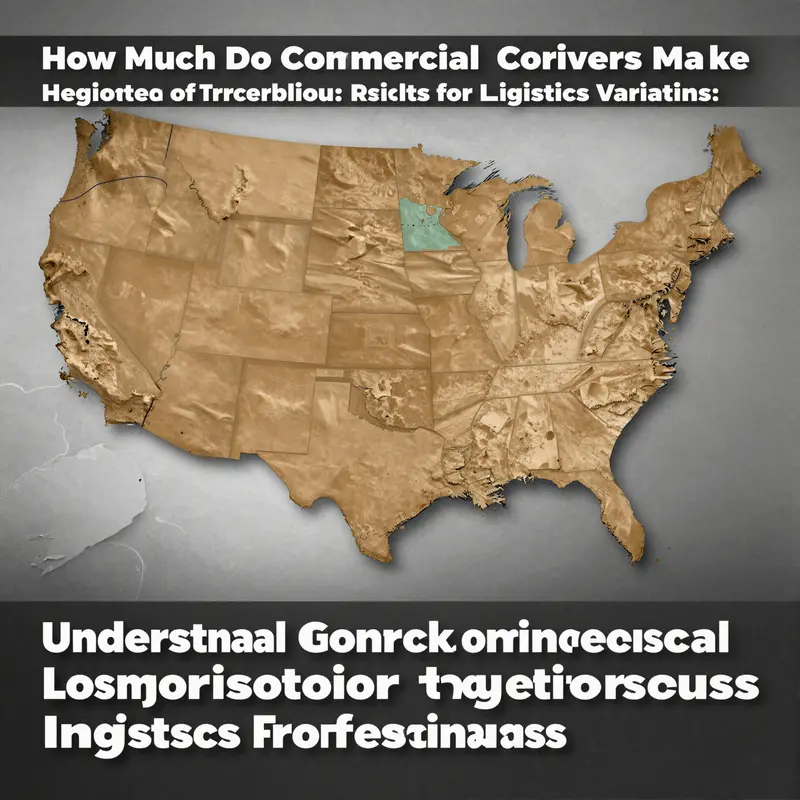
Regional pay patterns in the United States reflect market demand, cost of living, regulatory context, and the operating model of the job. When considering how much commercial truck drivers earn, it helps to start with national averages and then peel back the region-specific factors that create the differences you actually see in paychecks. Across the country, earnings span a broad range, and a single statistic rarely captures the full picture. Still, regional benchmarks give drivers, fleets, and policymakers a sense of where money is concentrated and what levers drive higher earnings.
A common reference comes from aggregated salary reports. On average, U.S. truck drivers earn a multi-region baseline that varies with job type, experience, and company structure. The range widens when you compare owner-operators to company drivers, and when you consider whether the role is long-haul, linehaul, or local. While the numbers are useful, the real story is how pay is influenced by the work plan, the freight mix, and the financial model behind owner-operator versus employee status.
Regional variation often centers on three dimensions:
- Employment type: company driver versus independent owner-operator. Owner-operators typically face higher gross opportunities but must cover depreciation, insurance, fuel, and maintenance, which affects net income.
- Operating model: long-haul versus regional or local work. Longer miles and time away from home can command higher per-mile rates or bonuses, while local roles may emphasize steady schedules and benefits.
- Freight type and market demand: high-demand corridors, capacity constraints, and regional freight mix drive rate fluctuations and availability of loads.
These factors interact with regional cost of living and market competition. High-cost regions with tight driver markets may offer higher pay to attract talent, while markets with more competition can compress rates. Beyond base wages, total compensation may include bonuses, detention pay, accessorial pay, and benefits, which vary by employer and region.
To place regional pay in a national context, official wage data and industry reports provide a backdrop for comparison. Readers can use these benchmarks to inform career decisions, negotiate terms, and assess which operating model aligns with their goals.
Miles, Markets, and Money: How Experience Shapes Truck Driver Earnings
The pay landscape for commercial truck drivers in the United States is a function of miles driven, demand for labor, and the accumulated know-how that comes with time on the road. Across the industry, the latest synthesis of data points to an average annual compensation near $93,839, derived from roughly 496,100 salary reports collected from job postings on Indeed over the past three years. That figure serves as a practical compass for readers trying to understand what a career behind the wheel can pay, but it also masks the sharp variations that ride along with experience, route type, geography, and employer philosophy. The weekly earnings implied by the annual figure—about $1,733 per week—highlight the rhythm of the job: long stretches, unpredictable schedules, and a compensation structure that rewards reliability and skill as much as distance and detours. The real story, however, is not a single number but a ladder of opportunity that unfolds as a driver gains experience, earns endorsements, and proves they can handle the complexities of modern freight networks.
From the outset, entry-level drivers typically find that their initial compensation sits in the range of roughly $50,000 to $60,000 per year. Those numbers reflect the learning curve many first-year drivers endure: mastering the basics of safe vehicle operation, navigating different freight types, and developing the discipline to manage time and logbooks in a highly regulated environment. As techniques and habits crystallize, drivers move from the novice tier into a more productive middle ground. In the three- to five-year window, earnings commonly rise into the neighborhood of $70,000 to $85,000. In this phase, drivers have accrued enough miles to demonstrate reliability, an essential currency in the industry, and have often earned endorsements or specialized training that enables them to tackle more challenging loads. The progression is not purely linear, but it tends to follow a recognizable arc: familiarity with routes and customers reduces downtime, safety records improve, and employers place greater value on consistent on-time performance.
Experience also reshapes the pay mix beyond base hourly or per-mile rates. Several drivers qualify for premium compensation when they assume roles that demand additional responsibilities. Specialized positions—such as refrigerated freight, hazardous materials, or oversized cargo—tend to carry higher pay due to the technical skill required, stricter regulatory compliance, and heightened risk management. These positions often come with enhanced pay scales that can push earnings past the $85,000 mark for those who stay in the profession long enough to master the trade. Long-haul work, by its nature, can carry more generous compensation as drivers endure extended hours and greater separation from home. There is a discipline to long-haul driving that, with experience, translates into higher productivity, fewer delays, and better routing decisions, all of which contribute to more favorable earnings.
Team driving emerges as another route to higher earnings for drivers who are willing to share the road. When two drivers operate a truck, the combination of more continuous driving hours and a more efficient cycle time can push earnings beyond what a single driver might achieve on the same lane. This approach often appeals to those seeking to maximize miles while maintaining a predictable schedule, though it requires compatibility between team members and a company that supports coordinated planning. The broader point is that earnings follow capability and reliability. A driver who consistently delivers safe, on-time service on complex routes can attract assignment to higher-paying positions, regardless of the exact miles logged in a given week.
Geographic variation is another critical element. Wages fluctuate with regional demand, the cost of living, and the density of trucking jobs. Some markets offer higher wage levels to offset longer commutes, tougher winter conditions, or urban congestion that stretches delivery times. Conversely, other regions might deliver competitive compensation through steady freight demand and close proximity to major distribution hubs. For drivers who travel nationwide, this means a dynamic pay picture—periods of higher regional pay can align with the right lanes and the right carrier relationships, creating opportunities to push annual earnings higher even within the same job category.
Beyond the base pay, the total compensation envelope often includes a mosaic of bonuses, health benefits, and retirement plans. Sign-on bonuses, retention bonuses, and performance-based incentives can substantially tilt the total earnings for a driver over a 12-month period, especially in tight labor markets where employers compete to secure experienced hands. Health insurance coverage, retirement matching, and other benefits cushion the financial volatility typical of a career defined by irregular schedules and potential hazards on the road. All of these components collectively influence the realized take-home pay and shape a driver’s long-term financial security. In other words, two drivers with the same per-mile rate may end up with different annual incomes because one has access to more comprehensive benefits and a more robust incentive structure.
Industry demand continues to shape both the supply of drivers and the compensation offered. The demand for experienced, dependable drivers has been a consistent upward pressure point in recent years, which translates into more competitive wages and broader opportunities for advancement. When the market tightens, carriers compete not just on base pay but on the total rewards package, including scheduling flexibility, travel resilience, and the quality of the employer-employee relationship. In parallel, safety records and reliability increasingly become currency in negotiations for higher wages. A strong safety history signals to employers that a driver is low risk and high value, which can translate into higher pay bands and more favorable route assignments. Formerly marginal endorsements and refresher courses can also become leverage points for salary growth as carriers seek to maximize the performance of their fleets.
To those considering a trucking career, the pay trajectory is not simply about advancing years but about building a portfolio of proven competencies. Certifications and endorsements—whether they unlock access to refrigerated freight, hazardous materials, or oversized loads—often correlate with above-average pay. The extra training translates into the capacity to handle more complex shipments with compliance and care. Even safety performance matters: a spotless safety record tends to broaden the range of assignments and can prompt carriers to offer improved pay scales to retain drivers who minimize the risk of damage and downtime. The linkage between skill, reliability, and earnings becomes a virtuous loop: better training leads to better job opportunities, which, in turn, support higher income and more stable employment.
All of this happens in a labor market that continues to evolve. Structural shifts in freight capacity, regulatory changes, and evolving demand for different freight types exert a quiet but persistent influence on pay levels. For the reader trying to forecast earnings, it pays to consider not just the year-over-year wage data but the undercurrents shaping the industry: capacity constraints, fuel costs, equipment costs, and the strategic priorities of major logistics players. Those forces determine where on the earnings ladder a driver can land and how quickly they can ascend. A driver who embraces a combination of route versatility, safety discipline, and ongoing certification positions themselves to capitalize on market swings and to extract greater value from each mile traveled.
In this sense, earnings are less a fixed destination and more a dynamic journey. The numbers—entry-level ranges, mid-career jumps, and top-tier pay—provide anchors, but the real driver of income is the quality of the professional relationship a driver builds with the work. Some readers may find themselves content with a steady, well-compensated routine in regional or linehaul operations. Others may seek the challenge and higher potential of specialized or team roles that can move earnings into six figures. Either path benefits from deliberate skill development, a practical approach to route planning, and an openness to new endorsements and responsibilities that the market rewards. The literature and data point to a future in which performance, reliability, and adaptability—not merely hours on the road—determine where a driver sits on the pay spectrum. For readers who want a broader sense of industry momentum and labor-market signals, see the discussion on 2024 trucking job recovery signals hope. 2024 trucking job recovery signals hope.
Ultimately, the dialogue about how much commercial truck drivers make needs to balance the headline figures with the granular realities of every mile and every paycheck. Averages give a sense of scale, but earnings are personal: shaped by the choices a driver makes about routes, schedules, endorsements, and the employers they align with. As the sector continues to adjust to evolving demand, the combination of steady miles, strategic certifications, and a strong safety record remains the most reliable engine behind a driver’s paycheck. For those seeking formal benchmarks, official labor statistics provide a durable frame for understanding national trends and regional deviations that shape both opportunity and compensation in this essential industry. For authoritative benchmarks, see the U.S. Bureau of Labor Statistics data: https://www.bls.gov/oes/current/oes537061.htm.
Final thoughts
In conclusion, the compensation of commercial truck drivers is influenced by a multitude of factors including job role, geographical location, and years of experience. Understanding these dynamics is essential for logistics company owners and procurement teams as they strategize on hiring practices, salary negotiations, and workforce planning. By gaining insights into the average earnings and compensation structures, businesses can make data-driven decisions to enhance their operations and attract the best talent in the trucking industry.