
Understanding when to tag a truck as commercial is crucial for logistics, freight, construction, and delivery enterprises. This classification impacts registration, insurance, and regulatory compliance. Under U.S. law, the Gross Vehicle Weight Rating (GVWR) is a primary indicator, where trucks over 10,001 pounds are categorized as commercial motor vehicles (CMV). However, the scope extends beyond just weight; trucks utilized for business, regardless of their GVWR, may require commercial tagging based on state regulations and licensing. Moreover, interstate operation raises different requirements. In this comprehensive exploration, we will delve into five critical chapters that dissect each aspect of truck tagging, empowering business owners with essential knowledge to avoid compliance issues and enhance operational efficiency.
GVWR as the Gatekeeper: Decoding When a Truck Must Wear a Commercial Tag
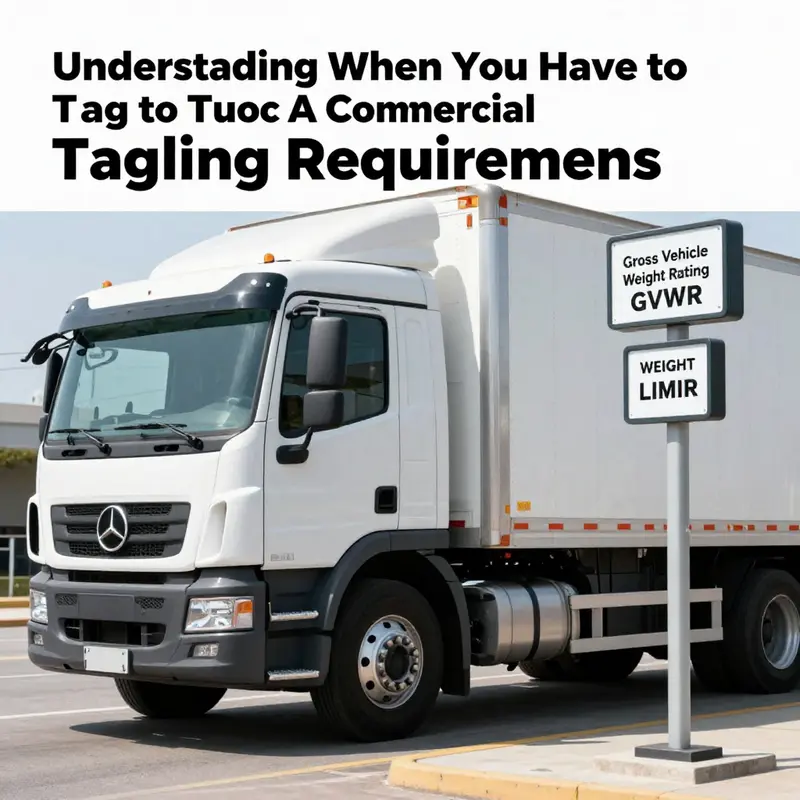
Weight is the first word in the language regulators use to describe a truck on the road. In the everyday work of trucking, weight matters because it translates into rules, registrations, and sometimes the difference between a routine trip and a regulated operation. The critical concept here is the Gross Vehicle Weight Rating, the GVWR. This rating is not the weight you happen to haul on a particular day. It is the maximum weight the vehicle is designed to carry safely, taking into account the chassis, engine, fuel, crew, cargo, and any equipment installed on the vehicle. When the GVWR exceeds 10,000 pounds, many authorities classify the vehicle as a commercial motor vehicle, a designation that triggers a cascade of tagging, licensing, and operational requirements. But the story does not end with a single threshold. The way a vehicle is used, the jurisdiction in which it operates, and the regulatory context all shape whether a tag is required and what that tag actually means in practice.
GVWR is a manufacturer determined ceiling. It represents the upper limit of safe operation for the vehicle in typical service. This means it is not merely a reflection of what you load on a given day; it is a property of the vehicle as built. The numerator of this concept stretches across the weight of the chassis and the body, the engine, the fuel, the occupants, and the cargo or tools that may be carried. In effect, GVWR is the weight the vehicle could reach if it were loaded to its maximum designed capacity. The moment a vehicle’s GVWR crosses the 10,001-pound line, the line between private use and commercial use often shifts. A pickup with a GVWR of 12,000 pounds, for instance, sits on the commercial side of that line even if it is used for personal or light-duty tasks. The rating is about design, not the weight of a typical day’s load.
The practical consequence of crossing that line is not a one-time label change; it is an ongoing compliance posture. When a truck falls under CMV classification, a set of requirements typically follows: commercial vehicle registration, more formal licensing considerations, and, depending on use, the possibility of needing a commercial driver’s license for the operator. The interaction between GVWR and licensing is not a single hinge but a bundle of regulatory implications that hinge on the vehicle’s duties and the routes it travels. For many operators, this means that the difference between a private vehicle and a CMV is not just a matter of payload; it is a matter of how that vehicle will be used over time, including whether it will engage in interstate commerce.
The border between federal baseline rules and state specifics adds another layer of nuance. Federal guidelines establish a baseline: a GVWR above the threshold tends to classify the vehicle as commercial for purposes like registration and licensing. Yet states frequently add their own conditions grounded in local enforcement priorities and practical road experience. In some states, a vehicle used for business tasks such as deliveries, field service calls, or passenger transport for hire, may be deemed commercial even if the GVWR sits below the conventional 10,001-pound threshold. A vehicle used to move goods or provide a service as part of daily business can thus incur commercial status because of its function, not solely because of its weight. In practice, this means that one operator may encounter CMV tagging and licensing in one state while another state would assess a vehicle differently, despite identical equipment. The upshot is that the tag is more than a static label—it reflects a legal interpretation of how the vehicle is intended to be used across the road network.
To navigate this landscape, the starting point remains the GVWR as listed in the vehicle’s official documentation. The GVWR is most commonly found on the placard inside the driver’s door jamb, a quick reference that accompanies the vehicle at purchase and throughout its life. If there is any doubt, the owner’s manual or the manufacturer’s specification sheets will reiterate the rating. A misread can trigger a mismatch between classification and registration—an inconsistency regulators will rightly question. Worse, reliance on a load to determine utility rather than the rating itself can expose drivers and operators to penalties, safety hazards, and a host of administrative headaches. The underlying logic is straightforward: the GVWR defines the vehicle’s capability, and the law uses that capability to determine whether the vehicle is treated as a CMV in a given jurisdiction.
A crucial dimension of compliance is how the vehicle is used in daily operations. Even when a GVWR sits under the formal CMV threshold, business use—such as delivery services, construction work, field service fleets, or passenger transport for hire—may push a vehicle into commercial labeling territory. This is not an assertion about weight but about function. For the fleet manager, that means training and policy must reflect use cases, not just numbers on a sticker. It also means that planning for insurance, permits, and driver qualifications must be informed by the most likely regulatory scenario the vehicle will encounter on its typical routes and over the course of a workweek. The tension between weight as a technical rating and use as a regulatory trigger is where many operators find themselves balancing efficiency with compliance.
The regulatory framework is designed with safety, accountability, and interoperability in mind. A vehicle that qualifies as CMV under federal rules often carries additional expectations around maintenance, inspection, and driver qualification standards. The logic is that heavier, more capable vehicles can pose greater risk if not operated within a clear structure of oversight. That is why hazardous materials transport, passenger transport beyond a small number, and interstate operations frequently intersect with CMV status and license requirements. The more a fleet crosses state lines, the more important it becomes to understand not only the baseline federal standard but also the ways states adapt or extend it. In practical terms, this means regular checks of licensing requirements, route planning that anticipates compliance needs, and a culture of documentation that makes audits straightforward rather than punitive.
For the operator, the daily task is to keep GVWR, use, and jurisdiction in a coherent register. The process can be summarized as a few simple steps: confirm the GVWR from the placard or manual, review the intended use for the vehicle, and verify the applicable state and federal requirements. This approach helps fleets avoid misclassification on registrations, minimize the risk of citations, and maintain a smoother relationship with regulators and insurers. It also lowers the likelihood of last-minute changes to a vehicle’s status that could disrupt a project, delay a shipment, or complicate a fleet’s payroll and safety programs.
The real world is a mosaic of equipment configurations and operating models, which means the weight question cannot be answered in isolation from the rest of the business. Heavier equipment changes the calculus for maintenance scheduling, insurance terms, and even the design of loading and unloading processes. At the same time, the market for trailers, tractors, and related equipment is in constant motion: orders rise and fall with capacity, and those cycles influence how fleets think about the weight classes they rely on for planning. This is where the broader industry context matters. The constraint of GVWR interacts with economic decisions about equipment purchases, maintenance budgeting, and the timelines for upgrading fleets to meet safety and regulatory expectations. Understanding this interplay helps operators avoid the trap of treating regulation as a roadblock and instead view it as a structured framework that supports reliable service and predictable costs.
For many readers, the most practical takeaway is a clear one: know your GVWR, know how you actually use the vehicle, and stay aligned with the official guidance from the appropriate authorities. The tag is not a decorative mark; it is a signal about use, licensing, and compliance that flows from the vehicle’s design and the path it travels. The goal is not to entrap operators in paperwork but to promote safer operations, clearer accountability, and smoother coordination with customers who expect dependable, compliant service across a complex regulatory landscape. A well-governed approach to GVWR and CMV status yields tangible benefits—reduced risk, more consistent insurance coverage, fewer unexpected regulatory holds, and a clearer basis for planning across the fleet’s lifecycle.
To connect this discussion to broader market dynamics and equipment decisions, consider how trailer orders and truckload margins are shaped by weight classifications and the regulatory environment. Industry analyses explore how shifts in equipment mix, utilization, and compliance costs influence the economics of capacity and pricing. These considerations illustrate that GVWR is not just a number on a placard; it is a strategic parameter that informs decisions about which vehicles to deploy, how to structure routes, and when to invest in upgrades that align with safety and regulatory expectations. For readers seeking a concrete link to how weight classes ripple through fleet economics, see the discussion on trailer orders and truckload margins: Trailer orders impact truckload margins.
For those who want to explore the official regulatory framework in depth, the Federal Motor Carrier Safety Administration provides authoritative guidance on commercial vehicle regulations and the interaction of GVWR with other compliance requirements. This resource helps clarify what counts as a CMV, what licensing and registration steps apply, and how interstate operations can shape the regulatory landscape over time. External guidance can be found at the FMCSA site: https://www.fmcsa.dot.gov/regulations/commercial-vehicle-regulations
null
null
CDL as Gatekeeper: How a Commercial Driver’s License Shapes Truck Tagging Rules
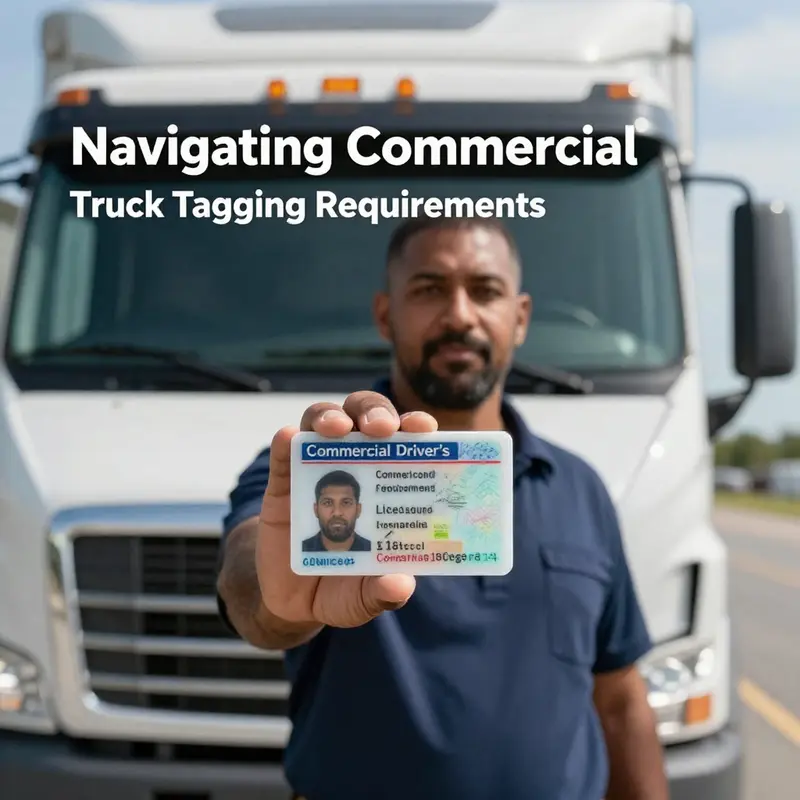
When regulators talk about tagging a truck as commercial, they describe a framework where the driver’s credentials, the vehicle’s weight, how the vehicle is used, and where it travels converge. The CDL sits at the center of that framework, signaling a regulatory expectation that goes beyond weight alone.\n\nThe GVWR threshold of 10,001 pounds often places a vehicle into the CMV category, triggering commercial registration and the familiar truck tags that mark it as CMV in the eyes of regulators. Weight alone is not the only driver; the CDL indicates commercial operations such as moving goods or passengers for hire, which reinforces tagging as commercial in many contexts. The safety standards and compliance expectations that accompany CMVs reflect risk considerations of heavier, more complex operations.\n\nThe CDL broadens beyond weight: hazmat, passenger transport, interstate commerce, and ELD mandates can influence tag classifications and renewal cycles. A CDL holder may see more frequent tag updates, placards, and alignment with regulatory measures tied to the vehicle and its use.\n\nState variation exists: some states require commercial tagging for broad business use, while others tie CMV tagging to cargo type or operating scenario. The result is that a CDL can push a vehicle into a stricter tagging regime even if the GVWR is modest.\n\nIn California and other states, the tagging ecosystem links classification to renewals, placard rules, and ELD compliance. For CDL holders, alignment means tags reflect current use and true classification; misalignment can trigger penalties and higher enforcement risk.\n\nPractical guidance: determine tagging needs by GVWR, use, and licensing regime. If GVWR exceeds 10,001 pounds, CMV tagging is typically warranted; if used in business activities, tagging considerations may apply even below the threshold. Hazmat or passenger service add nuance.\n\nMaintain current tags, renewals, and documentation to avoid penalties and to support safe, compliant operations.\n\nThe CDL’s role has strategic implications for fleet management: tagging informs inspection planning, maintenance, and compliance training. A CDL carries a discipline that permeates tagging decisions and daily operations. Firms often implement robust onboarding and ongoing training to ensure tag accuracy and regulatory alignment across federal and state requirements.\n\nFor readers navigating the regulatory landscape, the key takeaway is that policy evolves with market demand, technology, and asset turnover. The CDL acts as a signal of a regulated transport chain and a driver of more rigorous tagging requirements that support safe, reliable operations.
Tagging Across State Lines: Navigating How Commercial-Truck Registration Varies by Jurisdiction
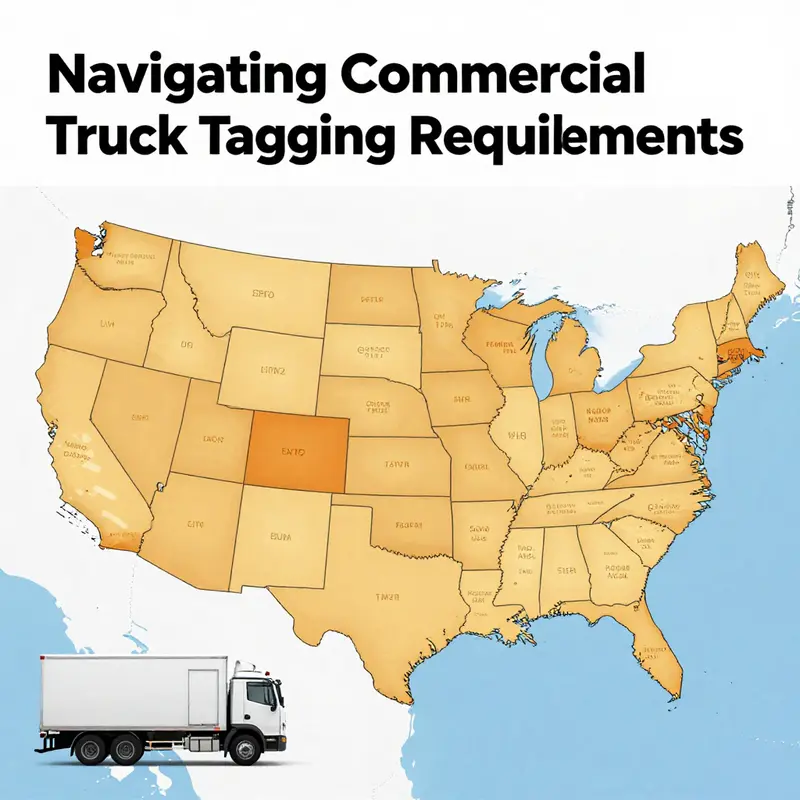
When people ask, “Do I have to tag a truck as commercial?” the simplest answer often points to weight. The federal framework does set a clear threshold: a Gross Vehicle Weight Rating (GVWR) of 10,001 pounds or more commonly classifies a vehicle as a commercial motor vehicle (CMV) for federal purposes. That status triggers certain registrations, fees, and compliance responsibilities. But the real world of tagging is broader and more nuanced. States have long inserted their own definitions, timelines, and charges into the process, and those state-level rules can either tighten or loosen the federal baseline. For operators who drive across town or across state lines, the difference between federal rule and state practice can mean the choice between standard plates and a commercial tag, between a routine inspection and a paperwork-heavy compliance package, and between minimal administration and an ongoing fleet-regulatory program.
To begin with, the GVWR threshold is still the anchor. A truck with a GVWR of 10,001 pounds or more is typically treated as a CMV in federal terms, which means registration and tagging designed for commercial activity. This is particularly relevant when the vehicle is used for interstate commerce, where the federal Motor Carrier Safety Administration (FMCSA) sets the broad framework for what counts as a CMV and what kinds of permits, inspections, and insurance are required. Yet many fleets quickly discover that weight alone does not determine the tag. The business use of a vehicle matters, and that use is often governed by state standards that sit alongside or, in some cases, above the federal baseline.
In practice, a truck that weighs under the 10,001-pound line can still carry a commercial tag in many states if the vehicle serves a business function. A delivery van making daily runs for a company, a contractor’s pickup used to haul tools and materials, or a service truck that travels to customer sites may all fall under state policies that treat business use as commercial activity. The logic is straightforward: when a vehicle is employed as a tool of trade—transporting goods, providing services, or moving workers to worksites—it participates in the commercial economy. States recognize this by tying vehicle classification and tagging to the vehicle’s intended use, not only its static weight.
The message for operators is simple but important: know both the weight and the mission. The weight tells you whether federal CMV rules may apply, but the mission tells you whether state rules may apply even if you stay within federally defined weight limits. Some states have adopted the federal threshold as their own line in the sand, while others apply a more expansive approach, especially for operations conducted entirely within state borders or for fleets that frequently deliver in urban settings. In these cases, a vehicle that does not meet the GVWR threshold could still require commercial registration if it is used in a way that the state defines as “commercial activities.” The practical implication is that a single truck can sit in a gray area depending on where and how it is operated.
Adding to the complexity are vehicles that operate under rules that resemble CDL (Commercial Driver’s License) expectations. If a truck is used in interstate commerce, carries hazardous materials, or transports more than a specific number of passengers, it can trigger additional requirements. The CDL framework, along with hazmat endorsements, is tightly woven into the way CMVs are regulated on the road. Even when the GVWR sits just below a federal threshold, the presence of hazardous materials or passenger transport for hire can shift the vehicle into a category that expects greater diligence and more robust tagging, licensing, and insurance. In a practical sense, this means that awareness of the mission is as crucial as awareness of the mass.
For many operators, the most helpful approach is to treat tagging as a two-step decision process. First, determine whether the vehicle qualifies as a CMV under federal definitions by reviewing GVWR and the vehicle’s use. If the weight crosses the threshold or if the vehicle is used in interstate commerce or for-hire activities, many CMV-related obligations come into play. Second, evaluate the state’s own rules. States differ in how they implement and enforce CMV concepts. Some require commercial plates for any vehicle used for business transportation of goods within the state, regardless of weight. Others impose commercial registration only when the vehicle’s weight or use aligns with specific state definitions. The interplay between these layers creates situations where the exact same truck could bear a standard plate in one state and a commercial tag in another.
The practical upshot is that drivers and fleet managers must stay attuned to local nuances. A business that operates in multiple states cannot rely on a single rulebook. Each jurisdiction may have distinct registration timelines, varying wording about “commercial use,” and different penalties for noncompliance. The cost of failing to align with a state rule can be more than a handful of extra fees; it can affect insurance, fleet inspections, and the ability to legally operate on public roads. In highly regulated environments, even small oversights can snowball into administrative headaches, delayed deliveries, or costly enforcement actions.
Where does that leave the operator who runs a small fleet, perhaps a handful of delivery trucks or service vans, within a single state? The answer remains grounded in due diligence. Start with the GVWR and the federal CMV framework. Then examine state statutes and DMV guidance. Many states publish explicit criteria for “commercial registration” or “commercial tagging” that tie back to use, weight, or the nature of the service. If a vehicle is employed to transport goods, equipment, or personnel for hire, even if it sits under the federally defined CMV threshold, it could still fall under a state’s commercial regime. This possibility underscores why the DMV or motor carrier authority in the state of operation should be consulted early in the planning phase, well before new registrations are due or plates are renewed.
The best practice, in practical terms, is to build a compliance routine that is not only weight-driven but use-driven. When a truck is intended to perform work that has a commercial character—delivering products, moving tools to a job site, or ferrying clients or employees—the state-of-use rules need to be checked. In some cases, the business may opt for commercial tagging to preempt potential penalties or to streamline processing with insurers and customers who require a clear demonstration of commercial status. In other scenarios, the operator may discover that standard plates suffice, simplifying administration and reducing costs. The variance is not simply a matter of which sticker is on the bumper; it is about how the vehicle is classified in the eyes of the rulemakers who watch for hazardous activity, for-hire transport, and interstate commerce.
Another dimension to consider is the evolving regulatory environment. The federal framework continues to influence state practices, but states reserve the authority to adapt rules to their local economies, road networks, and enforcement priorities. Regulatory proposals, like those affecting fuel-tank capacity, emissions, or vehicle inspection standards, can ripple into tagging policies as states seek to harmonize or adjust compliance requirements. Operators should stay vigilant for changes in both the federal and state landscapes and should align their tagging and licensing practices with the latest guidance from the DMV and FMCSA. The complexity is real, but it is manageable with a steady information stream and a proactive compliance mindset.
For readers who want a broader perspective on how regulatory issues intertwine with daily trucking operations, consider exploring discussions on cross-border regulatory issues. These conversations illuminate how rules across different jurisdictions—state or national—can impact tagging, licensing, and documentation when fleets traverse borders or operate across multiple states. See a discussion of cross-border regulatory issues here: cross-border regulatory issues event. While the focus in this chapter centers on state variations, the cross-border lens helps anchor the idea that tagging is part of a larger regulatory ecosystem rather than a stand-alone administrative task.
In closing, the decision to tag a truck as commercial cannot rest on a single criterion. GVWR provides a solid starting point, but state variations keep the process dynamic. Operators who look beyond weight to the vehicle’s use, miles driven, and the nature of their business will be better positioned to comply, avoid penalties, and ensure smooth operations. The most reliable path is a proactive, state-aware approach: review the GVWR, verify the vehicle’s role in the business, consult the state DMV for definitive criteria, and document the decision-making so that registrations, renewals, and inspections stay on track. By integrating federal concepts with state practice, drivers and fleets can navigate this terrain with clarity rather than ambiguity, maintaining road-readiness while aligning with the expectations of regulators and customers alike. For authoritative guidance, consult the regulatory resources provided by the FMCSA and the state motor vehicle authorities, and keep a checklist that can be updated as rules evolve. The road may vary by jurisdiction, but a disciplined approach to tagging keeps your operation compliant and efficient.
External resource for further reading: https://www.fmcsa.dot.gov
Interstate Tagging: When a Truck Becomes Commercial Across State Lines

Understanding when a truck must be tagged as a commercial vehicle for interstate operations requires more than checking a single number. The Federal Motor Carrier Safety Administration (FMCSA) sets clear triggers that turn a private-looking pickup into a regulated commercial motor vehicle (CMV) when it crosses state lines or is used in interstate commerce. These triggers hinge on weight, cargo, passenger capacity, and the nature of operations. While states may add their own requirements, the federal criteria form the baseline that governs registration, markings, and safety obligations for interstate fleets.
A central federal threshold is Gross Vehicle Weight Rating (GVWR). If a truck’s GVWR is 10,001 pounds or more, it meets one of the primary definitions of a CMV and must be registered with the FMCSA for interstate use. GVWR is the manufacturer-rated maximum weight of the vehicle and its contents. This figure, not the vehicle’s current loaded weight, determines whether federal CMV rules apply. Owners and operators should confirm GVWR from the vehicle’s certification label or manufacturer’s documentation. Misreading or estimating this number is a common mistake that can lead to noncompliance.
Beyond GVWR, the type of cargo also matters. A truck used to transport materials classified as hazardous and requiring placards under federal law automatically triggers FMCSA registration for interstate operations. Hazardous materials present elevated risks and therefore attract stricter oversight. Even smaller vehicles that otherwise fall below the 10,001-pound threshold must adhere to federal rules if they carry placardable loads across state lines. The presence of hazardous cargo changes insurance, driver training, and placarding obligations, and it necessitates a USDOT number and appropriate operational permits.
Passenger-carrying capacity is another statutory touchstone. Trucks or vehicles designed or used to carry more than eight passengers, including the driver, for compensation—such as shuttles or certain ride services—are regulated as CMVs when those operations cross state boundaries. Similarly, vehicles designed or used to transport more than fifteen passengers, including the driver, for noncompensated use are also subject to federal rules. These thresholds ensure that vehicles carrying many people meet consistent safety and inspection standards, which is especially important when passengers may be traveling across multiple jurisdictions.
The operational context matters as well. Interstate commerce is broadly defined and includes any transport of goods or passengers that crosses state lines, or that moves in a way that affects trade and commerce between states. This can include routine delivery routes that cross a state border, contract work that requires travel to multiple states, or moving goods purchased from another state. If a truck is used in interstate commerce and meets any of the above criteria, the operator must register with the FMCSA and display a USDOT number on the vehicle. Registration gives regulators a way to identify carriers and monitor safety performance across state lines.
Registering with the FMCSA is done through the Unified Registration System (URS). The process collects essential details about the carrier’s operations, fleet, and responsible parties. Once registered, the carrier receives a USDOT number that must be prominently displayed on the vehicle’s exterior. This marking facilitates inspections and enforcement across state lines. Registration also opens carriers to federal safety audits, recordkeeping expectations, and compliance reviews that are uniform across states.
Operators should understand that state requirements can expand on federal rules. Some states require commercial-tagging for business-use vehicles below the federal GVWR threshold. For example, a state may mandate commercial registration for vehicles used in deliveries, construction, or ride services regardless of weight. An operator who conducts both in-state and interstate work may need to meet the strictest applicable standards. Always check state DMV rules where the vehicle is registered and where it frequently operates to avoid conflicting obligations.
Insurance and driver qualification rules follow tagging requirements. Once a truck becomes a CMV under federal standards, the carrier must carry appropriate levels of insurance and ensure drivers meet qualification requirements. That includes medical certification and, where applicable, a Commercial Driver’s License (CDL) for vehicles that require it. Drivers transporting hazardous materials or operating larger passenger vehicles often need specialized endorsements. Failing to align insurance and driver credentials with FMCSA expectations risks fines and operational restrictions.
Practical enforcement starts with roadside inspections and can extend to audits. Enforcement officers check for USDOT numbers, verify GVWR, inspect cargo placarding, and review driver credentials. They also examine logbooks and electronic logging devices for hours-of-service compliance where applicable. Trucks that meet the CMV criteria but lack proper registration or markings can face penalties, orders to cease operations, or seizure until compliance is achieved. For carriers operating across multiple states, these encounters can multiply, making proactive compliance more cost-effective than reactive fixes.
Small businesses and owner-operators often stumble on the intersection between state business use and federal interstate rules. A local contractor who occasionally picks up materials across a state line may cross into federal territory without realizing it. Similarly, a small delivery operation that expands service into neighboring states may outgrow its current registration status. To avoid surprises, evaluate routes, cargo types, and passenger arrangements before expanding interstate work. Map the operations against federal triggers and consult state DMVs to confirm additional requirements.
Technology and recordkeeping help sustain compliance. Maintain accurate GVWR records, manifest hazardous loads correctly, and keep driver qualification files up to date. Electronic logging devices may be mandatory depending on operations; they also simplify hours-of-service tracking during interstate runs. Proper markings—USDOT numbers and business names—should be visible on all applicable units. These steps reduce the risk of penalties and make inspections more routine and less disruptive.
For carriers dealing with cross-border or multi-jurisdictional complexities, industry events and regulatory briefings offer practical insights. Resources that tackle regulatory issues at border crossings and interstate cooperation can clarify ambiguous situations and present real-world solutions. One useful industry discussion covered meeting insights on bridging border barriers and is available for deeper context on cross-jurisdictional topics: bridging border barriers meeting insights.
Ultimately, tagging a truck commercial for interstate operations is not a single-step decision. It is an outcome of evaluating GVWR, cargo class, passenger capacity, and the nature of interstate commerce. When any federal threshold is met, register with the FMCSA, secure a USDOT number, and comply with marking, insurance, and driver qualification rules. Where state requirements are stricter, follow those as well. For definitive, up-to-date guidance and to begin the registration process, consult the FMCSA’s official resources at the U.S. Department of Transportation: https://www.fmcsa.dot.gov/
Final thoughts
In conclusion, understanding when and how to tag a truck as commercial is vital for businesses, impacting regulatory compliance and operational legality. The primary triggers are the Gross Vehicle Weight Rating (GVWR), business use, and specific licensing requirements. Furthermore, state-specific variations and interstate regulations shape the complexities truck owners must navigate. By equipping yourself with the insights provided in this article, you can ensure that your operations remain compliant while optimizing your fleet management strategies. When in doubt, always consult local authorities or weigh regulatory implications before assuming compliance based on federal standards alone.