
As the backbone of many industries, commercial truck drivers are vital in ensuring goods are transported safely and efficiently across the nation. For logistics and freight company owners, procurement teams in construction and mining, and small business owners operating delivery fleets, understanding what it takes to become a commercial truck driver is crucial for maintaining operational efficiency and regulatory compliance. This comprehensive guide will explore the age and legal requirements necessary to enter the field, the process of obtaining a Commercial Driver’s License (CDL), the health and safety standards expected of drivers, and the training and education pathways available for developing successful driving careers. Each chapter will provide a thorough analysis of the relevant criteria, equipping businesses with the knowledge needed to effectively manage their workforce in this challenging yet rewarding field.
Gateways to the Open Road: Age, Authorization, and the Legal Path to Becoming a Commercial Truck Driver
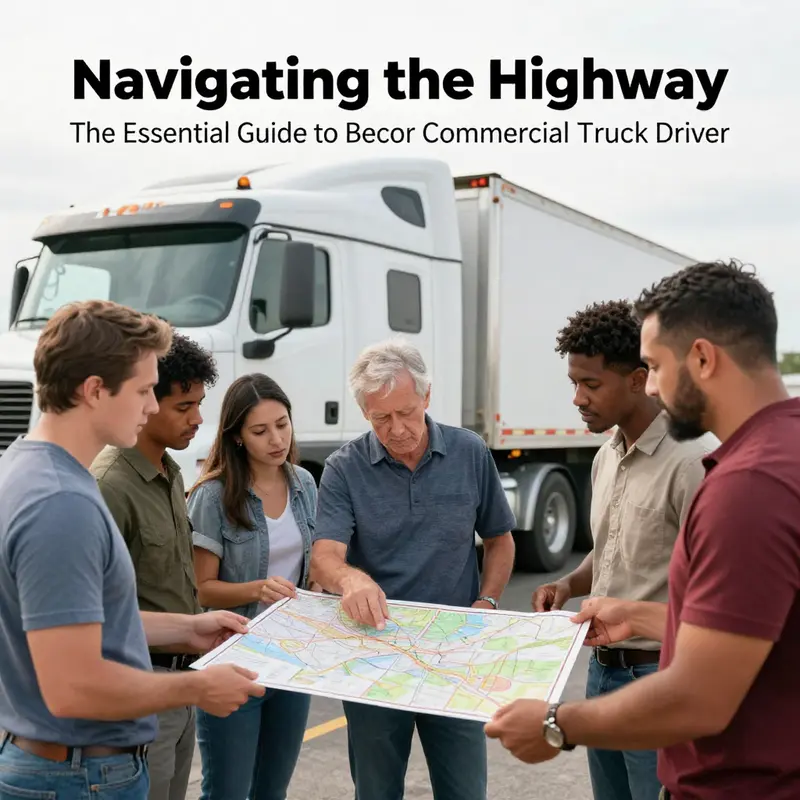
A person who imagines a life behind the wheel of a big rig often pictures the freedom of the open road, the hum of the engine, and the sense of independence that comes with steering a vehicle that can cross whole regions in a single shift. Yet the road to becoming a commercial truck driver begins long before a first drive. It starts at the gate, with two intertwined thresholds: age and legal authorization. Across the United States, these gates are not mere formalities; they are the backbone of safety, accountability, and the reliability that the economy depends on when massive quantities of goods move every day. Understanding how these thresholds work helps a would-be driver map not just a career path but a sustainable journey that can weather regulatory changes, evolving safety standards, and the shifting demands of a truck-driving workforce. The progression from curiosity to credential rests on a blend of age requirements, legal eligibility to work, and the administrative steps that convert a license into a career. The way these pieces fit together is meticulously defined, yet it unfolds through real-world processes that emphasize preparation, health, and compliance just as much as skill and temperament behind the wheel. This is the framework that explains how one becomes eligible to drive commercially, and how that eligibility translates into practical steps on the road to a CDL and a first job behind a truck.
First, age anchors the path. The rules are clear: to drive a commercial vehicle across state lines, a driver must be at least 21 years old. This is a federal standard designed to ensure a baseline level of maturity and experience when operating in interstate commerce. The intrastate route—the work within a single state—carries a lower threshold, typically 18, but it is crucial to distinguish between local or state-only operations and interstate responsibilities. The distinction matters not just for the license class that will be pursued but for the kind of assignments a driver may legally take and where those assignments can legally take place. The door labeled 18 opens to many local and regional opportunities, perhaps with shorter routes or limited miles, while the door labeled 21 opens the broader highway system that underpins cross-border and cross-state freight corridors. The longer horizon matters because most of the nationwide demand for long-haul trucking sits squarely in interstate operations, where the age requirement of 21 becomes non-negotiable and nontrivial in its implications for entry timing and career planning.
But age is only the most visible gate. The second gate—legal work authorization—ensures that anyone who sits behind the wheel has the right to work in the United States. This requirement protects both the worker and the public and is closely tied to the broader regulatory framework that governs employment and immigration. In practice, this means possessing lawful status that authorizes employment. For some, that status is permanent—citizenship or lawful permanent residency (a Green Card). For others, it may be a temporary but work-authorizing status, such as specific forms of work permits tied to visa programs. The reality is plain: even if a candidate meets the age requirement and has the driving license, without lawful work authorization the path cannot proceed. Employers, training programs, and licensing authorities all rely on this core condition to ensure that the driver’s credentials can be used in practice and that the driver is legally permitted to work while operating a vehicle that carries passengers or freight across the vast geography of the United States.
Once age and work authorization are established, the journey continues with the centerpiece of commercial driving eligibility: the Commercial Driver’s License, or CDL. The CDL is the credential that formalizes the ability to operate heavy vehicles. It sits on a backbone of prerequisites: a valid standard driver’s license, a written knowledge test, and a practical skills test. The knowledge test covers a broad swath of topics essential to safety and operations—traffic laws, vehicle inspection procedures, safe driving practices, and, where applicable, hazardous materials handling. A driver who seeks to haul hazardous materials must demonstrate additional knowledge and meet stricter requirements. The skills test then validates the candidate’s ability to perform a pre-trip inspection, demonstrate basic vehicle control, and conduct an on-road driving test. The class of CDL—A, B, or C—depends on the type of vehicle and the kind of cargo the driver intends to haul. A Class A license opens access to the combination vehicles that dominate long-haul freight, while Classes B and C cover a range of other heavy vehicles and smaller commercial vehicles. The interplay of these testing elements ensures that the operator not only knows the rules but also can apply them under real-world driving conditions, with the immediate accountability of the road ahead.
These steps would be straightforward if not for the surrounding safeguards designed to protect drivers and the public. A comprehensive background check accompanies the CDL process. This check scrutinizes criminal history and driving records for disqualifying offenses, such as serious traffic violations or drug- or alcohol-related crimes. The purpose is not punitive so much as preventive: past behavior can be predictive of future risk on the highway, and the governing bodies want to limit exposure to scenarios that endanger road users. Alongside this background review sits the medical requirement—the Department of Transportation medical examination. A certified medical examiner conducts a thorough evaluation to confirm that the driver meets health standards that are essential for safe operation. Vision and hearing must be adequate, cardiovascular health must be reliable, and other physical and mental health considerations must be aligned with the demands of transporting heavy loads across long distances. A Medical Examiner’s Certificate is issued to document that the driver meets or exceeds the standards established by the FMCSA, providing a formal affirmation that the individual is fit to operate a commercial vehicle. The certificate is more than a formality; it is a reflection of ongoing health and the enduring commitment to safety on every mile traveled.
An often understated but equally important requirement is language proficiency. The guidelines emphasize basic English proficiency to understand road signs, communicate with law enforcement and other drivers, and comprehend safety manuals and instructions. This is not a test of language artistry but a functional threshold that ensures clarity in high-stakes situations. In the operating environment, split-second decisions may hinge on precise comprehension of traffic signals, hazard cues, and standardized procedures. The standard may not always be label-rich with formal exams, but the practical expectation is clear: a driver needs to understand and respond appropriately when the road demands rapid, coordinated action.
Beyond the legalities, training and education play a substantial role in shaping a successful entry into commercial driving. While not universally mandated in every state, the majority of employers prefer or require some formal training. Truck driver training programs offered through vocational schools, community colleges, or private institutions provide structured instruction on practical vehicle operation, safety procedures, defensive driving, and cargo handling. The value of such programs is not merely academic instruction; they furnish hands-on practice with the vehicles under supervision, close guidance on inspection routines, and a simulated experience of regulated procedures that become second nature through repetition. For many aspiring drivers, training shortens the learning curve, boosts confidence behind the wheel, and helps align a candidate’s knowledge with the expectations of employers who want reliable, safety-minded crews.
The regulatory framework also implies a clear career progression from training to testing to licensure. But the map does not end at the CDL. The path continues with the ongoing responsibility to maintain qualifications. The CDL is a credential that requires periodic renewal and, in many cases, periodic medical re-certification to demonstrate continued fitness to drive. Traffic violations, weaponized with penalties or disqualifications, can interrupt a driver’s career, so a clean driving record remains a critical asset. The combination of consistent health, legal status, and compliant driving history forms the tripod that supports a driver’s continued eligibility to operate commercially. This is why the process is described not as a one-time achievement but as a career-long commitment to safety, accountability, and professional conduct on the road. In practice, keeping up with documentation, renewals, and regulatory updates becomes part of the routine—an ongoing discipline that complements the daily responsibilities behind the wheel.
The journey is rarely a straight line. The timing of eligibility can be influenced by personal circumstances, such as when an individual becomes legally eligible to work or when a program enables an accelerated path toward a CDL. It can also be shaped by regulatory developments that alter testing standards, medical requirements, or even the perceived risk associated with certain cargo or routes. This is why the practical approach to preparing for a trucking career centers on steady, deliberate steps: secure lawful work authorization, obtain or upgrade a driver’s license, complete a respected training program if feasible, prepare for and pass the knowledge and skills tests, undergo a comprehensive medical examination, and ensure the background check is clean and aligned with expectations. With those elements in place, a candidate moves from eligibility to eligibility-plus—earning not only a license but the confidence that comes from being assessed against rigorous safety standards.
As with any professional field governed by public safety considerations, there is nuance. Some states administer CDL testing through their own DMV systems, while others align testing procedures with national guidelines in collaboration with federal agencies. The practical effect for a prospective driver is that they may need to prepare for state-specific knowledge nuances, vehicle inspection procedures, and local driving norms even as they pursue a national credential. A careful plan recognizes these small but meaningful differences and anticipates the time and effort required to bridge any gaps. It also considers the realities of the labor market. The trucking industry has long valued reliability, punctuality, and the consistent ability to operate within procedural rules and safety standards. For people exploring this field, a thoughtful approach to age, legal status, and health is not a barrier so much as a map of prerequisites—markers along a journey that when met, unlock the right to take the wheel on the nation’s highways.
In the broader conversation about readiness and eligibility, it helps to keep an eye on how border policy, labor regulations, and industry hiring practices intersect. If a reader wants a real-world lens on how regulatory changes and cross-border considerations shape driver preparedness, one useful entry point is a discussion that examines how border barriers and related insights affect workforce planning in trucking. That resource presents a grounded view of how policy conversations translate into practical steps for candidates pursuing a CDL and a career on the road. For a deeper look, you can explore Bridging Border Barriers: Meeting Insights. This internal resource provides context on how regulatory dynamics influence preparation timelines and the overall readiness of drivers stepping into interstate work. Bridging Border Barriers: Meeting Insights.
From there, the road to the CDL and a first job typically winds through a sequence of practical steps that align with the gates described above. A prospective driver gathers the necessary documents, such as a valid driver’s license, proof of work authorization, documentation for the background check, and medical paperwork. The written knowledge test requires study across several domains, including traffic laws, signs, lockout/tagout concepts relevant to vehicle inspection, and, if applicable, hazardous materials regulations. The skills test demands a thorough pre-trip inspection where the examiner verifies the driver’s ability to identify issues that could compromise safety, such as brake integrity, tire condition, lights, and load securement. The on-road portion evaluates lane control, signal use, following distance, speed management, and the ability to respond to real traffic conditions. A driver who passes these stages not only earns the CDL but also attains the status of someone who is entrusted with heavy weights and the responsibility that accompanies them.
The narrative of becoming a commercial truck driver, then, is really a story about stewardship as much as it is about speed and efficiency. It is the profession that requires a steady mind, a steady body, and a steady adherence to standards that protect everyone who shares the road. It is a discipline that rewards preparation, compliance, and ongoing attention to health and legality. The gate is visible—the age requirement, the legal authorization—and beyond it lies a field of opportunity shaped by the CDL, the medical certificate, and the understanding that every mile traveled is underpinned by a framework designed to keep drivers safe and in service to the broader economy. For many, the payoff is not merely a paycheck but the confidence that comes with knowing one has met a clear set of criteria and earned a credential that signifies readiness to take on a demanding, high-stakes job. The doorway is real, and it opens onto a career built on competence, responsibility, and a shared commitment to safety on every highway and byway. As the industry continues to evolve—with shifts in demand, new safety technologies, and evolving regulatory expectations—the core requirements described here provide a stable foundation. For those who plan thoughtfully, the road ahead is navigable and full of opportunity, with every step reinforcing the reliability that keeps supply chains moving and communities thriving. For the next stage of this discussion, the focus turns toward how training choices, practical preparation, and employer expectations intersect to shape the early career of a truck driver, including how to align personal timelines with licensing and certification schedules, and how to sustain growth once the first CDL is in hand. The road is long, but with clear gates, patient preparation, and a steady sense of purpose, it is a road that accommodates both beginners and seasoned professionals alike. Official guidance and periodic updates from the regulatory authorities remain essential touchstones, guiding decisions and helping every aspirant stay on a compliant and safe path to professional driving. For the most authoritative, up-to-date details, consult the FMCSA at https://www.fmcsa.dot.gov.
The CDL Gate: How Earning a Commercial Driver’s License Opens the Road to a Career Behind the Wheel
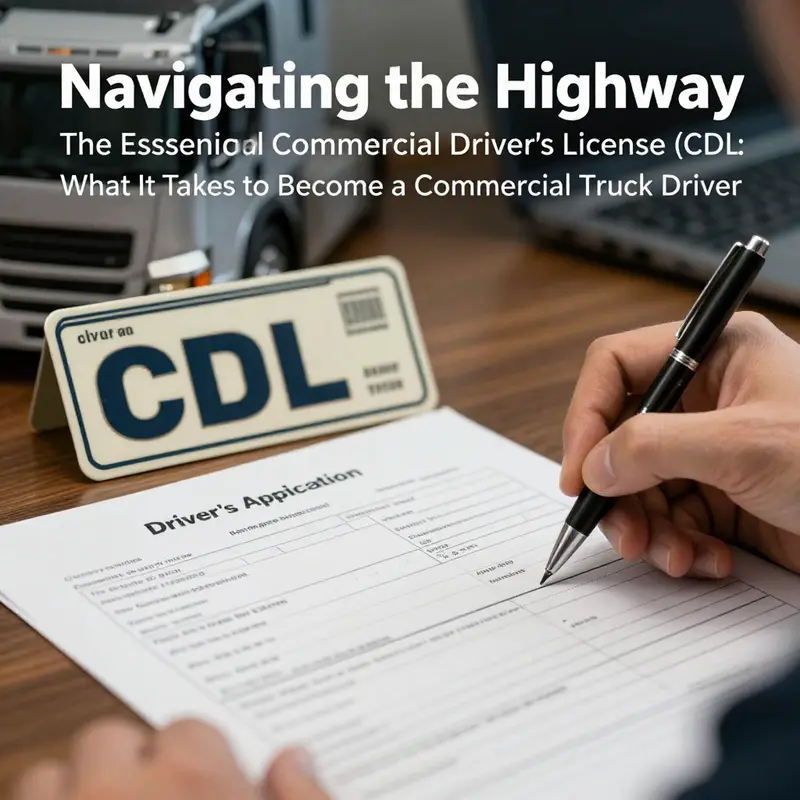
When you stand at the edge of the highway that runs across the United States, the question isn’t just what you want to haul or where you want to go. It is whether you are ready to pass through the CDL gate—the official credential that proves you can operate a heavy vehicle safely, legally, and reliably. The path from curiosity to cab is defined less by passion alone and more by a sequence of concrete steps, each designed to test and then confirm your readiness to shoulder responsibilities on behalf of a nation built on the movement of goods. The CDL, in this sense, is not merely a license; it is a certification of competence and a ticket to a demanding, essential career. Understanding what it requires helps reconstruct a journey that might otherwise feel abstract or daunting. It is a story that begins with eligibility and ends in a life on the road, with stopovers at training, testing, and ongoing health and safety obligations that frame every mile traveled thereafter.
Eligibility is the first gate to be approached with clarity. Interstate commerce, the driving that crosses state lines, is governed by federal standards that set the minimum age at 21. The option to drive within a single state exists for some 18-year-olds, but crossing borders between states takes maturity and experience that the federal government deems essential for the safety of a national transportation network. Beyond age, the applicant must have lawful work authorization in the United States. That typically means lawful permanent residency or citizenship, paired with an eligible work status. These criteria are not mere formalities; they ensure the industry can rely on drivers who can legally be employed in a field that holds both accountability and public safety at its core. Once eligibility is established, the journey moves toward the CDL itself, a credential that can be earned in different classes depending on the vehicle you intend to drive and the cargo you plan to haul. A Class A license enables operation of most combination vehicles, including tractor-trailers with heavy cargo. Class B covers single-vehicle rigs of substantial size, while Class C addresses smaller commercial vehicles that still require specialized handling. Each class comes with its own set of endorsements, which open doors to specific duties and cargo types. The most commonly discussed endorsements, such as hazardous materials or passenger transportation, require additional checks and testing, but they also broaden the spectrum of opportunities and the kinds of roles you can pursue.
The testing regime sits at the heart of the CDL gate. Prospective drivers must first succeed on a written knowledge examination. This test surveys a breadth of topics, including traffic laws, vehicle inspection procedures, and safe driving practices. It is not a trivia exam; it is a measure of your ability to apply knowledge to practical, sometimes high-stakes situations on the road. After passing the written test, the next phase is a skills demonstration. This is where theory meets practice. The applicant must demonstrate a comprehensive pre-trip inspection, showing they can identify and address potential defects before a trip begins. They must also display basic control skills, such as handling the vehicle’s maneuvers with precision and steadiness. Finally, a road test evaluates real-world driving ability under conditions that mimic the daily realities of a commercial fleet—changing lanes, judging distances, managing turns, and maintaining safety in traffic. For certain cargo types or vehicle configurations, endorsements add extra layers to the testing process, sometimes requiring specialized knowledge or handling protocols. The testing sequence thus balances cognitive understanding with hands-on dexterity, mirroring the dual demands of planning and execution that define professional driving.
Crucially, training is not merely recommended; it is often the most practical pathway to success. While a few individuals may rely on prior experience to navigate the process, most entrants benefit from enrolling in a certified CDL training program. These programs, offered through vocational schools, community colleges, and private training providers, provide structured, hands-on instruction that demystifies the scale and physics of large vehicles. Trainees learn not only the mechanics of operating a big rig but also the safety protocols that underpin defensive driving, cargo securement, and regulatory compliance. The value of training extends beyond the tests. It accelerates familiarity with the vehicle’s feel, the spatial awareness required in tight spaces, and the rhythm of long-haul trips that demand stamina and focus. A well-designed program also exposes students to the realities of day-to-day trucking, including how to engage with dispatch, plan routes, anticipate weather and road conditions, and manage fatigue. In practice, a prospective driver who completes formal training tends to approach the tests with confidence, reducing the likelihood of costly retakes and delays.
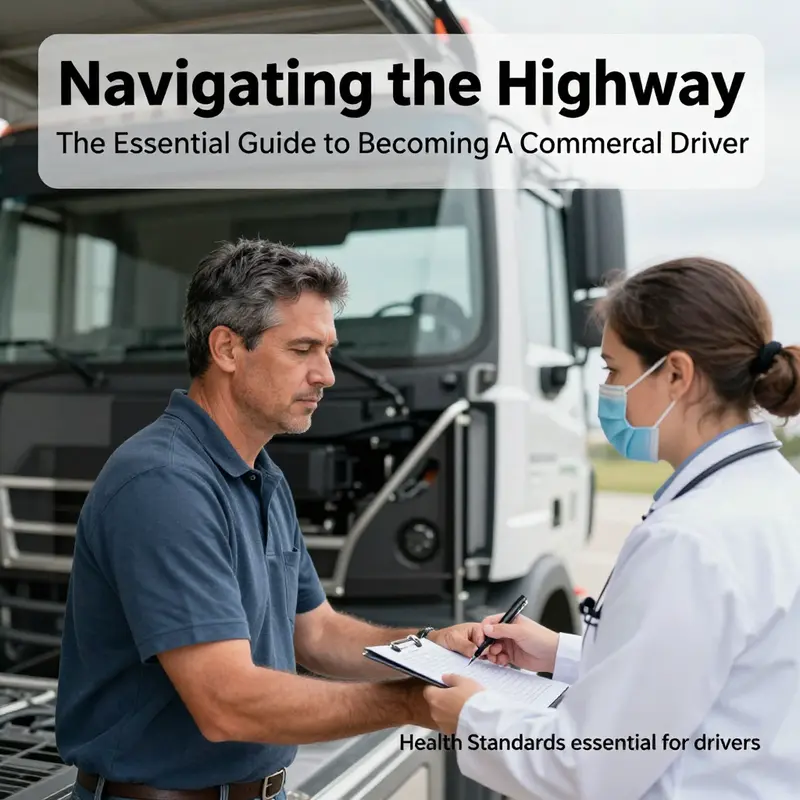
The medical and background checks are not add-ons but foundational requirements that reflect the industry’s emphasis on health and responsibility. The Department of Transportation requires a medical examination to ensure that drivers meet physical and mental standards essential for safe operation. The medical exam, conducted by a certified examiner, addresses crucial areas such as vision and hearing, cardiovascular health, and general fitness for duty. Failing to meet these standards can disqualify an applicant from immediate licensing and may necessitate medical follow-up or treatment. The background check, particularly relevant for endorsements that involve high responsibility or security, scrutinizes criminal history and driving records for disqualifying offenses. A clean record is not a guarantee of a license, but it is a key factor in whether an applicant advances to the next stage. These checks, together with the medical exam, underscore a broader principle of trucking culture: safety and reliability are not optional add-ons; they are core to how the industry assesses a person’s fitness to operate heavy machinery on public roadways.
English proficiency, while not always codified as a formal test, remains a practical necessity. Drivers must read road signs, comprehend safety manuals, understand dispatch instructions, and communicate clearly with law enforcement and colleagues on the road. The ability to interpret instructions quickly and to articulate concerns or alerts in a calm, precise manner can be the difference between a successful run and a safety incident. For many entrants, this means refining vocabulary related to driving, cargo handling, and safety procedures, as well as developing confidence in communicating across diverse crews and across state lines where dialects, accents, and terminology may vary.
Beyond the minimums of eligibility, testing, and health, training is often the deciding factor in how readily someone can secure a first driving position. The industry historically values basic qualifications but increasingly prioritizes demonstrated readiness. That readiness is most effectively shown through a formal training program that translates into real-world aptitude. As employers evaluate candidates, the combination of a solid CDL, a clean background, a valid medical certificate, and practical driving skills positions a new driver for entry-level roles that can lead to more advanced assignments. The path may include a period of supervised driving, sometimes called apprenticeship or mentor-based learning, during which a new driver gains experience behind the wheel under the watchful eye of seasoned professionals. This phase helps bridge the gap between classroom knowledge and the unpredictable rhythms of the road, including peak traffic, fatigue management, and the discipline required to stay compliant with a tangle of federal and state regulations.
A realistic assessment of cost and timeline is essential. Training programs charge tuition, and licensing involves state-specific fees for applications, testing, and the issuance of the CDL. The exact amounts vary by state and by the chosen class and endorsements, but most aspiring drivers should anticipate an investment of time and money before the first big paycheck arrives. The duration from decision to license can range from a few months to closer to a year, depending on the individual’s pace, the availability of training slots, and the scheduling of tests. While the financial aspect can pose a hurdle, many programs offer payment options, and some employers sponsor or reimburse training as part of entry-level hiring packages. The larger economic context also matters. Even as a barrier, the investment pays dividends: the trucking industry continues to rely on qualified drivers to move goods across the country, and the demand for trained professionals has persisted even amid cycles of expansion and adjustment. Those who complete training and secure a CDL often find themselves entering a field with clear career ladders, from entry-level positions focused on learning the ropes to more specialized routes, such as regional or dedicated runs, that build long-term stability and growth potential.
Endorsements are a powerful way to tailor your CDL to the kinds of work you want to do and the cargo you are prepared to handle. A HazMat endorsement, for example, opens doors to transporting explosive or dangerous materials, but also comes with heightened responsibilities, extra training, and stricter background checks. Doubles and triples endorsements enable you to operate multi-trailer configurations, a capability that increases the complexity of maneuvers and the skill level required. Passenger endorsements expand options into the realm of moving people, with corresponding safety and background requirements. Each endorsement adds not only a layer of credentialing but also a new horizon of job opportunities. It is not unusual for drivers to begin with a basic Class A license and then acquire endorsements as their confidence and experience grow, crafting a career path that can traverse a wide spectrum of cargo types and vehicle configurations. In practice, endorsements can translate into more favorable placement with carriers that handle specialized freight or routes that demand particular equipment, further underscoring how the CDL is both a gate and a compass for a professional trajectory.
The professional life that follows licensing is inseparable from the ongoing maintenance of qualifications. The CDL is not a static credential; it requires renewal and periodic medical recertification. Medical cards have expiration dates tied to the driver’s health status, and failure to maintain the medical certificate can result in loss of the license, at least temporarily. State DL offices and the FMCSA regulate these renewal processes, and they often require up-to-date information and, at times, revalidation of endorsements. Likewise, the driving record continues to be monitored for eligibility. Traffic violations, accidents, or other discretionary actions can impact eligibility for certain endorsements or the right to operate specific vehicle classes. The expectation is continuous compliance: safe driving records, time-bound medical certificates, and recertifications that align with evolving federal guidelines. This continuous cycle of compliance helps preserve the safety standards that define the profession and sustains the trust that carriers place in their drivers. In short, earning the CDL is the first milestone in a long journey governed by consistent discipline, training, and a readiness to adapt to new rules and technologies that shape the road portfolio of a modern trucker.
For readers considering this path, the broader job market context matters, especially when assessing the practicality of pursuing CDL training. The trucking sector has, over recent years, shown resilience even as it navigates demand cycles and regulatory shifts. A glimpse into the industry’s trajectory suggests that the right combination of training, certification, and a solid safety record remains a strong predictor of early success and long-term mobility within the profession. As you map your own route, you may also find it helpful to connect with resources that reflect current market dynamics, such as industry discussions that highlight job recovery signals and the evolving roles within fleets. For a snapshot of these trends and their implications for aspiring drivers, you can explore related coverage at the 2024 trucking job recovery, stabilization signals, and hope resource. This insight can help you align your preparation with the realities of the market and plan a path that maximizes your chances of entering and then thriving in the profession. 2024 trucking job recovery, stabilization signals, and hope.
Ultimately, the CDL gate is more than a hurdle to overcome; it anchors a career built on reliability, responsibility, and the willingness to keep learning as the road evolves. The process rewards those who approach it with preparation and patience, recognizing that each step—from the written test to the road test, from medical clearance to ongoing endorsements—serves a practical purpose: to ensure that every driver behind the wheel can contribute to a safe, efficient, and resilient transportation system. As you prepare to take the next step, remember that the license you seek is a credential earned through study, practice, and a commitment to safety. It opens the road not just to a job, but to a profession that moves communities, supports supply chains, and demands a steady focus that lasts far beyond the first solo trip. For readers seeking a broader perspective on how the job market interacts with training and licensing, the linked industry update provides context on the current landscape while you consider your own timeline and investment. And once you have earned your CDL, you join a cadre of drivers who understand that every mile traveled is a contribution to something larger than the truck you operate—the dependable movement of goods that keeps economies in motion. For additional regulatory context and official requirements, you can consult the FMCSA’s resources at the external link below.
External resource: https://www.fmcsa.dot.gov/
null
null
From Classroom to Cab: Mapping the Training and Education Path to a Successful Commercial Truck Driver
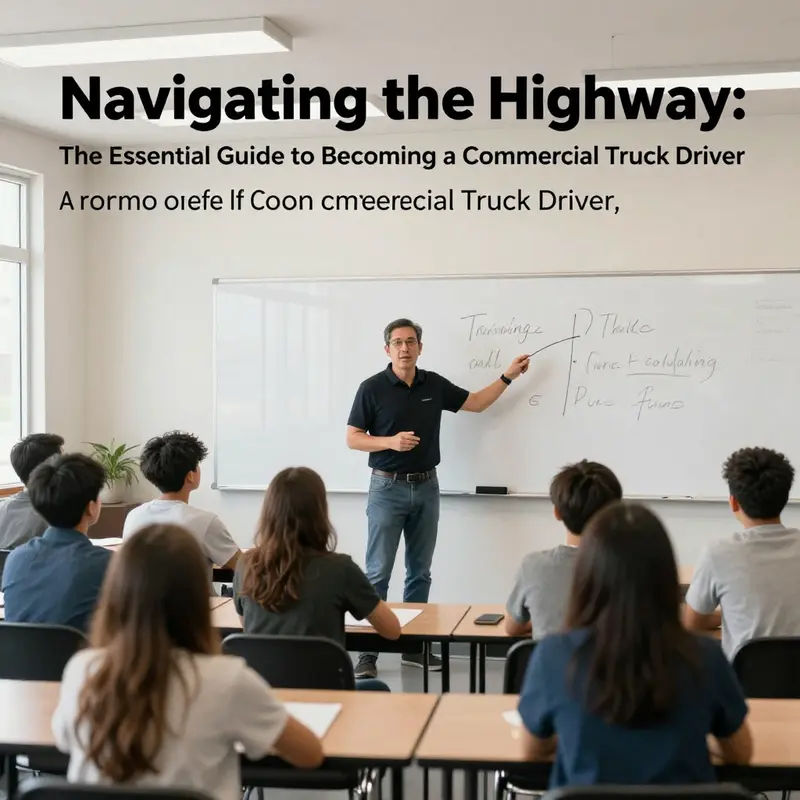
The path from a learner’s permit to a long-haul career behind the wheel is less a single exam and more a carefully designed journey. It blends formal instruction, hands-on practice, and ongoing professional development into a coherent pathway. Across the United States, the foundation remains consistent: you must meet certain prerequisites, then pursue a CDL through a program that integrates classroom study with real-world driving. These elements—age, health, legal work status, and a structured training sequence—frame not just qualification, but a career arc built on discipline, safety, and continuous learning. The doorway is a CDL, but the corridor that follows is a long, evolving corridor of skills, endorsements, and responsibilities. This training-focused chapter builds on the practical requirements outlined for entry into the profession and expands into how drivers grow once they’ve earned their license. It is a narrative about preparation as much as it is about performance, a story of a road worth choosing for those who value reliability, safety, and consistency in a demanding industry.
The initial gatekeepers are clear and nonnegotiable. To drive a commercial vehicle across state lines, you must be at least 21. You must also have lawful status to work in the United States, which means a valid practical pathway to employment, whether as a citizen, a permanent resident, or a work-authorized immigrant. Beyond eligibility, the CDL stands as the central credential. The licensing process is designed to ensure competency at multiple levels: knowledge of traffic laws and vehicle systems, the ability to inspect and maintain a vehicle, and the operational skill to manage large, heavy trucks in diverse traffic conditions. It is not enough to be able to drive well in one situation; a driver must be proficient in a broad set of tasks, from pre-trip inspections to on-road maneuvers, in order to demonstrate readiness for professional service. The importance of medical fitness and vision, hearing, and cardiovascular readiness cannot be overstated, because safety is a founding principle of the profession. The DOT medical exam and periodic renewals are not mere formalities; they are ongoing commitments to health that support long-term performance on the road.
With the regulatory thresholds in place, the next phase is the CDL training program itself. State-approved CDL programs exist to translate general driving knowledge into specialized truck operation. The classroom portion covers essential topics: traffic regulations and the rules of the road applied to heavy vehicles, vehicle inspection procedures that teach drivers how to identify wear or faults before they become hazards, and safe driving practices tailored to large equipment. There is also instruction on cargo handling and securement, critical when hauling sensitive or hazardous goods. Yet the classroom is only the first half of the equation. Behind the wheel, students practice the practical realities of operating a big rig: turning wide, backing into tight spaces, parking, and maintaining lane discipline under varying weather and road conditions. The behind-the-wheel experience is where theory meets muscle memory, and where students learn to translate a diagnostic understanding of a vehicle into confident, controlled responses in real traffic. The blend of theory and practice builds competence, but it also cultivates the judgment that separates a competent driver from an elite professional.
After training, the license journey continues with examinations administered by the DMV. A driver must pass both a comprehensive knowledge test and a practical skills test. The knowledge test spans regulations, vehicle systems, and safety procedures, while the skills test assesses pre-trip inspection discipline, basic vehicle control, and an on-road drive. The process also reinforces the importance of the CDL class designation. Class A, B, or C determines the type of vehicle you’re authorized to drive and the cargo you may haul. This tiered structure ensures that a driver possesses the appropriate level of expertise for the specific responsibilities of their job. The exam sequence is not merely a hurdle; it is a framework that aligns a driver’s capabilities with the demands of the work, from maneuvering a tractor-trailer in congested urban corridors to operating medium-duty trucks in regional fleets.
For many starting drivers, the certification earned through these exams marks the formal entry into the profession. Yet the entry is rarely the end of the training story. On-the-job training (OJT) plays a pivotal role as new drivers adjust to company policies, equipment nuances, and the rhythms of daily dispatch. Employers commonly provide mentorship and structured OJT to help graduates translate their classroom and road skills into company-specific proficiency. This phase often introduces drivers to specialized freight operations, such as hazardous materials or refrigerated cargo, where additional safety and regulatory knowledge are essential. The goal is not only to perform tasks but to internalize the routines, safety checks, and decision-making processes that keep goods moving efficiently and without incident. In many cases, this hands-on experience also serves as a bridge to advanced opportunities, enabling drivers to demonstrate reliability, adherence to safety protocols, and a track record of on-time performance.
Beyond the immediate requirement to hit the road, a successful trucking career rests on ongoing education and credential diversification. Endorsements expand a driver’s scope and open doors to more varied assignments. Tank vehicles, doubles and triples, or passenger transport are examples of endorsements that can broaden work options and potentially improve earnings. Each endorsement carries its own set of training prerequisites and testing requirements, reinforcing the idea that learning is continuous in this field. Professional development doesn’t stop with endorsements; it extends into areas such as fleet management, logistics, and safety compliance. Courses and certificates in these domains equip drivers with broader perspectives on how transportation fits within the larger supply chain. For ambitious drivers, such education translates into career mobility—from trainer roles who pass on best practices to dispatch or fleet supervisory positions that shape safety culture and operational efficiency.
The landscape of learning for truck drivers isn’t tethered to traditional classrooms alone. Modern options include informal, yet structured, avenues that complement hands-on experiences. Online platforms can offer supplementary courses on communication, leadership, and business basics that improve a driver’s performance in daily work. For example, courses focused on business English or professional communication help drivers interact effectively with dispatchers, customers, and colleagues. The value of these resources lies in their ability to cultivate professionalism, which, in turn, enhances reliability and workplace credibility. While the core driving skills must be acquired through CDL programs and practice, supplementary learning helps a driver cultivate a holistic skill set that supports long-term success in a competitive labor market.
The path described here is not a checklist to be rushed through. It is a continuum of growth, where each stage builds on the previous one. A driver who completes the training program and passes the exams gains access to job opportunities, but it is the ongoing commitment to safety, health, and skill development that sustains a thriving career. The CDL and the medical certification remain ongoing obligations—renewed, updated, and reaffirmed as the person advances through different job roles and responsibilities. Reliability, a clean driving record, and a demonstrated ability to master new cargo types or regulatory requirements become the metrics by which career progression is measured. It is common to see drivers transition into roles that emphasize leadership or mentoring, such as training new hires or coordinating routes as part of a fleet team. Each progression leverages the solid foundation built during training: the discipline to complete inspections thoroughly, the judgment to manage risk on the road, and the communication skills that keep everyone aligned with safety and efficiency.
In this sense, training and education are not static milestones but a continuous investment. The investment pays off in several ways. First, it builds competency that translates directly into safer operations and fewer disruptions. Safer drivers are less likely to incur violations or accidents, which protects their licenses and their employers’ reputations. Second, ongoing learning signals adaptability in a rapidly changing sector. As new regulations, technologies, and shipment profiles emerge, drivers who stay engaged with education are better prepared to adopt best practices, integrate new equipment, and optimize loading, routing, and fuel efficiency. Third, the growth mindset supported by career development opportunities fosters retention. When drivers perceive a clear path to advancement—whether into trainer roles, supervisory positions, or specialized freight assignments—they are more likely to stay with an employer and contribute to a positive, safety-first culture. The result is a more capable workforce that can respond to demand with skill and reliability.
To weave these threads into a practical perspective, consider the broader industry’s signals about the value of training. A well-trained driver who has navigated the gatekeeping requirements, completed a rigorous CDL program, passed the exam, and earned valuable endorsements is better positioned to meet a fleet’s needs and a shipper’s expectations. This is especially true in markets where driver shortages intersect with supply chain pressures, making the quality of training a differentiator for employers seeking dependable talent. It is not simply about getting a job; it is about establishing a career built on a dependable skill set, a proven safety record, and the capacity to adapt to evolving freight patterns and regulatory environments. The journey from classroom to cab thus encapsulates not just technical mastery but professional maturity.
As the industry continues to evolve, the value of structured training remains a constant. The path—from initial eligibility through training programs, examinations, and on-the-job acclimation, to ongoing education and career advancement—offers a comprehensive framework for success. It reflects a transportation ecosystem that prioritizes safety, compliance, and continuous improvement. For aspiring drivers, embracing this pathway means recognizing that every phase has its own purpose: preparation, verification, immersion, and growth. Each phase reinforces the others, creating a reliable cycle that supports personal development and industry resilience. The chapter you’ve just stepped through is not a one-time rite of passage; it is a living trajectory designed to sustain proficiency and opportunity across a driver’s entire career. And as the road ahead unfolds with new routes, loads, and regulations, the most durable advantage remains the commitment to disciplined training and lifelong learning.
2024 trucking job recovery signals hope. This link offers a real-world context for why investing in training now can yield broader employment stability as the market navigates recovery cycles. For those seeking an authoritative overview of the licensing framework that anchors this pathway, consult external federal guidance that outlines the CDL and medical certification requirements, ensuring you stay aligned with national standards and those of your state.
External resource: https://www.fmcsa.dot.gov/registration/commercial-drivers-license-cdl
Final thoughts
The journey to becoming a commercial truck driver in the United States involves navigating a path defined by age and legal requirements, obtaining a CDL, adhering to stringent health and safety standards, and engaging in proper training and educational pathways. Each of these elements plays a pivotal role in shaping a competent driver who contributes to the efficiency and reliability of logistic operations across the country. By understanding these requirements, logistics and freight company owners, construction and mining procurement teams, and small business owners can ensure they are well-equipped to recruit and maintain a qualified driving workforce that meets industry standards and promotes safety.