
In Oregon, compliance with seat belt laws is a mandatory requirement for all commercial motor vehicles (CMVs), including trucks. This legal stipulation, which includes both drivers and passengers, is essential not only for safety but also to avoid penalties, making it crucial for logistics and procurement teams to understand these regulations deeply. This article addresses the implications of Oregon’s seat belt laws for commercial trucks, the regulatory landscape that governs these vehicles, and the vital importance of compliance for operators in the state. In the chapters that follow, we will dive into Oregon’s seat belt laws, explore the regulatory framework surrounding commercial truck operations, and discuss the critical need for compliance among truck operators.
Not Exempt: Oregon’s Seat Belt Rules for Commercial Trucks
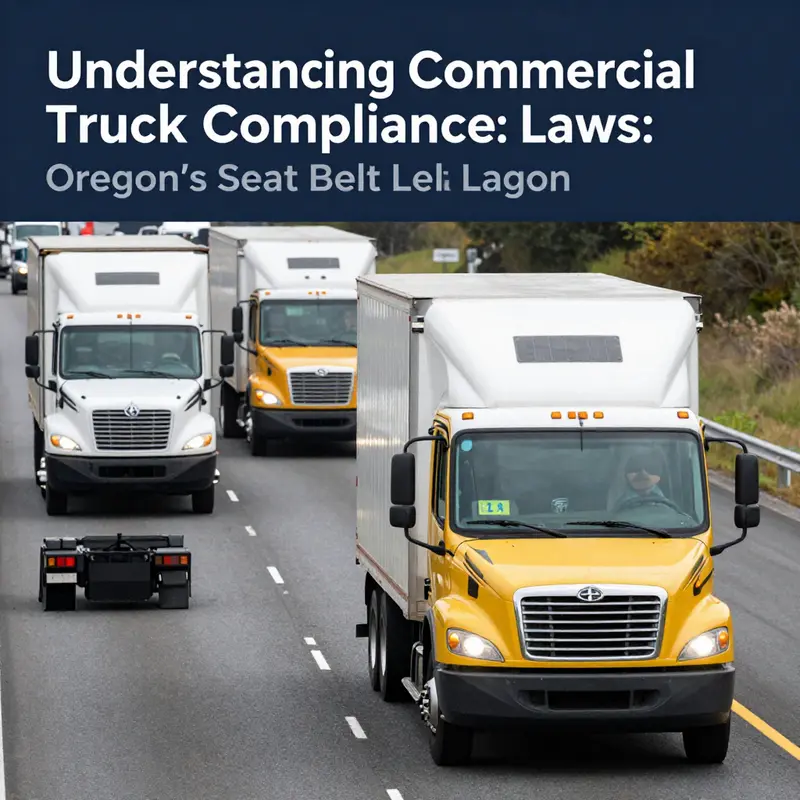
Oregon does not exempt commercial motor vehicles (CMVs) from seat belt laws while moving. CMV drivers and passengers in vehicles over 10,000 pounds must wear belts, aligning with FMCSA requirements. The state uses primary enforcement for seat belts, meaning an officer can stop a CMV solely for a belt violation. For fleets, this underscores the importance of belt-use discipline in pre-trip checks, driver training, and safety culture. While cross-border operations add complexity, the belt rule remains mandatory when the vehicle is in motion. Official language and guidance can be found through the Oregon Department of Transportation seat belt resources.
null
null
The Belt, the Law, and the Open Road: Compliance Realities for Oregon’s Commercial Truck Operators
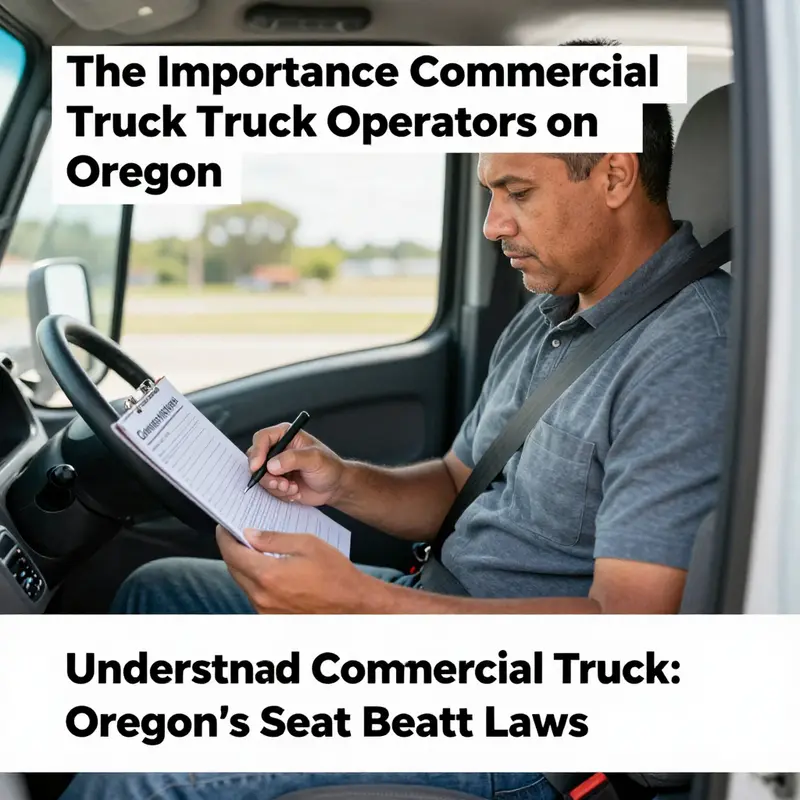
On the open road, policy and practice collide in a way that shapes every mile a commercial truck travels. In Oregon, the simple act of buckling a seat belt is more than a personal habit; it is a legal requirement that anchors the safety expectations for operators, passengers, and the communities they share the road with. The state does not grant exemptions to commercial motor vehicles from the basic safety measure of wearing a seat belt. Instead, it treats the belt as a standard part of the vehicle’s equipment that must function when the vehicle is in motion. This is not a peripheral rule that drivers can overlook during a rush to meet deadlines or during adverse weather. It is a primary enforcement law, meaning an officer can stop a vehicle solely for the act of not wearing a seat belt. In practice, this means a CMV can be pulled over, cited, and held accountable for a violation independent of any other traffic infraction. The clarity of this standard offers a straightforward baseline for fleets trying to manage risk while navigating Oregon’s complex landscape of federal, state, and local regulations. {The emphasis on belt use is not merely about avoiding penalties; it is about reducing injuries and saving lives.} In Oregon, the belt law applies to all motor vehicles, and commercial trucks are part of that broad inclusion. The relevance for operators is simple and powerful: every person in the cab must have the belt secured when the vehicle is moving. The rule is designed to function in real driving conditions—city streets, rural highways, mountain passes, and lane-dividing rain—so the expectation is universal and consistent across fleets, irrespective of the cargo, route, or time of day. When a driver sits behind the wheel, the responsibility to buckle up becomes a posture of safety that supports every other safety measure a fleet might deploy. It is the first line of defense against severe injuries in the event of a crash and a shared standard that translates into predictable behavior across a diverse set of drivers and vehicles. For operators, this predictability is a form of operational stability. It reduces the variability that often complicates compliance programs and gives managers a tangible metric to communicate and enforce. The Oregon seat belt requirement is not a stand-alone rule; it sits within a broader network of regulations aimed at preventing fatigue, ensuring vehicle safety, and safeguarding cargo integrity. The same ethos that drives seat belt compliance—preventing harm through simple, enforceable practices—also informs how fleets approach hours of service, maintenance programs, and cargo securement. The weight of these regulations is not theoretical. When fleets align their day-to-day operations with seat belt requirements, they also reinforce a culture of safety that translates to lower risk in other domains. The Oregon Department of Transportation (ODOT) emphasizes that seat belt use is a fundamental safety practice, and the regulatory framework supports drivers in making the right choice in real-world conditions. This alignment between law and practice is essential for any operator serious about reliability, safety, and long-term viability in a competitive market. The practical implication of the belt rule becomes even clearer when one considers the everyday realities of commercial trucking in Oregon. The cab can be a dynamic, high-stress environment where fatigue, distractions, and time pressure converge. In such moments, a simple, unambiguous policy—belt up whenever the vehicle is moving—reduces the likelihood of injuries and helps ensure that drivers remain in control of their bodies and their attention. It also minimizes a wide spectrum of legal and financial exposures for the company, from fines to claims that may accompany a crash. For drivers, the belt law serves as a personal baseline of safety that should be nonnegotiable, even when a route is routine or the weather is unfavorable. This universal standard helps new drivers acclimate quickly to the expectations of Oregon’s roadways, and it gives experienced drivers a shared framework that reduces second-guessing about what is permissible in a tense moment. The regulatory structure surrounding seat belt use intersects with a wider ecosystem of compliance that governs how trucking is conducted in the state. The Oregon Department of Transportation, together with the Federal Motor Carrier Safety Administration (FMCSA), maintains a set of regulations that cover hours of service, vehicle maintenance, driver qualifications, and cargo securement. The interplay among these rules creates a comprehensive regime aimed at preventing fatigue-related incidents, ensuring mechanical reliability, and keeping cargo secure. The seat belt requirement is a critical element of this regime because it directly affects injury outcomes, which in turn influence regulatory scores and enforcement priorities. Keeping a driver belted does not automatically solve all safety challenges, but it consistently reduces the risk profile of the operation and supports safer decision-making in the cab. The broader compliance landscape is not merely a checklist. It is a dynamic system that requires fleets to invest in people, processes, and technology that collectively raise safety standards. The FMCSA introduces Hours of Service (HOS) rules designed to minimize fatigue and its contribution to accidents. Oregon’s enforcement of belt laws complements these rules by ensuring that the physical state of the driver and the vehicle is conducive to safe operation. Vehicle maintenance inspections—an essential feature of compliance programs—are more effective when drivers understand that passenger safety inside the cab matters at the same level as exterior condition checks. In practice, the belt rule reinforces the idea that safety is an integrated, end-to-end responsibility: the operator, the company, the fleet manager, and the individual driver all contribute to a system in which every component supports the others. The consequences of ignoring or undervaluing belt use extend beyond personal risk. From a fleet management perspective, violations can impact a company’s overall compliance footprint, which, in turn, shapes CSA scores under the federal safety program. The CSA program monitors unsafe driving, vehicle maintenance, and hazardous materials compliance, among other factors. While belt use itself may not be a direct CSA metric, a high rate of violations can correlate with broader risky behaviors and reduced safety performance. That linkage matters because CSA scores influence access to certain customers, the ability to contract with fleet operators, insurance costs, and even the perceived reliability of a carrier in the marketplace. In short, adherence to safety belt laws in Oregon is a foundational element of professional trucking that ripples through an operation’s risk profile, financial health, and reputation. The requirement’s simplicity—fasten the belt when the vehicle is moving—belies its significance. It is a rule that translates directly into fewer injuries and less severe outcomes in crashes, which, in turn, supports smoother regulatory compliance across the board. For operators who manage fleets across multiple states, the Oregon belt rule also serves as a baseline that reduces variability. While other jurisdictions may apply different penalties or enforcement approaches, Oregon’s primary enforcement framework ensures that belt use remains visible, immediate, and actionable in the field. From a fleet leadership perspective, the belt requirement is a manageable safety lever. It invites leadership to embed belt use into training programs, pre-trip checks, and daily routines. It also provides a straightforward topic for coaching sessions and safety meetings, reinforcing the expectation that every driver and passenger in a CMV should be belted whenever the truck is in motion. This consistency is valuable precisely because it is straightforward. It helps reduce ambiguity about what is expected and makes accountability easier to measure. And because the law applies to all motor vehicles on Oregon’s roads, the belt rule creates a common standard across a wide spectrum of operating contexts—from long interstate routes to short urban runs. In that sense, compliance is not about adhering to a single rule in isolation. It is about building a safety culture that aligns with the broader regulatory framework, supports efficient operations, and protects people and cargo alike. The practical path to achieving this alignment is straightforward, though not always easy. It starts with clear communication: ensure every member of the crew understands that belt use is mandatory whenever the vehicle is in motion. It continues with training that reinforces the correct use of belt systems, including proper wear, adjustment, and the need to keep belts in good repair. It extends to routine vehicle checks that confirm belts are functional and accessible in every seat. It also includes leadership discipline that models belt use and holds individuals accountable when the rule is ignored. Beyond the cab, compliance requires you to think about how seat belt policies integrate with other operational disciplines. For example, when a truck is loaded, the driver’s focus should remain on securing and monitoring the cargo, but this should never come at the expense of personal safety. The belt is a personal piece of safety equipment, and its use is a non-negotiable component of a professional approach to driving in Oregon. The regulation’s emphasis on primary enforcement means that authorities can act on belt nonuse alone, which underscores the need for fleets to monitor and reinforce compliance consistently. This is where the role of training, audits, and feedback loops becomes crucial. Training is not a one-off event but a continuous practice that reinforces why the belt matters, how to wear it properly, and what to do if a belt is damaged or missing. Audits should be systematic, focusing not only on the exterior aspects of compliance but also on the cab’s interior safety practices. A robust audit process helps identify gaps, such as seat belt wear patterns, misadjusted belts, or seat belt malfunctions, and it creates opportunities for corrective action before violations occur during inspections. Feedback loops are essential for sustaining improvement. When a driver receives timely coaching after a belt-related incident or near-miss, the lesson is more immediately tied to real-world behavior rather than abstract policy. In Oregon, the combination of a clear legal requirement and a straightforward enforcement approach creates a practical environment for fleets to build reliable safety systems. The state’s belt law is a building block that supports other safety initiatives, including fatigue management, vehicle inspection routines, and cargo securement practices. Those elements converge to form a comprehensive safety ecology that helps CMV operators manage risk and protect their people, their equipment, and their business interests. The emphasis on compliance is not about punishment; it is about safeguarding lives and ensuring that the road network can withstand the pressures of heavy trucks moving through it every day. When a company commits to belt-use compliance as part of a larger safety program, it reinforces a disciplined approach to driving that can yield tangible benefits. Fewer injuries mean fewer days of work lost, reduced medical costs, and less interruption to schedules. A safer cab environment also reduces the likelihood of secondary incidents that can occur when drivers are unbelted and there is sudden deceleration or erratic vehicle behavior. The calm, deliberate discipline of wearing a belt becomes part of the company’s operating rhythm, supporting steadier performance and more predictable service levels. Oregon’s belt law thus functions as a practical touchstone for broader compliance ambitions. It anchors training content, informs policy development, and supports a shared sense of accountability across drivers, dispatchers, maintenance staff, and leadership. It is not an isolated decree but a living element of a safety-first operating model. For readers who want to see the regulatory landscape in a fuller context, Oregon’s seat belt law is part of a constellation of rules designed to prevent crashes, reduce injuries, and preserve the integrity of roadways and communities. As rules evolve and as fleets respond to new safety expectations, industry conversations—such as ongoing discussions about emissions regulations and how OEMs seek clarity in emissions regulations—remain relevant to the way fleets plan for compliance improvements. You can explore those ideas further in dedicated industry forums and articles that trace how regulatory clarity supports better investment and better safety outcomes. internal link: OEMs seek clarity in emissions regulations. In that vein, Oregon’s belt rule serves as a practical reminder that safety is inseparable from daily operations and regulatory strategy. The miles traveled are a tangible measure of compliance maturity, and the belt, as small as it may seem, is a quiet but powerful instrument that helps keep people safe and rules respected in the same breath. For operators, the takeaway is straightforward: belt up, build safety into every decision, and treat the rule as a baseline upon which more complex compliance programs can be layered. The encounter with belt laws is a daily reminder that safety is both simple and strong when embraced by a fleet’s culture. In the end, the Oregon belt requirement is less about a single citation and more about a shared commitment to protecting life on the road, ensuring that every journey begins with a belt secure and every mile of travel reflects a responsible, compliant, and professional approach to trucking in the state. External resources reinforce this understanding. For official regulations and current language, consult the Oregon Department of Transportation seat belt guidance, which provides the precise wording and enforcement stance that underpins these expectations: https://www.oregon.gov/odot/vehiclesafety/pages/seatbelt-laws.aspx
Final thoughts
Oregon’s seat belt laws are an integral aspect of operating commercial trucks within the state, serving as both a legal requirement and a vital safety measure. As commercial truck owners and operators, understanding and adhering to these laws is essential to foster a culture of safety on the road, mitigate risks, and prevent potential legal consequences. The binding nature of these regulations underscores the importance of compliance at every level of operation. By prioritizing seat belt use among drivers and passengers, you not only protect your team but also lay the groundwork for a more responsible and law-abiding transportation industry in Oregon.