
Acquiring commercial truck insurance is an essential step for logistics and freight companies, construction enterprises, and small business delivery fleets. Without the proper coverage, businesses risk financial loss and operational disruption. This guide details the requirements and process of obtaining commercial truck insurance that meets your specific needs, focusing on five critical areas: understanding your insurance needs, selecting a reputable provider, comparing quotes, the online purchasing process, and maintaining your policy. By addressing each of these chapters, business owners can navigate the complexities of commercial truck insurance confidently and ensure their assets and operations are adequately protected.
Understanding Your Insurance Needs: Mapping Coverage for the Road Ahead in Commercial Truck Insurance
Understanding your insurance needs is not a simple checkbox exercise. It is the foundational map that guides every subsequent decision about coverage, price, and risk management. The landscape of commercial truck insurance is shaped as much by the specifics of your operation as by the rules that govern the industry. Before you compare policies or talk to a broker, you need a clear picture of what you actually require. Start with the type of cargo you carry, the routes you run, and the frequency of those trips. If your business moves hazardous materials, perishables, or high-value electronics, your risk profile shifts in ways that require different layers of protection. Likewise, the number of trucks in your fleet, whether you operate as an owner-operator or manage a larger fleet, and how you deploy drivers all influence the policy structure and the premium you should expect. This is not about chasing the lowest premium; it is about aligning coverage with exposure and operations so you are neither underinsured nor paying for protections you do not need. Your needs also shape how you discuss risk with brokers and insurers, because a well-defined scope makes underwriting more efficient and accurate.
First, consider the type of cargo. General freight carries a broad spectrum of risk, but some loads command higher liability limits or specialized coverage. Hazardous materials carry explicit regulatory obligations and often require endorsements that add cost but reduce the chance of catastrophic gaps in protection. Perishables bring concerns about spoilage, temperature control, and potential cargo-only losses that standard liability may not fully address. Even if you routinely haul nonhazardous goods, the value and fragility of certain loads can justify higher coverage limits or separate cargo insurance. The aim is to quantify risk on each load you routinely transport and to ensure the policy can respond to the most consequential scenarios you face rather than just the average trip.
Next, assess distance and frequency. Local, regional, and intercity routes expose you to different exposure patterns. Interstates and long-haul trips involve higher travel speeds, greater highway exposure, and more potential for single-vehicle incidents that still impose substantial liability. The frequency of trips affects premium calculations: a fleet that runs heavier miles with tighter schedules may benefit from a policy that rewards consistent, well-documented driving patterns with safer-driver discounts and loss-control programs. Understanding your typical annual mileage and the spread of trips helps set reasonable expectations for liability limits, deductibles, and the value of add-ons such as cargo or non-owned auto coverage. It also frames your risk tolerance and what a claims process would look like in the wake of an accident.
Then, evaluate the value of equipment and the business model itself. The more valuable your trucks and trailers are, the more you rely on physical damage coverage, including collision and comprehensive, to keep your assets protected after a loss. If your operation includes leased or financed equipment, lenders often require specific coverage levels and endorsements as a condition of financing. The business model matters too. A single owner-operator has different risk exposures than a multi-truck fleet with what may effectively become a distributed workforce. In a larger fleet, you may also need to consider hired and non-owned auto liability or non-owned auto liability depending on how drivers operate company vehicles for work outside official routes. This is where risk management becomes a strategic initiative rather than a reactive purchase. A broker who understands commercial trucking will help tailor the mix of coverages to your model, ensuring you are protected in the ways that matter for cash flow and operations.
Regulatory considerations, though sometimes overlooked, profoundly influence what you must carry. If you haul hazardous materials, you will almost certainly face additional liability requirements and may need surety bonds to satisfy regulatory bodies. Interstate operations bring FMCSA rules into play, with minimum liability thresholds designed to protect the public and keep commerce moving. For interstate carriers, these thresholds are typically substantial, and the precise requirements vary by cargo and vehicle type. Even within a single jurisdiction, rules can change as cargo types evolve or as your operations scale. Being aware of these regulatory guardrails helps you avoid penalties, fines, or operational interruptions that can arise from gaps in coverage. It also makes the conversation with insurers more productive, because you can articulate compliance as a risk management strategy rather than a purely financial concern. In some markets, mandatory coverage exists for certain classes of trucks, while in others, you may rely on a baseline policy supplemented by endorsements to meet regulatory expectations. The aim is to create a policy that keeps you compliant without overpaying for coverage you don’t need.
With clarity about cargo, routes, equipment, and regulations, the next practical step is working with a broker who specializes in commercial trucking. A broker acts as an advocate who can synthesize your unique exposure into a policy framework, compare quotes across multiple insurers, and tailor endorsements to fit your risk profile. A good broker does more than stitch together a package; they translate regulatory language into policy terms you can understand and use. They can help you navigate the subtle differences between endorsements and exclusions, such as physical damage coverage, cargo insurance, non-owned auto liability, and hired and non-owned auto liability. They can also guide you on endorsee requirements if your operation involves owner-operators or drivers who occasionally use personal vehicles for work. The broker’s role extends into risk management. They can help you implement driver qualification standards, maintenance schedules, and safety programs that not only reduce the likelihood of a claim but also demonstrate proactive risk reduction to insurers, which can translate into more favorable terms or premium savings over time.
Documentation becomes your ally in this process. A well-prepared packet—comprising vehicle identification numbers, engine numbers, driver licenses, vehicle registration certificates, and business licenses—speaks to credibility and organization. When the policyholder is a company, a relationship certificate or affiliation agreement may be required to show who is insured and who operates under the policy. Having these materials ready accelerates underwriting and reduces the back-and-forth that can derail timing. It also signals to insurers that your operation is well-managed, which can be a valuable hint for favorable coverage terms.
As you build your understanding, consider the practical endgame: a policy that protects against the most financially disruptive risks while supporting efficient operations. This means prioritizing coverages that align with your exposure and choosing deductibles you can sustain in a loss scenario. It may also mean recognizing where you can add value through risk management measures—driver training, maintenance rigor, and pre-trip checklists—that not only improve safety but also lower premiums over time. An informed buyer also learns to differentiate between baseline mandatory coverages and optional protections. If your cargo includes high-value items or sensitive goods, cargo insurance can be a crucial addition. If you operate across state lines or rely on drivers who occasionally switch vehicles, non-owned or hired auto liability might be essential to close gaps that could otherwise leave you financially exposed after a claim. A thoughtful early investment in coverage often proves itself when a claim arises, turning a potential setback into a manageable disruption rather than a financial blow.
In practice, the journey from understanding to obtaining coverage is iterative. You start with a clear assessment of needs, then consult a broker who can translate those needs into a tailored policy plan. You compare quotes not just on price but on coverage, exclusions, and the reputations of the insurers’ claims-handling capabilities. You finalize a purchase online or through a broker, review the policy meticulously, and then set up a system to stay informed about changes in your operation or regulatory environment. Even after purchase, you maintain documentation, monitor your fleet’s performance, and actively engage with your insurer about risk improvements. This ongoing dialogue helps you adjust coverage as your business evolves, ensuring you stay adequately protected without paying for unnecessary redundancy.
For operators seeking broader context on market dynamics and industry trends that can influence insurance costs and terms, industry insights on excess capacity in the trucking market offer a useful backdrop to what you might experience as you scale and diversify operations. See: Excess capacity in the trucking market insights.
Finally, while this chapter lays the groundwork for understanding your needs, it is not a one-and-done exercise. Regulations evolve, fleets grow, and cargo risks shift with market conditions. Your insurance strategy should evolve with them. The goal is a policy that not only meets current requirements but also accommodates anticipated growth and changing risk profiles. When you feel confident in your needs, you are better positioned to engage in meaningful conversations with insurers and brokers, securing terms that align with your operation’s realities. And as you move toward actual purchase, remember that reputable, transparent guidance—whether from a broker or an insurer—helps ensure you’re protected when it matters most.
External resource: Insurance Information Institute. For a broader overview of commercial truck insurance, you can consult their detailed guide at https://www.iii.org/article/commercial-truck-insurance
null
null
From Coverage to Confidence: Navigating Quotes and Choosing the Right Commercial Truck Insurance for Your Fleet
Every trucking operation carries risk, from fender-benders to cargo losses that affect the bottom line. Insurance translates risk into a manageable expense rather than a sudden hit. The path to commercial truck insurance is about aligning coverage with your operations, your duty to clients, and the realities your fleet faces on the road. This chapter outlines a practical journey: gather the right information, request solid quotes, compare fairly, select a policy that fits, buy online with confidence, and maintain protection that stands up when a claim matters most. The goal is to move from uncertainty to a plan you can rely on, so you can focus on keeping cargo moving and customers satisfied.
Start with clarity about what you operate. Before contacting insurers, map out your fleet profile: type and number of trucks, asset values, annual miles driven, and driver history. Review cargo types you transport; high value or sensitive items may require different coverage. This upfront diligence streamlines the rest of the process and reduces back-and-forth that can stretch timelines and inflate costs.
With that information, move into the quote phase. Reach out to multiple providers and present an honest, complete view of your operation. Premiums matter, but they are only one piece: a lower price may come with gaps in coverage, high deductibles, or limits that don’t fit risk. A policy with higher limits and broader endorsements may pay off in a loss. When you submit data—truck types, asset values, mileage, driver histories, and cargo specifics—provide precise details to avoid underwriting delays or disputes later.
As quotes come in, use comparison tools to view policy structure side by side. Independent brokers who specialize in commercial trucking can help translate the language into practical implications. Online platforms offer quick comparisons that highlight premium differences, but look at coverage limits, deductibles, exclusions, and endorsements. Endorsements should reflect your reality on the road: cargo protection for high-value loads, non-owned vehicle coverage if drivers use personal vehicles for work, or hired auto liability for rented equipment. This is a risk-management exercise, not just shopping.
The decision phase: select the right policy. Confirm compliance with legal minimums, but many contracts demand higher limits. Consider the reputational and operational cost of a claim. For physical damage, decide if you need collision coverage for your own vehicles and comprehensive for non-collision events. For cargo, ensure the coverage response times meet client expectations, and verify whether transit insurance is needed for the entire chain of custody or if a carrier’s liability suffices. Endorsements deserve scrutiny: cargo protection, non-owned vehicle coverage, hired auto liability. A reputable insurer should offer customizable policies with safety resources and risk-management tools.
The purchase phase often moves online: enter vehicle details and locations, let the system assess risk, and receive recommended packages. You can tailor coverages, raise third-party liability limits for high-value contracts, or add cargo coverage for expensive shipments. Payment is usually secured through familiar channels with encryption and fraud protection. The online path is fast and convenient for fleet managers with renewal windows.
After purchase, review the policy carefully. Read the contract, confirm limits, understand exclusions, review deductibles, and learn the claims procedures. If you see ambiguities, press for clarification or ask for amendments before finalizing. Save the digital policy and print copies for drivers and fleet managers. Distribute documentation so there’s no last-mile confusion during a claim.
A policy is a living shield that must evolve with your business. Renew before expiry, and set reminders for mid-term reviews whenever a material change occurs. Notify your insurer about changes that affect risk. A simple update can alter premiums and coverage needs. Regular vehicle maintenance also protects insurance, reducing the chance of a claim. Document maintenance activities and keep receipts to support future claims and demonstrate risk management.
In practice, the ideal approach blends accuracy, comparison, sensible coverage choices, and disciplined management. A robust policy reflects the realities of your fleet, customer expectations, and contract demands. It’s easy to default to the lowest price, but a thoughtfully constructed package often pays dividends when a loss occurs. The right policy cushions your business against road risks and provides a platform for growth.
Resources: The NAIC offers consumer education, policy contrasts, and tools to help buyers. Engaging with these resources can deepen understanding of reasonable protection and how to verify insurer reliability over time. https://www.naic.org
Digital Road to Coverage: Mastering the Online Route for Commercial Truck Insurance
A commercial fleet moves on more than just wheels and fuel. It runs on risk management, regulatory compliance, and the confidence that the policy behind each mile will stand up to the unexpected. For many operators, the online purchase path has become the fastest, most efficient way to secure not only mandatory protection but a tailored shield for cargo, drivers, and operations. This chapter follows that journey from first click to policy in hand, weaving practical steps with the realities of a market that prizes speed, clarity, and real-world value. At its core lies a simple truth: insurance for trucks is not just about meeting a legal requirement; it is about choosing the right balance between coverage, cost, and the ability to keep the business moving when the road gets rough.
Before you even open a platform, you should map your needs with care. The legal baseline in most places is third-party liability, the coverage that protects others when your vehicle causes damage or injury. But the road to a resilient policy runs deeper. For trucks, the coverage you select should reflect the kind of cargo you carry, the routes you travel, and the value of the vehicle itself. In practical terms, that means a couple of essential categories: mandatory liability to protect others, physical damage to protect your asset, and cargo protection if you haul valuable or fragile goods. You’ll also encounter options that answer specific risks tied to your operations—such as coverage for non-owned or hired vehicles, or protection against gaps in other drivers’ insurance. And for the fleet owner who operates blue-plate or heavy-duty equipment, it’s worth noting that the default line between mandatory and optional can be thin; a robust policy often requires stepping beyond the minimum to avoid exposing the business to financial shocks.
A critical first move online is choosing a reputable platform and insurer. The strength of a digital purchase rests not only on the price but on the reliability of the claims service, the clarity of the policy terms, and the ease of renewal. In the online space, you want a provider that presents transparent pricing, straightforward coverage options, and a clear path to obtaining and managing your e-policy. While the specific names of providers aren’t the focus here, look for platforms with strong digital workflows, responsive customer support, and a track record of efficient claim handling. A thoughtful broker or agent can still be valuable, especially if your operations span multiple vehicle types or jurisdictions, but the online channel remains the fastest route to a usable policy when you have the right documentation in hand.
The documentation you’ll need is the bridge between your business needs and the policy that will cover them. The typical set includes identifiers for the vehicle and the owner, proof of driver qualifications, and the registration details of the truck. You should have the vehicle Identification Number (VIN) and the engine number ready, along with the license plate. You’ll also be asked for the registration date and basic owner or company information. If the policyholder and the insured are not the same person or entity, a simple relationship or affiliation document may be requested to establish the proper coverage alignment. Having these items organized before you begin will shorten the process and reduce friction during the application flow.
As you proceed to select coverage, a careful balance unfolds. Compulsory third-party liability is non-negotiable by regulation in many jurisdictions, but its limits should be assessed in light of your cargo risk, route exposure, and potential financial exposure. Beyond the mandatory layer, consider main protections such as vehicle loss or damage, and third-party coverage that aligns with the maximum value of the goods you transport. Optional features deserve equal thought. Cargo insurance, for example, directly guards the value of the freight, which is essential if you carry high-value or fragile items. Non-owned auto liability and hired-and-non-owned auto liability extend protection when employees use personal or leased vehicles for work tasks. Uninsured/underinsured motorist coverage adds a safety net against gaps in other drivers’ coverage. While add-ons can seem attractive, the key is to avoid padding the policy with features you do not truly need or will not use; every extra line increases premium and complexity without necessarily improving your risk profile.
In the more procedural parts of the online journey, you will be guided through the payment and e-policy delivery. The fastest route to coverage is through the insurer’s digital platform or app, where you input vehicle details, location, and a risk profile that the algorithm uses to suggest suitable packages. After you customize the options—such as increasing third-party liability limits or adding cargo coverage—you review the terms carefully. It’s important to confirm the policy period, the premium, any deductibles, exclusions, and the claims procedure. This is not a mere formality: a misread term or a hidden exclusion can alter outcomes drastically in a claim scenario. When you confirm, the policy is issued electronically, often in minutes. You should receive an e-policy document immediately, with a digital copy securely stored. It’s wise to share access with key personnel—fleet managers and drivers—so they know the coverage landscape and what to do in the event of an incident.
Once the policy is active, the maintenance phase begins, and it is an ongoing discipline. Renewal timing matters: set reminders to review the policy before expiration, and use the renewal window to re-evaluate your coverage as your operation evolves. Any material change—such as adding a new driver, introducing a different vehicle type, or expanding routes—should trigger a quick update with the insurer to prevent gaps in coverage. Regular maintenance also means keeping your vehicle in good condition, documenting any service work, and ensuring that you meet any policy-required safety standards. A predictable maintenance cycle supports fewer surprises during claims, and it can influence your premium in a favorable way if you demonstrate responsible risk management.
From a strategic point of view, the online path presents a compelling advantage: real-time quotes, rapid comparison, and the ability to tune coverage while observing your risk tolerance in a single interface. This aligns with the modern fleet operator’s needs—speed, clarity, and control. Yet the online route does not absolve you from due diligence. Start with a candid assessment of what coverage you truly need rather than chasing the lowest price. A common pitfall is underinsuring a fleet by choosing minimal limits or skimping on cargo protection in an effort to reduce upfront costs. The consequences of underinsurance can be severe, forcing a fleet into difficult positions after an accident where the damages or cargo losses exceed what the policy can cover.
As you navigate cross-border or multi-jurisdiction operations, regulatory considerations will begin to shape insurance choices in subtle but meaningful ways. To explore these dimensions, you can delve into discussions about how regulators balance safety, economic efficiency, and coverage expectations across borders. For a broader view on cross-border regulatory issues in trucking, see Cross-Border Regulatory Issues in Trucking. This resource helps illuminate how policy structures and compliance requirements can influence what you select when you buy online, especially if your routes traverse different legal regimes or if you operate in markets with distinct insurance frameworks. It’s worth noting that the landscape is dynamic; updates to regulations can shift required minimums, reporting duties, and even the availability of certain coverage types.
The choices you make online will set the foundation for your fleet’s risk management. A well-chosen policy should deliver not only protection but confidence. It should allow your operations to press forward with fewer interruptions, knowing that a robust safety net is in place. A practical mindset is to treat coverage as a continuous, unfolding conversation with your insurer: review the policy terms, confirm the coverage aligns with ongoing operations, and stay attuned to any changes in vehicle use, driver roster, or cargo profiles. The digital route makes that conversation easier by providing timely updates, transparent pricing, and quick adjustments when your business evolves.
In the end, the objective is straightforward: secure the right coverage at a fair price, delivered quickly through a trusted online channel, while keeping the policy aligned with your fleet’s real-world needs. The online purchase process, when navigated with attention to documentation, coverage balance, and ongoing maintenance, becomes not just a transaction but a strategic asset. It supports steady operations, safer journeys, and the financial resilience that a fleet business relies on to stay on the road and grow.
External resource guidance: for broader guidance on online quotes and digital policy delivery, you can consult major online platforms and insurer portals. External resource: https://www.pingan.com
The Ongoing Shield: Mastering Policy Review and Maintenance for Your Commercial Truck Insurance
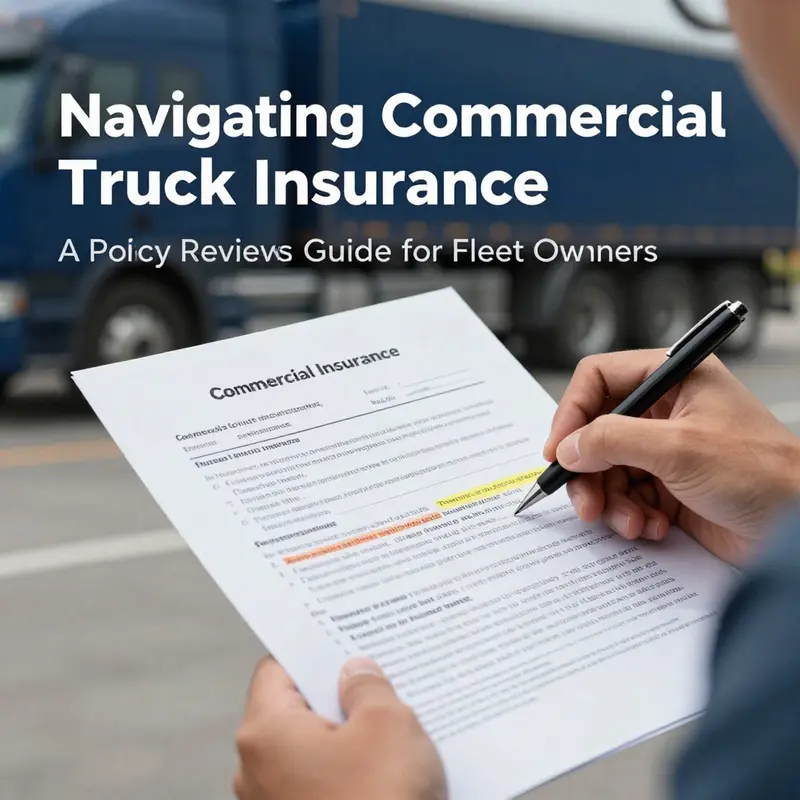
Policy review and maintenance form the quiet backbone of a resilient commercial truck insurance program. The moment a policy is signed, the work begins, not ends. A disciplined, regular review keeps coverage aligned with shifting operations, evolving risk, and the realities of the road. Without this ongoing attention, a fleet can drift into gaps, gaps that become costly when a claim arrives or when rates spike at renewal. The goal is not just to renew, but to renew smarter—to keep the shield strong as routes lengthen, cargo value grows, and vehicles multiply.
A yearly, comprehensive audit is the cornerstone of smart maintenance, but it is not a box to check only once a year. Significant operational changes warrant earlier review. If you add a new lane or expand into longer hauls, if you bring on additional tractors or trailers, or if the value of cargo you carry increases, those changes alter risk in tangible ways. Each shift can affect liability limits, endorsements, deductibles, and even the necessity for separate cargo coverage. The review should be a living process, not a once-a-year ritual, because the risk profile of a fleet is dynamic and multifaceted. This is especially true in environments where regulatory requirements tighten or where price pressures in the market push for tighter controls on cost and coverage alike.
A practical review begins with a precise inventory of the fleet and a careful audit of regulatory compliance. Ensure every vehicle is properly listed on the policy and that each vehicle is described accurately. This means confirming basic identifiers such as VINs and engine numbers, and verifying that the legal entity and the insured party are correctly aligned. If the owner and the operator are different, you’ll need the appropriate relationship or affiliation documentation to avoid miscommunication at claim time. Verification extends to the personnel side as well. If there are new drivers, their records, licensing, and any applicable medical or training requirements should be current and documented. The policy should reflect who is driving, where they operate, and under what conditions, because the same vehicle can pose very different risks in different contexts.
Beyond listing accuracy, the review should scrutinize coverage sufficiency. This means reexamining third-party liability limits to ensure they are adequate for the operating reality of the fleet. It also means considering whether the policy includes or should include cargo coverage, and whether endorsements such as non-trucking liability or miscellaneous liability equivalents apply to the business model. Endorsements can fill gaps that basic coverage leaves exposed, especially when drivers use personal vehicles for work tasks or when vehicles are rented or leased for peak periods. In addition, a careful eye should be kept on more specialized protections—bobtail scenarios, non-owned auto liability, and underinsured or uninsured motorist protection—where appropriate. The aim is a policy that reflects the true risk surface rather than a generic template that may become ill-suited as the business evolves.
An annual review should also consider deductibles and exposure management. Higher deductibles can offer premium relief, but they transfer more of the upfront risk to the business in the event of a claim. If you maintain a robust safety program, transparent driver performance metrics, and a disciplined maintenance schedule, you may qualify for favorable terms or discounts; these factors are not merely administrative. They translate into lower total cost of risk over time. The review should measure not just price, but the overall value you receive: the speed and fairness of claim handling, the clarity of exclusion language, and the ease with which drivers can access the coverage when needed. Clarity and predictability in the claims process reduce downtime and protect cash flow when an incident occurs.
To keep a policy well-tuned, involve the right partner in the conversation. A seasoned insurance broker who understands trucking can translate operational realities into policy language and help identify gaps that a standard, off-the-shelf approach might miss. Their expertise can be especially valuable when contemplating complex risk landscapes—such as mixed fleets, varying cargo types, or multi-state operations where regulatory nuance matters. A broker can also serve as a convenient liaison during renewal, compiling documents, comparing what is essential against what is optional, and negotiating endorsements that deliver real protection without unnecessary cost. In practice, this means scheduling a formal review with a broker ahead of renewal, bringing a precise fleet snapshot, and outlining both current and anticipated changes in operations. This collaborative approach makes the renewal a strategic decision rather than a reactive one.
Documentation is the lifeblood of any insurance program. Maintain a centralized, organized repository of policy documents, endorsements, and correspondence with the insurer. Digital copies are fine, but they should be easily accessible to the fleet manager and to any drivers who need proof of coverage on the road. A simple, proactive habit—updating the document library as soon as a vehicle is added, a driver is changed, or a cargo profile shifts—prevents last-minute scrambles when a claim or government audit occurs. Regularly reconcile the policy with the actual fleet roster. If a vehicle is retired, sold, or temporarily out of service, update the policy accordingly. Conversely, if a new asset comes online, ensure it appears in the policy with the correct identifiers and coverage selections.
The governance around renewal should be explicit and forward-looking. Set a renewal window that begins well before the expiration date, ideally 60 days out, to allow time for a thorough review and any negotiations. Prepare a renewal package that details exposure changes since the last term, notes any evolving regulatory considerations, and outlines recommended adjustments in limits, deductibles, and endorsements. This forward trajectory matters because renewal is the moment when risk management, not just risk coverage, is revalidated. A strong renewal posture reflects a business that anticipates its own future needs and negotiates terms that both protect and enable growth. It also signals to drivers and operations teams that coverage is stable, predictable, and aligned with the company’s operational ambitions.
Market dynamics influence every decision about policy maintenance. Insurers price risk based on a blend of factors, including fleet age, maintenance history, accident frequency, and cargo exposure. A fleet that demonstrates consistent safety practices, up-to-date maintenance records, and disciplined asset management often enjoys more favorable terms at renewal. Conversely, a sudden shift—such as a surge in high-value cargo or an expansion into riskier routes—will require a reassessment of limits and endorsements. It is here that the concept of ongoing risk management becomes practical. The better you document and communicate your risk profile, the more precisely coverage can be calibrated to it. A thoughtful review, conducted with data and a clear picture of operations, tends to produce policies that are not merely adequate but optimized for your unique set of risks.
For operators navigating these questions, it can be instructive to explore how external market conditions influence coverage decisions. See insights on excess capacity in the trucking market for a sense of how shifts in supply and demand can affect pricing, terms, and the availability of endorsements that truly meet your needs. excess capacity in the trucking market insights.
In sum, policy review and maintenance are not chores; they are strategic governance of your risk. They require discipline, data, and collaboration among fleet managers, drivers, brokers, and insurers. The aim is to keep the policy aligned with today’s realities and tomorrow’s plans, so that when the road throws a curveball, the coverage is ready to respond calmly, quickly, and fairly. If you treat renewal as a chance to recalibrate rather than as a formality, you’ll find that protection scales with your business, not against it. And as your fleet grows or changes, that ongoing shield remains the hinge that keeps your operations secure and resilient on every mile of every route.
For a deeper dive into best practices for commercial vehicle coverage and to stay current with evolving guidance, see the Insurance Information Institute’s resources at https://www.iii.org.
Final thoughts
Securing appropriate commercial truck insurance is crucial for protecting your business from unforeseen events and liabilities. By understanding your coverage needs, selecting a reputable provider, effectively comparing quotes, leveraging online purchase platforms, and maintaining your policy, you can ensure maximum protection for your fleet. This proactive approach not only safeguards your financial investments but also empowers you to operate confidently in a competitive market.