
India’s commercial truck market is witnessing remarkable growth, driven by increasing economic demand and evolving industry trends. As logistics, construction, and mining sectors expand, understanding the current landscape and availability of commercial trucks becomes crucial for business leaders. This article delves into the current market trends, growth projections, government policies, and technological innovations influencing commercial trucks in India. Each chapter contributes to a holistic view of the industry, equipping decision-makers with informed insights that aid in strategic planning and procurement.
Counting the Wheels: Tracing the Expanding Scale of India’s Commercial Truck Fleet Amid Growth and Electrification
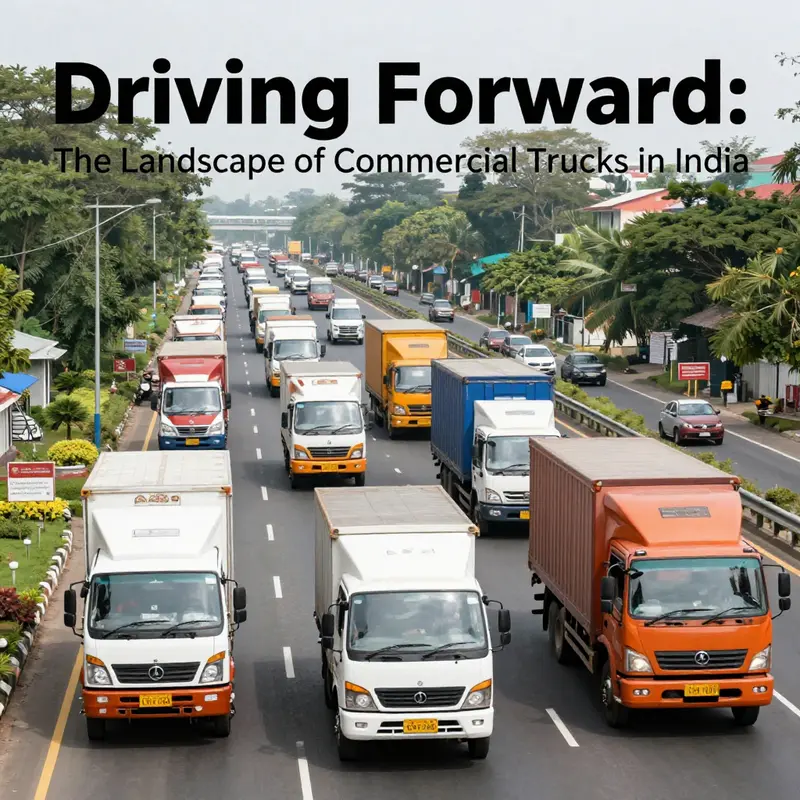
To ask how many commercial trucks roam India is to ask about a moving target. The country’s vast freight network rests on an intricate balance of sales, registrations, fleet utilization, and a rapidly evolving powertrain mix. The latest data from 2025 show a market that is not only growing in size but also transforming in capability. In October 2025, retail sales of commercial vehicles reached 1.078 million units, a year-on-year rise of more than 10%. For the full fiscal year 2025, sales were about 1.027 million units, up roughly 8% from the previous year. Taken together, these numbers underscore a market that is dynamic, productive, and deeply integrated with the country’s growing logistics appetite. Yet they also remind us that the on-road count of trucks—how many vehicles are actually plying the roads at any given moment—is not captured in a single public figure. Fleet managers, policymakers, and analysts must look across multiple indicators to sketch the true scale of the fleet and its likely trajectory.
The relationship between annual sales and the on-road stock is not straightforward. A robust year of sales can translate into a larger fleet over time, as new trucks replace aging ones and spare capacity expands to handle peak seasons or regional surges. Conversely, if operators push heavier utilization or accelerate retirement of older models, the on-road count may grow more slowly than sales would suggest. India’s trucking sector sits at the intersection of two enduring dynamics: a resilient domestic demand for goods and a policy environment that encourages modernization of the fleet. In practice, this means more trucks enter service, but those trucks also tend to be newer, more capable, and more attentive to efficiency and reliability. The result is a fleet that is not just bigger, but more sophisticated in both energy use and uptime.
A pivotal driver of this transformation is the accelerating shift toward electrification. The market’s new energy commercial vehicles (NECVs) are moving from a policy-driven phenomenon to a commercially viable segment. In 2025, NECV penetration reached 25.7%, with monthly shares often exceeding 30% in September and October. This is a watershed moment. Electrification changes the economics of truck ownership by altering operating costs, maintenance requirements, and charging logistics. For fleets, the lower fuel costs and reduced maintenance burdens associated with electric powertrains can significantly improve total cost of ownership over the life of a vehicle. At the same time, the technology is advancing in battery efficiency and in ultra-fast charging solutions, which helps to reduce downtime and keeps vehicles on the road longer.
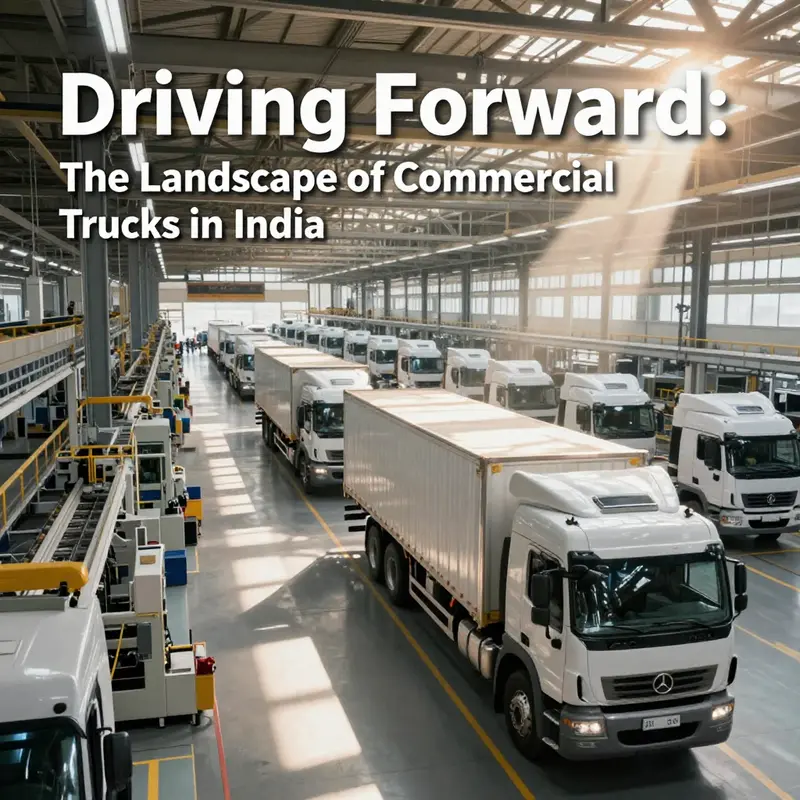
The electrification trend is closely tied to India’s broader manufacturing and export story. The domestic market is expanding alongside an aggressive push to export commercial vehicles. In 2025, India exported over a million units, reinforcing its position as a global production hub. This export momentum supports a robust domestic supply chain: more factories, more suppliers, and a richer service network, all of which encourage operators to refresh or expand their fleets. A larger, globally integrated manufacturing base also tends to lift the quality and reliability of trucks available in the domestic market, further incentivizing fleet modernization and higher utilization. As a result, the on-road stock is likely to grow alongside rising sales, output, and export activity, even as fleets evolve toward cleaner and smarter configurations.
The scale of India’s truck fleet is also bound up with regional logistics demands and infrastructure development. Corridor improvements, urban-rural connectivity, and a modernizing distribution framework are expanding the reach of freight flows. As a result, more trucks are needed to move goods across longer distances and to service a denser network of warehouses and hubs. Smaller operators are entering with newer, more modular approaches, while larger fleets are piloting electrification, telematics, and data-driven maintenance regimes. These developments collectively boost asset utilization, reduce idle time, and extend the productive life of each vehicle. They also reshape the fleet’s composition, tilting it toward newer models and energy-efficient configurations that align with a lower-emission, higher-availability logistics paradigm.
In this context, it is useful to acknowledge the nuanced picture that market insights provide. Even as the fleet grows, there are segments where utilization patterns reveal pockets of excess capacity. Fleets may still expand, but not every mile traveled translates into proportional increment in demand for new trucks. Industry observers note that capacity management becomes a strategic lever—operators must balance expansion with efficiency, the availability of charging and service infrastructure, and the reliability of supply chains. A practical takeaway from these insights is that the movement of trucks on Indian roads is driven more by the rhythm of demand and the efficiency of operations than by a single metric or year alone. For readers who want to explore this nuance in depth, an insightful analysis of excess capacity in the trucking market can be found here Excess capacity insights.
The blend of strong domestic demand, growth in NECVs, and an expanding export footprint also points to a broader, more durable expansion of the country’s truck fleet. As manufacturers scale up, the industries that support trucking—spares, maintenance services, and digital solutions—grow in tandem. Digitization is no longer a nice-to-have; it is increasingly embedded in everyday fleet management. Telematics, real-time routing, predictive maintenance, and data analytics help operators squeeze more value from each asset. This fosters longer asset life and steadier renewal cycles, which contribute to a growing but more stable on-road presence for trucks. In turn, the market becomes more capable of absorbing demand shocks and sustaining momentum across cycles, a pattern that helps explain why India has moved confidently into the ranks of the world’s most dynamic auto markets.
Amid these shifts, policymakers and industry stakeholders are balancing incentives and infrastructure investments to sustain growth while promoting sustainability. The electrification trajectory requires not only compelling battery technology and vehicle reliability but also a supportive charging ecosystem and grid readiness. Infrastructure planning, land-use policies, and urban logistics strategies all play a role in determining how quickly fleets can transition to electric powertrains and how seamlessly trucks can be integrated into dense, multi-modal networks. At the same time, the domestic manufacturing push—often framed as a Make in India effort—continues to expand the supply chain’s depth and resilience. Localization reduces dependencies, brings down costs, and improves the ability of fleets to service vehicles and source parts quickly. The net effect is a cycle in which higher production supports more jobs and more robust logistics, which in turn fuels higher demand for dependable fleets.
All of these factors converge on one practical reality for the contemporary trucking market: while precise on-road counts may not be published in a single public figure, the trajectory is unmistakable. India is not merely adding trucks; it is upgrading the fleet’s capability, integrating cleaner powertrains, and sharpening the efficiency of logistics networks. The market’s expansion is not a matter of impulsive growth; it reflects a strategic transition toward a more modern, more responsive, and more export-ready trucking ecosystem. The implication for fleet operators is clear. Growth will come with choices about powertrains, charging infrastructure, and service networks. It will come with decisions about fleet renewal timing and the integration of digital tools that improve uptime. And it will come with a determination to participate in a wider national and global supply chain that rewards efficiency, reliability, and scalability.
For the most up-to-date and authoritative information on these trends, industry observers turn to the official reports published by the Society of Indian Automobile Manufacturers. See the SIAM official website for detailed statistics and analysis: https://www.siam.org.in/.
On the Road to Scale: Decoding India’s Commercial Truck Fleet
The question of how many commercial trucks are on India’s roads is not a simple tally; it is a lens into a logistics system expanding faster than a direct census. Recent data show a buoyant market, with sales momentum that informs fleet turnover and utilization rather than an exact on-road headcount.\n\nIn October 2025, retail CV sales reached 1.078 million units, a year-on-year gain above 10%. For the full fiscal year 2025, total CV sales were about 1.027 million units, up roughly 8% from 2024. These figures signal a large, active fleet and a healthy pace of capacity renewal.\n\nForecasts for 2030 imply continued growth in the truck segment, with a projected CAGR of about 5% and sizable capital investment in fleet modernization. The Indian truck market was valued around USD 20.18 billion in 2025 and is expected to reach about USD 26.11 billion by 2030, while the broader CV market could approach USD 29,076.5 million in revenue by 2030. These numbers describe scale and direction more than an exact stock count, reflecting turnover, replacement cycles, and efficiency gains.\n\nPolicy and infrastructure shifts—such as road-improvement programs, corridor optimization, and the National Logistics Policy—shape how quickly capacity can translate into on-road capacity. Fleets increasingly deploy data-driven scheduling, condition-based maintenance, and higher-capacity tractors and trailers, all of which push utilization higher without necessarily expanding the day-to-day vehicle count.
null
null
Wheels of Change: Tech-Driven Transformation and the Fleet Equation in India’s Commercial Trucks
India’s commercial vehicle market is currently navigating a period of rapid change, where steady demand growth intersects with a shifting technology landscape. The latest data for 2025 shows that commercial vehicle retail sales reached 1.078 million units in October, a year-on-year increase of more than 10 percent. For the full fiscal year, CV sales hovered around 1.027 million units, marking an 8 percent rise from the previous year. These figures confirm that India remains a world-scale automotive market with a resilient pace of production and demand. Yet, a crucial question remains more elusive in public data: how many commercial trucks are actually on Indian roads today? No single source provides a definitive truck-on-road tally. What is clear is that robust sales activity underpins an expanding and intensively utilized logistics network, which in turn shapes the way fleets are planned, funded, and managed. In that sense, the trajectory of the on-road truck fleet is less about a static headcount and more about how technology, efficiency, and integration are recalibrating capacity utilization over time.
The most transformative takeaway from the current cycle is that technology is not a peripheral enhancement but a core driver of value. As freight movements scale across vast and diverse geographies, operators face the twin imperatives of moving more goods faster and doing so more cost-effectively. Lightweight materials have emerged as a central lever in this equation. By incorporating aluminium alloys and composites, manufacturers can reduce the vehicle’s overall weight while preserving, and sometimes increasing, payload capacity. The immediate energy payoff is straightforward: a lighter truck consumes less fuel for the same distance, delivering lower operating costs per ton and mile. The longer arc is equally important. Lower curb weight can translate into the ability to haul heavier loads within regulatory gross-vehicle-weight limits, improving fleet productivity without adding additional trucks. Beyond cost savings, the reduced weight contributes to cleaner operation, aligning with India’s broader push toward greener transport and a stricter emission regime. In practical terms, lighter trucks help carriers maximize the use of available road space and infrastructure while delivering the same or improved service levels, a combination that supports higher utilization of the existing asset base over time.
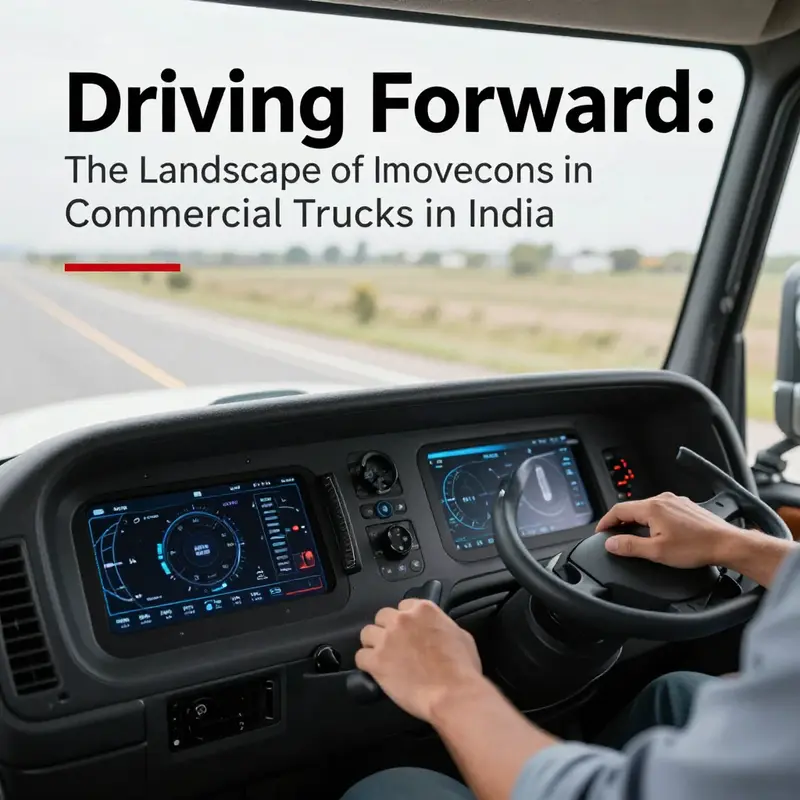
Technology’s reach extends far beyond the chassis and the airframe. Digitalization and telematics have moved from experimental add-ons to essential management tools. Real-time GPS tracking and onboard data collection give operators a lucid picture of where each asset is and how it is performing. Telematics systems monitor engine health, fuel efficiency, idling, and driver behavior, turning streams of data into concrete actions. Fleet management software ties these insights to concrete planning: maintenance scheduling to prevent unexpected breakdowns, route optimization to shave minutes or kilometers off each trip, and capacity planning that aligns supply with demand fluctuations. The result is not only lower costs but greater predictability. Fewer unplanned outages mean more consistent service levels, tighter adherence to delivery windows, and a more reliable freight corridor. In a market where margins can be tight and competition intense, the ability to minimize downtime through proactive maintenance and smarter routing becomes a decisive differentiator that shores up revenue per kilometer and strengthens customer relationships.
The digital transformation of trucking does not stop at individual vehicles. It also reweaves the larger logistics ecosystem, bringing together shippers, carriers, and intermediaries through smarter platforms. The rise of smart logistics platforms and digital freight marketplaces brings new levels of visibility and coordination to freight flows. When freight movements are visible end to end, warehousing and terminal operations are better synchronized with trucking capacity. Dynamic tendering, made possible by real-time visibility, pairs loads with available capacity more quickly and accurately. This level of integration reduces idle time, speeds up decision-making, and improves overall asset utilization. In turn, operators can plan networks with greater confidence, knowing that they can balance demand with the delivery of services—without unnecessary capital burn on a larger but less efficient fleet. The implication for the on-road stock, therefore, is nuanced: it is not simply an arithmetic rise tied to sales, but a qualitative shift toward a fleet that moves more efficiently, with higher reliability, and the agility to respond to market shifts without a proportional expansion in vehicle counts.
Within this evolving picture, predictive maintenance stands out as a practical enabler of broader efficiency gains. By blending sensor data, historical repair records, and usage patterns, maintenance becomes a forward-looking discipline. Components with predictable wear profiles can be serviced just before failure, reducing unplanned downtime and extending the life of tires and other critical parts. For fleet operators, this translates into more stable budgeting, longer intervals between major overhauls, and a quieter demand line when it comes to capital reinvestment. The upshot is a more predictable cost base and smoother capital planning, which in turn supports prudent growth strategies. Rather than chasing a rapid expansion in truck counts, operators can prioritize smarter use of the assets they already own, investing in the tech stack and process improvements that extract more value from every mile and every load.
Policy and market dynamics also color the pace and pattern of fleet evolution. While the sources here do not break down every regulation, the broader trend is clear: higher efficiency and cleaner operations are becoming embedded in the next generation of trucks. This creates a favorable environment for the adoption of lightweight construction, telematics, and ecosystem-enabled optimization, even as competition remains intense. When policy nudges align with technological capabilities, fleets gain a stable platform for upgrading and integrating new tools without sacrificing reliability or service quality. The result is a fleet that moves farther and faster on less fuel, with fewer disruptions along the way. In that sense, the on-road truck population is increasingly defined not by a simple headcount, but by how well the fleet uses data and connectivity to sustain logistics momentum across the country’s varied landscapes.
From the operator’s vantage point, the narrative of India’s growing freight task is inseparable from the story of smarter, better coordinated trucks. The capacity to haul more with the same road and to do so while consuming less fuel and incurring lower maintenance costs reframes the question of how many trucks are necessary. It places emphasis on asset quality, utilization, and resilience. Regional freight intensity, urban congestion, and infrastructure readiness all influence the rate at which fleet size might grow. Yet, the prevailing trajectory points toward a smarter, more productive stock of commercial trucks. Growth in demand will likely be met not merely by adding trucks, but by equipping each truck with better tools for planning, monitoring, and execution. And as fleets become more integrated with digital marketplaces and smart platforms, the linkage between capacity and service quality strengthens, making the fleet equation more about optimization than just expansion.
A practical implication of this transformation is the heightened importance of capital efficiency. When trucks are treated as intelligent moving assets rather than isolated machines, fleets can extract more value from each tire turn. The business case for upgrading to lighter materials and smarter systems grows stronger as fuel costs, maintenance overhead, and driver shortages influence profitability. Operators who invest in telematics-enabled monitoring, predictive maintenance, and integrated logistics platforms can deliver higher service levels at comparable or even lower marginal costs. In this framework, growth in the on-road fleet is tempered by the ability to monetize capacity more effectively, rather than by a straightforward escalation in vehicle counts. The balance between incremental capacity and incremental efficiency becomes the defining metric for determining whether the fleet size will meaningfully increase in the coming years.
As India continues to urbanize, industrialize, and weave itself more tightly into global supply chains, the momentum behind technological innovations in the trucking sector will shape both the pace and the profile of fleet growth. The on-road truck population may not be precisely quantifiable in public datasets today, but the direction is unmistakable: smarter trucks, better networks, and data-driven asset management will push efficiency, reduce costs, and expand the practical capacity of the existing fleet. For fleet operators, policymakers, and researchers, the lesson is clear. Understand how lightweight design, digitalization, and ecosystem integration translate into real-world movement and reliability. The chapter’s focus on these innovations reveals not just how many trucks exist, but how effectively they move goods across a nation that remains in motion.
For a concrete look at how order flow affects margins in trucking operations, see the related analysis here: trailer orders impact on truckload margins.
External reference for a broader historical perspective on technology in Indian logistics: Technological Innovations in the Indian Logistics Industry: The Case of Freight Handling.
Counting the Wheels: Infrastructure, Policy, and Market Forces Shaping India’s Commercial Truck Fleet
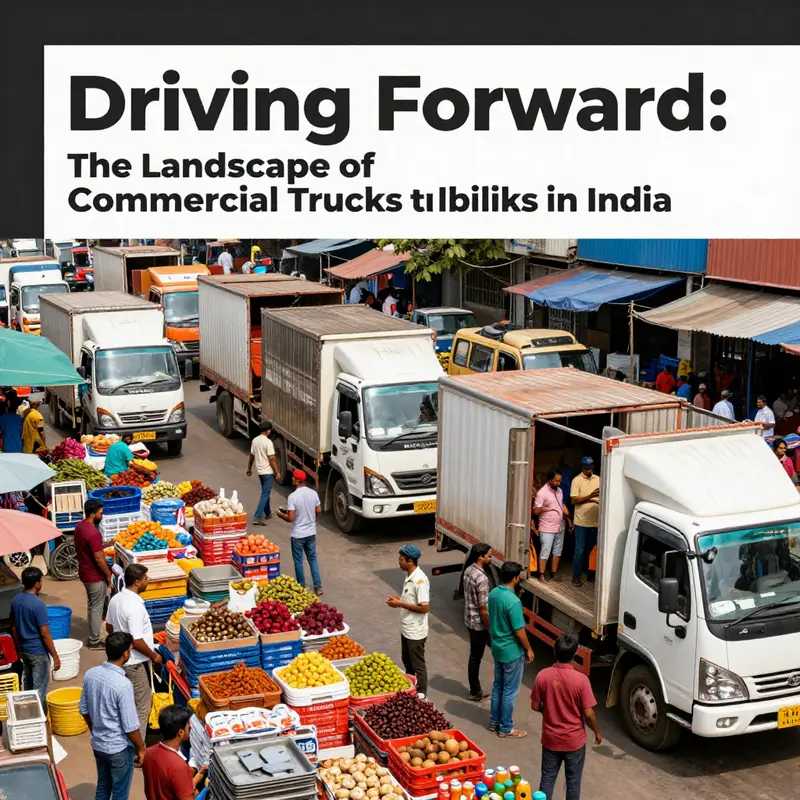
The question of how many commercial trucks roam India’s roads is not answered by a single census. The latest figures illuminate the market’s rhythm rather than its exact size on the pavement. In October 2025, commercial vehicle retail sales reached 1.078 million units, a year-on-year rise of more than ten percent. For the full fiscal year 2025, CV sales were about 1.027 million units, up eight percent from the prior year. These numbers signal robust demand, ongoing production momentum, and a fleet that continues to turn over as operators chase reliability and service levels. Yet the on road stock of trucks—the actual headcount of heavy haulers in daily service—remains elusive in published sources. The absence of a definitive on road fleet tally does not diminish the value of the sales data; it simply shifts the emphasis to how fleets are built, replaced, and scaled in response to broader economic and policy currents. In practice, analysts triangulate from registrations, fleet purchases, financing activity, and scrappage patterns to infer the fleet size, but these are still proxies rather than a fixed ledger. The momentum hinted by 2025’s sales figures, however, matters because it frames the capacity available to move India’s growing volumes of goods across expanding corridors and into a future of intensified logistics activity.
Infrastructure development stands out as a locomotive of truck availability and utilization. When road networks extend toward new logistics hubs and industrial belts, the volume of freight that must be moved rises accordingly, creating a virtuous circle: more efficient movement lowers transit times, expands service windows, and justifies larger fleets. Government initiatives such as major road program expansions and long-term connectivity plans push freight demand outward along corridors that connect major manufacturing zones with distribution centers, ports, and consumer markets. The result is a sustained demand signal for heavy-duty trucks that not only replaces aging assets but also scales up to support larger, more complex supply chains. In such an environment, the daily use of trucks becomes a barometer for the health of the economy and a proxy for the pace of development across regions.
Industrial growth threads the procurement of trucks with the cadence of production and logistics. A manufacturing rebound in sectors like automotive components, construction materials, and consumer durables translates into more raw materials and finished goods needing movement. This expansion elevates the strategic importance of dependable fleets capable of meeting tighter delivery windows and just-in-time manufacturing requirements. The Make in India initiative reinforces this linkage by aiming to bolster domestic production capacity and strengthen supply chain resiliency. As local manufacturing expands, so does the need for a freight backbone that can move inputs to factories and finished goods to markets with minimal friction. In turn, fleet operators rationalize asset utilization, optimize routes, and invest in heavier, more efficient trucks that can haul larger payloads over longer distances with better fuel efficiency and reliability.
Policy, financing, and macroeconomic conditions together shape the speed and scale at which new trucks enter service. Financing remains a central lever; orders rise when funding is accessible, interest rates are favorable, and lending disciplines align with operator cash flows. Conversely, higher financing costs or tighter credit can dampen new truck acquisitions even amidst healthy demand, especially for smaller operators or fleets that rely on external financing. On the flip side, fiscal and regulatory incentives can tilt the balance in favor of newer, cleaner technology. Subsidies or favorable tax treatment for electric trucks, for instance, can shorten payback periods and enhance total cost of ownership against legacy diesel fleets. This dynamic underscores a broader truth: the number of trucks in operation is not simply a function of how many are built, but how many operators can finance, lease, or purchase them under prevailing conditions. In the same vein, credit availability and policy maturation play a critical role in fleet renewal cycles, encouraging operators to replace older, higher-maintenance assets with newer machines that offer lower operating costs and higher uptime.
Inputs and costs along the supply chain also influence the speed at which new trucks reach the road. Global commodity prices for steel, rubber, and electronics feed into the price of chassis, tires, and on-board systems. Volatility in these costs can dampen production schedules or translate into higher vehicle prices, tempering the pace of fleet expansion. The investment cycle becomes more complex as the industry debates the balance between upgrading fleets with conventional diesel powertrains and transitioning to electric or more fuel-efficient technologies. The transitional path offers long-term operational benefits but can introduce short term headwinds: higher upfront costs, the need for more specialized maintenance skills, and a developing charging or fueling infrastructure that must keep pace with utilization. For policymakers and fleet finance teams, the challenge is to design a climate where capital is available to support durable, productive assets while ensuring that the total cost of ownership remains competitive with evolving technology choices.
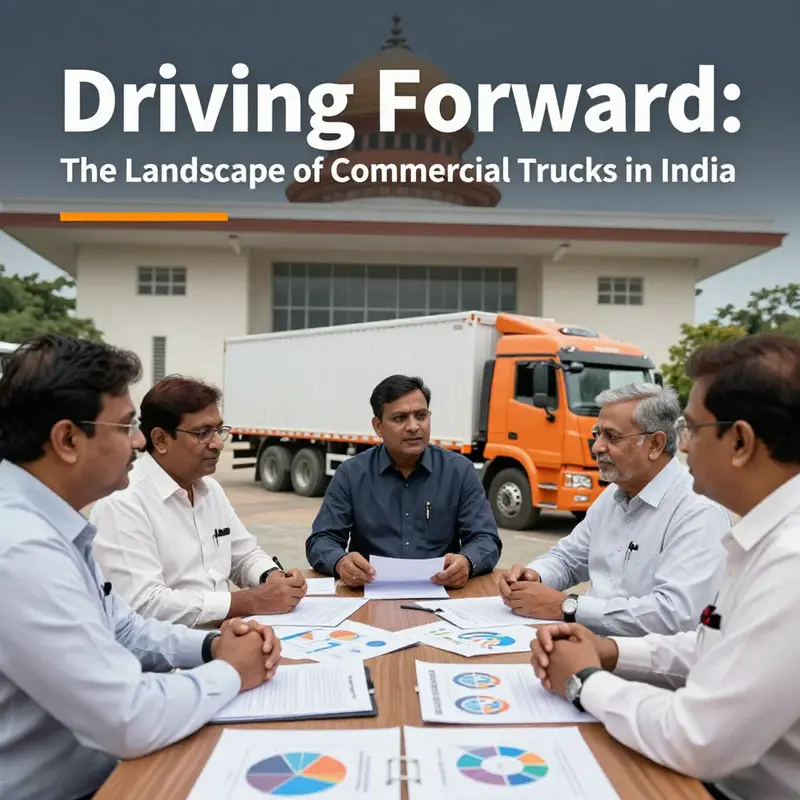
Taken together, infrastructure push, industrial growth, macroeconomic stability, and the cost of capital create a layered, interdependent environment in which the size of India’s commercial truck fleet takes shape. The annual sales figures provide a pulse on the market’s health and the pace of new asset creation, but the true on road stock reflects how fleets are financed, how quickly assets are exchanged, and how policy nudges buyers toward modernization. In this sense, the current trajectory of truck availability is less a single headline number than a narrative of capacity being mobilized by infrastructure gains, industrial expansion, and the financial architecture that underwrites large-scale asset investment. For readers interested in the mechanics behind equipment orders and how broader trucking trends feed into fleet growth, a deeper discussion of macro trends and their impact on trailer and vehicle orders can be found in this analysis trucking economic trends affecting trailer orders.
The broader conversation surrounding the number of trucks on Indian roads also benefits from a look at external market intelligence. Industry data from established references shows a robust heavy-duty segment and a market that remains highly sensitive to policy and macro shifts. While the on road stock remains a moving target, the pattern in 2025 clearly signals a market with growing throughput, expanding capacity, and an industry poised to adapt to a changing regulatory and technological landscape. This adaptability will be crucial as the country continues to pursue higher manufacturing output and more integrated logistics networks that reduce transit times and increase reliability across the supply chain. In the longer run, the pace at which new trucks enter service will depend on a balance between infrastructure progression, industry investment, financing options, and the evolving economics of operating a modern fleet. External references and market intelligence suggest that the momentum observed in late 2025 is not a temporary spike but part of a broader shift toward greater logistics capability in India. External reference: Heavy Duty Trucks Market in India, Statista: https://www.statista.com/statistics/1275098/india-heavy-duty-trucks-market-size-by-value/
Final thoughts
The landscape of commercial trucks in India is rapidly evolving, underpinned by strong economic growth, government support, and technological advancements. By comprehensively analyzing market trends, growth projections, policy impacts, and economic factors, businesses can better navigate procurement and operational challenges. Understanding how many commercial trucks are available can equip logistics, construction, and delivery enterprise leaders with essential insights for strategic growth and competitive advantage.