
A & G Commercial Trucking, Inc., established in 2004, has carved a niche within Arizona’s competitive transportation industry. Focusing on domestic for-profit logistics, the company’s success hinges on navigating complex regulatory environments, optimizing operational dynamics, understanding market positions, and ensuring robust financial health. This article meticulously explores the intricate layers of A & G Commercial Trucking’s business, detailing how regulatory compliance safeguards operations, how daily operational dynamics foster efficiency, how strategic market positioning allows for sustained growth, and how financial metrics illuminate the overall business viability. Each chapter contributes insight to better understand the strategic frameworks that define A & G Commercial Trucking, offering valuable lessons for logistics and freight company owners, construction and mining enterprise procurement teams, and small business owners with delivery fleets.
Steering the Horizon: Regulatory Currents, Fleet Decisions, and the Future of A & G Commercial Trucking
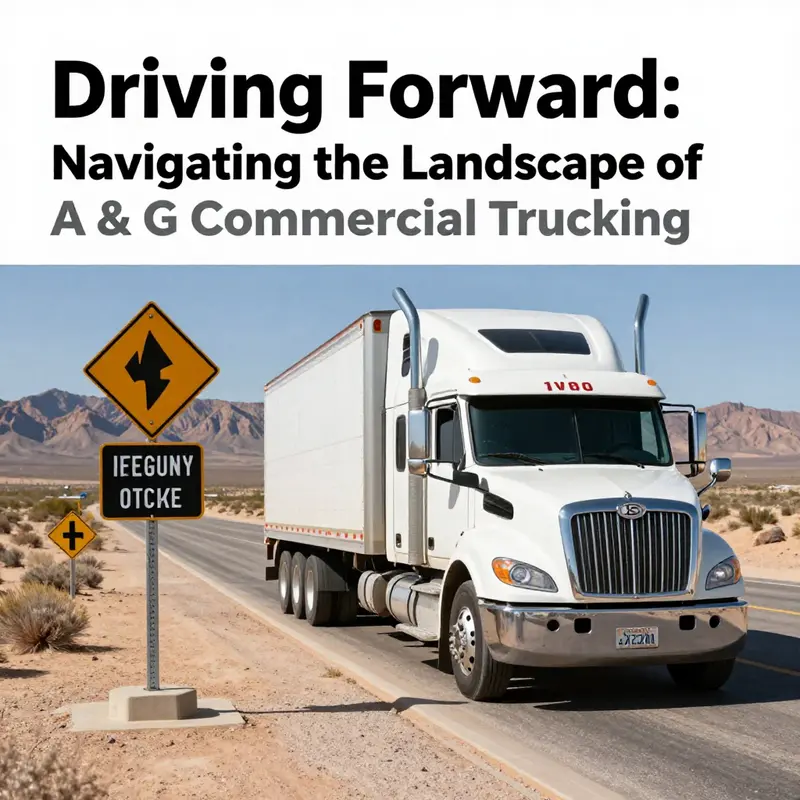
A & G Commercial Trucking, Inc. sits within a regulatory landscape that has grown increasingly complex and consequential for daily operations, strategic planning, and long term investment. The company, registered in Arizona and active since 2004, operates as a domestic for‑profit enterprise providing transportation services across regional and national corridors. Its registered agent, CT Corporation System, maintains the official address in Phoenix, a detail that underscores how compliance threads weave from corporate governance to fleet management. The regulatory environment that governs A & G mirrors the broader regulatory push in the United States and beyond—a push driven by the need to curb emissions, reduce oil dependence, and accelerate the energy transition that frames modern logistics. Since 2002, the Environmental Protection Agency has intensified oversight of the trucking sector, especially heavy‑ and medium‑duty vehicles, as a principal lever in national climate policy and air quality improvement. This focus has only sharpened in the years since, with policymakers increasingly considering not just tailpipe emissions but also the broader lifecycle of vehicles, fuels, and infrastructure that enable a functioning zero‑emission economy.
The latest Reinventing the Truck (RTT) report from S&P Global Mobility, released in 2025 and updated into 2026, crystallizes the future through a dual lens. On one path, Inflections, policy continues to push forward in a way that reflects current constraints in technology, capital, and supply chains, producing steady, if sometimes painful, progress. On the other, Green Rules projects a more aggressive stance: rapid decarbonization supported by ambitious climate policy and a faster deployment of clean technologies. For a company like A & G, these scenarios are not merely theoretical—they map directly onto capital budgeting, fleet planning, and the timing of major procurement cycles. In a sector where medium‑ and heavy‑duty trucks account for a small share of new vehicle sales yet dominate demand for fuels and road emissions, the regulatory balance of incentives, penalties, and standards creates outsized strategic leverage for operators who synchronize operations with policy trajectories rather than respond to them after the fact. The RTT analysis is clear: electrification and the shift to alternative fuels are not distant options but plausible timelines that interact with grid readiness, charging or fueling infrastructure, and the social license to operate in increasingly regulated corridors.
The implications for cost structure and risk management are immediate. In 2023 MHCVs, which represented less than four percent of on‑road vehicle sales excluding three‑wheelers, still drove roughly forty percent of on‑road CO2 emissions and a similarly large share of road fuel liquids demand. This disproportionate environmental footprint is precisely what drives policy attention. It also means the regulatory burden will cease to be about compliance alone and will become a framework for lifecycle decision making. For A & G, this means that decisions about when to replace an older tractor or how to manage fuel and maintenance costs cannot be decoupled from expectations around emissions standards, supplier disclosures, and end‑of‑life recycling requirements. As regulations broaden to cover manufacturing, battery production, and waste management, the total cost of ownership begins to reflect not only purchase price and fuel efficiency but also the risk profile of future compliance, the reliability of energy supply, and the availability of trained personnel to support new technologies. In practice, this translates to a more integrated approach to fleet renewal that accounts for capital cycles, regulatory risk, and the ability to monetize improvements in energy efficiency or emissions performance over the life of a vehicle.
A&G’s daily operations illustrate how the regulatory context translates into practical management choices. The company’s leadership must consider how regional rules align with national standards and how they interact with state incentives, infrastructure grants, and private sector partnerships that fund or enable technology adoption. The RTT framework helps them see beyond the next renewal contract. It invites a scenario‑planning mindset that anticipates both gradual shifts and abrupt policy pivots. In this sense, the regulatory environment becomes a driver of strategic clarity rather than a passive compliance obligation. A forward‑leaning operator designs procurement and maintenance plans that are robust to different policy tempos, while maintaining flexibility to switch to alternative fuels or electrified powertrains as market and grid realities become clearer.
This is where collaboration and information flow matter most. Regulation in trucking is not a boundary line but a moving tide that gathers around capital planning, supply chain resilience, and workforce development. The RTT report emphasizes that the alignment of local regulatory frameworks with global climate goals will shape the pace and direction of decarbonization in major markets such as the United States, Europe, China, and Japan. For a company like A & G, this means that staying informed about regulatory developments is not an afterthought but a core capability. It also means recognizing that the policy narrative is no longer a national issue alone; it is a global conversation that shapes technology ecosystems, supplier readiness, and the comparative advantages of different regions and port corridors. In this context, internal and external communication about policy developments becomes a strategic asset, enabling the company to time investments in fleet modernization and to negotiate with suppliers who can offer scalable energy solutions.
One practical consequence of the evolving environment is the rising importance of data and transparency. As regulatory regimes expand to cover not only exhaust emissions but also energy sourcing, battery production lifecycles, and end‑of‑life management, operators must capture meaningful data across vehicle performance, charging or refueling patterns, and maintenance outcomes. This data governance becomes a prerequisite for participation in incentive programs, subsidies, and even carbon accounting frameworks that may influence operating margins. The ability to demonstrate progress toward emissions targets, or to document improvements in fuel efficiency under varying duty cycles, can be decisive in securing favorable financing terms, negotiating with shippers who demand sustainability, and meeting stakeholder expectations for responsible operations.
This broader view of regulation also redefines the role of infrastructure readiness. The RTT scenarios put infrastructure front and center—power grids capable of supporting fleet electrification, safe and high‑capacity charging networks, and reliable alternative fuel supply chains. For a regional carrier based in Arizona, the geography and climate add layers of complexity and opportunity. The Southwest presents challenges related to extreme heat, which can affect battery performance and charging efficiency, as well as opportunities in desert‑region solar capacity that could support on‑site or regional charging hubs. These physical realities intersect with policy signals at the state and federal levels, which may favor investments in grid resilience, fast charging corridors along major transport routes, and incentives for fleets that demonstrate robust utilization and high uptime. In short, regulatory foresight is inseparable from the engineering and logistics design that determines whether electrified or alternative‑fuel strategies are viable within the company’s existing operating footprint.
The internal link to industry discourse about emissions regulations highlights how operators collectively navigate uncertainty. As OEMs seek clarity in emissions regulations, the broader ecosystem benefits when policy signals are coherent, predictable, and technically grounded. A&G can glean guidance from embodied industry conversations about standards, testing protocols, and lifecycle reporting. The emphasis on lifecycle emissions—not just tailpipe outcomes—points to a shift in how fleets are evaluated by lenders, insurers, and customers. It also encourages a more holistic approach to risk management, where regulatory exposure is analyzed alongside fuel price volatility, driver shortages, and geopolitical factors that influence supply chains. This integrated perspective helps ensure that decisions about fleet composition—how many tractors to run, what kind of powertrain to deploy, and where to locate charging or fueling assets—are made with a realistic appraisal of both policy trajectories and market realities.
Beyond policy mechanics, the regulatory environment is shaping the way A & G engages with its broader network of stakeholders. Customers increasingly expect sustainable transportation solutions, and regulators reward demonstrable progress toward decarbonization. In practice, this means the company must articulate a credible roadmap that links capital investments to measurable outcomes in emissions, energy efficiency, and lifecycle stewardship. It also means building partnerships with energy providers, infrastructure developers, and regional authorities to align on access to power and fuel resources, while maintaining reliability and cost discipline. The strategic challenge is to translate policy possibilities into a coherent operational plan that preserves service levels and competitive pricing while progressively reducing climate impact. In this sense, the RTT framework becomes not only a forecasting instrument but a governance tool that helps A & G keep its commitments to customers, employees, and shareholders while adapting to the evolving regulatory ecosystem.
For readers seeking a focused lens on how this regulatory dialogue unfolds in practice, consider the OEMs’ ongoing efforts to seek clarity in emissions regulations—an issue that sits at the intersection of policy, technology, and market dynamics. OEMs seek clarity in emissions regulations. This linkage underscores that the regulatory journey is not a solo enterprise for carriers but a collaborative process that involves manufacturers, policymakers, and service providers as co‑creators of a feasible energy transition. As A & G weighs next steps, it can draw on these industry conversations to calibrate its investment thesis, its fleet renewal cadence, and its partnerships with suppliers who can provide scalable energy solutions, battery management expertise, and integrated maintenance programs tailored to high‑duty operations.
From a practical standpoint, the regulatory horizon prompts a disciplined approach to capital budgeting. The company can implement a staged plan that aligns with credible policy timelines and grid readiness. In the near term, this may involve continuing to optimize conventional efficiency measures while preparing for potential shifts toward hybrid or fully electrified powertrains as charging infrastructure and regulatory incentives become more robust. In the medium term, A & G might explore strategic pilots that test energy efficiency improvements, battery health, and energy management practices in controlled segments of its operation. The long horizon invites more ambitious deployment, possibly including the construction of on‑site charging capacity at key terminals, partnerships with energy providers, and participation in regional green freight programs that recognize the value of uptime and reliability in service commitments. Throughout, the chain of governance—from safety and maintenance to regulatory compliance and financial oversight—must reinforce a culture of proactive adaptation rather than reactive compliance.
The conversation around regulation also invites reflection on geography and the role of state policy in shaping fleet decisions. Arizona’s regulatory posture, and how it interfaces with federal standards, can influence where A & G concentrates its modernization efforts. The RTT framework reminds operators that regional differentiation matters. Some markets may accelerate decarbonization faster than others, creating a need for modular and scalable solutions that can be deployed without disrupting core operations. In this light, the company can view its asset base not as a fixed set of tractors and trailers but as a portfolio of capabilities that can be adjusted as rules evolve. A careful balance of risk and opportunity means preserving core capabilities for reliability and service while reserving flexibility to adopt cleaner technologies as policy and market incentives allow.
In sum, the regulatory environment represents a living architecture that touches every facet of A & G Commercial Trucking’s business—from corporate governance and fleet procurement to workforce development and customer value. It challenges the organization to operationalize long‑term climate goals within the realities of daily freight movement. The RTT perspective helps translate policy ambiguity into strategic clarity by offering a framework in which choices about fleet mix, energy strategy, and infrastructure investments are guided by plausible futures. It also reinforces the need for continuous dialogue among stakeholders—regulators, customers, suppliers, and employees—so that the path toward decarbonization preserves the competitiveness and reliability that define A & G’s service promise. As the industry navigates the complexity of modern emissions standards, lifecycle thinking, and energy transition, the company’s ability to anticipate policy shifts and align resources accordingly will determine not only compliance success but long‑term growth and resilience in a dynamic logistics ecosystem.
External perspective is invaluable in this context. For a comprehensive, forward‑looking briefing on energy transition in trucking and the regulatory forces shaping it, the Reinventing the Truck report offers a rigorous synthesis of policy trends, technology trajectories, and market dynamics. Access to this analysis can illuminate strategic choices and help align fleet modernization with a credible trajectory toward decarbonization while maintaining service quality. https://www.spglobal.com/mobility/en/research/insights/reinventing-the-truck-2026
Steering Through Complexity: The Operational DNA of A & G Commercial Trucking in a Modern Freight Ecosystem
In the quiet before dawn, a dispatcher’s screen glows with a constellation of routes, cargo priorities, and live signals from a fleet that stretches across familiar highways and unfamiliar byways. This is not a romance with the open road; it is a disciplined orchestration, a daily proof of how a mid-sized, Arizona-based carrier threads efficiency, safety, and reliability into every mile. The operational dynamics of A & G Commercial Trucking emerge not from a single clever tactic but from a coherent ecosystem where logistics planning, technology adoption, regulatory compliance, and responsive leadership intersect. The story that unfolds in that dispatch room is a practical anatomy of modern freight: a continuous negotiation between the certainty customers demand and the volatility inherent in moving goods through a complex network of constraints and opportunities. When viewed as a whole, it becomes clear that the company’s effectiveness rests on the fusion of careful, data-informed planning with flexible execution, a balance that thrives under conditions of continuous change rather than rigid adherence to static rules.
Logistics management sits at the heart of this system. Efficient movement of goods over vast networks requires meticulous planning that begins long before a truck leaves the yard. Route optimization is not a one-time calculation but an ongoing process that updates as new information comes in. Traffic patterns shift by the hour; weather systems push fleets to adjust routes to protect delivery windows and protect margins. Load distribution follows a similar logic, striving to maximize capacity utilization without compromising safety or service levels. The choice of which truck carries which load is influenced by a spectrum of factors: equipment suitability, driver availability, maintenance status, and the proximity of outbound shipments to the next destination. Scheduling, in turn, is the art of aligning customer expectations with the realities of transit times, dwell times at shippers, and the inevitable frictions of road travel. In a market that rewards punctuality, the discipline of scheduling becomes a competitive differentiator, and the ability to deliver on time becomes a tangible asset, not merely a contractual obligation.
Technology is the enabler that turns these planning principles into reliable practice. Modern trucking operations increasingly lean on telematics and real-time tracking systems to illuminate what once lived only in the dispatcher’s intuition. Telematics deliver diagnostic insight into vehicle performance—speed, fuel consumption, braking patterns, and on-board maintenance indicators—so that preventative interventions can be scheduled before minor issues become costly roadside incidents. Real-time tracking extends visibility beyond a single shipment to an entire network, fostering transparency for customers and enabling proactive communication when disruptions arise. The data generated by these systems feeds predictive analytics, a forward-looking capability that helps the operation anticipate potential problems—congestion on a corridor, a forecasted storm that could slow a leg of the network, or a spike in demand that requires load reallocation—long before it manifests as a delay. Safety benefits accumulate in tandem with efficiency gains: better driver behavior, timely maintenance, and evidence-based decision-making create a culture where risk is managed not by luck but by ongoing monitoring and adjustment.
Central to the success of any trucking operation is driver management, because people remain the most variable and valuable asset in the supply chain. Hours-of-Service regulations exist to prevent fatigue and protect driver’s health, and they demand rigorous adherence to duty statuses, rest periods, and reset requirements. The practical implication is that scheduling must harmonize with legal limits while still meeting customer commitments. This balancing act is not simply a compliance exercise; it is a fundamental design choice that influences fleet utilization and service reliability. A well-managed driver roster recognizes patterns in availability and preferences, supports meaningful rest, and provides clear expectations about routes, shifts, and performance standards. Recruitment and retention emerge as parallel imperatives: a capable, rested driver pool reduces turnover, cuts variability in service quality, and strengthens the reputational capital that sustains business growth in a competitive market.
Cost management threads through every decision the operation makes. Fuel costs, maintenance schedules, tire life, and depreciation all shape the bottom line as surely as the price of a customer’s freight lane. The ability to forecast demand patterns helps the business prepare for shifts in utilization, avoiding costly spikes in idle capacity or overexertion of the fleet. In this context, maintenance becomes a strategic investment rather than a reactive expense: proactive scheduling extends equipment life, reduces breakdown risk, and stabilizes service levels. The same logic governs fuel management, where route optimization, speed management, and engine efficiency—balanced against driver safety and customer service—work together to protect margins in a market where fuel volatility can erode profits quickly if left unmanaged.
The operation’s dynamic response capabilities are perhaps the most visible sign of modern containerless trucking maturity. Automated dispatch systems allocate work to drivers with speed and fairness, minimizing deadhead miles and smoothing workload across the fleet. Predictive analytics play a dual role: they anticipate disruptions and suggest alternative configurations before conditions force changes. When a lane suddenly experiences congestion, or when weather warning systems indicate a risk of delays, the system can reallocate loads, re-sequence deliveries, or reroute trucks in near real time. These capabilities do not simply react to events; they create resilience by enabling proactive decisions, turning potential bottlenecks into predictable, manageable variables. The effect is a fleet that behaves less like a group of independent units and more like a coordinated organism, where each part responds to the others in anticipation of the next mile.
Market conditions exert a constant pull on operations. The trucking industry lives with cycles of demand and capacity, and agile operators understand that flexibility is a competitive advantage. In good times, capacity can tighten as shippers seek reliable service and transport providers expand to meet demand. In lean periods, excess capacity arises, and operators must recalibrate to protect margins and maintain utilization. The strategic response to these cycles is to maintain a lean, data-driven backbone while preserving the ability to scale up or down quickly. This means keeping maintenance windows aligned with anticipated peak periods, scheduling drivers to match expected volume without overcommitting, and preserving optionality in equipment types and shipment mix so that the business can adapt as market signals shift. The balance is delicate: overreact too quickly to short-term trends, and the operation risks churn; underreact, and it risks losing share to nimbler competitors who can move more swiftly when demand reappears.
A broader understanding of urban freight movements, and the vulnerabilities that accompany dense, interdependent networks, helps illuminate the constraints facing operations like A & G Commercial Trucking. A body of research on the Structure and Dynamics of Urban Freight Truck Movements highlights how network resilience, spatiotemporal patterns, and system vulnerabilities shape day-to-day decisions. For practitioners, these insights translate into a practical mindset: urban routes carry different risk profiles than long-haul corridors, and a shipment’s journey through a city adds layers of complexity that demand careful planning, robust data, and flexible execution. The study’s emphasis on resilience mirrors the operational emphasis an Arizona-based carrier must maintain when outbound traffic collides with a city’s peak hours, or when a weather front stalls a corridor that previously seemed predictable. This awareness infuses the operational culture with a habit of preemptive problem-solving, ensuring that the fleet maintains service levels without surrendering efficiency when surprises arise.
All of these strands—logistics calculus, technology-enabled visibility, disciplined driver management, cost discipline, dynamic dispatch, and market responsiveness—cohere into what might be described as the operational DNA of A & G Commercial Trucking. The company’s approach is not anchored in a single policy or a single technology; it is rooted in an integrated philosophy that treats data as a living instrument, people as a central asset, and safety as an operating principle. When a customer calls with a late shipment notice, the response is rarely a single lever being pulled. Instead, the system weighs the change across several dimensions: the available fleet, the nearest compatible equipment, the current maintenance status, the driver’s hours, and the impact on subsequent legs of the network. If the disruption risks cascading delays, the dispatch center engages in a broader recalibration—reallocating loads, re-sequencing deliveries, and, if necessary, communicating honestly with stakeholders about revised timelines. In such moments, the value of an open, data-informed conversation becomes evident. It is not merely about meeting a new deadline; it is about preserving trust through transparent, accountable contingency planning.
The internal capability to navigate these decisions often hinges on the depth and quality of the information flowing through the operation. Data is not a passive byproduct; it is the currency that buys predictability and efficiency. The integration of telematics data with dispatch workflows generates a feedback loop: performance indicators inform future route choices, maintenance windows are adjusted to optimize uptime, and driver schedules reflect observed patterns of fatigue and alertness. This cycle supports a culture of continuous improvement, where small refinements accumulate into meaningful gains over time. The human element remains essential, however. Even the most sophisticated algorithms require skilled operators who understand the business context, the regulatory boundaries, and the practical realities of loading docks, cross-dock transfers, and customer-specific requirements. Leaders in the fleet management sphere recognize that technology amplifies human judgment, but it never replaces it. The dispatchers, planners, and drivers together shape the trajectory of each shipment by interpreting signals from the system and applying professional expertise to those signals in ways that preserve service quality while protecting the bottom line.
The narrative of A & G Commercial Trucking thus becomes a case study in the art of balancing competing demands. Growth and profitability depend on precision in logistics, disciplined cost control, and unwavering compliance. Customer satisfaction rests on consistent on-time performance, transparent communication, and the ability to anticipate and mitigate risk. The operational framework described here is not a static recipe but a living approach that adapts to market signals, regulatory developments, and technological advances. It is a reminder that the freight industry, though highly mechanical in its visible operations, ultimately relies on human judgment and organizational discipline to translate data into dependable service. As the company continues to grow within the Arizona business ecosystem and beyond, its story will likely feature not only incremental improvements in route efficiency and fuel management but also the emergence of new capabilities that further enhance resilience. In the ever-changing landscape of freight transport, that resilience is the asset that keeps customers moving and keeps the wheels of commerce turning.
For readers looking to explore the capacity dynamics shaping trucking decisions, one perspective worth considering is the ongoing discussion around market excess capacity and how it influences pricing, utilization, and strategic planning. See the insights titled Excess Capacity in the Trucking Market Insights for a contemporary view of how shifts in capacity affect fleet utilization and service commitments. This lens helps connect the operational practices described here with broader market realities, offering a bridge between the day-to-day discipline of a dispatch center and the macro forces that determine long-run profitability. By recognizing the echoes between strategic market signals and tactical routing choices, operators can craft plans that stay robust across cycles of tight or loose capacity. In practice, that means maintaining a flexible asset base, investing in data-enabled decision-making, and cultivating a culture that welcomes proactive adaptation rather than reactive scrambling.
As a closing reflection, the operational dynamics of A & G Commercial Trucking illustrate a larger truth about modern freight: success arises where planning intelligence, safety culture, and human judgment converge. The company’s Arizona roots provide a stable platform from which to negotiate cross-border and cross-regional transport challenges, while its emphasis on technology and process discipline positions it to respond nimbly as the market morphs. The road ahead will undoubtedly bring new regulatory developments, evolving environmental expectations, and shifts in demand that test the organization’s adaptability. Yet the framework described here—rigorous logistics, intelligent use of data, mindful driver management, cost discipline, and agile response capabilities—offers a durable template for sustaining performance in a dynamic freight ecosystem. It is a reminder that trucking, at its core, is a logistics art grounded in science: a continuous concert of planning, monitoring, and adjustment that keeps goods moving, customers satisfied, and communities connected.
External reading for a broader structural perspective on urban freight dynamics can be found in the study on urban freight movements, which discusses how network resilience and spatiotemporal patterns influence operations like those of A & G Commercial Trucking. See Structure and Dynamics of Urban Freight Truck Movements at https://www.sciencedirect.com/science/article/pii/S0191261524000387 for a scholarly context that complements the practical, day-to-day focus of this chapter.
Navigating Niche Highways: The Market Position and Operational Reality of A & G Commercial Trucking
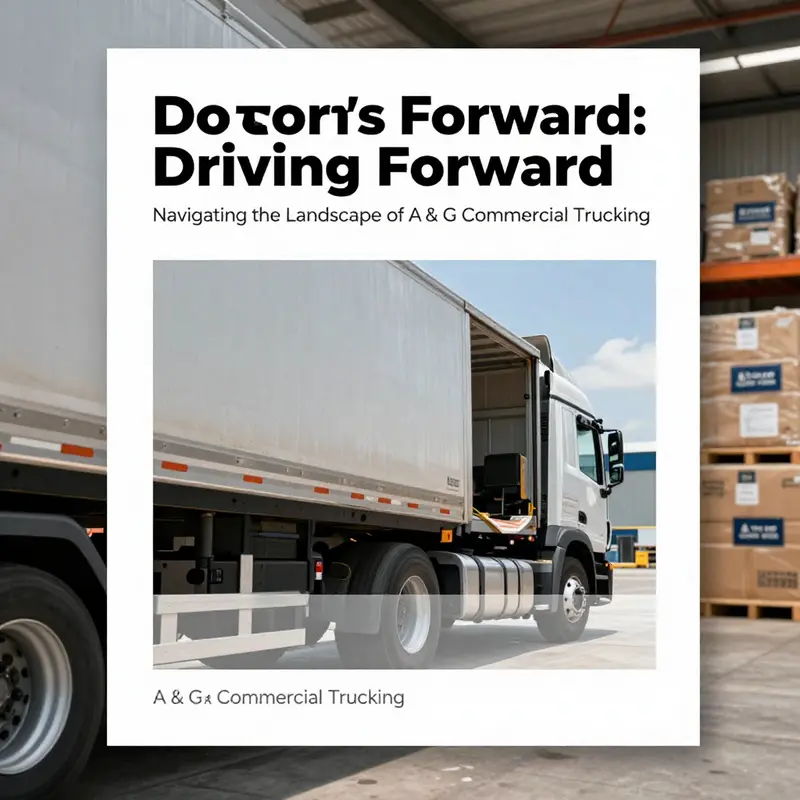
A & G Commercial Trucking, operating from Sulphur Springs in Texas with roots linked to a corporate decision to register in Arizona, occupies a distinctive lane in the United States’ sprawling trucking landscape. Its stated focus, mobile home moving and related specialized freight, places the company beyond the mass-market long-haul model that dominates much of the industry. In this sense, A & G is less a giant of scale and more a steward of a targeted, service-intensive niche. The market position that emerges from this setup is not a loud proclamation of dominance but a quiet assertion of relevance within a local and regional economy. Regional emphasis matters; it sharpens the company’s competitive edge where demand is steady, relationships are intimate, and the supply chain’s pain points—like timing, equipment compatibility, and on-site handling—are most acute. The decision to concentrate operations in a defined geographical zone, with Texas and its neighboring states often serving as the core corridor, aligns well with a business model designed to maximize utilization of a small, specialized fleet, rather than chase nationwide presence at the expense of reliability and responsiveness.
This positioning also reflects a broader truth about trucking as an industry: specialization can be a sustainable differentiator in a market where scale alone does not guarantee success. Mobile home moving demands careful coordination, equipment readiness, and careful attention to customer timetables. Unlike the generic freight that moves through vast interchanges, this niche requires a nuanced understanding of local regulations, zoning constraints around large trailers, and the particular needs of a customer base that relies on time-sensitive delivery and careful handling. A & G’s market footprint, therefore, is not just about where it operates physically, but about how it positions itself as a dependable partner for a segment with precise logistical requirements. It is this combination of regional focus and service specificity that shapes the company’s market cadence, margins, and risk profile.
Yet a narrow footprint carries both advantages and vulnerabilities. On the upside, A & G can cultivate deep, repeatable relationships with operators and crews who move mobile homes within a defined geographic circle. The company can tailor its dispatch and maintenance cycles to local traffic patterns, weather risks, and seasonal demand fluctuations. The workforce can become intimately familiar with the quirks of the region’s routes, the timing quirks of mobile home setups, and the nuances of securing loads in compliance with state and municipal regulations. This depth of local knowledge translates into smoother operations, quicker problem resolution, and a reputational edge when customers seek a partner who will show up on time and handle sensitive freight with care. Such a reputation is a form of intangible capital that strengthens the position of a smaller player in a sector where customer service can unreadily replace lost assets and where the cost of service disruption is disproportionately high for a customer waiting on a tight installation or relocation schedule.
However, the same regional concentration exposes the company to market and external pressures that larger, national operators weather in different ways. Public market share data for such niche players is rarely disclosed; therefore, the precise slice of the market remains opaque. What is clear from the operational model is that A & G’s emphasis leans toward niche, localized demand rather than a broad-based attack on high-volume freight lanes. In practice, this means the company will compete on reliability, specialized knowledge, and the ability to offer flexible scheduling that aligns with client timeframes. It also implies a dependency on a steady stream of local and regional moves; economic cycles that depress demand in Texas’ mid-sized towns or sudden shifts in housing relocation activity could disproportionately affect throughput. This conditional exposure is a reminder that niche success is earned by balancing distinctive capabilities with the ability to withstand local downturns and policy changes that ripple through small-to-midsize markets.
Two threads of the internal narrative at A & G shed light on how a small staff builds and sustains this market position. First, the environment described by current and former employees points to a complex operating world where the driver pool, dispatch, maintenance, and administration must perform in concert with limited headcount. A compact team means every role often wears multiple hats, elevating the importance of cross-functional training and robust internal messaging. Second, the workforce discourse features a balance of trade-offs. Some drivers report pay that lags behind broader industry benchmarks, coupled with a significant amount of unpaid deadhead miles—the trips a truck travels without a customer load between assignments. This combination directly impacts earnings perception and job satisfaction. Yet other voices highlight favorable pay-per-mile in certain contexts and a degree of location flexibility that lets drivers select short-, medium-, or regional-haul options. The latter can translate into better work-life balance for drivers who prize predictability and the ability to choose assignments that align with personal constraints. Taken together, these perspectives reveal a tension common in small, service-intensive fleets: the need to maintain competitive compensation and efficient routing while managing a lean organizational structure that must cover the end-to-end journey of a shipment with minimal slack. In this context, operational excellence becomes a fusion of fair pay, efficient routing, and transparent communication, all anchored by a workforce that feels fairly treated and aligned with the company’s regional mission.
The market position of A & G is best understood as a thoughtful response to the realities and opportunities of a segmented trucking ecosystem. The company does not project the bravado of a national carrier, nor does it pretend to serve every freight need across the country. Instead, it carves out value where the demand is mission-critical, where timing and handling expertise reduce risk for customers, and where a small, agile team can respond more quickly than a larger, more hierarchical organization. This equilibrium is more fragile than it appears. It rests on ensuring the number of available drivers and dispatchers aligns with the volume of regional loads and the capacity of the fleet, while maintaining enough margin to invest in preventive maintenance, training, and compliance measures that safeguard the business against regulatory shifts and safety concerns.
In the broader industry context, the trajectory of niche players like A & G is influenced by several macro trends. The trucking market, as a whole, continues to be shaped by driver shortages, fluctuating fuel costs, evolving emissions standards, and increasingly complex regulatory landscapes. Market research sources such as Statista illustrate how demand for commercial transport varies by region and by freight type, with regional and specialized services often weathering economic volatility differently than national, general freight. The specific segment A & G serves—mobile home moves and related specialized freight—factors into decisions about capital allocation, equipment readiness, and risk management. The regional hub model requires a careful calculus of spot pricing versus contract commitments, the length of cycles between assignments, and the ability to deploy a crew quickly for on-site tasks that demand physical handling expertise. In practice, a company like A & G may keep a modest market footprint not as a signal of weakness but as a deliberate stance to preserve reliability, reduce exposure to price wars, and avoid the operational fragmentation that can occur when a fleet expands without commensurate back-end support.
The internal and external data points converge on a simple truth about market positioning in this sector: specialized regional operators thrive when they can couple intimate local knowledge with disciplined, capability-driven service. A & G’s constraints—small staffing, a complex operating environment, and the challenge of translating flexible, pay-per-mile arrangements into consistent earnings—are not merely obstacles. They are the levers through which the company can differentiate itself over the long term. The question for leadership becomes how to convert perceived gaps into opportunities for greater efficiency, better driver retention, and higher service reliability. One pathway lies in optimizing the dispatch process to cut down deadhead miles. This could involve tighter scheduling, more strategic pairing of loads with compatible routes, and pursuing contracts that anchor the fleet with predictable demand. Another pathway focuses on workforce development: creating clear pay structures that reflect both mileage and the value of on-site expertise, providing transparent progression opportunities for drivers, and investing in practical training that reduces downtime and safety incidents. When a small firm with specialized capability commits to disciplined growth—without sacrificing its core strengths—it can deepen its market foothold in a way that larger, more diffuse players may struggle to emulate.
From a narrative standpoint, the market position of A & G also intersects with the evolving expectations of customers who need more than just a transport service. They require a partner who understands the intricacies of their cargo, from how mobile homes must be strapped for transport to the precise steps involved in on-site placement and relocation. The importance of reliability in delivering on a tight schedule cannot be overstated, especially in markets where delays propagate through multiple stakeholders, from homeowners and installers to real estate professionals and local authorities. In this light, A & G’s value proposition rests on a synthesis of local reliability, specialized handling competence, and a willingness to adapt to the customer’s timetable. It’s not simply about moving something from point A to point B; it is about managing a process that touches several distinct spaces—manufacturing, logistics, housing, and local regulations—in ways that large, generic carriers often find incompatible with the speed and care required by this freight type.
To capture this dynamic in a way that remains grounded and practical, consider how a small fleet can transform its positioning with targeted improvements. First, a sharper focus on route optimization can reduce deadhead miles, leading to enhanced driver earnings without necessarily increasing the miles driven. Second, clearer communication channels within a lean team can cut response times when unexpected events occur, such as weather-related detours or last-minute reshuffles of mobile home deliveries. Third, a more deliberate approach to compensation, where drivers see meaningful, transparent pay tied to both miles and on-site performance, can improve retention in a tight labor market. These adjustments do not erase the challenges of operating a regional, service-intensive business; they acknowledge them and propose concrete steps toward resilience. In the end, A & G’s market position is best viewed as a platform with real potential to grow within its chosen niche—provided it sustains a disciplined focus on efficiency, employee alignment, and customer-centric reliability. For readers seeking broader market mechanisms that shape these opportunities, the discussion around industry-wide capacity and pricing dynamics offers useful context, alongside the specifics of regulatory evolution that can influence regional operators more acutely than their larger counterparts. In other words, the company’s future is less about chasing every mile and more about making the most of the miles that truly matter to its customers, its people, and its home region.
For those exploring the intersections of capacity and strategy in trucking, consider the broader narrative of excess supply and demand in the market. A regional operator like A & G may encounter periods when capacity in its niche exceeds immediate demand, creating a price-competition environment that tests margins. Yet such cycles also offer opportunities to deepen customer relationships through value-added services, improve utilization via smarter dispatching, and invest in training that reduces incidents and accelerates installation timelines. The path forward is not a sprint toward scale but a measured ascent toward reliability, profitability, and a reputation for doing the heavy lifting when regional clients need it most. In this light, A & G’s market position emerges not as a static label but as a dynamic posture—one built on local knowledge, specialized capability, and a willingness to adapt pace to the rhythms of the communities it serves.
Internal link reference: For readers interested in how market dynamics like excess capacity influence decision-making in trucking markets, see the analysis here: excess-capacity-in-the-trucking-market-insights.
External resource for broader context: https://www.statista.com/statistics/1348062/global-commercial-vehicle-market-size-by-region/
null
null
Final thoughts
The insights gathered from the operational, regulatory, market, and financial perspectives of A & G Commercial Trucking illustrate the multifaceted nature of success within the logistics and transportation sector. By understanding the regulatory landscape, optimizing operations, positioning effectively in the market, and maintaining financial health, similar enterprises can navigate industry complexities and achieve sustainable growth. Each component analysed contributes crucially to forming a comprehensive understanding of the challenges and opportunities inherent in trucking operations, empowering stakeholders to make informed decisions.