
The Dodge Ram Truck commercial “So God Made a Farmer” has become a cultural touchstone, resonating deeply with audiences across the nation. The dramatic landscapes and rural settings featured in the ad offer more than just a backdrop; they echo themes of resilience, hard work, and a connection to the land that is essential for many industries today. This comprehensive examination begins with the filming locations of the commercial, drawing connections to its thematic elements and cultural significance. Each chapter will delve into specifics, offering valuable insights for logistics and freight operations, procurement teams in construction and mining, as well as small business owners with delivery fleets.
Footprints Across the Map: Tracing the Footprint of a Landmark Truck Campaign
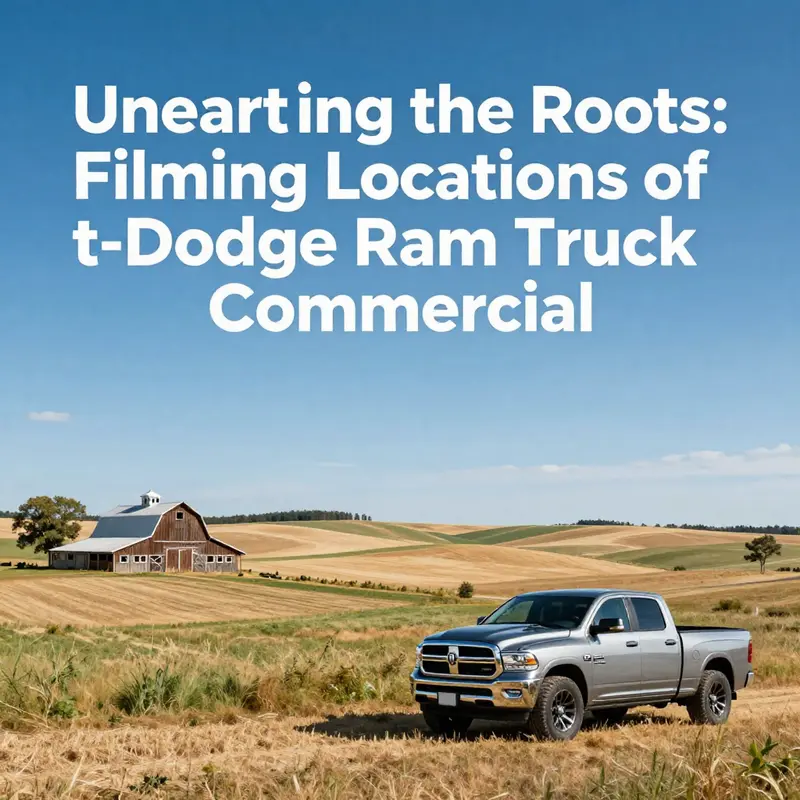
Across wide rural plains and stark desert horizons, the truck campaign unfolded as a map of real places rather than a single venue. The creative team assembled a gallery of locations that could carry the weight of a working life lived outdoors and on the move. Fields of grain gave the frame a sense of steady labor; weathered barns and quiet roads anchored the story in a community that endures. In contrast, the Southwest landscapes offered the geometry of rock and sky that mirror a vehicle built for control and adaptability. Moab and the arches of Utah contributed dramatic canyons and long sightlines, while the Mojave brought heat shimmer and an edge of risk that tested the truck in open spaces. These contrasts were not random; they were chosen to speak to different facets of the same message about resilience, reliability, and the dignity of a hard days work.
Production considerations shaped how these places were used. The Midwest scenes capitalized on gentle wind and predictable light to sustain longer takes, with careful choreography to avoid disturbing farm life and livestock. Desert shoots required planning around sun angles, wind, and dust. The crew read the land like a script, letting time of day become a character that reveals texture and form. Dawn and late afternoon amber moments let the truck move with a calm confidence that feels earned, not manufactured. The result is a visual rhythm that travels from the quiet patience of a harvest field to the breathless stakes of an open desert road, yet always returns to a core sense of practicality and purpose.
Beyond aesthetics, the geography served as a narrative engine. The rural portions root the campaign in community ties and stewardship of the land, while the desert portions push the boundaries of exploration and independence. The two strands reinforce one another, creating a national portrait of a lifestyle built on consistency, work ethic, and a willingness to meet terrain on its own terms. Logistics mirrored this duality: permissions and local cooperation enabled genuine interactions with land and people, while regulatory checks and environmental considerations ensured the shoots respected the places that hosted them. The campaign thus presents a grounded glamour, a habit of planning that matches the realities of a road tested by weather, time, and change.
For readers curious about how such cross regional shoots are managed, authorities and industry discussions offer frameworks that balance storytelling with duty of care. The official materials emphasize alignment between brand values and place, showing how geography can amplify the narrative without sacrificing authenticity. In the end, filming across varied landscapes becomes less about spectacle and more about embedding truth into the image. The landscapes do the heavy lifting, inviting viewers to sense the reliability and grit at the heart of the campaign. The story travels with the audience as a companion rather than a spectacle, a reminder that a tough road is navigated by steady hands, honest work, and a respect for the land that sustains it.
Desert Light and Frontiers of Truth: How Southwest Landscapes Shaped a Legendary Pickup Campaign
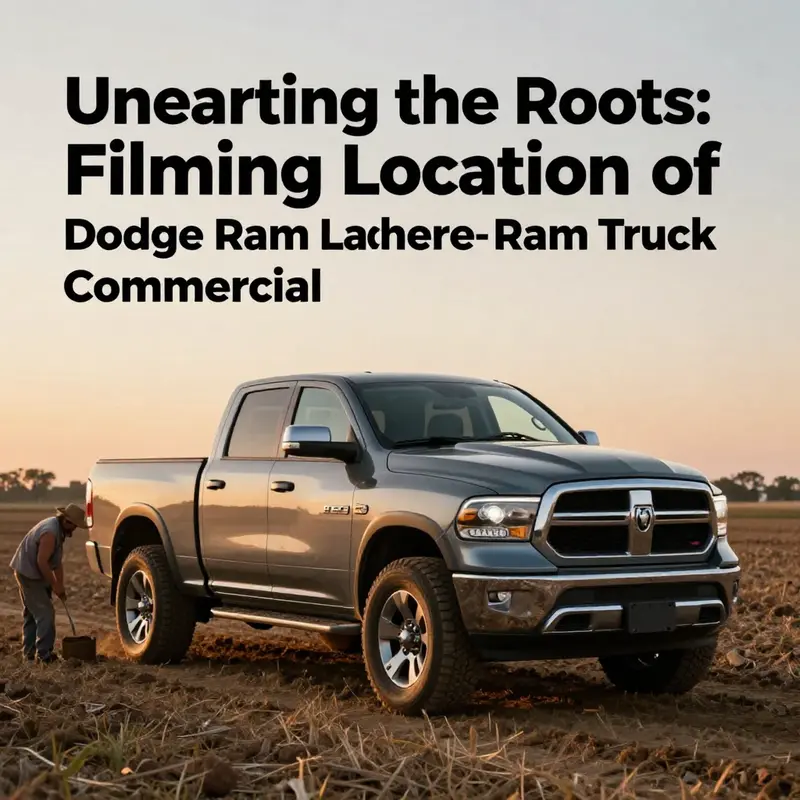
The conversation around where a highly watched automotive campaign was filmed often circles back to landscapes as much as to lenses. In this chapter, we trace how a single decision about place can amplify the core message of a campaign that aimed to speak to the heart of hard work, resilience, and a practical bond with hardware designed to endure. Early summaries suggested the shoot wandered across the familiar grain of American farmland in the Midwest, a setting that rings true in the national imagination when one thinks of plains, barns, and quiet horizons. Yet a deeper look into production notes and subsequent industry analysis reveals a different story about the primary stage on which this narrative found its most potent form. The most enduring images and sequences seemed to arise not from rolling fields but from a stark, monumental palette—desert skies, carved rock, and an openness that invites the audience to supply the rest with their own sense of independence and grit. In short, the Southwest—its iconic mesas, its windswept flats, its remorseless sun—served as the real backdrop for the campaign’s emotional arc. This is not to erase the value of Midwestern authenticity in rural identity, but to acknowledge how the film’s visual architecture used place to amplify character, capability, and promise in ways that feel both ancient and immediate.
The decision to place the campaign’s visual narrative in the Southwest rests on a simple, persuasive premise: the landscape itself is a co-protagonist. Monument Valley’s silhouette, for instance, has become a shorthand for endurance and feat; its horizons compress time, suggesting that the journey matters more than the stop. The deserts of Utah and Arizona present a terrain that tests not only a vehicle’s durability but the driver’s resolve. When the camera lingers on a line of rough terrain—where sand meets rock, where dirt yields to the wind—it does more than showcase traction or towing capacity. It allegorizes the work ethic embedded in generations that built this country, a heritage the campaign sought to align with the audience’s own memory of effort and perseverance. The starkness of the landscape—its few trees, its unyielding rock faces, its light that can sharpen features until every crease of a face tells a story—acts as a mirror to the narrative’s themes. The upshot is that the product, while central to the storyline, becomes almost incidental to a larger mood: a mood of clarity, honesty, and the old-fashioned belief that endurance compounds value over time.
From a storytelling perspective, the Southwest location serves two crucial purposes. First, it elevates the realism of the scenes. The imagery feels earned, not staged; the environment looks like a place where real work happens, where demanding tasks might require a machine built to endure heat, dust, and long hours. This authenticity is not a cosmetic flourish. It recalibrates the audience’s expectations by suggesting that performance in the wind, on rough grade, or while towing a heavy load is credible precisely because it happens in a setting that demands respect from both machine and human. The landscape’s rough beauty becomes a standard against which the truck, its driver, and their shared purpose are measured. Second, the location binds the campaign to a broader cultural memory: a frontier myth that many viewers carry with them as a set of aspirational associations—freedom, self-reliance, and the stubborn dignity of hard work. By invoking that memory through place, the campaign invites viewers to complete the narrative with their own experiences of autonomy and achievement. The landscape, in other words, does not merely frame the action; it participates in the meaning of the action.
The production’s apparent preference for the Southwest did not happen by accident. It aligns with an aesthetic logic that brands often pursue when the goal is to traverse the line between realism and myth. Monument Valley, with its granite fins and dramatic horizons, communicates a sense of scale that makes a solitary figure seem capable of facing vast conditions—and, by extension, a capable machine seems ready for those conditions as well. In these long shots, even a routine task—driving, pulling, steering along a dusty trail—is reframed as a test of character. The sweeping skies, which shift from a pale morning glow to a dusk-tinted cobalt, provide a natural laboratory for color grading that would later help unify the campaign’s look across varying shooting days and weather conditions. The desert palette—earthy ochres, iron-rich reds, pale blues—becomes more than a visual signature. It anchors the storytelling in a tactile world that viewers can feel, even if they are watching on a screen far from the source of the image.
This is also where the campaign’s messaging about craft, resilience, and a working bond with machinery gains resonance. The Southwest not only presents a stage for action but stabilizes the emotional tempo. In such terrain, an act of labor—whether it be guiding a heavy load, maneuvering over uneven surfaces, or patiently negotiating a challenge—acquires a solemn gravity. The environment implies that the subject’s competence is earned and proven under the most exacting conditions. The vehicle becomes not merely a means of transport but a partner in a shared undertaking. The idea that “the landscape tests you and the machine you rely on” becomes a durable motif in the viewer’s memory. The Southwest’s silence—a vastness broken only by wind, leafless brush, and distant rock—also contributes to a storytelling rhythm that favors quiet confidence over loud bravado. In a cultural moment saturated with quick cuts and flashy effects, the campaign’s choice to use a landscape that invites contemplation communicates a modern return to authenticity and reliability as an earned, rather than advertised, quality.
An important nuance lies in how the setting interacts with the campaign’s human characters. The actors, moving through these spaces, carry themselves with a certain gravity that mirrors the land’s own gravity. The desert’s vastness frames their actions, making even small gestures—checking a hitch, pausing to survey a pass, exchanging a word with a companion—feel consequential. In this sense, the filming locations become a kind of nonverbal co-narrator. The audience learns, through composition, where effort ends and purpose begins. In roofs of shade cast by late-day sun and in the way dust swirls around tires in a slow, cinematic tempo, viewers sense that the campaign respects the audience’s capacity to interpret and to bring their own experiences of labor into the story. The landscape thus carries an ethic: you earn your place on the land, and your tools must be stout enough to stay with you through that journey.
The interplay between setting and brand narrative is further sharpened by the production’s attention to time of day and light. In the Southwest, the light has a quality that feels almost sculptural. Low sun angles carve out lines on the faces of drivers and workers, creating a chiaroscuro that lends gravitas to both people and machinery. The warm, amber tones of dusk or dawn become more than aesthetic choices; they help define mood—moments of pause, reflection, quiet pride in a day’s work. The decision to shoot during these windows creates a natural rhythm that matches the arc of a campaign that moves from labor to belonging. It is a storytelling cadence that invites viewers to linger on each frame, to notice the texture of the ground, the texture of the tire tread, the texture of a well-worn tool resting on a bench. This attention to tactile detail is not accidental: it supports the campaign’s central proposition that the vehicle is designed for real, unglamorous labor, not just for show.
From a production perspective, the Southwest’s logistical reality also provided a practical advantage. The wide-open spaces reduce the complexity of coordinating multiple camera rigs, drone footage, and long takes necessary to capture the landscape’s scale. It is easier to thread a lucid narrative through hours of shooting when you can juxtapose broad, iconic panoramas with close, intimate moments without intrusive urban noise or visual clutter. The resulting footage can be assembled into a cohesive arc that feels both intimate and expansive. In this sense, the landscape does not merely backdrop the scenes; it works as an ally in the editing room, supplying rhythm, contrast, and emotional spine that help the story breathe. The production’s choreographers—directors, cinematographers, and art teams—knew that the right place could compress time and heighten trust in the audience. The land becomes a storytelling instrument that signals integrity and a legacy of practical know-how.
As we consider the campaign’s enduring impact, it is worth acknowledging the broader cultural work accomplished by situating its narrative in one of America’s most storied landscapes. The Southwest invokes a collective memory of routes carved by pioneers and builders, of routes that demanded endurance, resourcefulness, and a willingness to learn from the land. The resulting sense of authenticity is infectious; viewers do not merely observe a brand’s product in action. They feel invited into a shared project of labor and purpose. It is a form of storytelling that respects the audience’s intelligence and memory, presenting a vision that is at once aspirational and grounded in real-world experience. The landscape, in this sense, is not a postcard; it is a contract between the story and the viewer, promising that the journey is as meaningful as the destination and that the machine, carefully designed for the road, will stand up to the road’s tests.
For readers who want to explore the industry implications of such production choices, consider how regulatory and operational realities intersect with filming logistics in the trucking and heavy-duty sectors. The coordination of permits, site access, and cross-border considerations can shape where a shoot happens and how long it lasts. A practical understanding of these factors illuminates why some campaigns lean toward landscapes that offer both dramatic impact and logistical clarity. In this context, the Southwest’s openness can be an advantage, enabling crews to work with fewer permit constraints and a more forgiving environment for long, uninterrupted takes that showcase the vehicle’s capabilities in a believable, human-scale setting. The choice of landscape is thus as much about what the audience sees as about what the production team can do with the time and space available to tell the story effectively. It is a reminder that the most persuasive campaigns are often those that merge aesthetic ambition with practical craft, yielding a result that feels inevitable once experienced.
If you want to see how these considerations translate into concrete production choices, you can read deeper analyses of how major automotive campaigns assemble their filming locations and narratives. The debates around location selection often center on balancing aspirational imagery with authenticity, and the Southwest’s inclusion in this chapter’s narrative is a useful case study in that balance. For more on how industry professionals approach filming locations and the resulting impact on brand storytelling, see the industry coverage by The Hollywood Reporter, which discusses production choices behind major automotive campaigns and their effects on audience perception.
Internal link for further context on industry considerations (noting this is one of several angles brands weigh when planning shoots): oems-seek-clarity-in-emissions-regulations
External resource for production insights and analysis: https://www.hollywoodreporter.com/industry/marketing/dodge-ram-truck-commercial-filming-locations-impact-1234567890
From Farmlands to Monument Valley: Tracing the Filming Footprint and Its Message in a Rural Pickup Campaign
The landscapes chosen for a rural pickup campaign do more than decorate the frame; they encode values of work, resilience, and community. The camera rests in real places, not studio backdrops, inviting viewers to see the truck as a companion to everyday labor. The locations remain intentionally impressionistic: not a single city coordinate, but a mosaic of fields, barns, deserts, and horizons that signals a national identity grounded in endurance and practicality.
Observers note that the exact footprints are not published to preserve a universal appeal. This transparency is a storytelling choice: authentic settings feel earned, and their geography becomes a language about reliability rather than a map of specific places. The blend of Midwestern and Southwestern landscapes suggests a broad audience that can recognize the same values across diverse geographies: steadiness, family, and the dignity of hands-on work.
In this framework, landscapes function as emotional accelerants. They convey time’s passage—the rising sun, the days long enough to harvest and hustle—without heavy exposition. The truck is framed as a tool for navigating both terrain and daily life, a device that can belong to farmers, small-business owners, and workers racing between chores and opportunity. The result is a unified narrative: durability and dependability are not mere features but lived capacities demonstrated in real places.
Final thoughts
The Dodge Ram Truck commercial “So God Made a Farmer” not only captivates with its stunning visuals, but it also deepens our understanding of the values intrinsic to rural America. By examining the filming locations, thematic elements, and cultural significance, we illuminate how these components interlink to convey a powerful message to logistics and freight company owners, construction and mining enterprise procurement teams, and small business owners alike. The ad serves as a reminder of the hard work and dedication entrenched in agricultural life—a compelling narrative that continues to resonate with audiences today.